
AAC Activities for Speech Therapy: 7 Easy Ideas to Try
Explore AAC activities for speech therapy that build core vocabulary, spark communication, and engage young learners ages 2-7. Get free tips now!
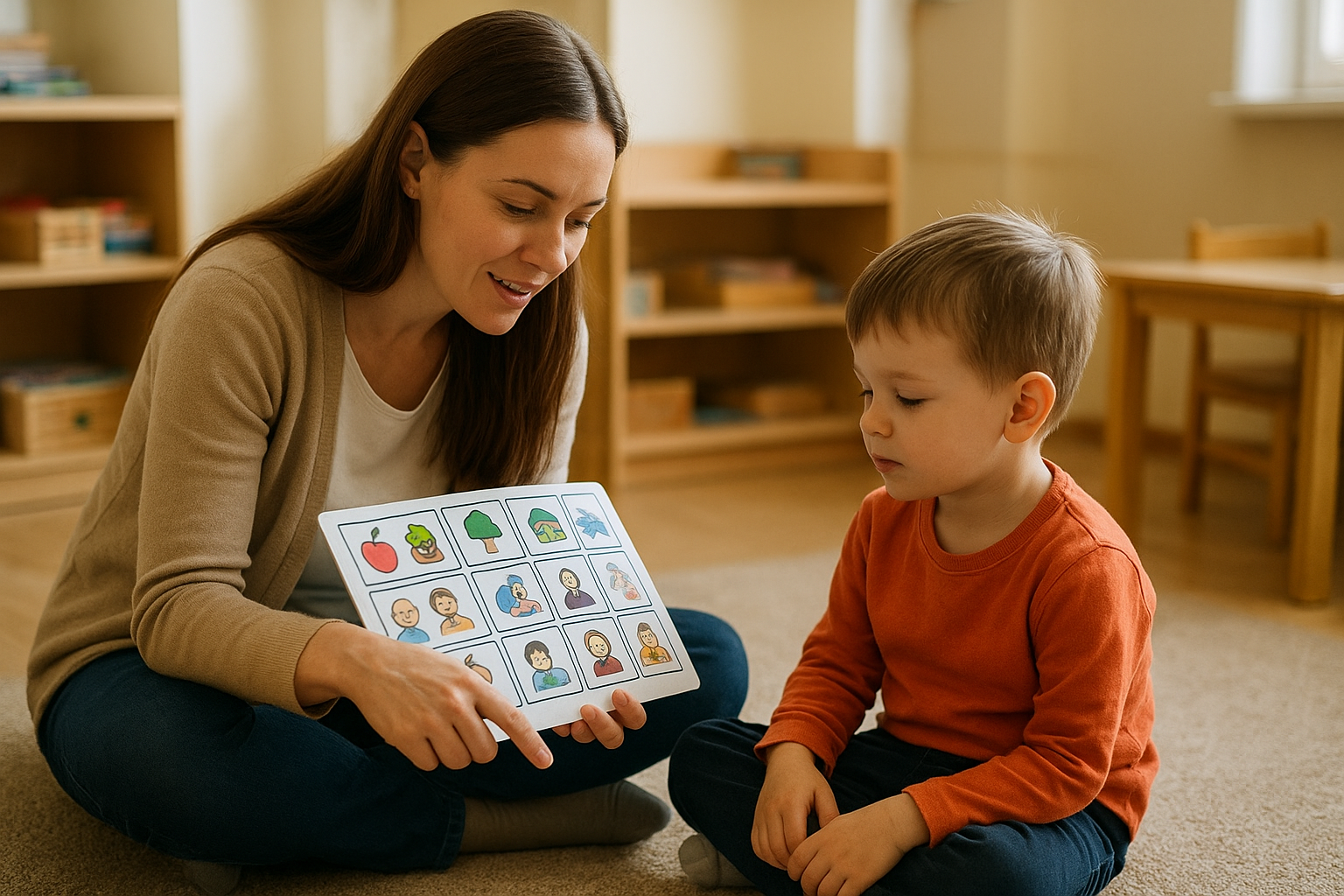
AAC activities for speech therapy give children who struggle to talk a reliable way to build language, connect with others, and grow their vocabulary one small step at a time. AAC stands for augmentative and alternative communication, a term for any tool or method — from picture boards to speech-generating devices — that supports or replaces spoken words. For speech-language pathologists (SLPs), early childhood educators, and parents working with children ages 2 to 7, these activities turn everyday moments into meaningful practice. This guide walks through what AAC activities are, why they matter, and how to bring them into sessions, classrooms, and homes with confidence.
Quick answer: AAC activities for speech therapy are structured exercises — like core-word modeling, picture exchange, and story-based play — that use augmentative and alternative communication tools to help children build functional language skills during real communication moments, not just drills.
AAC activities for speech therapy often start with simple picture boards during one-on-one sessions.
What Are AAC Activities for Speech Therapy?
AAC activities for speech therapy are structured exercises that pair augmentative and alternative communication tools with specific speech and language goals. In practice, this means modeling core words on a communication board while reading a story, or using a speech-generating device during a play routine. Therefore, every activity targets a skill — requesting, commenting, or answering questions — while giving the child a way to actually communicate that skill.
Unlike traditional flashcard drills, these AAC-based therapy activities happen inside real communication moments, as described in more depth in this overview of augmentative and alternative communication. As a result, children practice initiating conversation rather than just naming pictures. For example, a therapist might hide a favorite toy and prompt the child to use their AAC device to ask "where" or "more." In addition, many SLPs pair AAC with a broader AAC-focused approach to therapy, since consistent use across settings tends to build vocabulary faster than isolated practice.
Why AAC Exercises Matter for Communication Growth
AAC exercises matter because they open a communication pathway before spoken words become reliable. According to the American Speech-Language-Hearing Association, consistent AAC use does not hold back natural speech; instead, it often supports language growth by giving children immediate success with communication. Furthermore, early AAC exposure tends to reduce frustration, since a child who can point to "help" or "more" has less need to cry or act out to get a need met.
In addition, the Centers for Disease Control and Prevention notes that speech and language delays are among the most common developmental concerns in early childhood, which is exactly why early, repeated practice matters so much. Consequently, children generalize skills faster when SLPs and caregivers use the same AAC system consistently at home, school, and therapy. Similarly, parents who model AAC during daily routines — mealtime, bath time, playtime — reinforce what happens in sessions, which speeds up overall progress.
Core Vocabulary: The Backbone of Strong AAC Activities
Most effective AAC activities for speech therapy build around core vocabulary — the small set of words that make up a large share of what people say in everyday conversation. Words like go, more, stop, want, and help appear across nearly every activity, from snack time to recess.
For a deeper breakdown of which words to prioritize and how to sequence them, this core words guide offers a practical starting point. In addition, story-based resources such as Little Speech Corner's Core Stories pair core vocabulary with play, using a "Read, Model, Play" approach so children hear, see, and practice the same target words repeatedly. As a result, sessions feel less like drills and more like shared reading time — while still targeting measurable AAC goals. You can browse a free sample of these resources directly on Little Speech Corner's site.
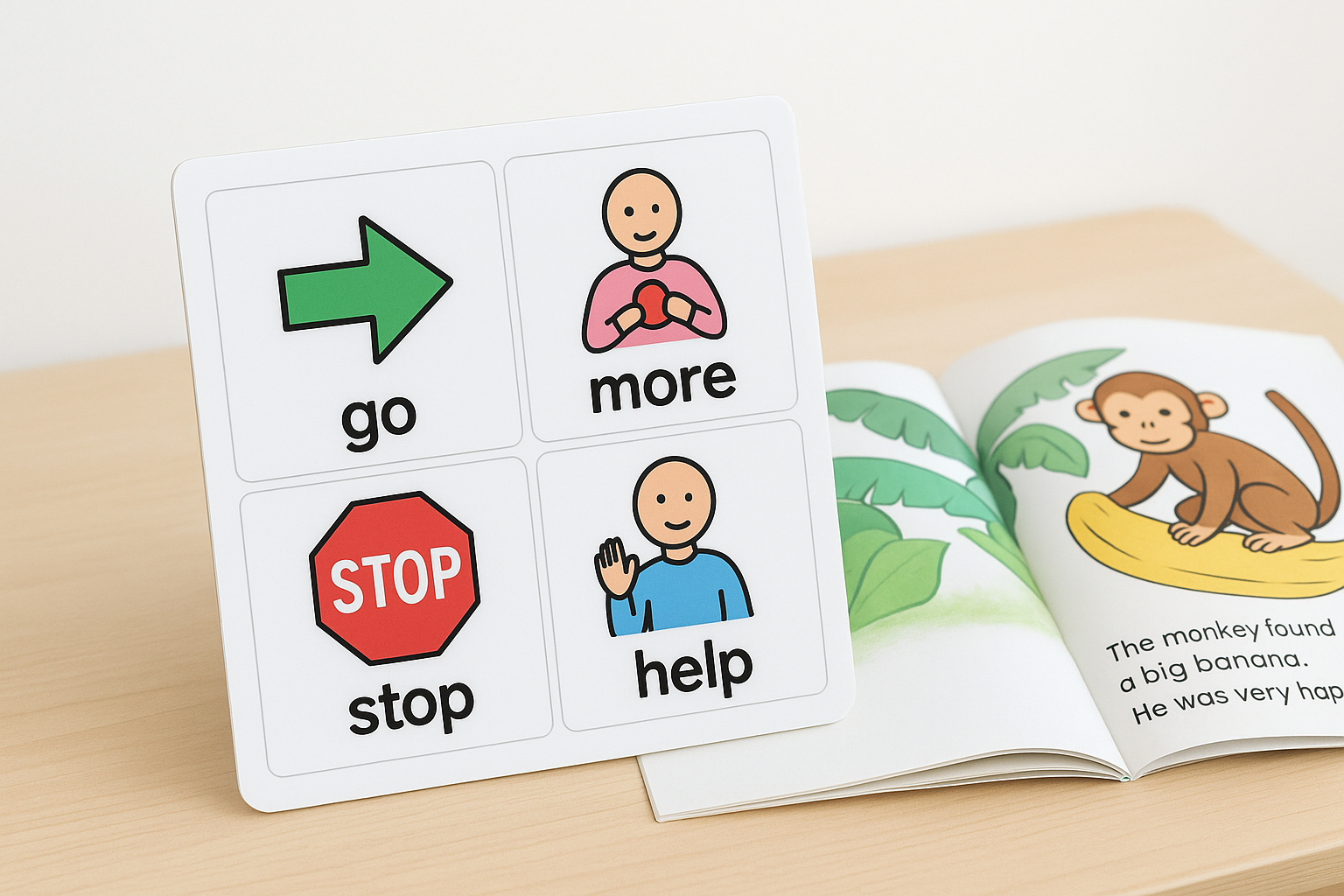
Core vocabulary boards support many of the most common AAC activities for speech therapy.
7 Practical AAC Activities for Speech Therapy Sessions
The following AAC activities for speech therapy work well across preschool classrooms, private practice rooms, and living rooms alike. Try rotating through a few each week rather than using all seven at once.
- Story-based core word modeling: Read a simple, repetitive story while pointing to core words like go, more, and look on an AAC board or device every time they appear in the text.
- Choice-making during snack time: Offer two snack options and prompt the child to use their AAC system to request "more" or "stop" rather than simply pointing at the food.
- Hide-and-seek vocabulary hunts: Hide familiar objects around the room and encourage the child to use AAC to ask "where" or comment "found it" when they locate each item.
- Barrier games with picture symbols: Set up a barrier between two communication partners and have the child direct their partner using AAC symbols for colors, shapes, or actions.
- Song and movement routines: Pair predictable songs with AAC buttons for action words like jump, stop, and go, pausing so the child can activate the word before the action happens.
- Play-based requesting: Place a favorite toy slightly out of reach and wait for the child to use their AAC device to request "help" or "want" before handing it over.
- Comment-focused book sharing: While reading together, model comments such as "funny" or "yucky" on the AAC system, giving the child chances to comment on pictures independently.
How to Introduce AAC Exercises at Home and School
Introducing AAC exercises successfully depends on consistency across environments. Above all, caregivers and educators should use the same core words and symbols the SLP uses in session, so the child does not have to relearn vocabulary in each setting.
For families exploring options beyond the classroom, in-home speech therapy sessions can be an effective way to practice AAC activities in the environment where the child communicates most naturally. Similarly, if a family is searching for local support, resources on finding speech therapy nearby can help connect them with a qualified SLP who has AAC experience.
Because AAC use is especially common among children with autism spectrum disorder, therapists should also review strategies specific to autism and speech development, since sensory preferences and motivation often shape which AAC activities work best. In particular, following the child's interests — a favorite show, toy, or food — makes every activity more motivating and effective.
Common Mistakes to Avoid With AAC Strategies
Even well-intentioned AAC strategies can stall progress when a few common mistakes creep in. First, waiting for a child to master AAC before using it consistently often backfires; children learn AAC the same way they learn spoken language — through modeling and repetition, not mastery drills.
Second, limiting AAC to "ask for things" activities narrows its power, since comments, protests, and social words matter just as much as requests. Third, switching vocabulary or systems too often confuses children and slows generalization. Finally, some adults remove AAC access once a child says a few words aloud; however, ASHA cautions against this, since spoken words and AAC can and should coexist as a child's communication grows.
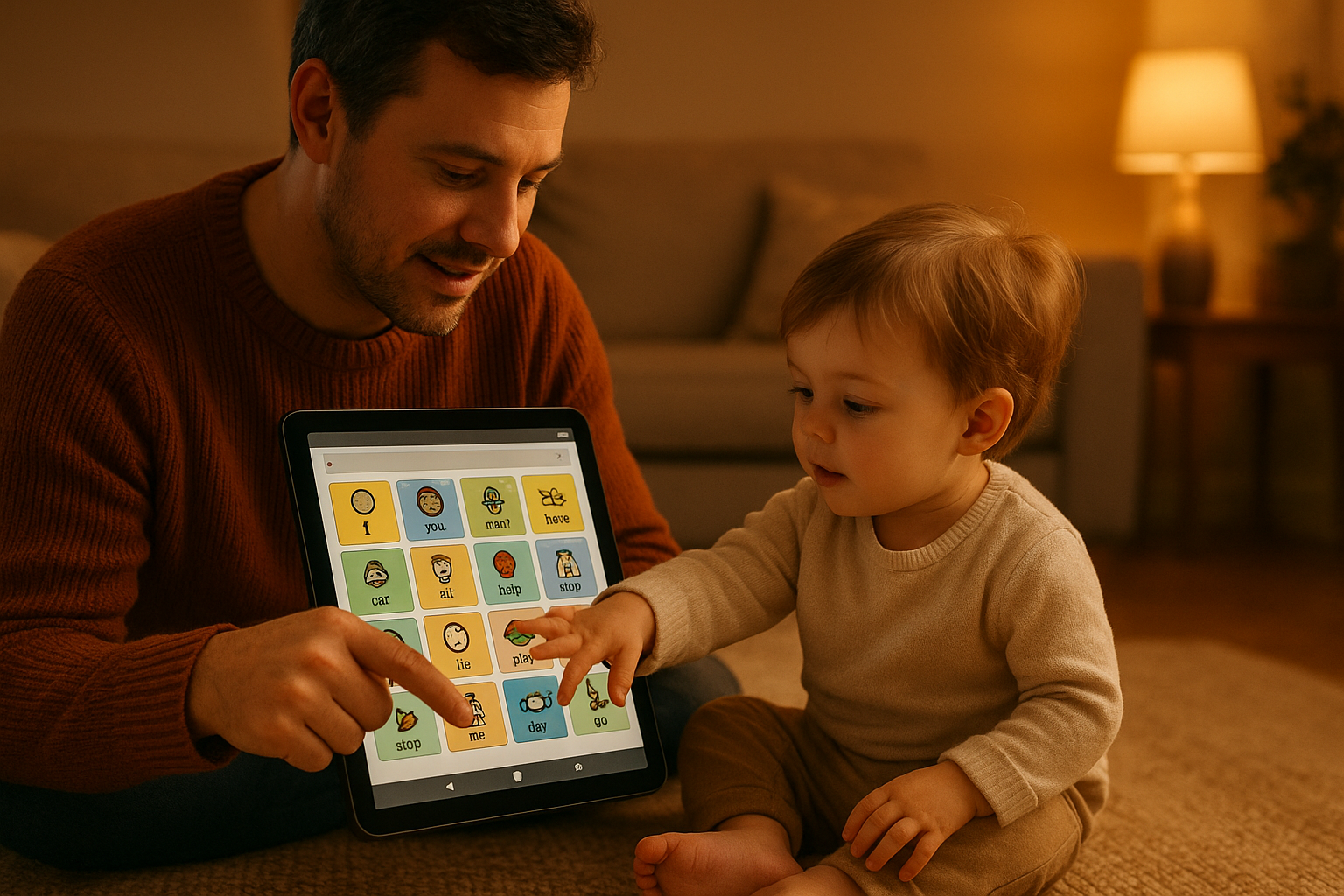
Consistent home practice reinforces the same AAC activities for speech therapy used in sessions.
Frequently Asked Questions About AAC Activities for Speech Therapy
What are AAC activities for speech therapy?
AAC activities for speech therapy are structured exercises that use augmentative and alternative communication tools — like picture boards, core vocabulary displays, or speech-generating devices — to help children practice functional language during sessions. They target specific goals such as requesting, commenting, and answering questions while giving the child a reliable way to communicate.
How do I start AAC activities for speech therapy at home?
Start by choosing three to five core words your child's SLP already uses, then model them during everyday routines like snack time or playtime. Consistency matters more than variety, so repeat the same words across several days before adding new ones.
Why do AAC activities matter for nonverbal or minimally verbal children?
AAC activities give nonverbal and minimally verbal children an immediate way to express needs, reduce frustration, and build language skills without waiting for spoken words to develop. Over time, this consistent success often supports, rather than delays, natural speech growth.
What is the difference between AAC and traditional speech therapy?
Traditional speech therapy often focuses on producing spoken sounds and words, while AAC-based therapy uses tools like devices or picture systems alongside or instead of speech. Many SLPs blend both approaches, since AAC can support language development even as verbal speech is still emerging.
How much does AAC therapy typically cost?
Costs vary widely depending on the AAC device or app, insurance coverage, and whether services are provided through schools or private practice. Low-tech options like picture boards can cost very little, while dedicated speech-generating devices may range from a few hundred to several thousand dollars.
How long does it take to see progress with AAC activities?
Many families notice small changes, like increased pointing or button pressing, within a few weeks of consistent practice. However, meaningful language growth typically develops over several months, especially with regular use across home, school, and therapy.
What core words should I start with in AAC activities for speech therapy?
Common starting words include go, more, stop, want, help, and look, since these appear across nearly every daily activity. A dedicated core words guide can help break down a fuller starter list and explain how to sequence new vocabulary over time.
Can AAC activities be combined with verbal speech practice?
Yes, AAC and verbal speech practice work well together, and most SLPs encourage using both at the same time. Combining AAC modeling with speech sound practice often reduces frustration while still building toward spoken communication goals.
What common mistakes should I avoid with AAC activities?
A common mistake is waiting until a child "needs" AAC before introducing it, rather than modeling it consistently from the start. Another frequent error is removing AAC access once a child begins speaking a few words aloud, which can slow overall progress.
What age is best to start AAC activities for speech therapy?
AAC can be introduced as early as infancy or toddlerhood when a child shows communication delays, though many children begin formal AAC activities between ages 2 and 4. Earlier exposure generally leads to faster, more natural adoption of the system.
Do AAC activities work for children with autism spectrum disorder?
Yes, AAC activities are widely used and well-supported for children with autism, particularly when paired with the child's specific interests and sensory preferences. Many SLPs adjust pacing and vocabulary choices to match each child's individual communication profile.
What materials do I need for AAC activities for speech therapy?
Basic AAC activities only require a core vocabulary board, picture symbols, or an AAC app on a tablet, along with familiar toys, books, or snacks to practice with. Story-based resources, like core-word stories, can also provide ready-made scripts for modeling target vocabulary.
How often should AAC activities be practiced for the best results?
Most SLPs recommend practicing AAC activities daily, even in short five- to ten-minute bursts, rather than saving practice for one long weekly session. Frequent, brief exposure across different routines helps children generalize core vocabulary faster than occasional intensive practice.
Bringing AAC Activities Into Everyday Practice
In summary, AAC activities for speech therapy work best when they feel like natural moments of connection rather than isolated drills. From story-based modeling to play-based requesting, each activity gives a child a real reason to communicate while building core vocabulary that transfers across home, school, and therapy settings. Ultimately, consistency across environments — paired with patience and a bit of creativity — tends to matter more than any single tool or device. Whether you are an SLP planning next week's sessions or a parent looking for simple ways to support your child, starting with even one or two of these AAC activities for speech therapy can open the door to steady, meaningful communication growth.