
Core Storytelling Therapy Materials for Young Learners
Core storytelling therapy materials help SLPs model core vocabulary through short stories and play. Explore Core Stories and free samples now.
Core storytelling therapy materials are short, illustrated stories built around a single core vocabulary word, designed to help speech-language pathologists (SLPs), special educators, and families model language in a natural, repeatable way. Instead of drilling isolated words on flashcards, these materials pair a brief story with modeling and play so a child hears and sees a target word used in context. At Little Speech Corner, this idea takes shape through Core Stories and the signature Read, Model, Play approach.
Quick answer: Core storytelling therapy materials combine a short story with core-word modeling and follow-up play, giving children repeated, natural exposure to a target word across reading, interaction, and hands-on activity. Little Speech Corner's Core Stories use this format and are available individually or in the Foundational 53-Pack through TPT.
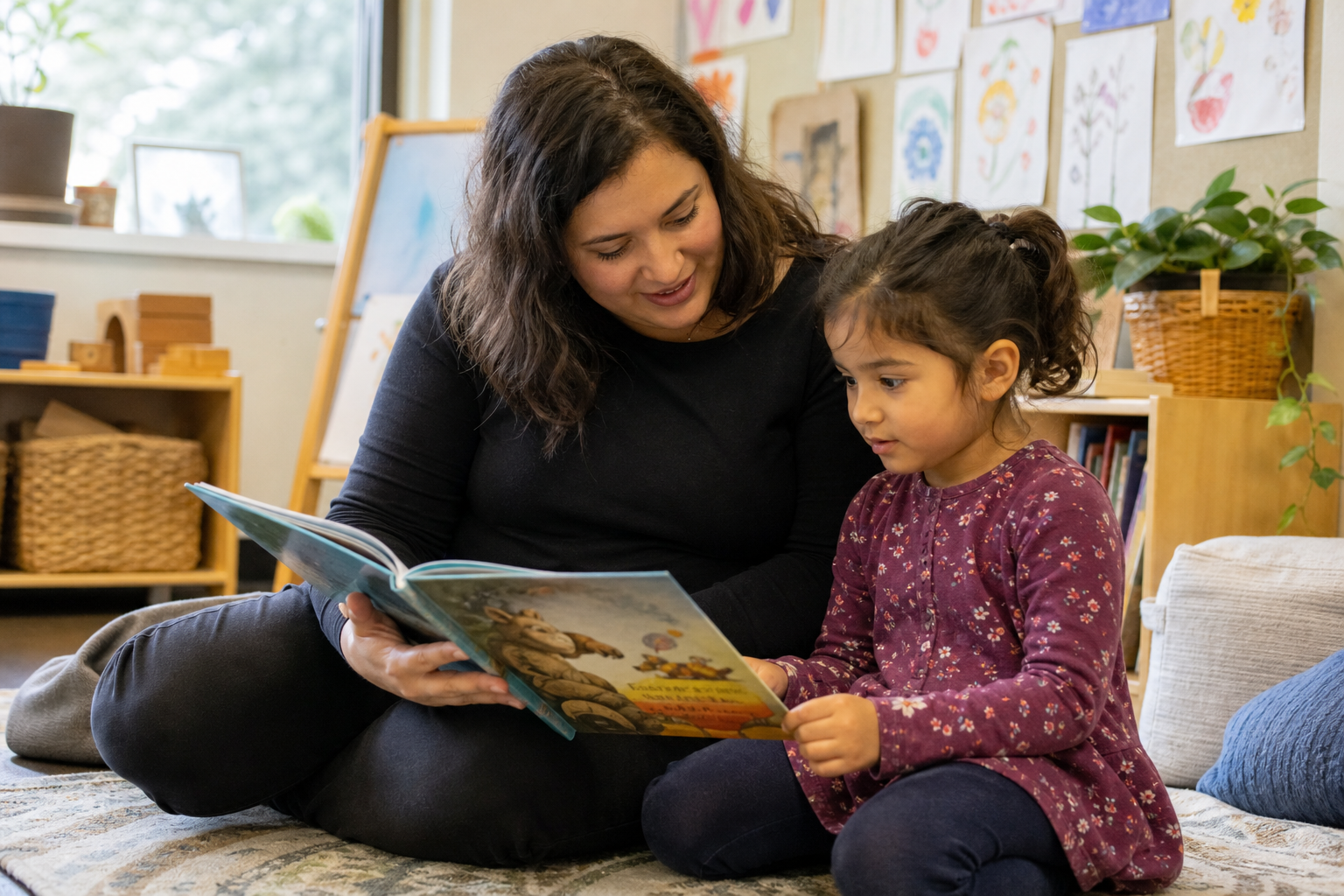
Shared reading is the first step in using core storytelling therapy materials during a session.
What Are Core Storytelling Therapy Materials?
Core storytelling therapy materials are illustrated stories centered on one core vocabulary word, such as "go," "more," or "help," that adults read aloud and then model during play. In particular, each story is short by design, usually around five minutes, so it fits easily into a therapy session or classroom routine without competing with other goals.
Unlike generic storybooks, these materials are written specifically to highlight one target word multiple times in meaningful context. As a result, children hear the word used the way they might use it themselves, whether through speech, sign, or an AAC device. For a broader look at how story-based tools compare across the field, this guide to story-based speech therapy resources covers several formats used by SLPs today.
Why Story-Based Core Vocabulary Tools Support Language Growth
Core vocabulary refers to the small set of high-frequency words that make up most of everyday communication. According to augmentative and alternative communication (AAC) research summarized by the American Speech-Language-Hearing Association, a relatively small group of core words can account for a large share of what people say across daily conversation. Consequently, teaching these words well pays off across many contexts, not just one.
Stories help because they give core words a meaningful setting rather than isolated repetition. For example, a story about a child losing a toy gives natural reasons to model "help" or "more" multiple times. Similarly, the Wikipedia overview of AAC notes that functional, context-rich modeling tends to support more generalized use than drill alone.
The Read, Model, Play Approach Behind Core Stories
Read, Model, Play is the structure behind every Core Story at Little Speech Corner. First, the adult reads the short story aloud, pointing to illustrations and pausing for anticipation. Then, the adult models the target core word using the child's own communication system, whether that is spoken words, sign, or AAC buttons.
Finally, the session moves into child-led play connected to the story's theme. This last step matters because play gives the child a low-pressure chance to use the word on their own terms. Therefore, the story is not the lesson by itself; it is the entry point into richer interaction. More ideas for this play phase appear in this collection of play-based language activities.

Modeling a core word during shared reading is the middle step of Read, Model, Play.
Core Stories vs. Sound Stories: Comparing Narrative Speech Therapy Resources
Not every narrative speech therapy resource targets the same goal. Core Stories focus on vocabulary and AAC modeling, while Sound Stories are built for clinician-selected articulation and speech-sound practice. Both use a connected-story format instead of isolated word lists, but the purpose behind each differs.
| Resource | Primary Goal | Best Fit |
|---|---|---|
| Core Stories | Core vocabulary and AAC modeling | Language goals, AAC carryover |
| Sound Stories | Articulation and speech-sound practice | Speech-sound goals |
Teams often use both across a caseload, choosing whichever matches the specific goal on a child's plan. The Sound Stories collection outlines available targets, including free SW and CH samples for anyone wanting to try the format first.
How to Use Storytelling Resources in Therapy Sessions
Using core storytelling therapy materials well involves a predictable sequence. The following steps outline a typical session from start to finish.
- Choose a target Core Story: Select a story that matches the child's current core vocabulary goal, communication system, and interests, since a well-matched story keeps attention and increases genuine opportunities to hear the word.
- Read the story in about five minutes: Share the short, illustrated story while keeping the pace relaxed, pointing to pictures and pausing so the child can anticipate repeated lines tied to the core word.
- Model the core word: Model the target word repeatedly through speech, sign, or AAC buttons exactly as the child would use it, rather than only asking for imitation, so the modeling feels natural.
- Move into child-led play: Transition into play built around the same theme or props, letting the child lead while the adult keeps modeling the core word across new, functional contexts.
- Extend practice with team supports: Share a core-word tip sheet or planning calendar with teachers and family members so the same vocabulary gets modeled consistently the following week.
Specifically, this five-step flow keeps sessions efficient without sacrificing depth. Above all, the goal is repeated, meaningful exposure rather than a single correct response.
Supporting Carryover with Team Supports and Tip Sheets
A single therapy session, however well run, rarely creates lasting change on its own. In contrast, consistent modeling across home, classroom, and therapy settings tends to build stronger habits. That is why core-word tip sheets and a planning calendar exist alongside the stories themselves.
These supports give teachers and family members a quick reference for the week's target word, along with simple modeling ideas that fit daily routines. For practical examples teams can hand to classroom staff, see this roundup of core vocabulary handouts. According to the CDC's developmental milestones resources, repeated, everyday language exposure plays a meaningful role in early communication development, which reinforces why cross-setting consistency matters so much.
Free Samples to Try Before You Buy
Before committing to a full bundle, many SLPs and teachers prefer to preview the format. Little Speech Corner offers several free samples, including the "Apples for Anna" Core Story built around the word "there," a core-vocabulary calendar with a sample story, and SW and CH Sound Story samples.
These samples give a realistic sense of the Read, Model, Play structure without any upfront cost. Once a team confirms the format fits their needs, the full Core Stories Foundational 53-Pack and individual Sound Stories are available through the Little Speech Corner store on Teachers Pay Teachers. You can browse the full catalog directly at Little Speech Corner to compare options before downloading.

Reviewing free samples helps teams decide which core storytelling therapy materials fit their caseload.
About the Creator Behind These Resources
Gwen Swire, M.A., CCC-SLP, known to many as Mrs. Gwen, created Little Speech Corner after more than 20 years of clinical experience across early intervention, preschool, elementary school, and family settings. She holds ASHA CCC-SLP certification, a California SLP license, and a Clinical or Rehabilitative Services Credential, along with M.A. and B.A. degrees in Communication Disorders from California State University Fullerton.
That background shapes every Core Story and Sound Story, since each resource grows out of real therapy sessions rather than theory alone. As a result, the materials tend to feel practical for busy caseloads and classrooms, not just polished on paper.
Frequently Asked Questions About Core Storytelling Therapy Materials
What are core storytelling therapy materials?
Core storytelling therapy materials are short, illustrated stories built around a single core vocabulary word, used by SLPs and educators to model language through shared reading and play. They combine a Core Story with modeling and hands-on follow-up activities.
How does the Read, Model, Play approach work?
Read, Model, Play starts with about five minutes of shared reading, during which the adult models the target core word using the child's own communication system. Afterward, the adult carries that word into interaction and child-led play to reinforce real use.
Who are Core Stories designed for?
Core Stories are designed primarily for SLPs, special educators, and classroom teams supporting children ages 2 to 7. They also support families practicing core vocabulary and AAC use at home.
What is the difference between Core Stories and Sound Stories?
Core Stories focus on modeling core vocabulary words for language growth and AAC use, while Sound Stories are illustrated, sound-loaded narratives built for clinician-selected articulation and speech-sound practice. Both use a connected-story format rather than isolated drills.
Can core storytelling therapy materials support AAC users?
Yes, Core Stories are built to support flexible language modeling, including augmentative and alternative communication. Adults can model the target word through speech, sign, or AAC buttons during the story and the follow-up play.
What is the Core Stories Foundational 53-Pack?
The Core Stories Foundational 53-Pack is a bundle of 53 Core Stories sold through Teachers Pay Teachers, organized around a suggested Core Word of the Week sequence. It pairs with a planning calendar and team modeling supports for consistent carryover.
How much time does a Core Story session take?
A Core Story typically takes about five minutes for shared reading and modeling, though this is not a guaranteed outcome for every child. The follow-up play and interaction can extend the session as needed.
Where can I purchase core storytelling therapy materials?
Little Speech Corner's Core Stories, Sound Stories, and the Foundational 53-Pack are available for purchase and download through the Little Speech Corner Teachers Pay Teachers store. Free samples are also offered there for anyone wanting to preview the approach first.
Are there free samples available before buying?
Yes, free samples include the Apples for Anna Core Story, a core-vocabulary calendar with a sample story, and SW and CH Sound Story samples. These let teams try the format before committing to a bundle.
What common mistakes happen when using story-based core vocabulary tools?
A common mistake is skipping the play phase and treating the story as the entire lesson, which limits carryover. Another mistake is choosing a word that does not match the child's current communication supports or classroom routines.
How do Team Supports help with carryover?
Team Supports include core-word tip sheets and a planning calendar that help therapists, teachers, and families model the same vocabulary across settings. Consistent modeling across home, classroom, and therapy increases opportunities for a child to hear and use the word.
Is Gwen Swire qualified to create these resources?
Gwen Swire, M.A., CCC-SLP, known as Mrs. Gwen, has more than 20 years of experience across early intervention, preschool, elementary, and family settings. She holds ASHA certification, California SLP licensure, and a Clinical or Rehabilitative Services Credential.
Do core storytelling therapy materials replace an individualized therapy program?
No, core storytelling therapy materials are designed as flexible tools to support goals, not as a complete individualized therapy program. Clinicians should select words, pacing, and expectations that match each learner's plan.
Final Thoughts
In summary, core storytelling therapy materials give SLPs, educators, and families a practical way to model core vocabulary through short stories, direct modeling, and meaningful play. Whether a team chooses an individual Core Story, the Foundational 53-Pack, or a Sound Story for articulation goals, the Read, Model, Play structure keeps sessions efficient and functional. Above all, starting with a free sample is a low-risk way to see whether this story-based format fits a caseload before purchasing a full bundle through the Little Speech Corner TPT store.
