
Core Vocabulary Activities for Speech Therapy That Work
Core vocabulary activities for speech therapy build functional language through shared stories, modeling, and guided play. Try a free sample today!
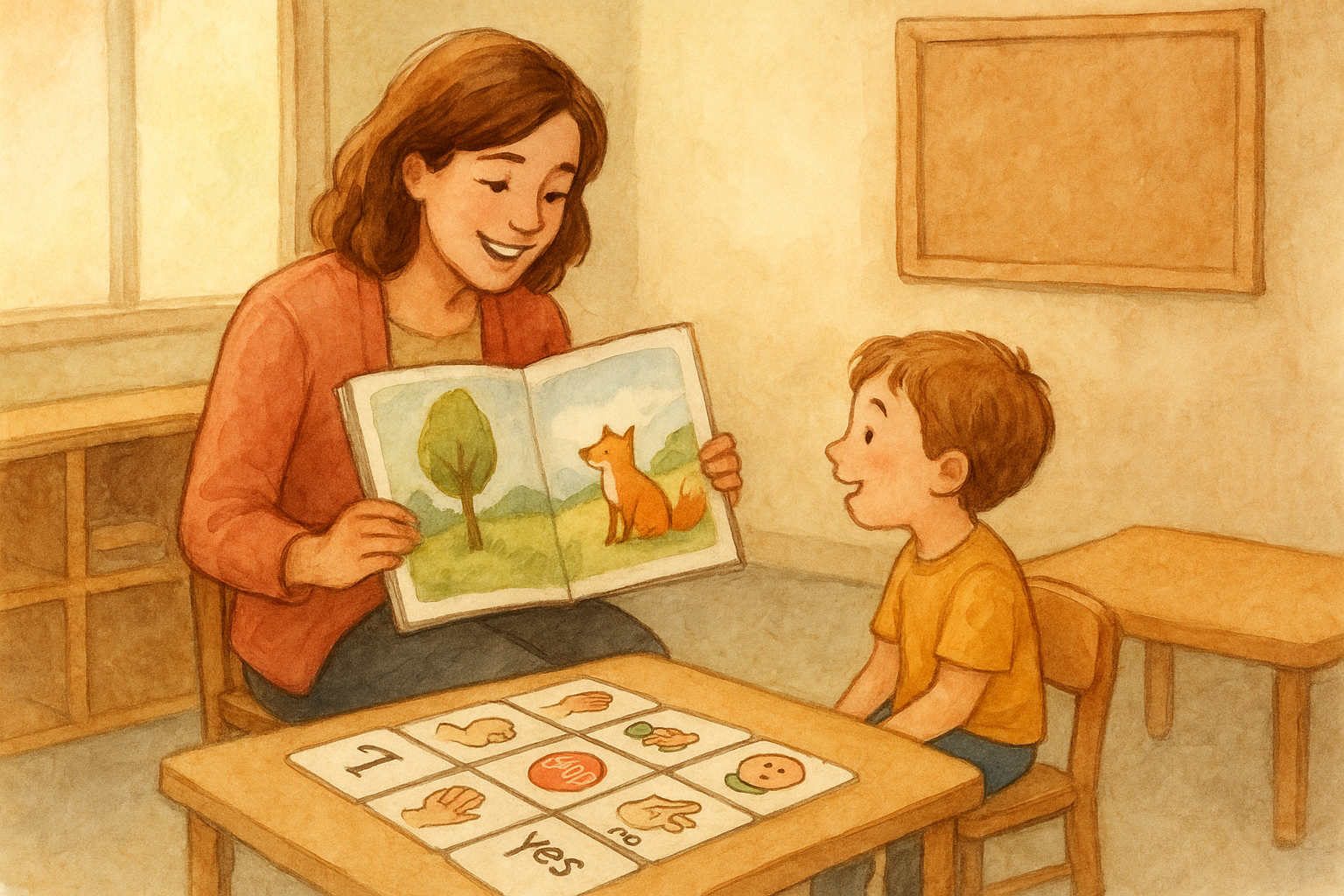
Core vocabulary activities for speech therapy give young communicators practical ways to use high-frequency words across daily routines, not just inside a single lesson. Instead of drilling isolated flashcards, these activities pair a short story with real modeling and play, so a child's new word shows up at snack time, in the classroom, and at home. Mrs. Gwen of Little Speech Corner built her entire Read, Model, Play approach around this idea, and it works well for verbal children and AAC users alike.
Direct answer: Core vocabulary activities for speech therapy use a short story to model one high-frequency word, then invite the child to practice that word through interactive play. This Read, Model, Play pattern helps the word transfer from therapy into everyday communication.
What Are Core Vocabulary Activities for Speech Therapy?
Core vocabulary activities for speech therapy are structured tasks built around words like go, more, stop, and help. These words are called "core" because they reappear constantly across subjects and settings, unlike "fringe" words such as dinosaur or birthday, which apply to narrower topics. As a result, a child who learns a small set of core words gains access to a surprisingly large range of messages.
According to the American Speech-Language-Hearing Association, a relatively small number of core words make up a large percentage of everyday spoken language, which is why clinicians often prioritize them early in therapy. For families and classroom teams, this means a single week's target word can be reinforced everywhere, not just during a 30-minute pullout session.
A shared story is often the starting point for core vocabulary activities for speech therapy.
Why Core Words Matter for Young Communicators
Young children, roughly ages 2 to 7, are still building the foundation of functional language, so efficiency matters. In addition, core words are typically the same words programmed onto AAC devices, which means practicing them in therapy directly supports a child's independent communication system. Consequently, a core-word focus benefits both emerging talkers and children who rely on augmentative and alternative communication, often called AAC, to express themselves.
Furthermore, repetition across settings strengthens retention far more than repetition within a single session. For example, if a preschooler hears and uses the word open during a story, again at snack time, and again during outdoor play, that word is far more likely to generalize than if it only appeared once during a 20-minute therapy block.
The Read, Model, Play Approach
Little Speech Corner's signature method, Read, Model, Play, structures core vocabulary activities for speech therapy into three simple phases. First, an adult shares a short, illustrated Core Story for about five minutes, pointing to the target word as it appears. Second, the adult models that word using whatever communication method fits the child, whether that is spoken language, sign, or an AAC device. Third, the pair moves into child-led play where the word naturally resurfaces again and again.
Notably, the five-minute story length is a flexible guideline rather than a promised outcome; some children need a shorter story, and others want to revisit it twice. Still, this rhythm gives clinicians a reliable, low-prep structure they can repeat weekly, which is part of why many SLPs appreciate story-based speech therapy resources over isolated drill cards.
Simple Core Vocabulary Activities for Speech Therapy Sessions
Below is a straightforward sequence many clinicians use to introduce and reinforce a single core word during one or two weeks of sessions.
- Choose one core word. Select a single high-frequency word, such as go, more, or stop, that fits naturally into a short story and several daily routines.
- Share a short core story. Read a brief, illustrated story aloud for about five minutes, emphasizing the target word each time it appears in the text or pictures.
- Model the word with supports. Model the core word using the child's own communication method, whether that is speech, signs, or an AAC device, so the input matches their output system.
- Move into child-led play. Transition into play that naturally invites repeated use of the word, letting the child direct the activity while the adult keeps modeling in context.
- Repeat the word across settings. Share the same target word with classroom teams and families so it gets modeled consistently across therapy, school, and home that same week.
For a closer look at keeping this routine simple week to week, see this guide on how to build a simple core vocabulary routine for preschool sessions.
Core Vocabulary Activities at Home and in Classrooms
Therapy gains fade quickly if a core word only appears during one weekly session. That said, extending the same word into classrooms and homes is often simpler than it sounds. A classroom team might post the week's core word near the snack table, while a parent might model it during bath time or a car ride.
Team supports, such as core-word tip sheets and a shared planning calendar, help everyone stay aligned on which word is being targeted that week. In particular, these tools reduce the guesswork for classroom aides or family members who are not trained clinicians but still want to reinforce language meaningfully. If five-minute windows feel more realistic than longer lessons, this roundup of five-minute speech and language activities offers additional quick ideas.
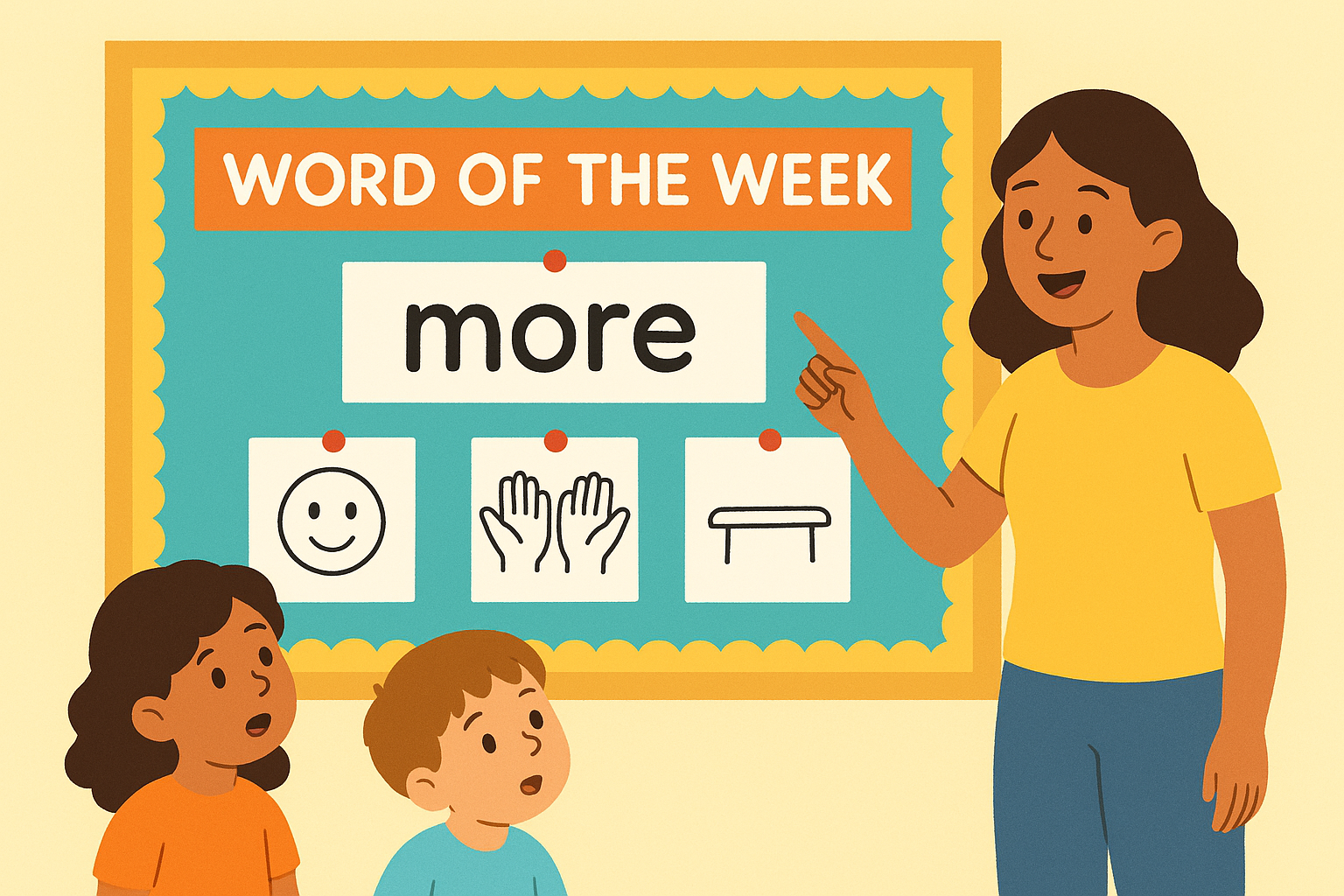
Classroom visuals help core vocabulary activities for speech therapy carry over throughout the week.
Using AAC Within Core Vocabulary Activities
For children who use augmentative and alternative communication, core vocabulary activities for speech therapy carry extra importance because the same words typically sit at the center of their AAC system. When an adult models a word like go on a device while reading the matching word in a story, the child sees the spoken word, the picture, and the AAC symbol together. As a result, the connection between meaning and symbol strengthens faster than it would through isolated drill.
The Wikipedia overview of augmentative and alternative communication explains how core-word based systems are designed for flexible, generative language rather than single-use phrases, which lines up well with story-based modeling. Similarly, the American Speech-Language-Hearing Association highlights core vocabulary instruction as a practical, evidence-aligned strategy for building functional communication in young AAC users. For more ideas specific to this population, this guide on AAC activities for preschool speech therapy sessions pairs well with a core-word story routine.
Choosing the Right Core Vocabulary Resources
Clinicians and classroom teams rarely want to build core-word materials from scratch every week. That is one reason Little Speech Corner's individual Core Stories and the Core Stories Foundational 53-Pack exist as ready-made options on Teachers Pay Teachers. The 53-Pack bundles a full year's worth of core-word stories alongside a suggested weekly sequence, though it works best as a flexible foundation rather than a fully individualized therapy plan.
Before purchasing any bundle, it helps to confirm the current listing details, since included files and licensing terms are set directly on the TPT store page. Likewise, free samples, including the Apples for Anna story targeting the word there, give a low-risk way to test the Read, Model, Play format before committing to a full collection. You can explore the full approach, plus easy embedding ideas, through this guide on teaching core vocabulary during play-based speech therapy.
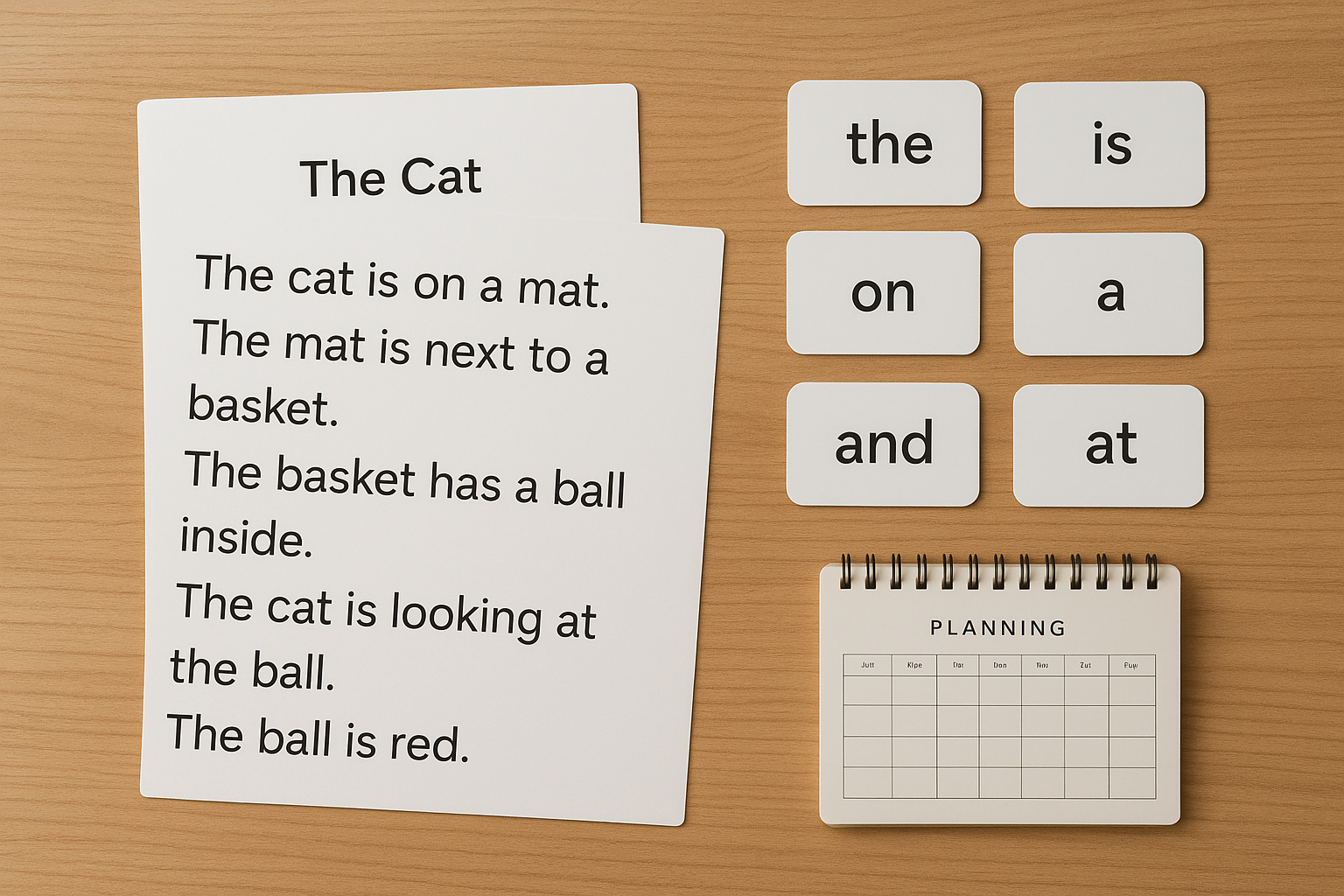
Printable stories and a simple calendar keep core vocabulary activities for speech therapy consistent week to week.
Common Mistakes to Avoid
One frequent mistake is introducing too many new core words at once, which dilutes repetition and slows generalization. Instead, most clinicians see stronger results focusing on one or two words for a full week before moving on. Another common pitfall is treating core vocabulary as a therapy-only task, so the word never gets modeled at home or in the classroom, limiting how often the child actually hears it used naturally.
Data from the National Institute on Deafness and Other Communication Disorders notes that early, consistent language exposure across environments plays a meaningful role in vocabulary growth, which reinforces why single-setting practice often falls short. Therefore, pairing a Core Story with a simple tip sheet for teachers and families tends to produce more reliable carryover than therapy sessions alone.
Frequently Asked Questions
What are core vocabulary activities for speech therapy?
Core vocabulary activities for speech therapy are structured tasks that target high-frequency, flexible words like go, more, and stop across stories, play, and routines. These words make up most of everyday communication, so practicing them helps children use language functionally rather than only in isolated drills.
How do I start a core vocabulary activity in a therapy session?
Start by picking one core word and a short, engaging story or routine that naturally includes it several times. Read or model the word first, then move into interactive play so the child hears and uses it in context.
Why is core vocabulary important for early language development?
Core words are reusable across countless situations, which means a child who learns a handful of them gains access to many messages. This efficiency makes core vocabulary a practical starting point for both verbal and AAC-using children.
What age range benefits most from core vocabulary activities for speech therapy?
Children roughly ages 2 to 7 tend to benefit most, since this is when functional vocabulary and early sentence structure are developing rapidly. However, older students with language delays or AAC needs can also benefit from the same core-word approach.
How long should a core vocabulary activity last?
Many clinicians use a short shared-reading segment of about five minutes, followed by extended interaction and play. The five-minute story is a flexible guideline, not a guaranteed outcome, since session length depends on the child and setting.
What is the difference between core vocabulary and fringe vocabulary?
Core vocabulary refers to a small set of high-frequency words usable across many contexts, such as go, want, or help. Fringe vocabulary, by contrast, includes specific nouns like dinosaur or birthday that apply to narrower topics.
Can core vocabulary activities for speech therapy be used with AAC users?
Yes, core vocabulary activities are especially well suited to augmentative and alternative communication, or AAC, because the same core words typically appear on AAC systems. Modeling a word on a device while reading or playing reinforces the connection between the symbol and its meaning.
How much does the Core Stories Foundational 53-Pack cost?
Pricing, licensing, and included files are set on the Teachers Pay Teachers listing, so it is best to check the current page before purchasing. The bundle is designed as a ready-made collection rather than a fully individualized therapy program.
What is a common mistake when teaching core vocabulary?
A common mistake is introducing too many new words at once instead of focusing on one or two words across many situations. Repetition in varied, meaningful contexts matters more than covering a long word list quickly.
What is the Read, Model, Play approach?
Read, Model, Play is a three-part method that pairs a brief story with adult modeling of a target word, followed by child-led interaction. It gives children repeated, low-pressure exposure to core vocabulary before asking them to use it independently.
How can teachers reinforce core vocabulary outside therapy sessions?
Teachers can reinforce core vocabulary by using the same target word during snack time, transitions, and classroom routines that week. Shared tip sheets or a simple planning calendar help entire classroom teams model the same word consistently.
What is the best way to track progress with core vocabulary activities?
Simple data sheets noting whether a child imitated, initiated, or combined the target word across settings work well for tracking progress. Comparing notes across home, classroom, and therapy also shows whether a word is truly carrying over.
Bringing It All Together
In the end, core vocabulary activities for speech therapy work best when they are simple, repeatable, and shared across every setting a child moves through during the week. A short story, one modeled word, and a stretch of child-led play can accomplish more than a long list of isolated drill cards. Above all, consistency across therapy, classroom, and home is what helps a core word turn into a word a child actually uses.
If you are ready to try this approach, Little Speech Corner's Core Stories and free samples offer a practical starting point built directly on Mrs. Gwen's 20-plus years of clinical experience. Whether you choose a single story or the full Foundational 53-Pack, pairing it with a basic weekly plan keeps core vocabulary activities for speech therapy manageable for busy clinicians, teachers, and families alike.