
Core Vocabulary Activities That Build Early Communication
Explore core vocabulary activities for play-based speech therapy and classrooms, plus free samples and guides from Little Speech Corner to try today.
Core vocabulary activities give children consistent, meaningful ways to use a small set of powerful words across daily routines, play, and stories. For speech-language pathologists (SLPs), special educators, and classroom teams supporting young communicators, these activities turn single words like "go," "more," and "help" into tools kids can use again and again. This guide walks through what core vocabulary activities are, why they matter for both verbal and AAC (augmentative and alternative communication) users, and how to build them into therapy sessions, classrooms, and home routines.
Quick Answer: Core vocabulary activities are tasks built around a small set of high-frequency words that children can combine across many situations, rather than isolated topic words. In practice, this means modeling words like want, stop, and more repeatedly through short stories, guided play, and everyday routines so language stays flexible and functional.
What Are Core Vocabulary Activities?
Core vocabulary activities are structured opportunities to hear, see, and practice a small bank of flexible words. Unlike fringe vocabulary, which refers to specific nouns tied to one topic, core words work across nearly any conversation. For example, a child who learns "more" can use it at snack time, during a game, or while reading a story.
In practice, a core vocabulary activity might be a shared book with one repeated target word, a modeled phrase during block play, or a classroom routine where every adult uses the same word of the week. Consequently, children experience the same word in many natural contexts instead of memorizing it in isolation. This repetition, rather than drilling, is what builds lasting, generalized use.
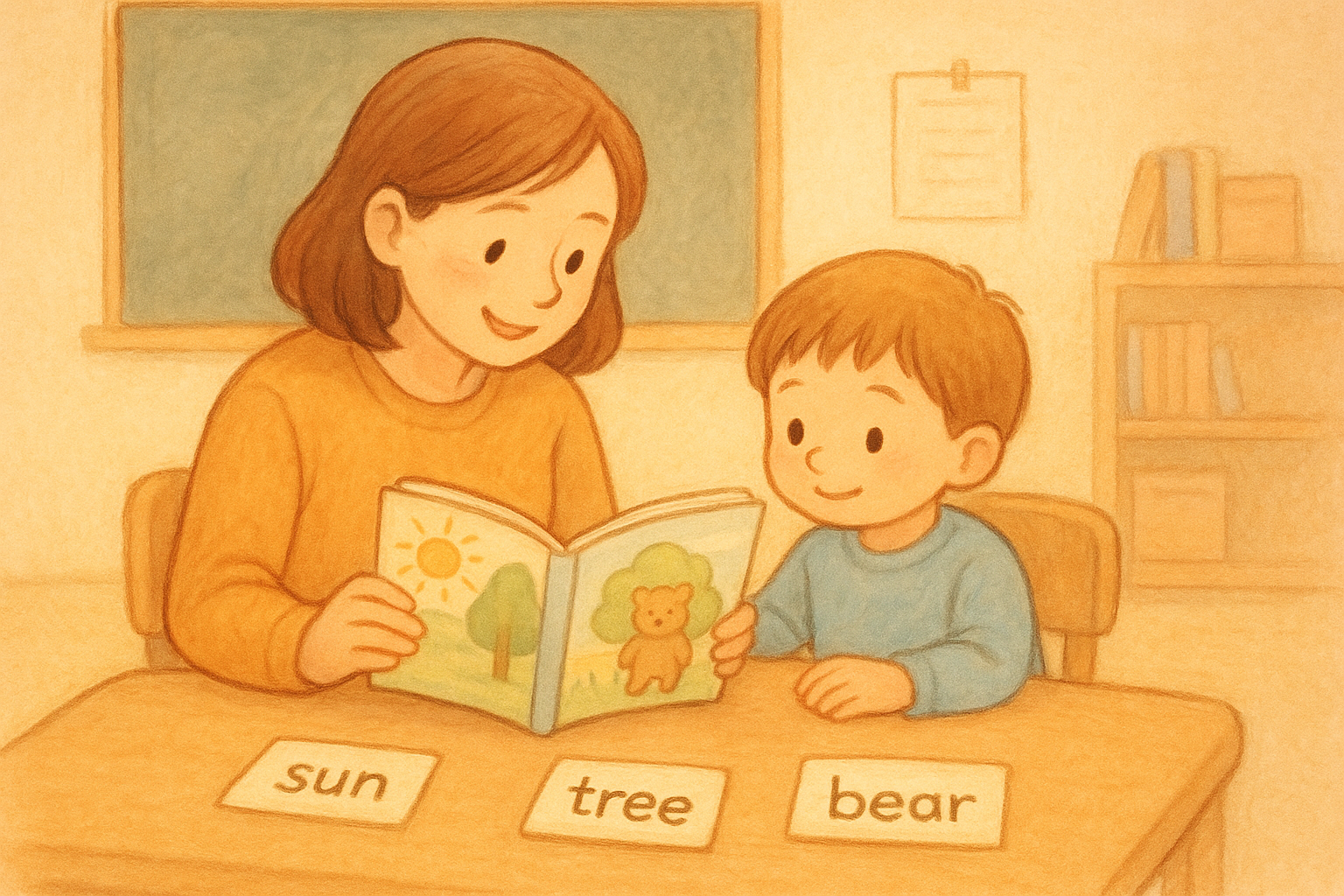
Shared reading is one of the simplest ways to fit core vocabulary activities into a short daily routine.
Why Core Vocabulary Matters in Early Language Development
Core vocabulary matters because a surprisingly small set of words does most of the work in everyday conversation. Research in augmentative and alternative communication has long noted that a core set of words accounts for a large share of what people say daily, which is why many AAC systems, as described by the American Speech-Language-Hearing Association, are organized around core words first.
For young communicators, especially those ages two through seven, this means therapy time is better spent building flexible words than memorizing long lists of specific nouns. As a result, children gain language they can reuse immediately, whether they are speaking, signing, or selecting symbols on an AAC device. In addition, early language milestones tracked by organizations such as the Centers for Disease Control and Prevention highlight just how quickly vocabulary grows during these years, making consistent, functional word choices especially valuable.
Core Vocabulary Activities Using Read, Model, Play
One approach to planning core vocabulary activities is a sequence called Read, Model, Play. A short Core Story, often about five minutes, introduces a target core word through illustrated, repetitive text. Afterward, the adult models the same word using the child's own communication supports, whether that means spoken language, gestures, or AAC symbols.
Finally, the activity moves into child-led play, where the word comes up naturally again without pressure to perform. This structure works well because it blends shared reading with real interaction, rather than relying on flashcards alone. For more ideas on applying this format, these play-based ways to teach core vocabulary offer additional practical examples suited to therapy rooms and busy classrooms alike.
Core Word Activities for AAC and Multimodal Communicators
Core word activities take on added importance for children who use AAC, since these systems are typically organized around the same small, flexible word bank. Specifically, modeling core words on a child's device, sometimes called aided language input, shows the child how to combine words without requiring them to respond immediately.
For instance, an adult might narrate play using the device alongside their own speech, pointing to "go" while saying it aloud. Over time, this consistent pairing helps a child understand that the symbol and the spoken word mean the same thing. Materials designed specifically for this purpose, such as core vocabulary teaching materials for AAC, can make this modeling easier to plan and repeat across sessions.

Modeling on a child's own AAC system is one of the most effective core vocabulary activities for multimodal communicators.
How to Build a Simple Core Vocabulary Routine
Building a sustainable routine does not require a complicated plan. Instead, a short, repeatable sequence tends to work best for both therapy sessions and classrooms. The steps below outline one simple way to structure a week around a single core word.
- Choose one core word — Pick a single flexible word, such as go, more, or help, rather than several at once so repetition stays consistent and manageable across the week.
- Model it through a short story — Share a brief story or picture book that naturally repeats the target word, pointing to it, saying it aloud, and pairing it with an AAC symbol or gesture when needed.
- Move into guided play — Carry the same word into a short play activity right afterward, creating real chances for the child to hear and attempt it without pressure to perform.
- Repeat across settings — Ask classroom staff or family members to model the same word during snack time, transitions, or home play so the child hears it from multiple people and places.
- Rotate to a new word weekly — Once the word shows up in spontaneous attempts or consistent AAC selections, introduce a new core word while still reviewing earlier ones in passing.
For a more detailed walkthrough of this exact sequence, this guide on building a simple core vocabulary routine breaks down scheduling and word selection for preschool speech sessions specifically.
Core Vocabulary Ideas for Classrooms and Home Carryover
Consistency across settings is often what makes or breaks a core vocabulary plan. Therefore, many SLPs pair therapy sessions with simple supports that classroom teams and families can use without additional training. A weekly calendar naming the target word, paired with a tip sheet of example phrases, helps everyone model the same language.
For book and activity suggestions that extend naturally into these settings, books and activities for modeling core vocabulary offer a practical starting point. Similarly, ready-made handouts such as core vocabulary handouts for teachers and parents reduce the planning load for busy adults who want to model consistently at home. Resources like the Core Stories Foundational 53-Pack, available through Little Speech Corner's resource library, pair a full year of weekly core words with this same calendar structure.
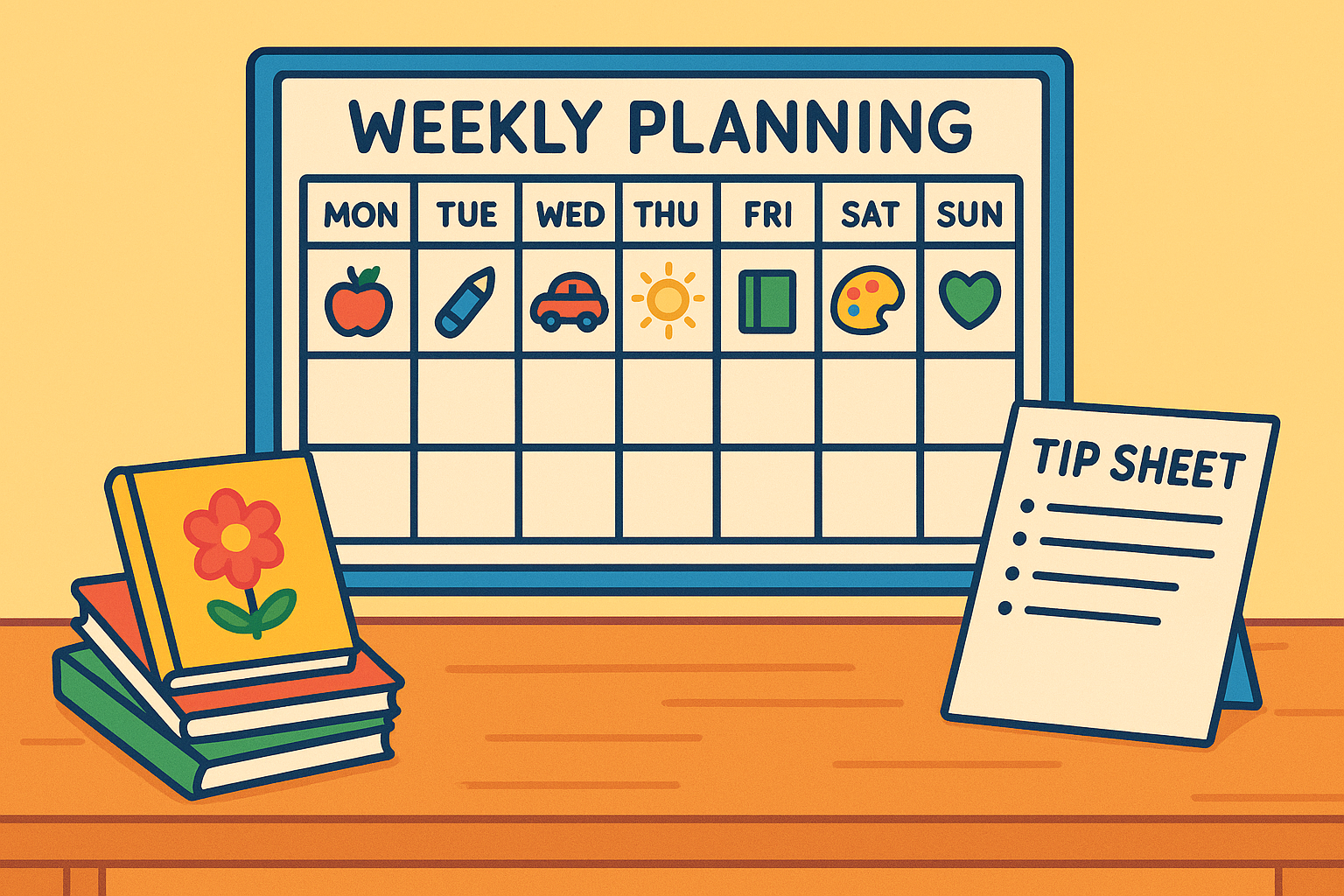
A shared calendar keeps core vocabulary activities consistent between classroom, therapy, and home.
Frequently Asked Questions About Core Vocabulary Activities
What are core vocabulary activities?
Core vocabulary activities are therapy or classroom tasks built around a small set of high-frequency words, such as go, more, stop, and want. Instead of teaching isolated topic words, these activities model the same flexible words repeatedly across stories, play, and routines.
How do I start core vocabulary activities with a preschooler?
Start with one or two core words and model them during a short, engaging activity like a story or a familiar game. Keep sessions brief, then repeat the same words across several days before introducing new ones.
Why are core vocabulary activities important for AAC users?
Core words can be combined across many messages and situations, which gives a child using a communication device or picture system more independence than memorized phrases tied to one topic.
What is the difference between core vocabulary and fringe vocabulary?
Core vocabulary includes a small set of high-frequency words usable in almost any context, like more, go, and help. Fringe vocabulary includes specific nouns tied to one topic, such as dinosaur or birthday, which are useful but far less flexible.
Do core vocabulary activities require expensive materials?
No, these activities can start with everyday books, toys, and routines already available at home or in a classroom. Many SLPs also use affordable digital resources, such as short illustrated stories, to keep modeling consistent.
How long should a core vocabulary activity take?
A single activity can take as little as five to ten minutes, especially when paired with a short shared story followed by play. Consistency across days matters more than the length of any one session.
What is a common mistake when teaching core vocabulary?
A common mistake is introducing too many new words at once instead of repeating a small set across varied contexts. Core words need many natural repetitions before a child uses them independently.
What are best practices for modeling core words?
Best practices include modeling the target word without requiring the child to repeat it, pairing speech with gestures or an AAC system, and using the word across multiple activities. This approach, sometimes called aided language input, reduces pressure and increases exposure.
Can core vocabulary activities work in a classroom, not just therapy?
Yes, they work well in classrooms when teachers and SLPs agree on a shared word of the week. Posting the word, modeling it during transitions, and sending home a simple tip sheet all support consistent exposure.
What books or stories work well for core vocabulary activities?
Short, repetitive stories with one clear target word tend to work best because they allow for natural, repeated modeling. Illustrated core-word stories designed specifically for therapy, like Little Speech Corner's Core Stories, are built around this exact structure.
What age range benefits most from core vocabulary activities?
These activities are especially useful for children roughly ages two through seven who are building early language or learning to use AAC. Older multimodal communicators can also benefit when activities are adjusted for complexity.
How do I get family carryover for core vocabulary activities at home?
Family carryover improves when adults receive a simple handout naming the target word, example phrases, and everyday moments to model it. Short planning calendars and tip sheets help families model the same word the classroom or therapy session is already using.
In summary, core vocabulary activities work best when they stay simple, consistent, and shared across the adults in a child's day. Whether the setting is a therapy room, a preschool classroom, or a family's living room, the same small bank of flexible words, modeled repeatedly through stories and play, gives children a sturdy foundation for both spoken and AAC-supported communication. Above all, starting small and repeating often matters more than covering many words quickly. Free samples and guided resources from Little Speech Corner offer a practical way to try this approach before committing to a full collection.