
Core Vocabulary Modeling Activities That Build Language
Discover core vocabulary modeling activities that build language skills in young children. Practical strategies for SLPs, teachers, and parents.
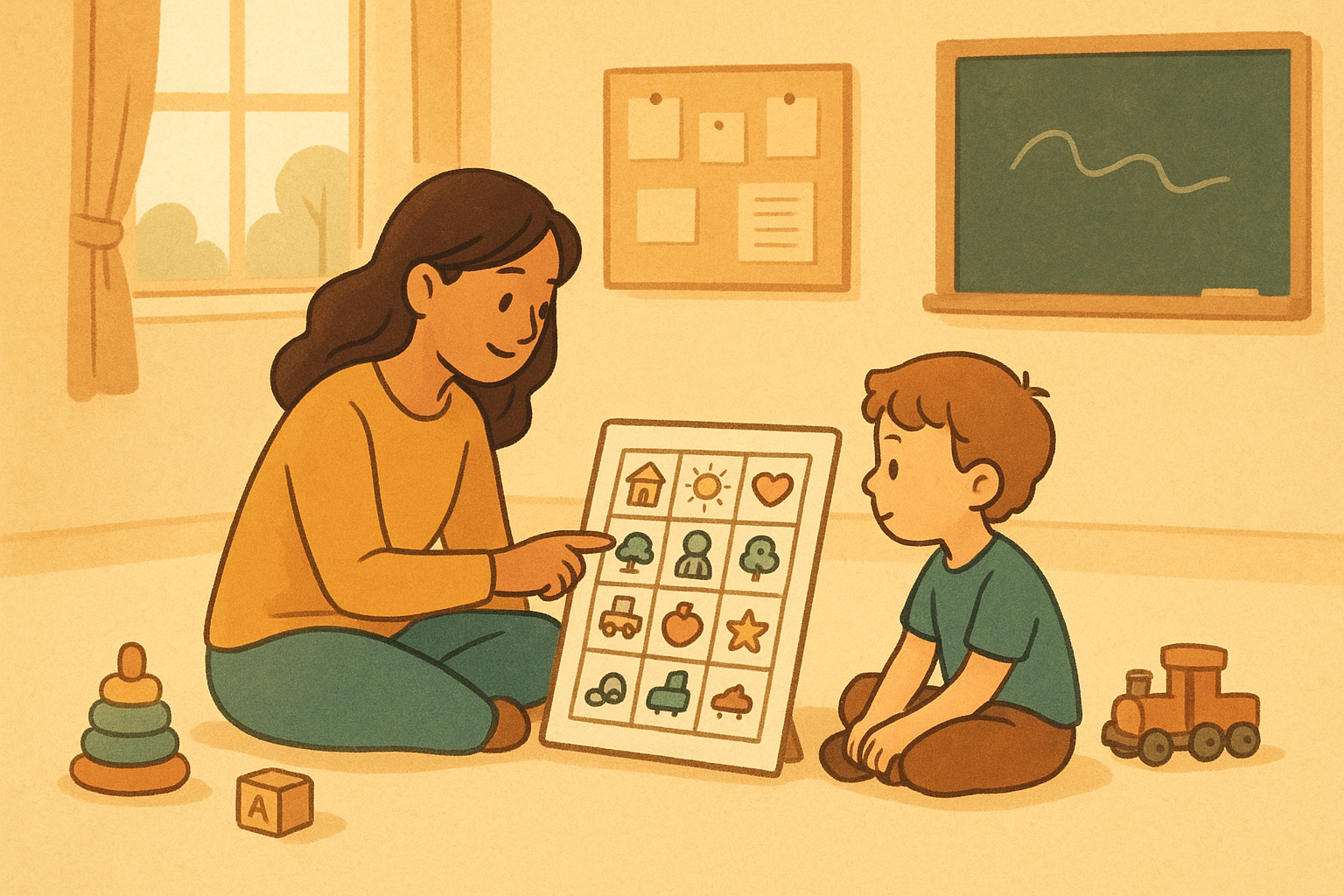
Core vocabulary modeling activities are simple, everyday strategies that show young children how to use a small set of powerful words across many situations. Rather than asking a child to repeat a word on command, an adult demonstrates the word in real time — pointing, gesturing, or activating a symbol on an AAC (augmentative and alternative communication) device while saying it aloud. For children ages 2 to 7, including those who use AAC, this approach builds flexible, functional language instead of isolated vocabulary lists. Below, you'll find practical activities, a step-by-step process, and answers to common questions from speech-language pathologists (SLPs) and caregivers alike.
Quick answer: Core vocabulary modeling activities involve an adult using high-frequency words — like go, more, and stop — in front of a child during natural play and routines, without demanding a spoken or signed response. Over time, repeated exposure helps children understand and eventually use these words on their own.
Core vocabulary modeling activities work best when they happen naturally, during play rather than structured drills.
What Are Core Vocabulary Modeling Activities?
Core vocabulary modeling activities are instructional techniques in which an adult demonstrates the use of high-frequency, flexible words — such as go, more, stop, and want — during natural play and daily routines. Rather than testing whether a child can say a word, the adult simply uses it themselves, showing how it functions across many contexts. This "show, don't quiz" approach is a cornerstone of both spoken language intervention and AAC instruction.
In practice, this might look like an SLP saying "open" while opening a container during a play session, or a parent saying "all done" while clearing a plate after breakfast. For a more structured introduction to these target words, the core vocabulary guide outlines which words tend to be most useful for beginning communicators.
Why Core Vocabulary Matters for Language Development
According to the American Speech-Language-Hearing Association, a relatively small set of core words makes up as much as 80 percent of the words used in everyday conversation. In contrast, fringe vocabulary — specific nouns like "dinosaur" or "trampoline" — accounts for the remaining share and is used far less often. As a result, teaching a handful of core words yields more communication opportunities than teaching dozens of fringe words.
In addition, consistent modeling helps children generalize words across settings. For example, a child who learns "more" during snack time can later apply it during play, bath time, or reading. Building this kind of flexible, everyday language is easier when caregivers create a language-rich environment at home, since more opportunities for modeling naturally lead to more learning moments.
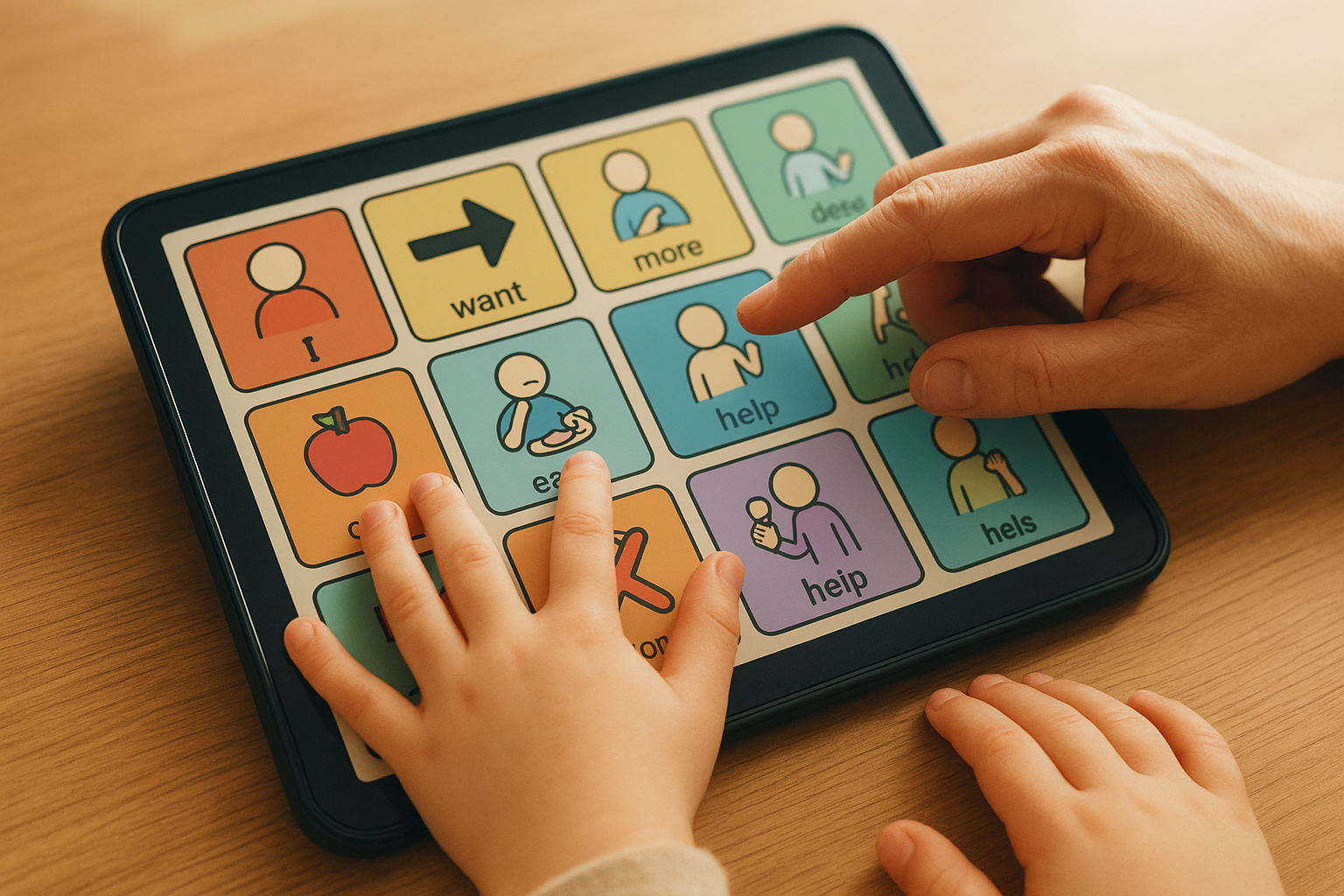
Aided language input pairs spoken words with AAC symbols during modeling.
How to Start Core Word Modeling: A Step-by-Step Process
Getting started with core word modeling does not require special equipment or extensive planning. Instead, it works best as a gradual habit built into routines you already have. Follow these steps to begin:
- Choose one or two core words to target during a daily routine, such as "go" and "more" during snack time, so the child hears the words repeatedly in a meaningful, motivating context.
- Model the word yourself first by saying it aloud while pointing to a picture or activating it on an AAC device, without requiring the child to respond immediately.
- Pair the word with the same action every time, repeating it consistently across multiple activities throughout the day to build a strong association.
- Expand the child's attempts by adding one more word once they imitate or show interest — for instance, turning "go" into "go car" during play.
- Review progress weekly, noting which words the child recognizes or attempts to use, and introduce new vocabulary gradually as current words feel established.
Core Vocabulary Modeling Activities for Home and Classroom
Specifically, core vocabulary modeling activities work best when tied to routines that already happen every day. Consider these ideas:
- Snack time: Model "more," "all done," and "want" while offering bites of food.
- Playdough or sensory bins: Model "open," "in," and "out" while manipulating materials together.
- Book sharing: Model "look," "go," and "stop" while turning pages and pointing to pictures.
- Transitions: Model "go" and "stop" during clean-up or moving between activities.
- Art activities: Model "more," "help," and "different" while painting or coloring together.
For additional ideas that pair naturally with these routines, the article on everyday activities to enhance toddlers' speech offers further inspiration. Similarly, story-based resources like Core Stories weave modeling directly into read-aloud time, which many educators find easier to sustain than standalone drills.
Modeling Core Vocabulary With AAC and Aided Language Input
For children who use augmentative and alternative communication, modeling looks slightly different but follows the same principle. The adult points to or activates a symbol on the device while saying the word aloud, a technique known as aided language stimulation. This shows the child both where the word lives on their device and how it sounds when spoken.
However, aided language input takes practice for adults too, since it requires narrating throughout the day rather than only during formal therapy sessions. For a deeper look at getting started, the guide on AAC basics walks through core concepts step by step. Consequently, teams that combine device modeling with unaided strategies, like gesture and facial expression, often see the most consistent growth.
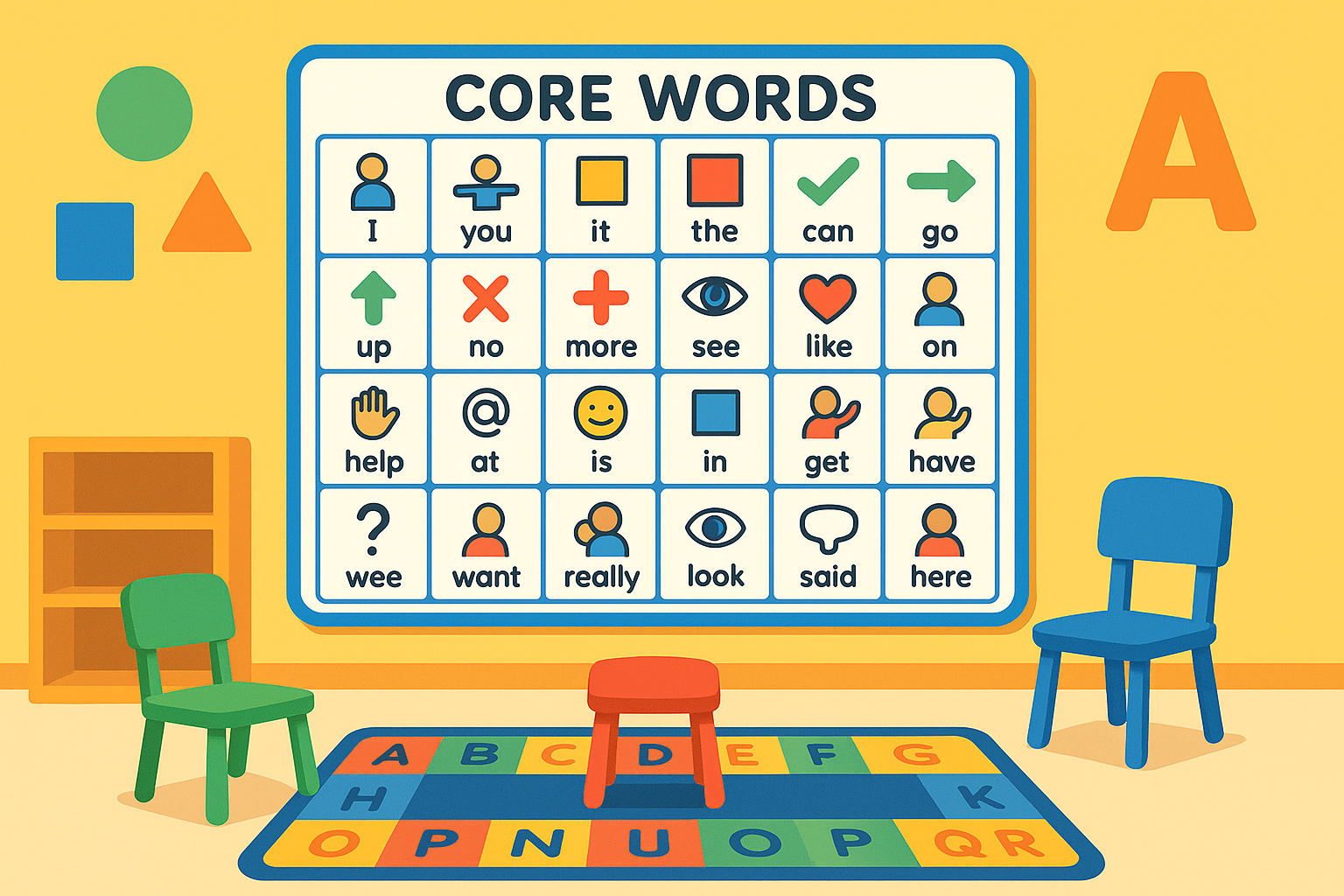
A visible core word board makes classroom-wide modeling easier to sustain.
Common Mistakes When Modeling Core Vocabulary
Even experienced adults sometimes fall into a few predictable traps. In particular, targeting too many words at once can overwhelm both the adult and the child, making it harder to stay consistent. Similarly, expecting an immediate spoken response defeats the purpose of modeling, which relies on low-pressure repetition rather than demands.
Another common mistake involves limiting modeling to screen-based apps rather than real interactions. While digital tools have a place, they should not replace face-to-face modeling during play and routines. For guidance on finding that balance, see the tips on balancing screen time and speech development. Above all, consistency across the day matters more than perfect execution in any single moment.
Frequently Asked Questions About Core Vocabulary Modeling Activities
What are core vocabulary modeling activities?
Core vocabulary modeling activities are strategies where an adult demonstrates high-frequency words like go, more, and stop during play and routines instead of asking a child to repeat them. This shows children how flexible words work across many situations.
How do core vocabulary modeling activities support AAC users?
For children using AAC, modeling means the adult points to or activates symbols on the device while speaking the matching word aloud. This aided language input helps the child learn where words are located and how they are used.
Why is modeling more effective than asking a child to repeat words?
Modeling removes pressure and demand, allowing children to absorb language naturally through repeated exposure. Children generally learn words faster when they hear them used meaningfully rather than when asked to imitate on command.
What is the difference between core vocabulary and fringe vocabulary?
Core vocabulary includes a small set of flexible words used across countless situations, such as want, go, and more. Fringe vocabulary refers to specific nouns, like dog or juice, that appear less often and only in certain contexts.
How many core words should I target at once?
Most speech-language pathologists recommend focusing on one to three core words at a time. Starting small allows for consistent, repeated modeling across daily routines before introducing more vocabulary.
How much does it cost to start core vocabulary modeling at home?
Core vocabulary modeling activities cost little to nothing since they rely on everyday routines like snack time, bath time, and play. Free printable core word boards and low-cost story resources can add structure without a large investment.
How long does it take to see progress with core word modeling?
Timelines vary by child, but many families notice increased attention to modeled words within a few weeks of consistent practice. Progress often shows up first as understanding, followed later by spontaneous use.
What are common mistakes parents make when modeling core vocabulary?
Common mistakes include targeting too many words at once, expecting immediate verbal responses, and modeling only during structured lessons rather than throughout the day. Consistency across natural routines matters more than isolated drills.
Can core vocabulary modeling activities work without an AAC device?
Yes, core vocabulary modeling activities support spoken language development as well as AAC use. Adults can model words verbally, with gestures, or using picture symbols even if a device is not part of the child's communication system.
What age group benefits most from core vocabulary modeling activities?
Children ages 2 to 7 typically benefit most, since this range covers early word combinations through more complex sentence building. However, older learners with language delays can also benefit from the same modeling principles.
How can teachers incorporate core vocabulary modeling into classroom routines?
Teachers can embed core words into transitions, circle time, and centers by narrating actions with target words like go, stop, and open. Posting a core word board within view helps the whole class see and hear the same vocabulary repeatedly.
What core words should beginners start with?
Beginner-friendly core words include more, go, stop, want, help, and all done, since these apply across nearly every daily activity. Starting with words tied to motivating routines increases opportunities for natural practice.
How do Core Stories support core vocabulary modeling activities?
Core Stories use a Read, Model, Play approach that embeds target core words directly into story time, giving adults built-in scripts for modeling. This structure makes it easier to stay consistent without extra planning, as described on littlespeechcorner.com.
In conclusion, core vocabulary modeling activities give children repeated, low-pressure exposure to the words that matter most in daily communication. By choosing a few high-frequency words, modeling them consistently across routines, and gradually expanding on a child's attempts, SLPs, teachers, and parents can support meaningful language growth. Whether working with spoken language or AAC, the same principle holds true: show the word in action rather than asking for it on demand. For more structured, ready-made support, resources like Core Stories and the tools at Little Speech Corner can help make core vocabulary modeling activities a natural part of everyday routines. Data from the CDC's developmental milestones further underscores why early, consistent language exposure matters so much during these formative years.