
Core Vocabulary Stories: Boost AAC & Language Skills
Discover how core vocabulary stories build AAC and language skills in young children, plus practical tips and free activities for SLPs to try today.
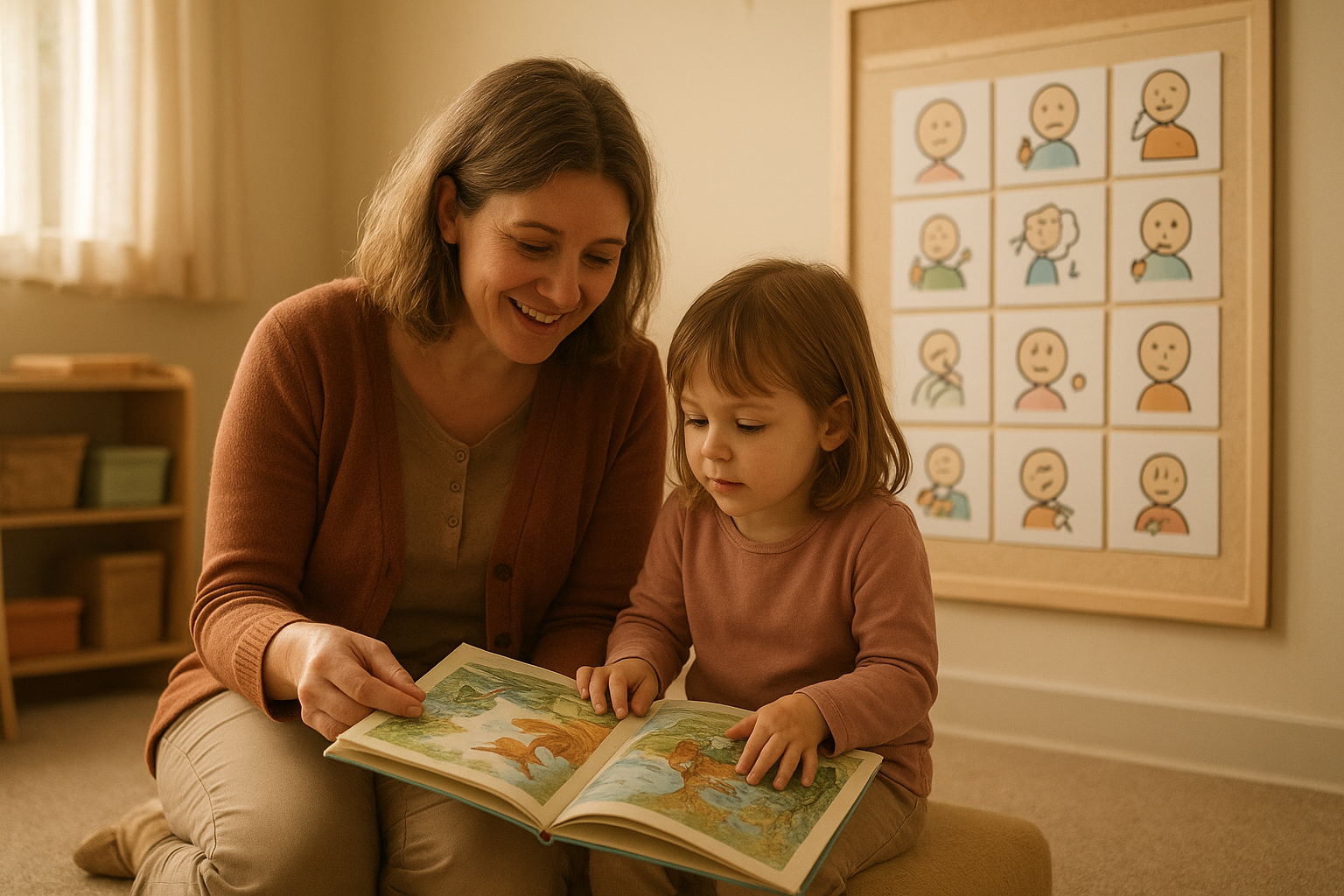
Core vocabulary stories are short, repeated-line narratives built around the small set of high-frequency words that children rely on most for everyday communication. For speech-language pathologists (SLPs) and early childhood educators supporting augmentative and alternative communication (AAC) users, these stories offer a structured way to practice essential words like "go," "more," and "stop" inside a simple, predictable plot. Because the same core words repeat on nearly every page, children get many low-pressure chances to hear, see, and eventually produce them, both in therapy sessions and during carryover at home.
Quick answer: Core vocabulary stories are repeated-line books or activities that embed one or two high-frequency words into a simple plot, giving children with AAC needs or emerging language repeated, functional practice with the words they use most in daily life.
What Are Core Vocabulary Stories?
Core vocabulary stories center on a tiny, repeated set of words rather than a wide-ranging vocabulary list. Typically, each story features only one to three core words, such as "want," "in," or "help," and those words appear on almost every page in slightly different sentences. Consequently, a child does not need to learn new vocabulary to follow the plot; instead, they hear the same functional word used in several natural ways.
This design matters because core words make up a disproportionately large share of everyday talk. In addition, because the story format is predictable, children with attention or processing differences can focus on the target word instead of tracking a complicated storyline. Many SLPs pair these stories with AAC devices, communication boards, or simple picture symbols so learners can model and eventually produce the word themselves during the reading.
Core vocabulary stories work well in small-group and one-on-one settings, especially when paired with AAC supports.
Why Core Vocabulary Matters for AAC and Language Growth
Research in augmentative and alternative communication has long pointed to a striking pattern: a relatively small set of 200 to 400 core words accounts for a large majority of what people say in everyday conversation (Van Tatenhove, 2009). Therefore, teaching those specific words tends to generalize faster and further than teaching isolated topic-based vocabulary. For a deeper look at how AAC vocabulary selection works, the Wikipedia overview of AAC offers helpful background.
Similarly, the American Speech-Language-Hearing Association (ASHA) notes that consistent, repeated exposure to functional vocabulary supports both expressive and receptive language growth in young children. In particular, core vocabulary stories give clinicians a built-in way to deliver that repetition without it feeling like rote drill work, since the words stay embedded in an engaging plot rather than a flashcard list.
How Core Word Stories Work: The Read, Model, Play Method
Little Speech Corner's signature Core Stories use a "Read, Model, Play" structure, and the same four-step framework works well for any core vocabulary story you build or buy. Above all, the goal is to move a target word from the page into a child's real, spontaneous communication.
- Choose one target core word. Select a story that highlights just one or two words the child is ready to practice, rather than introducing several new words at once.
- Read the story aloud. Read the repeated-line text slowly, pointing to or highlighting the target word every time it appears so the child hears it in context repeatedly.
- Model the word on AAC or in speech. Model the word on the child's device, communication board, or through clear spoken language each time it appears, without demanding an immediate response.
- Extend practice through play. Follow the story with a short, related activity that gives the child several natural chances to use the same core word during real interaction.
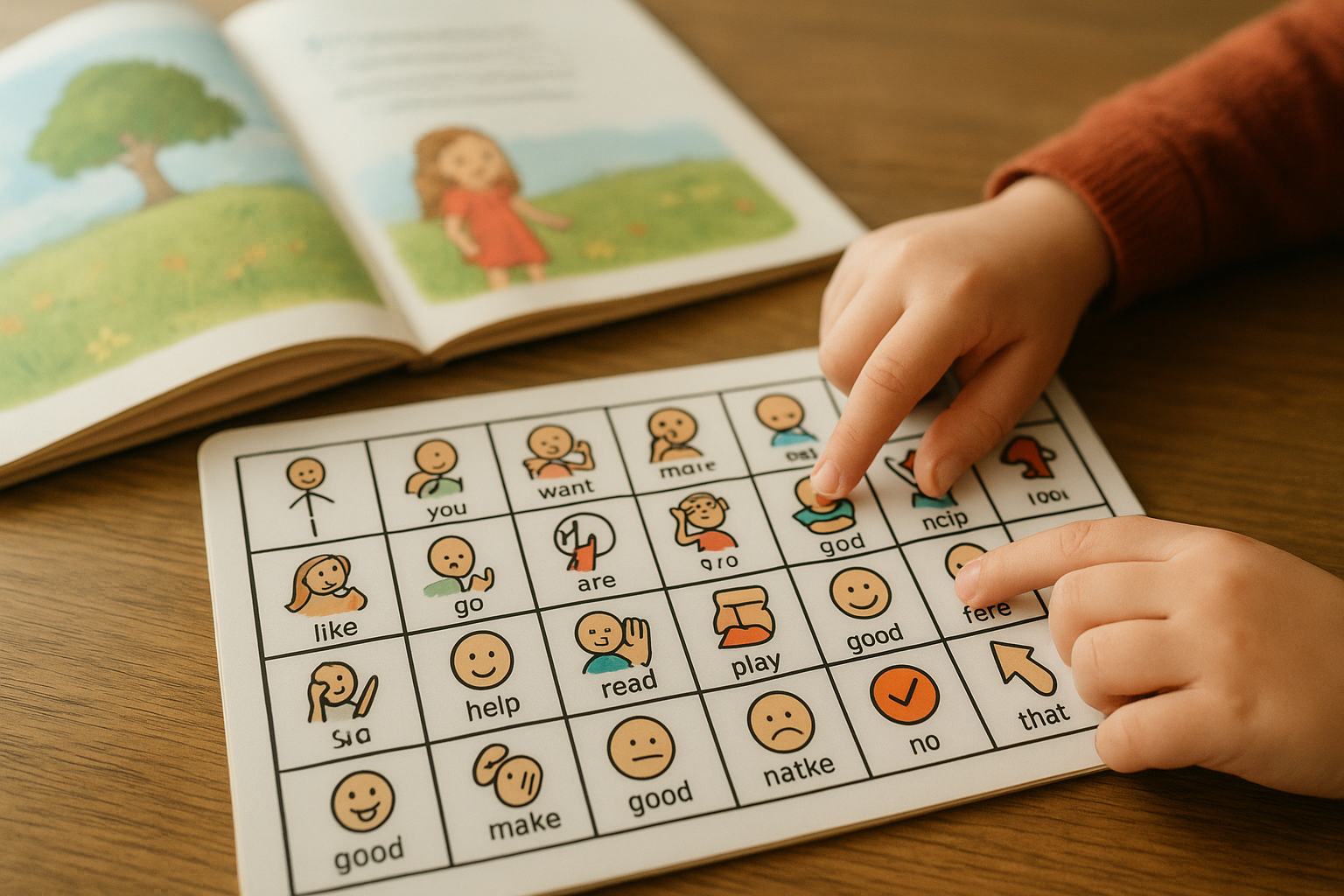
Modeling the target word on AAC devices during core vocabulary stories helps children link the symbol, the sound, and the meaning.
Core Vocabulary Stories vs. Traditional Storybooks
Traditional picture books usually prioritize plot variety and a rich, expanding vocabulary, which is wonderful for general literacy exposure. However, that variety can overwhelm a child who is still building foundational core words or learning to navigate an AAC system. In contrast, core vocabulary stories intentionally narrow the vocabulary so the same word repeats on nearly every page.
As a result, core vocabulary stories are better suited for targeted therapy goals, while traditional books remain valuable for broader language and literacy exposure. Many SLPs use both formats side by side, choosing core vocabulary stories for direct instruction time and general storybooks for shared reading and enjoyment. If you want to see this contrast in action, the sample story Little Lily's Language Leap demonstrates how a repeated-line plot can still feel warm and engaging.
Choosing the Right Core Stories for Your Classroom or Caseload
When selecting core vocabulary stories, start by matching the target word to a child's current goals rather than picking a story based on theme alone. Furthermore, consider whether the story includes clear picture supports, AAC symbol overlays, and simple sentence structures that match the child's current level.
Little Speech Corner, founded by school-based SLP Gwen Swire, M.A., CCC-SLP, builds its Core Stories and the Core Stories Foundational 53-Pack specifically around this kind of targeted, repeated-word structure for children ages 2 through 7. For a broader look at word selection, the core words guide walks through how to prioritize which words to teach first. You can also browse the free introductory Core Vocabulary samples on Little Speech Corner before committing to a full bundle.
Practical Tips for Using Core Vocabulary Activities at Home and School
Consistency across settings makes the biggest difference in how quickly a child masters a core word. Specifically, sending the same story home that was used in a therapy session gives caregivers an easy, low-pressure way to reinforce practice during daily routines like snack time or bath time.
In addition, pairing a story with a hands-on activity, such as a matching game or simple craft, helps the target word stick. The everyday activities that enhance toddler speech offer several ideas that pair naturally with a core vocabulary story theme. Meanwhile, building a broader language-rich environment at home supports carryover between sessions.
Finally, if a child also needs articulation support alongside core vocabulary goals, resources like Sound Stories can target specific speech sounds using a similar story-based format. According to CDC language milestone guidance, most children combine words into short phrases between ages 2 and 3, which is exactly when core vocabulary stories tend to have the greatest impact.
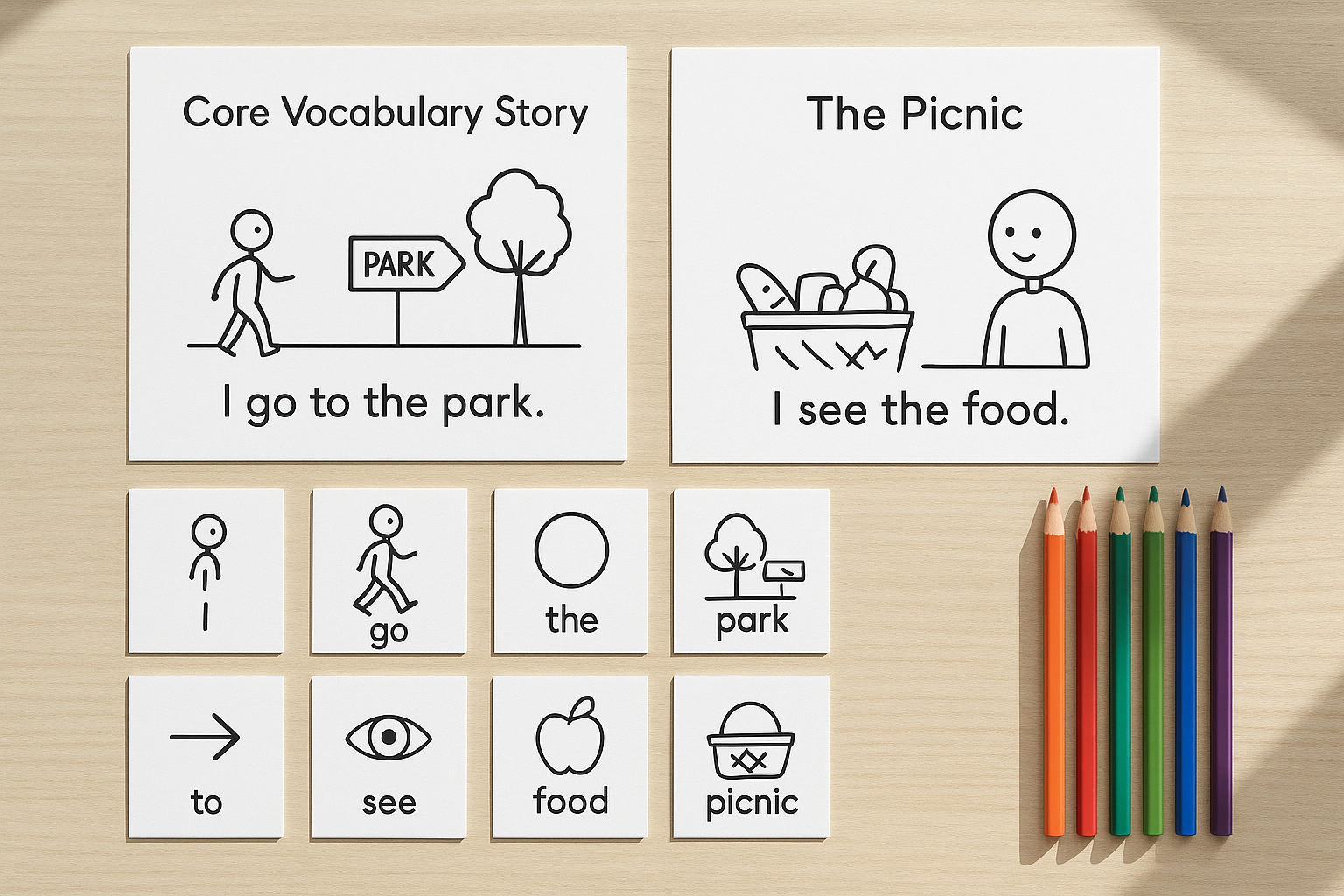
Printable core vocabulary stories paired with picture symbols make session prep quick and consistent.
Frequently Asked Questions About Core Vocabulary Stories
What are core vocabulary stories?
Core vocabulary stories are short, repeated-line narratives built around a small set of high-frequency words, such as go, more, and stop. They give children repeated, meaningful practice with the words they need most for everyday communication.
How do core vocabulary stories support AAC users?
Core vocabulary stories model the same core words on an AAC device or board across every page, so learners see functional, real-time examples of navigation and word combining. This repetition builds motor planning and confidence with the device.
Why is core vocabulary important for early language development?
A small set of core words accounts for the majority of what children say every day, so mastering them has an outsized impact on communication. As a result, focusing therapy and instruction on core vocabulary tends to generalize faster than teaching isolated fringe words.
What age range benefits most from core vocabulary stories?
Children roughly ages 2 through 7 benefit most, since this is when foundational language and AAC skills are emerging. However, older students who are new to AAC or core vocabulary instruction can also benefit from the same story-based approach.
How are core vocabulary stories different from traditional picture books?
Traditional picture books emphasize plot and vocabulary variety, while core vocabulary stories deliberately repeat a small set of target words throughout the text. This intentional repetition is what makes them effective therapy and classroom tools rather than general reading material.
What is the Read, Model, Play approach?
Read, Model, Play is a three-part method where an adult reads a core vocabulary story, models the target words on AAC or through speech, then extends practice through a related play activity. This structure moves core words from the page into real communication.
How much time does it take to run a core vocabulary story session?
Most core vocabulary story sessions take 10 to 20 minutes, which fits comfortably into a therapy slot or classroom circle time. Shorter, more frequent sessions are generally more effective than one long session per week.
Can core vocabulary stories be used at home as well as school?
Yes, core vocabulary stories are designed to work in both settings, which helps children practice the same words consistently across environments. Sending a story home for caregiver carryover is one of the simplest ways to reinforce classroom or therapy goals.
What common mistakes do educators make with core vocabulary stories?
A common mistake is introducing too many new core words at once, which overwhelms rather than builds mastery. Another is skipping the modeling step and moving straight to asking the child to produce words before they have seen enough examples.
How many core words should a story include?
Most effective core vocabulary stories focus on just one to three target words per story so children can reach mastery before new words are added. Additional core words are typically layered in gradually across a series of related stories.
Are core vocabulary stories appropriate for children who aren't using AAC devices?
Absolutely, core vocabulary stories also benefit verbal children who are building early language, vocabulary, and sentence structure skills. The repeated-line format supports language growth regardless of whether a child communicates through speech, AAC, or a combination of both.
How much do core vocabulary story resources typically cost?
Costs vary widely, from free introductory samples to bundled packs priced for a full school year of sessions. Many SLPs start with a free sample story before investing in a larger set like a foundational core vocabulary bundle.
What is the best way to introduce core vocabulary stories to a new classroom?
Start with one familiar core word and a single short story, then repeat it across several days before adding a new title. This slow, consistent introduction helps both students and staff become comfortable with the routine.
How do Sound Stories differ from core vocabulary stories?
Sound Stories target specific speech sounds for articulation practice, while core vocabulary stories target high-frequency functional words for language and AAC use. Some programs, including Little Speech Corner, offer both types so clinicians can address articulation and core language goals side by side.
In short, core vocabulary stories give SLPs, educators, and caregivers a practical, repeatable way to teach the handful of words that carry the most weight in everyday communication. By pairing a simple, repeated-line plot with the Read, Model, Play approach, teams can model AAC use, encourage expressive language, and extend practice through play, all without turning core word instruction into rote drill work. Whether you are building a therapy caseload plan, setting up a classroom core-word calendar, or looking for carryover activities at home, core vocabulary stories offer a flexible, evidence-informed starting point that grows with a child's emerging language skills.