
Core Vocabulary Teaching Materials for AAC & Language
Discover core vocabulary teaching materials that build AAC skills through story-based lessons. Explore free samples and printable resources today.
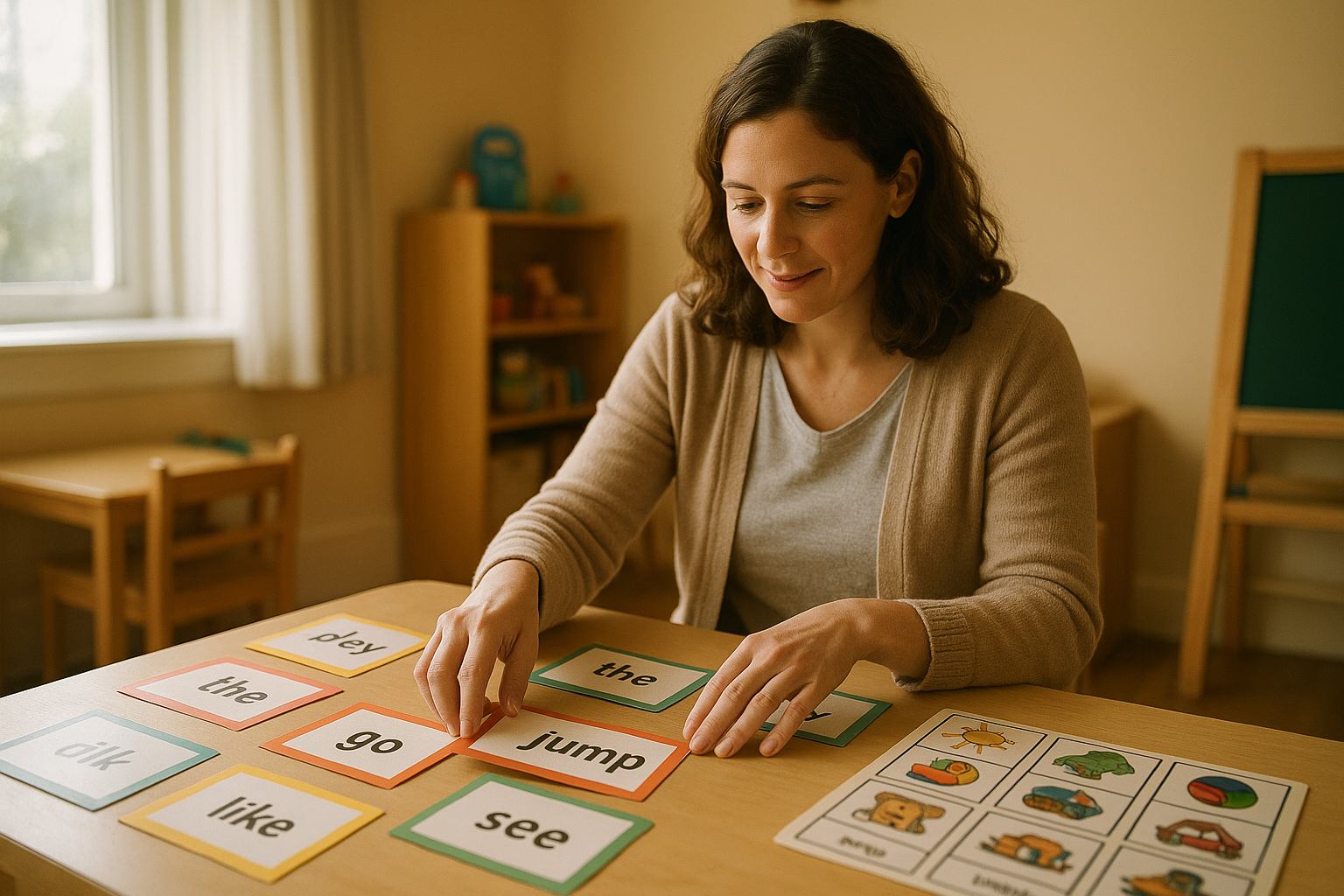
Core vocabulary teaching materials are the printable and digital tools speech-language pathologists (SLPs) and early childhood educators use to teach the small set of high-frequency words that make up most everyday communication. If you support toddlers, preschoolers, or beginning AAC (augmentative and alternative communication, meaning tools that support communication beyond speech) users, having the right materials on hand makes therapy sessions and classroom routines far more consistent. This guide walks through what these materials include, how to choose them, and how a story-based approach can simplify implementation for busy teams.
What Are Core Vocabulary Teaching Materials?
Core vocabulary teaching materials are structured resources — such as word cards, visual boards, story scripts, and activity guides — that target the words used most often in daily communication, including more, go, stop, and help. These materials give SLPs, teachers, and caregivers a consistent way to model and practice the same words across many different contexts.
Specifically, core vocabulary refers to a small, stable set of words that stay useful no matter the topic. In contrast, fringe vocabulary words are tied to one activity, like dinosaur or birthday. Research on core vocabulary suggests that a limited set of words accounts for the large majority of what most speakers say in everyday conversation, a figure frequently cited in AAC literature from organizations such as the American Speech-Language-Hearing Association. As a result, teaching materials built around core words tend to generalize faster than materials built around a single theme.
Because these words repeat constantly, teaching materials designed around them naturally create more practice opportunities. Therefore, many SLPs prefer resources that weave the same core words into multiple stories, songs, and play routines rather than teaching an isolated word list.
Consistent, well-organized core vocabulary teaching materials help SLPs model the same target words across many activities.
Why Core Vocabulary Matters for AAC and Early Language Development
Core vocabulary matters because it gives beginning communicators a flexible toolkit instead of a fixed script. In particular, AAC users benefit when the same words appear in the same location on a communication board across every session, since this builds motor planning and speeds up word retrieval over time.
Similarly, verbal learners benefit from repeated exposure to core words because these words show up constantly in books, play, and conversation. Consequently, targeting core vocabulary early tends to produce broader gains than teaching narrow, topic-specific word lists in isolation. For a deeper look at which specific words belong on a beginning core board, this core words guide breaks down age-appropriate word sets and how to introduce them gradually.
Furthermore, according to the Wikipedia overview of augmentative and alternative communication, consistent, predictable vocabulary systems are considered a best practice for supporting language growth in AAC users. That consistency is exactly what well-designed teaching materials are meant to provide.
Types of Core Word Teaching Resources for SLPs and Educators
Not all core word teaching resources look the same. Above all, the best options fit naturally into whatever setting you already use, whether that is a therapy room, a preschool classroom, or a family's living room.
- Story-based lessons that embed target words into a repeated, predictable narrative, such as Core Stories.
- Visual boards and word cards for quick modeling during play, snack, or transitions.
- Tip sheets that translate core-word strategies for classroom teams and home caregivers.
- Planning calendars that map out which core words to target each week or month.
- Targeted articulation resources, such as Sound Stories, for children who need speech sound practice alongside vocabulary work.
In addition, some teams combine several resource types at once. For example, a classroom might pair a core-word story for whole-group instruction with individual visual boards for one-on-one carryover during centers.
How to Choose the Right Core Vocabulary Teaching Materials
Choosing core vocabulary teaching materials becomes easier when you follow a clear process rather than buying resources at random. The following steps outline a practical approach.
- Identify your learners' current communication levels. Determine whether each child is a beginning communicator, an emerging AAC user, or already combining several words, since this shapes which materials will match their needs.
- Match materials to your teaching setting. Consider whether you need resources for one-on-one therapy, whole-classroom instruction, teletherapy, or home carryover, because a story-based lesson works differently in a group than in an individual session.
- Look for built-in modeling scripts and visuals. Choose materials that already include suggested phrases and supports so you spend less time planning and more time delivering consistent language input.
- Check for progress tracking and carryover tools. Favor materials that include simple data sheets or caregiver tip sheets, since tracking growth and extending practice at home both support faster generalization.
- Test the materials with a free sample first. Before buying a full bundle, try a free sample story or activity to confirm the vocabulary, format, and reading level fit your caseload.
Using Core Stories: A Read, Model, Play Approach
Little Speech Corner's Core Stories use a Read, Model, Play approach: a story introduces target core words in context, the adult models the words with natural gestures and repetition, and a follow-up play activity gives children a chance to practice the same words independently. As a result, one story can generate several practice opportunities across a single session or week.
The Core Stories Foundational 53-Pack bundle expands this approach across dozens of core words, which is particularly useful for teams who want a full year of consistent material without building lessons from scratch. Meanwhile, individual stories work well for SLPs who only need to target a handful of words with a specific caseload. You can browse available bundles and single stories through the Little Speech Shop on Teachers Pay Teachers.

The Read, Model, Play approach turns core vocabulary teaching materials into repeated, hands-on practice.
Core-Vocabulary Calendar and Planning Resources for Teams
Planning is often the hardest part of consistent core-word instruction. Therefore, a core-vocabulary calendar can help teachers, SLPs, and caregivers stay aligned on which words to target each week, reducing the risk of switching topics too quickly.
Team supports, such as shared calendars and tip sheets, also help classroom aides and family members reinforce the exact same words a child is practicing in therapy. For related strategies on building consistent language exposure throughout the day, see this guide on creating a language-rich environment. In addition, families juggling therapy goals alongside daily routines may find this resource on balancing screen time and speech practice useful for extending core-word modeling beyond the classroom.
Free Samples and Getting Started
Before committing to a full bundle, it helps to try a free introductory Core Vocabulary story or sample activity. This lets you confirm the reading level, illustration style, and word targets actually fit your students or your own child. You can explore free samples and the full range of resources directly on the Little Speech Corner website.
Common Mistakes With Core Vocabulary Instruction
Even well-intentioned teams sometimes make avoidable mistakes with core vocabulary instruction. For instance, switching target words too often prevents children from getting the repeated exposure that builds true retrieval speed. Similarly, relying on a core board without active modeling rarely produces the same growth as hands-on demonstration during real activities.
Another frequent mistake is ignoring fringe vocabulary entirely. While core words should anchor instruction, occasional topic-specific words still add meaning and motivation, especially for preferred activities. Finally, inconsistent implementation across a classroom team, where only the SLP models core words, tends to slow generalization considerably compared to a shared, whole-team approach.
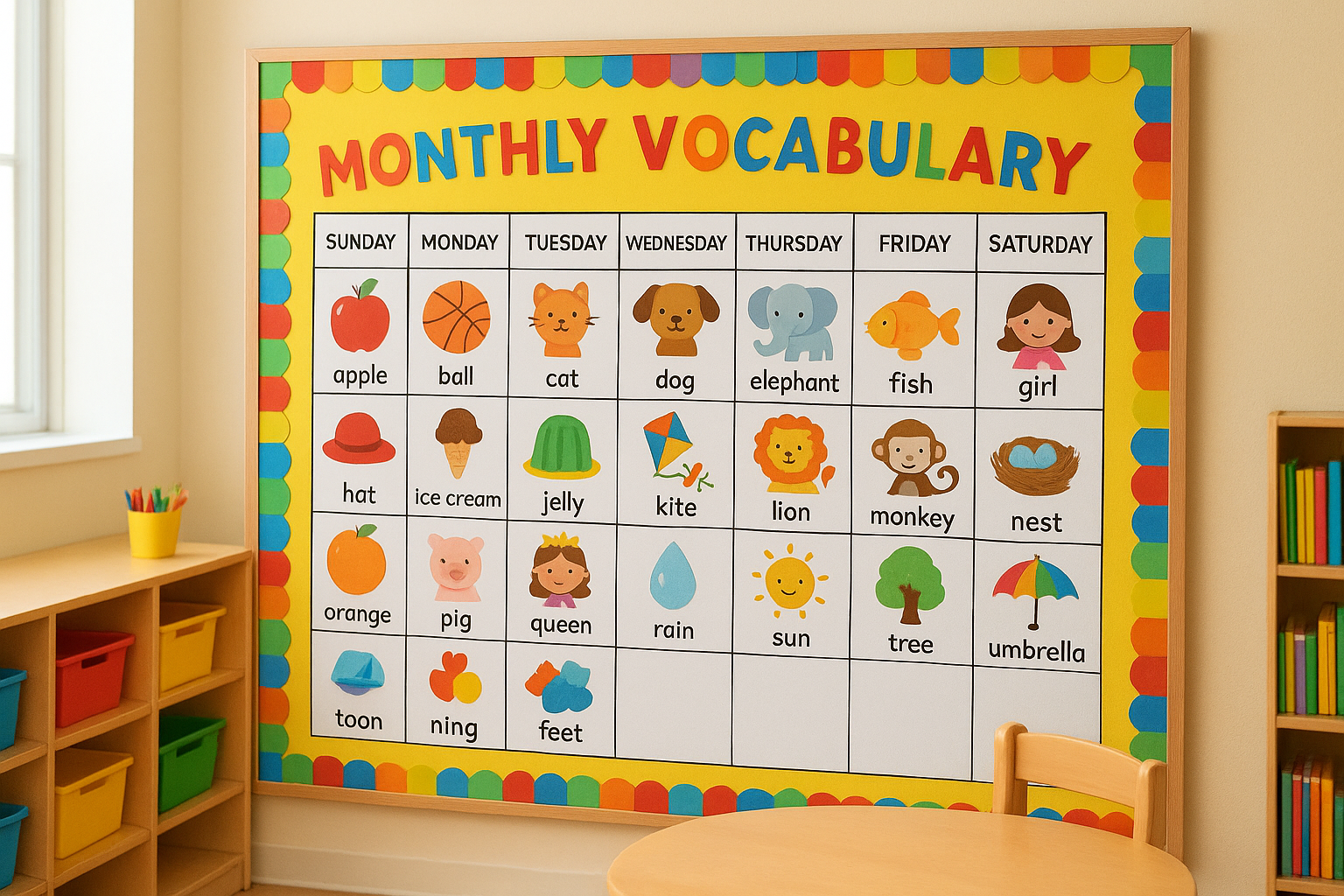
A shared core-vocabulary calendar keeps classroom teams and caregivers aligned on weekly word targets.
Frequently Asked Questions
What are core vocabulary teaching materials?
Core vocabulary teaching materials are resources like word cards, boards, and story-based lessons that target the small set of high-frequency words used most in daily communication. They help SLPs and teachers model the same core words consistently across settings.
How many words are considered core vocabulary?
Most core vocabulary lists include roughly 20 to 50 words for beginning communicators, expanding toward 200 to 400 words as skills grow. These words, like go, more, and stop, appear across nearly every activity and setting.
Why is core vocabulary important for AAC users?
Core vocabulary gives AAC users flexible words they can combine to express many different messages. Because the words stay the same across activities, learners build stronger motor planning and faster access on their devices.
What is the difference between core and fringe vocabulary?
Core vocabulary words are used across almost every topic, such as want, help, and go. Fringe vocabulary words are specific to a single topic or activity, like dinosaur or birthday.
How do Core Stories teach core vocabulary?
Core Stories use a Read, Model, Play approach that pairs a simple story with repeated exposure to target core words, followed by guided play activities. This repetition helps children generalize the words beyond the story itself.
Can parents use core vocabulary teaching materials at home?
Yes, many core vocabulary teaching materials are designed for caregiver carryover, including tip sheets and simple visual boards. Consistent modeling at home reinforces the same vocabulary children practice in therapy or the classroom.
How much do core vocabulary resources typically cost?
Digital core vocabulary bundles often range from a few dollars for a single story to $20 to $40 for larger bundles like a foundational multi-story pack. Many creators also offer free sample stories before purchase.
How long does it take to see progress with core vocabulary instruction?
Progress varies by child, but many educators notice increased spontaneous word use within a few weeks of consistent daily modeling. Short, frequent practice sessions tend to produce faster generalization than occasional long sessions.
What is a common mistake when introducing core vocabulary?
A common mistake is switching target words too frequently instead of giving children repeated exposure to the same core words across many activities. Consistency, not novelty, builds strong word retrieval.
Where can SLPs find free core vocabulary samples?
Many publishers, including Little Speech Corner, offer free introductory core vocabulary stories and sample activities on their websites. Trying a free sample first helps confirm a resource fits your caseload before buying a full bundle.
Final Thoughts
In summary, choosing the right core vocabulary teaching materials comes down to consistency, fit, and repeated exposure rather than novelty. Whether you rely on story-based lessons, visual boards, or a shared planning calendar, the goal stays the same: give children frequent, predictable practice with the words that matter most in daily life. As you build or expand your resource library, start with a free sample, involve your whole team, and let repetition do the heavy lifting for language growth.