
Core Word Books: A Complete Guide for SLPs & Teachers
Core word books help children ages 2-7 learn functional vocabulary fast. See how Core Stories build language skills—try a free sample today.
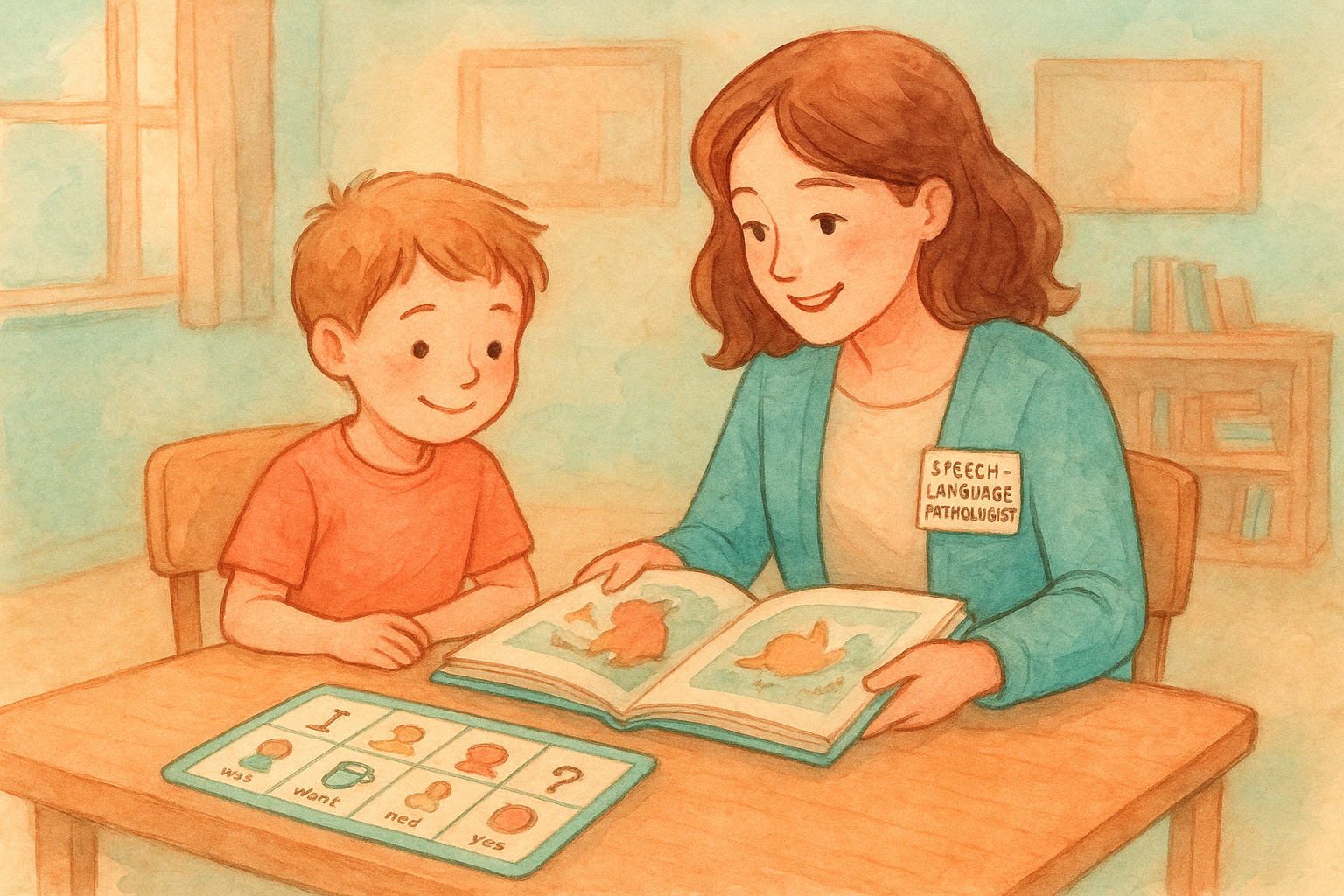
Core word books are simple, repetitive storybooks built around the small set of high-frequency words that make up most of everyday communication. For speech-language pathologists (SLPs), early childhood educators, and parents of children ages 2 to 7, these books offer a practical way to model functional language during play, mealtime, and classroom routines. Unlike traditional storybooks packed with unfamiliar vocabulary, core word books focus on words like go, more, stop, and want—words that transfer across nearly every setting a child encounters.
In particular, this approach has become a cornerstone of early language intervention because it turns storytime into targeted practice without feeling like a drill. As a result, many school-based and private-practice SLPs now build entire therapy plans around core vocabulary resources.
What Are Core Word Books?
Core word books are decodable, repetitive storybooks designed around core vocabulary—the roughly 300 to 400 words that account for most of what people say every day. Each page repeats the same core word in a new context, giving a child several chances to hear, see, and use that word during a single reading.
Consequently, core word books look different from typical children's literature. Instead of a rich, varied vocabulary spread thin across a story, they intentionally narrow the focus to one or two target words, then repeat those words on nearly every page. For example, a story about a child going to the park might repeat the word "go" a dozen times across simple, predictable sentences. This structure gives children with limited verbal output, AAC (augmentative and alternative communication) users, and late talkers many low-pressure opportunities to practice the same functional word in context.
Core word books turn simple storytime into repeated practice with functional vocabulary.
Why Core Vocabulary Matters for Speech and Language Development
Core vocabulary matters because a small number of words carry an outsized share of daily communication. According to research widely cited by the American Speech-Language-Hearing Association, core words account for nearly 80 percent of what people say in typical conversation, regardless of age or setting. Therefore, teaching a child to reliably use even 20 to 50 core words can unlock far more spontaneous communication than teaching dozens of topic-specific fringe words.
In contrast, fringe vocabulary—words like dinosaur, birthday, or spaceship—only applies to narrow topics. Similarly, the augmentative and alternative communication field has long prioritized core vocabulary because it gives AAC users a stable, reusable word bank across every activity, rather than a new symbol set for every topic. Above all, this is why core word books are considered a foundational tool rather than a supplemental one for many SLPs.
How to Choose the Best Core Vocabulary Resources for Your Classroom
Choosing the right core vocabulary resources starts with matching the material to your students' current level and your session structure. For instance, a classroom team supporting multiple communication levels may prefer a bundled set, such as the Core Stories Foundational 53-Pack, so every child can access the same books at their own pace. If you are building a scope and sequence from scratch, the core words guide offers a practical starting point for selecting which words to target first.
Additionally, look for resources that pair each story with clear modeling tips and play-based extension ideas, since this combination helps carry the target word beyond a single reading. Teams who want broader support planning core vocabulary across a full school year can review the team supports for educators and caregivers, which outline how to integrate core-word instruction into everyday routines.
The Read, Model, Play Approach to Core Word Stories
Little Speech Corner's signature core word stories use a "Read, Model, Play" approach, which structures every session around three connected steps. First, an adult reads the story aloud so the child hears the target word repeated naturally. Next, the adult models the word using speech, sign, or an AAC device, pointing to the matching symbol each time it appears. Finally, the word is extended into hands-on play, reinforcing the same vocabulary across a second, unrelated activity.
Because this method separates listening, modeling, and doing into distinct steps, it works well for mixed-ability classrooms and one-on-one therapy alike. Educators pairing core word books with targeted speech sound practice often use Sound Stories alongside core stories, since both formats rely on the same repetitive, story-based structure.
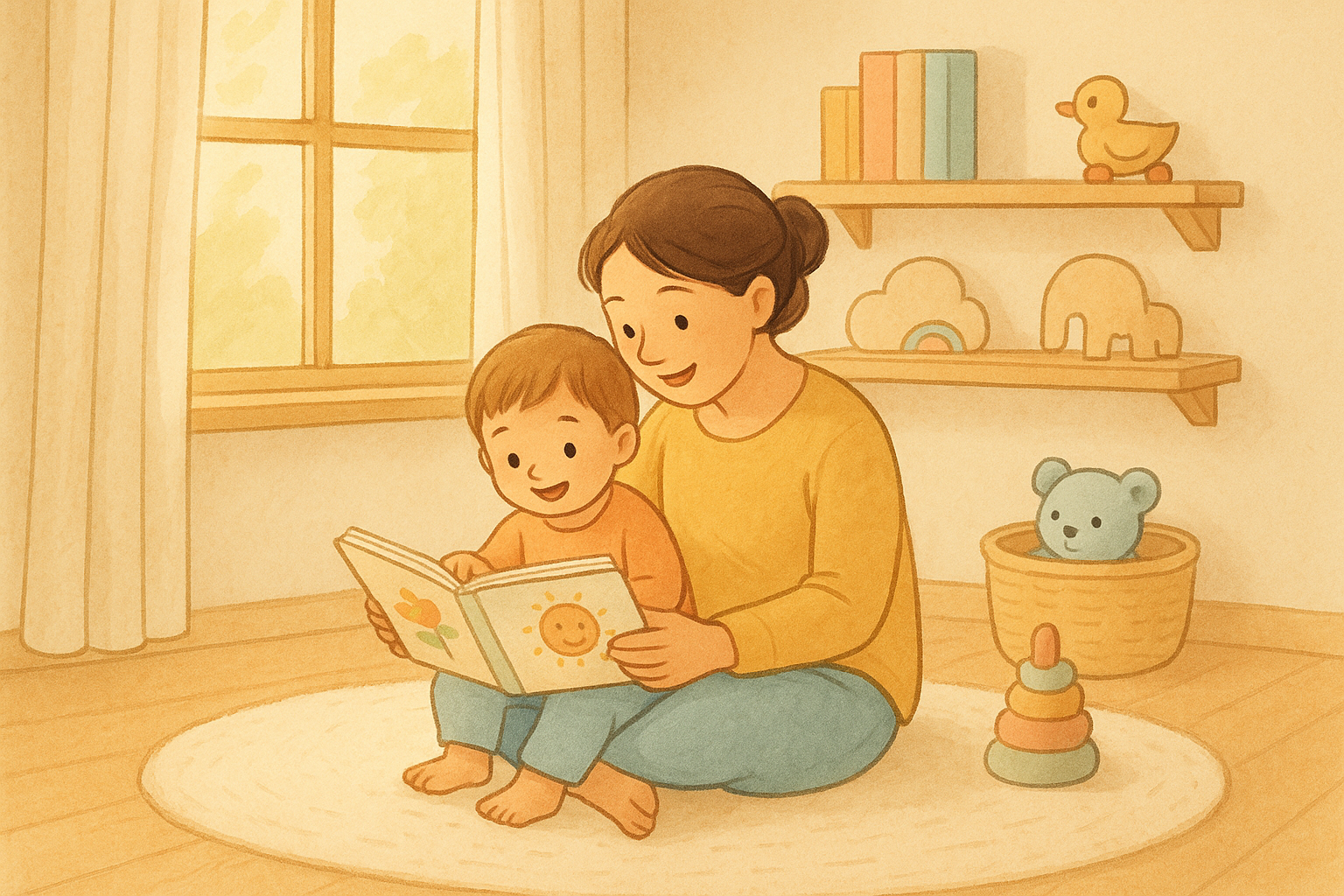
Repeating a core vocabulary story at home reinforces the same words practiced in therapy.
Step-by-Step: Using Core Word Books in Therapy Sessions
Above all, consistency matters more than variety when introducing a new target word. The following sequence works well across therapy rooms, classrooms, and homes alike.
- Choose one core word to target, such as go, and read the book once through without stopping so the child can enjoy the story and hear the word repeated naturally in context.
- Model the core word using simple phrases and, if applicable, an AAC device or communication board, pointing to the matching symbol every time it appears on the page.
- Pause after key moments in the story and wait several seconds, giving the child a genuine chance to imitate or produce the core word independently before continuing.
- Extend the core word into play using toys, gestures, or real objects related to the story, reinforcing the same word across several different activities and settings.
- Repeat the same book across several sessions or days, since repeated exposure to the same functional vocabulary builds faster generalization than moving through many new stories quickly.
For families who want to extend this routine beyond scheduled sessions, the guide on how to create a language-rich environment offers practical ideas for weaving core words into daily routines like getting dressed or snack time.
Core Word Books vs. Traditional Storybooks
Traditional storybooks and core word books both build language, but they serve different purposes. Understanding the distinction helps teams decide when to use each format.
- Vocabulary focus: Traditional storybooks introduce broad, varied vocabulary once or twice per page, while core word books repeat one or two target words throughout.
- Purpose: Picture books build background knowledge and story comprehension; core word books build reusable, functional language a child can apply daily.
- Best use: Use traditional books for general literacy exposure and core word books for targeted vocabulary or AAC modeling goals.
- Repetition level: Core word books intentionally repeat far more often, which supports children who need many exposures to generalize a new word.
Common Mistakes When Introducing Core Vocabulary Books
Even experienced teams sometimes run into the same few pitfalls when they first add core word books to a routine.
- Introducing too many new core words at once instead of building mastery of one or two words first.
- Skipping the wait time that lets a child attempt the word before an adult jumps in to repeat it.
- Reading the same book only once, rather than repeating it across several sessions for true carryover.
- Overlooking developmental milestones; the CDC's developmental milestones checklist can help teams set realistic, age-appropriate targets before selecting a book.
Furthermore, teams who want a ready-made scope for planning core-word instruction across a full school year can explore the core vocabulary and planning resources available through Little Speech Corner, which include tip sheets and calendars designed for both school and home use.
Frequently Asked Questions About Core Word Books
What are core word books?
Core word books are repetitive storybooks built around a small set of high-frequency words, called core vocabulary, that make up most of everyday communication. Each page repeats the target core word in a new context so children hear and practice it multiple times per reading.
How do core word books support AAC users?
Core word books give AAC users repeated, low-pressure practice pointing to the same core words on their device or communication board across a predictable story. This repetition builds motor planning and message speed over time.
What age group benefits most from core word books?
Children ages 2 to 7 typically benefit most, since this is when foundational vocabulary and early sentence structure are developing. However, older students with complex communication needs also use core word books for language remediation.
How much do core word books cost?
Digital core word books and bundles commonly range from free sample sets to roughly $10-$40 for full packs sold through platforms like Teachers Pay Teachers. Bundled resources, such as a foundational multi-story pack, often cost less per book than individual purchases.
How long does it take to see progress using core word books?
Many educators notice increased spontaneous use of a target core word within two to four weeks of consistent, repeated readings. Progress depends on session frequency, carryover at home, and the child's starting communication level.
What is the difference between core words and fringe words?
Core words are the small set of high-frequency words, like go, more, and stop, used across almost every topic and setting. Fringe words are specific, topic-related vocabulary, such as dinosaur or birthday, that appear less often in daily conversation.
Can core word books be used at home as well as in therapy?
Yes, core word books work well at home because parents and caregivers can reread the same simple story during daily routines like bedtime or snack time. This repetition outside of sessions reinforces carryover of skills taught in therapy or the classroom.
What is the Read, Model, Play approach?
Read, Model, Play is a three-part method where an adult first reads the core word story, then models the target word using speech or AAC, and finally extends the word into hands-on play. This structure gives children multiple exposures across different contexts.
Are core word books only for children with autism or AAC needs?
No, core word books benefit any child building early language skills, including late talkers, students with language delays, and typically developing preschoolers. Their simple, repetitive structure supports general vocabulary growth for a wide range of learners.
What common mistakes do educators make when introducing core word books?
A frequent mistake is introducing too many new core words at once instead of focusing on one or two words across several sessions. Another common error is skipping the wait time that lets children attempt the word before an adult repeats it.
How many core words should a child learn before moving on?
Most SLPs recommend solid, consistent use of one core word across at least two to three different activities before introducing a new target. Moving too quickly through words often limits generalization to real communication.
Where can I find free core word book samples?
Many speech and language resource sites, including Little Speech Corner, offer free introductory core vocabulary samples so educators and families can try the format before purchasing a full set. These samples typically include one complete story with modeling tips.
Do core word books work for articulation practice too?
Standard core word books focus on vocabulary and language rather than specific speech sounds, but companion resources like Sound Stories pair story-based practice with targeted articulation goals. Using both together supports language and speech sound development side by side.
How do core word books compare to picture books for building vocabulary?
Traditional picture books introduce broad, topic-specific vocabulary once or twice per story, while core word books deliberately repeat a small number of functional words many times. This repetition makes core word books more effective for building words a child can reuse daily.
What's the best way to start using core word books in a classroom?
Start by choosing one core word that appears naturally during classroom routines, then read a matching core word book aloud during circle time for several consecutive days. Pair the reading with visual supports, such as a core board, so students can practice the word throughout the day.
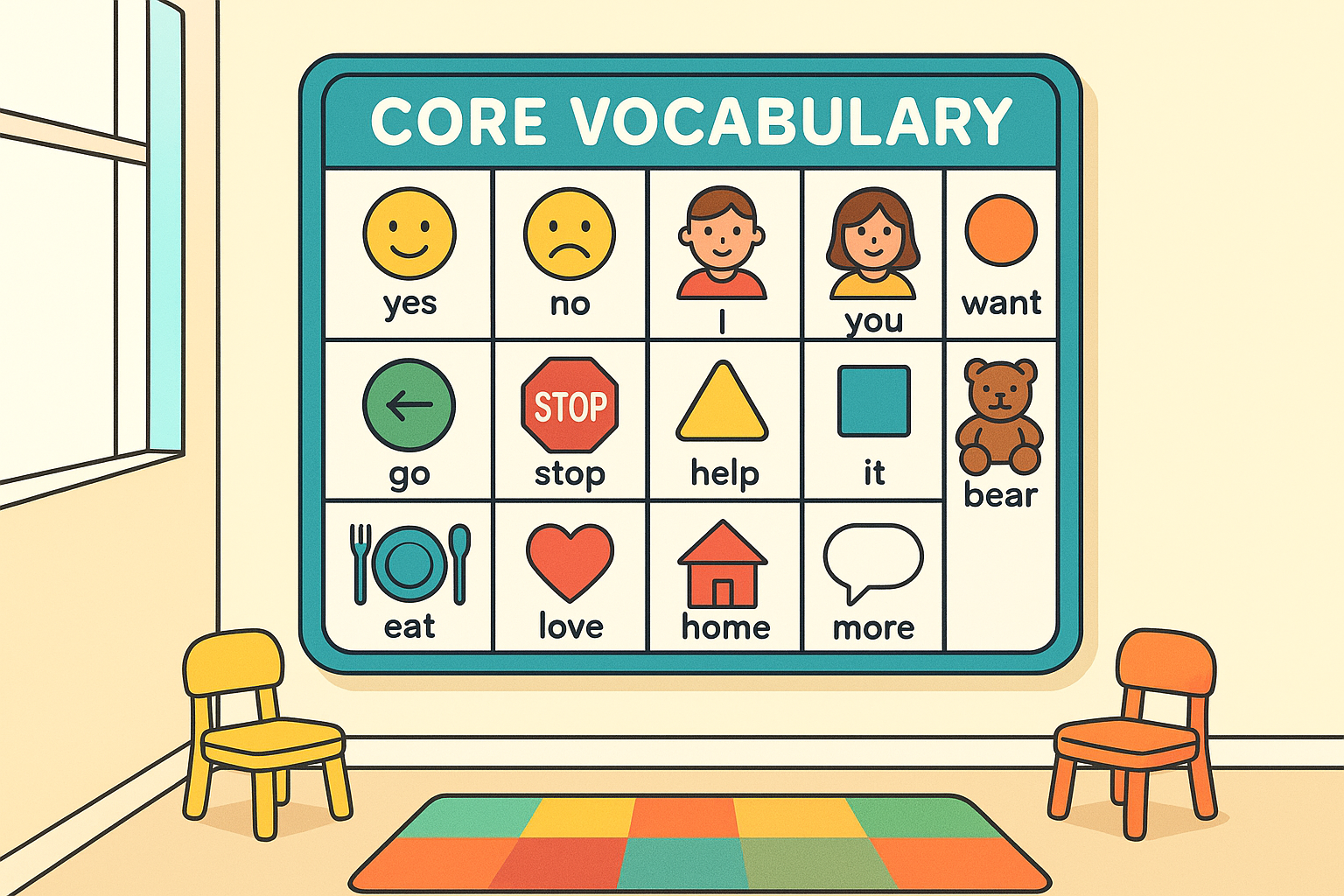
Pairing a classroom core vocabulary board with core word books reinforces the same target words all day.
Final Thoughts on Choosing Core Word Books
In summary, core word books give SLPs, educators, and caregivers a focused, evidence-informed way to build the functional vocabulary children use every day. Because these books repeat a small set of high-frequency words across a predictable story, they support faster generalization than traditional vocabulary-heavy storybooks. Whether you are planning a therapy caseload, setting up a classroom core board, or simply reading with a child at home, choosing well-designed core word books—paired with a consistent Read, Model, Play routine—can make everyday language practice feel natural rather than forced. As you build or expand your collection, start small, repeat often, and let each core word earn real, spontaneous use before moving on to the next.