
Core Word of the Week Activities: Fun Ideas for SLPs
Discover core word of the week activities that build AAC and core vocabulary skills in preschoolers. Try these practical tips and free resources today.
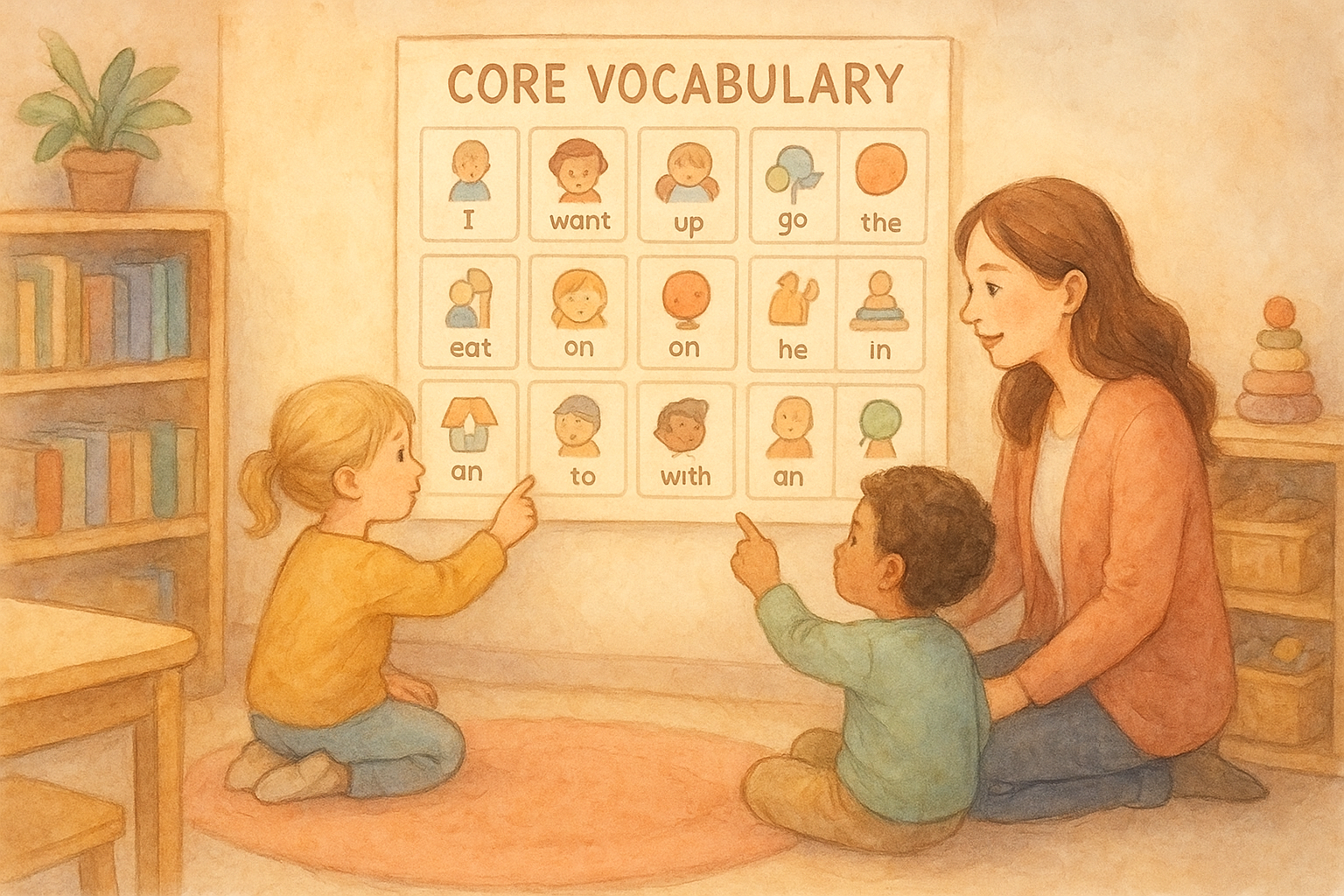
Core word of the week activities give speech-language pathologists (SLPs), early childhood educators, and caregivers a simple, repeatable structure for teaching high-frequency vocabulary that children use across many settings. Instead of teaching random topic words, this approach focuses on one flexible "core" word, such as go, more, or stop, and models it everywhere a child spends their day. As a result, children get the repeated exposure they need to actually use the word, not just recognize it. Many practicing SLPs, including the team behind Little Speech Corner's Core Stories, build entire weekly plans around this single-word focus.
Quick answer: Core word of the week activities are a weekly instructional routine where one high-frequency core vocabulary word is introduced, modeled, and practiced across therapy, classroom, and home settings for several consecutive days. This repeated, cross-setting exposure helps young children and AAC (augmentative and alternative communication) users build a flexible vocabulary they can combine into new sentences on their own.
What Are Core Word of the Week Activities?
Core word of the week activities are a planning structure, not a single worksheet or game. Specifically, a teacher or SLP selects one core vocabulary word and designs a week's worth of stories, songs, play routines, and home carryover materials around it. Because the word repeats across so many contexts, children hear and practice it far more often than they would if it appeared once in a single lesson.
This approach draws on research showing that a relatively small set of core words accounts for a large share of everyday spoken language, according to guidance published by the American Speech-Language-Hearing Association (ASHA). In contrast, fringe vocabulary, like specific nouns tied to one topic, offers far less flexibility for combining into new phrases.
Why Core Vocabulary Matters for Early Communicators
Core vocabulary matters because these words appear in nearly every sentence a child needs, regardless of setting or topic. For example, words like "go," "more," "want," and "stop" work at snack time, on the playground, during circle time, and at home. Consequently, a child who masters even a handful of core words gains far more communicative power than one who only knows isolated nouns.
This is especially true for children who use augmentative and alternative communication (AAC), a term for tools and systems that support or replace spoken language. When AAC users build strong motor patterns for locating core words on their device, they can generate original phrases instead of relying only on pre-programmed messages. Above all, this flexibility is the entire point of a core-vocabulary approach.
Modeling core word of the week activities during small group instruction helps children hear the target word repeatedly.
How to Plan a Core Word of the Week Activities Calendar
Planning a core-vocabulary calendar in advance saves time and keeps instruction consistent across the school year. In particular, mapping out several weeks at once lets teams align words with seasonal themes, classroom units, or an individual student's goals. The following steps outline a simple process many SLPs and classroom teams follow.
- Choose the weekly core word. Select one high-frequency core word, such as go, more, or stop, based on curriculum themes, seasonal routines, or an individual child's current communication goals and needs.
- Introduce the word in context. Present the new core word through a story, picture book, or Core Story routine so children hear it modeled repeatedly inside a meaningful narrative before independent practice begins.
- Model the word across settings. Use aided language input to point to or say the target word during classroom transitions, therapy sessions, and daily routines so children see it applied in many different real situations.
- Practice through play-based activities. Reinforce the word through hands-on play, sensory bins, or Sound Stories style games that let children practice using the target word multiple times in a low-pressure setting.
- Send home a caregiver tip sheet. Share a simple core-word tip sheet listing example phrases and daily routines so families can continue modeling the weekly word consistently outside of school or therapy.
Therefore, a well-planned calendar removes the guesswork from weekly instruction. If you want a ready-made starting point, the free introductory core words guide outlines a full year of suggested vocabulary alongside sample activities.
Core Word Activities for Preschoolers Across Settings
Preschoolers benefit most when a core word shows up in several places throughout the day, not just during a single circle-time lesson. For instance, a teacher might model "go" during a transition song, a therapist might target it during a Core Story session, and a parent might use it while pushing a toy car at home. As a result, the word becomes anchored to real, repeated experiences rather than a single worksheet.
Everyday routines also offer natural opportunities for practice. In fact, simple daily moments like snack time, bath time, and outdoor play work well for reinforcing a core word without any special materials. For more ideas along these lines, this collection of everyday activities to enhance toddlers' speech pairs nicely with a core-word focus.
Similarly, building a language-rich environment at home or in the classroom supports every core word taught during the week. Consider reviewing this guide to creating a language-rich environment for additional strategies that complement a weekly core-vocabulary plan.
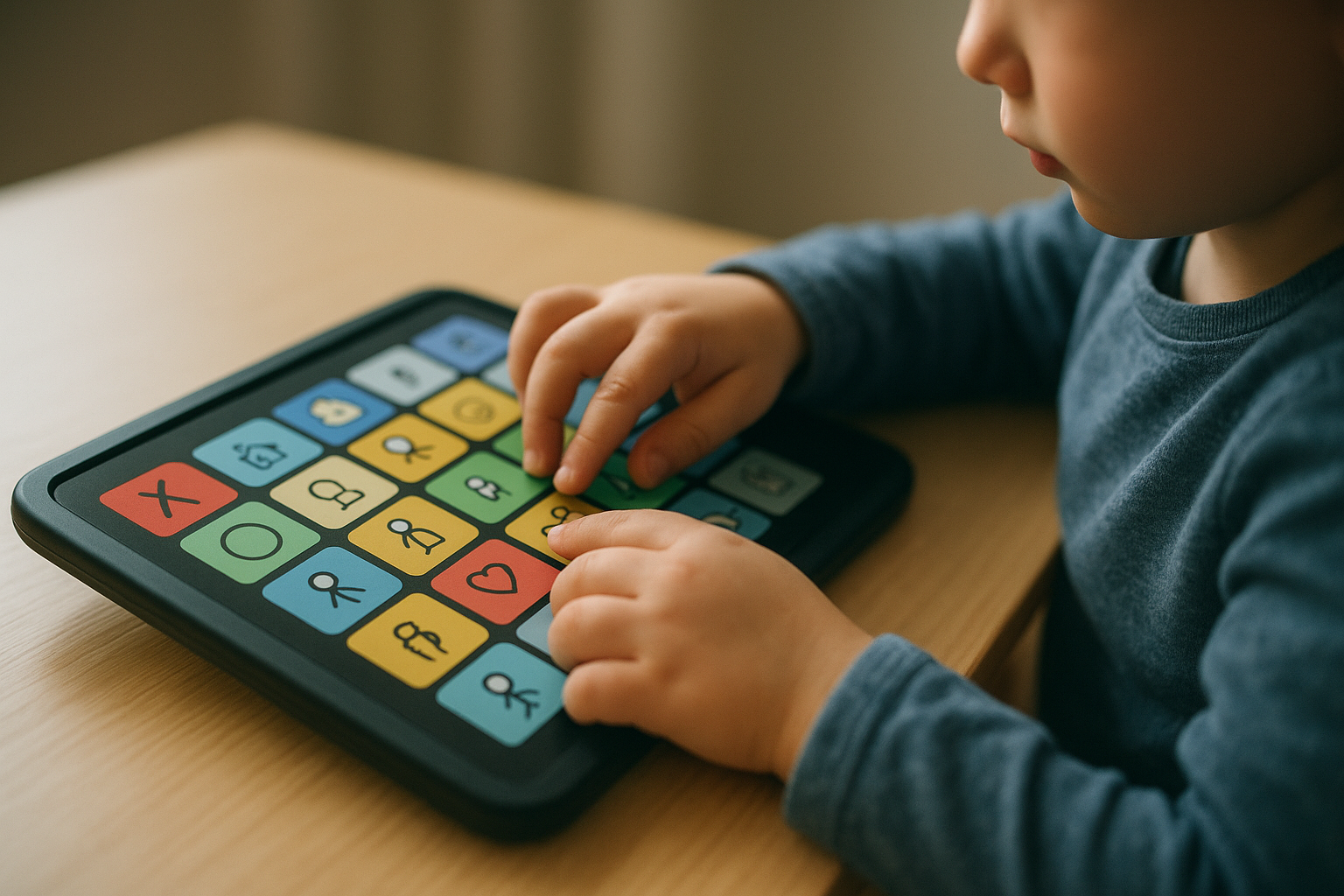
AAC users build stronger motor patterns when core word of the week activities repeat the same symbol location daily.
Sample Weekly Core Vocabulary Themes
Many teams find it helpful to see a sample sequence before building their own calendar. Below is one possible month-long rotation using common core words.
- Week 1: "go" - transitions, toy cars, simple obstacle courses.
- Week 2: "more" - snack time, block building, repeated songs.
- Week 3: "help" - dressing routines, puzzles, cooperative games.
- Week 4: "stop" - freeze dance, red-light games, safety routines.
Notably, each of these words applies across dozens of unrelated activities, which is exactly what makes a word "core" rather than "fringe." A recent data summary from ASHA-affiliated research suggests that roughly 80 percent of everyday spoken language is made up of just a few hundred core words, underscoring why this small, repeated set deserves so much instructional attention.
Core Vocabulary Activities for AAC Users
Core vocabulary activities for AAC users follow the same weekly structure, with one important addition: the target word must be modeled directly on the child's own communication system. This practice, called aided language input, means the adult points to or activates the symbol while speaking the word aloud. In turn, the child sees exactly where the word lives on their device every time it comes up.
Consistency matters enormously here. If the core word's location changes from week to week, children lose the motor-planning benefit that comes from repeated practice. Therefore, many programs recommend keeping the symbol in the same spot across the entire school year, even as the "word of the week" changes. Reducing unrelated screen exposure during these focused sessions also helps; this article on balancing screen time and speech offers practical guardrails for families.
Common Mistakes to Avoid With Weekly Core Word Planning
Even well-intentioned teams sometimes undermine their own core-vocabulary instruction. Recognizing these pitfalls early can save weeks of slow progress.
Teaching the word in isolation: A single flashcard drill rarely transfers to spontaneous use. Instead, the word needs to appear inside stories, songs, and hands-on play.
Skipping caregiver carryover: Without a simple tip sheet, families may never learn which word is being targeted that week, cutting off dozens of potential practice opportunities at home.
Moving too fast: Introducing a new word every single day, rather than sticking with one word for a full week, limits the repetition children need to internalize it. As a result, patience and consistency tend to outperform variety.
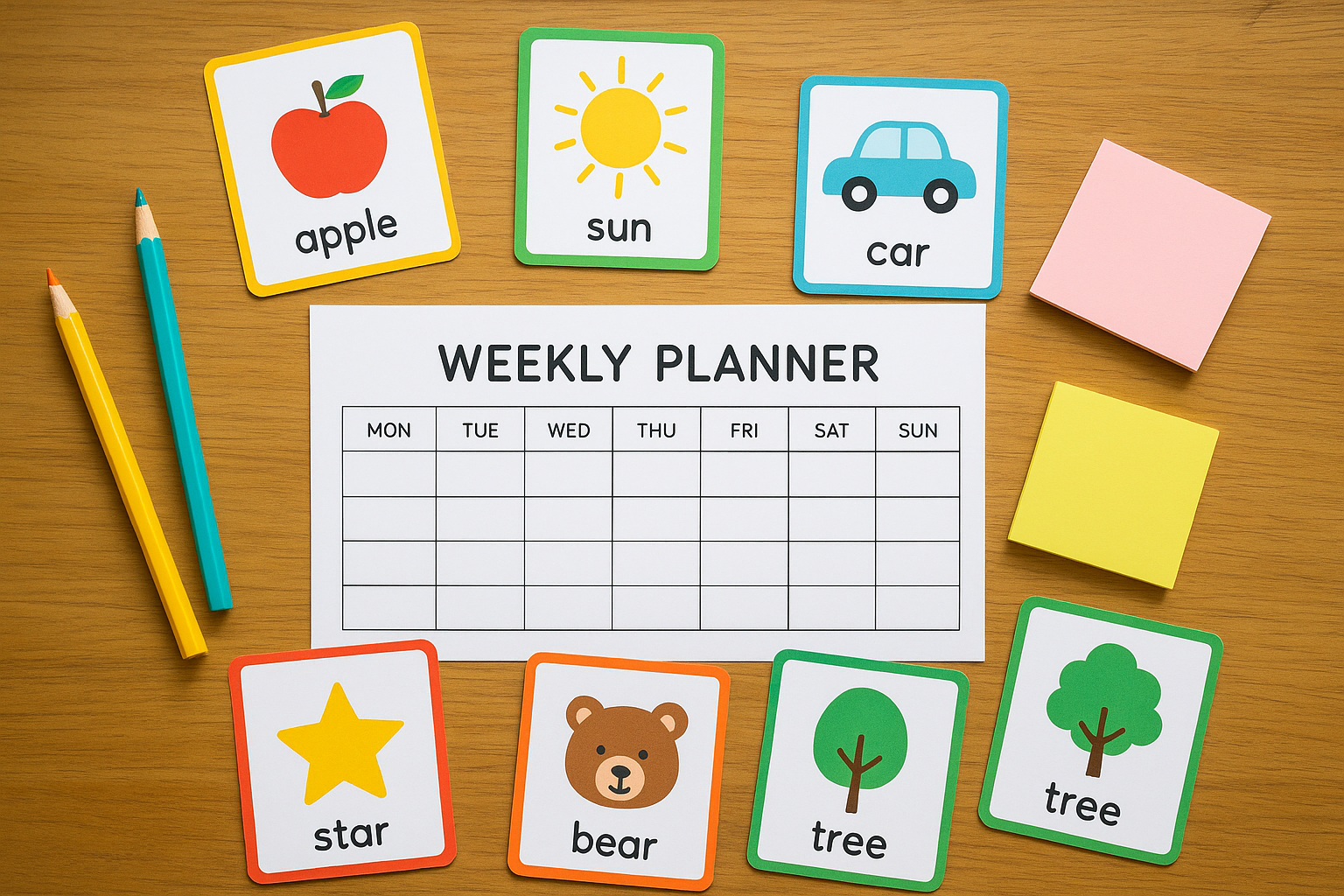
A simple printed calendar keeps core word of the week activities organized across a busy school term.
Frequently Asked Questions
What are core word of the week activities?
Core word of the week activities are a weekly teaching structure where one high-frequency vocabulary word, like go or more, is introduced and practiced across therapy, classroom, and home settings. This repetition helps children generalize the word to many different situations.
How do you choose which core word to teach each week?
Pick a core word based on its usefulness across many contexts, such as go, more, stop, or help, rather than a word tied to a single topic. Many teams also align word choice with classroom themes or an individual child's current communication goals.
Why is core vocabulary important for early language development?
Core vocabulary makes up a small set of words that account for a large percentage of everyday speech, so mastering them gives children flexible communication power. In contrast, fringe words tied to one topic offer far less carryover value.
How many core words should be introduced per week?
Most SLPs and educators introduce just one or two core words per week to allow enough repetition for mastery. Moving too quickly through new vocabulary often reduces retention, especially for AAC users still learning to locate symbols.
What is the difference between core vocabulary and fringe vocabulary?
Core vocabulary includes high-frequency words like want, go, and more that apply across countless topics, while fringe vocabulary includes specific nouns like dinosaur or pizza tied to one context. Both matter, but core words offer far greater flexibility for early communicators.
How much does it cost to implement a core word program?
Costs vary widely, from free printable core vocabulary boards to paid resource bundles that run between roughly ten and fifty dollars. Many SLPs start with free introductory materials before investing in a full core-vocabulary curriculum.
How long does it take to see progress with core word instruction?
Some children begin combining a new core word into short phrases within two to four weeks of consistent modeling. However, progress depends on exposure frequency, current language level, and consistency across home and school.
What are common mistakes when planning weekly core word activities?
A common mistake is teaching a core word in isolation instead of modeling it across multiple real activities and routines. Another frequent error is skipping caregiver carryover, which limits how often the child hears and uses the word outside sessions.
What materials work best for teaching core words?
Picture books, story-based sequences, core-vocabulary boards, and hands-on play materials all support core word instruction effectively. Story-based resources such as Core Stories pair a repeated word with a Read, Model, Play routine that reinforces the target vocabulary.
Can core word of the week activities be used with AAC users?
Yes, core word of the week activities work especially well for AAC users because they build consistent motor patterns on a speech-generating device or communication board. Modeling the target word on the child's own AAC system, known as aided language input, is considered a best practice.
How can parents reinforce core words at home?
Parents can reinforce core words by using the target word naturally during daily routines like mealtime, bath time, and play, rather than drilling it in isolation. Sending home a simple tip sheet listing the weekly word and sample phrases helps caregivers feel confident joining in.
What age group benefits most from core word instruction?
Children roughly ages two through seven, including early communicators, late talkers, and AAC users, tend to benefit most from structured core vocabulary instruction. This age range aligns with a critical window for building foundational language and symbolic communication skills.
Bringing It All Together
In summary, core word of the week activities give SLPs, teachers, and families a manageable, evidence-informed way to build flexible vocabulary in young children. By choosing one core word, modeling it across settings, and sending consistent tip sheets home, teams create the repetition that early communicators and AAC users need to truly own a word. Above all, consistency across therapy, classroom, and home is what turns a single weekly word into lasting, spontaneous language. For ready-made stories, tip sheets, and planning calendars built around this exact approach, explore the resources available at Little Speech Corner, or start with the free core words guide to build your first weekly plan today.