
Core Word of the Week Calendar: A Simple SLP Planning Tool
A core word of the week calendar helps SLPs and teachers plan consistent core vocabulary practice. Get tips, examples, and a free resource to start today.
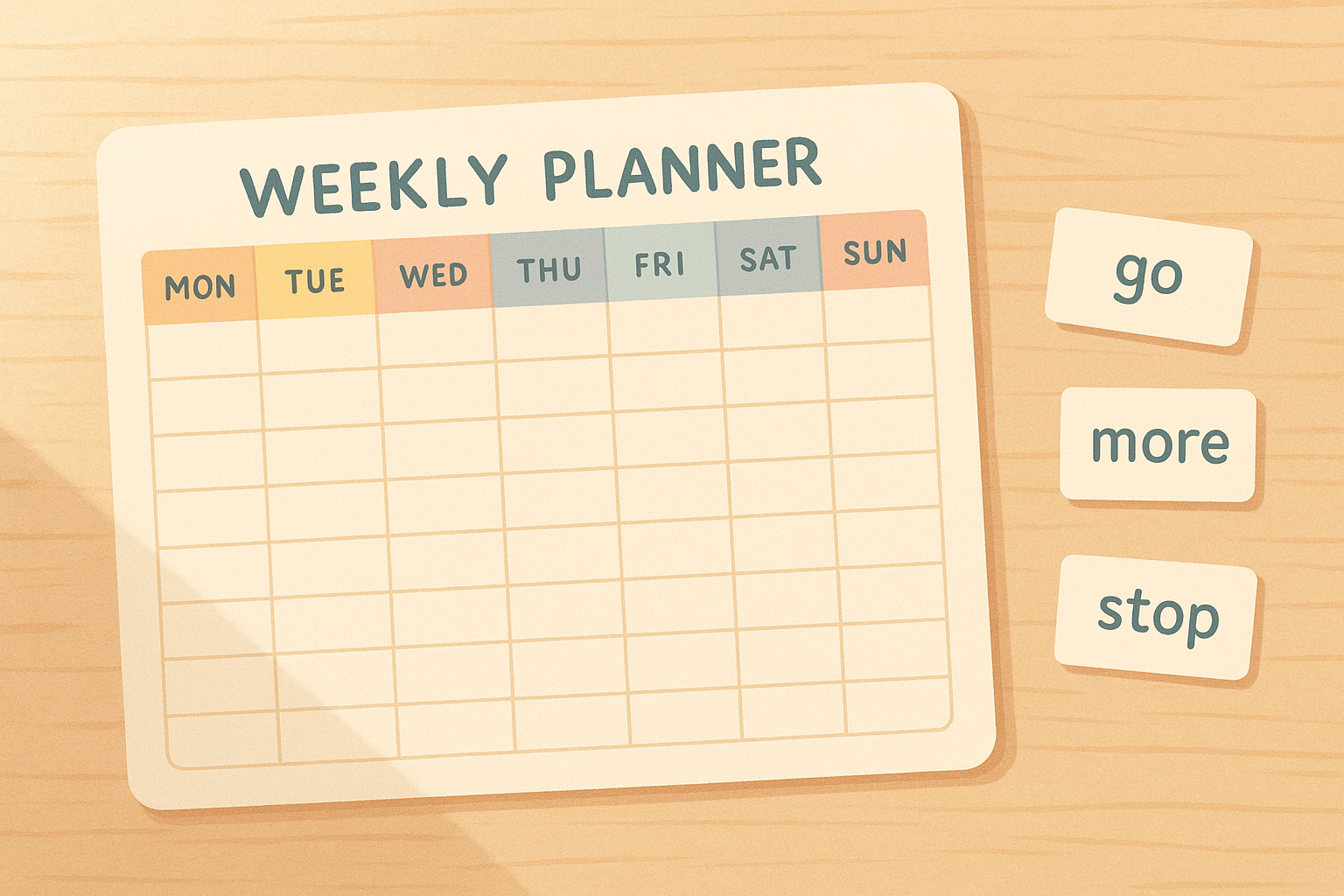
A core word of the week calendar is a simple planning tool that helps speech-language pathologists, early childhood educators, and families organize which core vocabulary word to target across a week of therapy sessions, classroom lessons, and home routines. Instead of juggling dozens of disconnected goals, a core-word calendar keeps everyone—from the school SLP to the classroom aide to a parent at dinner—focused on the same word. This shared focus matters because research suggests that a small set of core words makes up the majority of everyday communication. Below, we'll explain how a core word of the week calendar works, why it supports AAC (augmentative and alternative communication, or ways to communicate beyond speech alone) learners, and how to build one that fits real classrooms and homes.
A core word of the week calendar keeps therapy, classroom, and home practice aligned around one target word.
What Is a Core Word of the Week Calendar?
A core word of the week calendar is a weekly or monthly schedule that assigns one high-frequency core vocabulary word—such as go, more, stop, or want—to be modeled and practiced across therapy, classroom, and home settings. In short, it turns core vocabulary instruction into a predictable routine rather than a random list of goals. Therefore, everyone supporting a child's communication knows exactly which word to model that week.
Typically, a core word of the week calendar lists 12 to 40 words spread across a school year, with one word featured for five to seven days at a time. Consequently, therapists and teachers can plan matching books, songs, and play activities without starting from scratch every week. For a deeper look at how core vocabulary fits into everyday language goals, this core words guide breaks down common target words and how to sequence them.
In addition, many calendars pair each word with a short list of contexts—snack time, recess, art class—so caregivers can reinforce the same word outside of therapy. As a result, children hear and use the target word far more often than they would if it appeared only once a week in a single setting.
Why a Core Vocabulary Calendar Supports AAC and Language Growth
Why does repetition matter so much? Specifically, studies on core vocabulary suggest that a relatively small set of roughly 200 to 400 words accounts for the majority of everyday spoken language, according to research summarized by the American Speech-Language-Hearing Association. Because these words appear across nearly every activity—home, school, playground—teaching them repeatedly gives children more chances to generalize new skills.
Furthermore, a core vocabulary calendar is especially valuable for children who use augmentative and alternative communication (AAC), since predictable exposure helps them locate and combine symbols on a device or board. For families just starting this journey, this guide to everyday activities that build toddler speech offers additional ways to layer core words into daily routines. Similarly, understanding typical milestones can help teams choose age-appropriate words; this overview of communication milestones for toddlers is a useful reference point.
In contrast to teaching only nouns tied to a single unit, core words such as go, help, and more transfer across every subject and setting. Above all, that flexibility is what makes a weekly planning structure so effective for both spoken language and AAC learners.
How to Build a Weekly Core Word Planning Calendar
Building a core word planning calendar does not require fancy software or a big budget. Instead, most teams can set one up in under an hour using the steps below.
- Choose a core word bank. Select 20 to 30 high-frequency words appropriate for the group's age and communication level, then order them from simplest to most complex concepts.
- Assign one word per week. Write the word on a shared calendar or planner so therapists, teachers, and family members can see what is coming up in advance.
- Plan modeling opportunities. List specific activities—circle time, snack, recess, story time—where the word naturally fits so adults remember to model it throughout the day.
- Add matching activities. Pair each word with a short story, song, or game; resources like story-based Core Stories or Sound Stories for articulation practice can simplify this step.
- Review and adjust. At the end of each week, note which words the child used independently and move slower or faster through the remaining list as needed.

Classroom teams can model the weekly core word during everyday lessons and routines.
Core-Word Calendar Ideas for Classrooms and Home
What does this look like in practice? Consider a preschool classroom using "go" as the word of the week. Therapists might model it during obstacle courses, teachers might pair it with a movement song, and families might use it while getting in and out of the car. Meanwhile, a private-practice SLP might use the same word inside a Core Stories session with a Read, Model, Play approach: reading a short story, modeling the word, then practicing it through play.
Because consistency across settings drives real progress, many practices choose to adapt an existing calendar rather than build one from scratch. For example, ready-made bundles such as the Core Stories Foundational 53-Pack in the Little Speech Shop already map core words to a full year of themes, stories, and printable planning pages. Likewise, families who want to start small can look for free introductory core vocabulary samples at Little Speech Corner before committing to a full bundle.

Home carryover helps children practice the week's core word beyond the therapy room.
Common Mistakes to Avoid With a Core Vocabulary Planning Tool
Even with a solid calendar in place, a few common mistakes can limit its impact. First, some teams introduce a new word every single day, which does not give children enough repetition to build mastery. Instead, most core vocabulary practices keep one word in focus for a full week or longer.
Second, calendars sometimes stay in a binder and never reach the people who see the child most—bus drivers, grandparents, cafeteria staff. Therefore, sharing the weekly word through a group chat, a take-home tip sheet, or a classroom poster helps close that gap. Third, teams occasionally choose words that are too abstract for a child's current level, and progress can stall simply because the target word does not match the child's stage of development, according to guidance from the CDC's developmental milestones resources.
Finally, some practices forget to track outcomes, so it becomes hard to tell whether a word needs more time or is ready to be retired. A quick weekly note—even a single line—prevents this problem and keeps the whole system data-informed rather than guesswork-based.
Frequently Asked Questions About Core Word of the Week Calendars
What is a core word of the week calendar?
A core word of the week calendar is a planning tool that assigns one high-frequency vocabulary word to a full week of therapy, classroom, and home practice. It keeps every adult supporting a child focused on modeling and reinforcing the same target word.
How do I choose which core word to feature each week?
Start with a list of 20 to 30 high-frequency core words and order them from simple, concrete words like go or more to more abstract ones like different or same. Base the order on the child's current communication level and everyday routines.
Why is a core vocabulary calendar useful for AAC learners?
A core vocabulary calendar gives AAC users repeated, predictable practice locating and combining the same symbols across settings. This repetition builds the motor planning and vocabulary recall needed for spontaneous communication.
How is a core word of the week calendar different from a themed vocabulary calendar?
A themed calendar rotates topic-specific nouns, such as farm animals or seasons, that rarely reappear once the unit ends. A core word of the week calendar instead cycles through flexible, high-frequency words that transfer across every subject and setting.
How much does a core word calendar cost?
Many SLPs build a basic calendar for free using a shared spreadsheet or printable template. Ready-made bundles with matching stories and activities, such as those sold through the Little Speech Shop, typically cost a modest one-time fee.
How long should each core word stay in focus?
Most teams keep a single core word in focus for five to seven days before moving to the next one. Some children benefit from two weeks per word if they need extra repetition to reach independent use.
What are common mistakes when using a core word planning calendar?
Common mistakes include changing words too frequently, failing to share the weekly word with everyone in a child's routine, and choosing words that are too abstract for the child's current level. Skipping progress notes is another frequent error.
What are best practices for carrying core words into daily routines?
Best practices include posting the weekly word somewhere visible, modeling it during multiple daily activities, and sending a simple tip sheet home so caregivers can reinforce it outside of therapy. Pairing the word with a short story or song also helps.
Can parents use a core word of the week calendar at home?
Yes, parents can use a core word of the week calendar at home without formal training. Simply modeling the week's word during meals, play, and routines gives children extra practice beyond the classroom or therapy room.
How many core words should be introduced each month?
Most calendars introduce three to five core words per month, depending on the child's pace and available sessions or classroom days. Slower introduction generally supports stronger generalization than rushing through a long list.
What materials pair well with a core-word calendar?
Short, repetitive story books, songs, and play-based activities pair especially well with a core-word calendar because they naturally repeat the target word. Story-based resources like Core Stories or targeted tools like Sound Stories can simplify planning.
How do I track progress with a core vocabulary calendar?
Keep a simple weekly note recording whether the child used the target word independently, with modeling, or not at all. Reviewing these notes monthly helps teams decide which words need more time and which are ready to be retired.
Final Thoughts
Ultimately, a core word of the week calendar turns abstract language goals into a simple, shared routine that classrooms, therapy rooms, and homes can all follow together. By choosing a manageable word bank, assigning one word per week, and reviewing progress regularly, teams give children far more chances to hear, see, and use the vocabulary that matters most. Whether you build your own calendar from scratch or start with a ready-made resource like the free introductory samples at Little Speech Corner, the key is consistency. Over time, that steady repetition is what helps children—especially those learning AAC—move from occasional word use to confident, everyday communication.