
Digital Speech and Language Lesson Plans for Preschool SLPs
Explore digital speech and language lesson plans built for SLPs: Core Stories, Sound Stories, and free samples ready to download on TPT today.

Digital speech and language lesson plans give speech-language pathologists (SLPs) and early childhood educators ready-to-use, story-based materials that cut prep time without cutting quality. Instead of building therapy materials from scratch every week, clinicians can open a short, illustrated story, model a target word or sound, and move straight into play. In addition, this guide from Little Speech Corner, created by Mrs. Gwen Swire, M.A., CCC-SLP, explains what digital lesson plans look like in practice, how the Read, Model, Play approach works, and where to find free samples before you buy.
Quick answer: Digital speech and language lesson plans are downloadable story-based or activity-based materials that SLPs and teachers use to model core vocabulary or speech sounds without building sessions from scratch. They typically combine a short story, adult modeling, and guided play, and they can be reused across therapy, classroom, and home settings.
What Are Digital Speech and Language Lesson Plans?
Digital speech and language lesson plans are downloadable resources, usually PDFs or similar files, that package a story, a target skill, and a modeling structure into one ready-to-use document. Rather than printing worksheets or designing activities session by session, a clinician opens the file and has a complete teaching sequence in front of them.
At Little Speech Corner, these plans take the shape of Core Stories, Sound Stories, and related team supports. Each one is illustrated, short enough for a young attention span, and built around a single teaching goal. For example, a Core Story centers on one core vocabulary word, while a Sound Story loads a story with opportunities to hear and practice one speech sound.
Because the format stays consistent, clinicians can swap stories week to week without relearning a new system. Consequently, planning time shrinks, and more of the session is spent actually interacting with the child.
Digital speech and language lesson plans turn shared reading into a quick, repeatable teaching routine.
Why School-Based and Private-Practice SLPs Choose Digital Lesson Plans
School caseloads rarely leave much room for extra prep. As a result, many SLPs look for materials that work right out of the file, without hours of cutting, laminating, or designing. Digital resources fit that need because they are instantly downloadable and reusable across an entire caseload.
The demand for efficient, evidence-informed materials is only growing. According to the U.S. Bureau of Labor Statistics, employment of speech-language pathologists is projected to grow much faster than average through the next decade, which means more clinicians will be searching for sustainable ways to plan sessions at scale. Digital, story-based lesson plans are one practical answer to that pressure.
In contrast to static worksheets, a story-based digital plan also gives therapists flexibility. Specifically, the same story can be used for group therapy, one-on-one sessions, or sent home for family carryover, which makes the investment stretch further.
The Read, Model, Play Approach to Speech and Language Lesson Planning
Little Speech Corner's signature method, Read, Model, Play, structures every Core Story around three connected stages. First, the adult shares a short Core Story, about five minutes of reading, focused on one core word. Next, the adult models that word using the child's own communication method, whether that is speech, a picture board, or a speech-generating device.
Finally, the pair moves into child-led play that keeps using the same target word. This matters because augmentative and alternative communication, often shortened to AAC, works best when a word is modeled repeatedly across natural, motivating contexts rather than drilled in isolation.
Therefore, the five-minute reading window is a guideline, not a promise. Some children will want to revisit the story twice; others will move into play more quickly. The structure stays flexible on purpose, so clinicians can follow the child's lead while still hitting the target vocabulary.
Core Stories: Digital Core Vocabulary Lesson Plans for Preschool
Core Stories are short, illustrated stories built around a single core word, such as go, stop, or more. Each story comes with modeling suggestions and activity ideas so the clinician knows exactly how to extend the word into play.
Individual Core Stories can be browsed by title or by core word, which makes it easy to match a story to a current goal. For a ready-made full year of planning, the Core Stories Foundational 53-Pack bundles 53 stories with a Core Words guide and a suggested weekly sequence through the Little Speech Corner TPT store.
It is worth noting that the bundle supports planning; it is not a substitute for individualized goal-writing. Clinicians still choose which words fit each learner and adjust expectations accordingly.
Sound Stories: Digital Lesson Plans for Articulation Practice
Where Core Stories focus on vocabulary, Sound Stories focus on speech sounds. Each Sound Story is an illustrated narrative loaded with a clinician-selected sound, so children hear and practice that sound repeatedly inside a connected story rather than on isolated drill cards.
The stories highlight target-word visuals and noticeable spelling or sound patterns, which helps even pre-readers start to notice how a sound looks and feels. Free SW and CH samples are available through TPT, so clinicians can test the format before committing to a full set.
Below is a quick comparison of how the two story types typically get used in session planning.
| Resource | Primary Focus | Best Fit |
|---|---|---|
| Core Stories | Core vocabulary, including AAC modeling | Language goals, classroom carryover |
| Sound Stories | Clinician-selected speech sounds | Articulation goals |

AAC supports fit naturally into story-based modeling at home and in therapy.
Team Supports and Core Word Tip Sheets for Classroom Carryover
A story alone rarely changes a child's everyday communication. For that reason, Little Speech Corner pairs its stories with Team Supports, including Core Word Tip Sheets and a planning calendar, so classroom staff and families can model the same vocabulary the SLP introduced.
In particular, the tip sheets translate clinical language into simple, actionable suggestions a teacher or parent can use without a speech background. This shared vocabulary approach echoes guidance from the American Speech-Language-Hearing Association, which emphasizes consistent modeling across a child's everyday environments.
How to Build a Weekly Plan with Digital Speech and Language Lesson Plans
Turning a bundle like the Core Stories Foundational 53-Pack into a working weekly routine only takes a few repeatable steps.
- Review the Core Words guide and annual calendar to identify the week's target word, then confirm it matches current student goals and IEP targets.
- Select the matching Core Story from the Foundational 53-Pack and preview the illustrations and modeling cues before the session begins.
- Share the story using Read, Model, Play: read for about five minutes, then model the word using the child's communication supports, including AAC where needed.
- Extend modeling into play, then send the Core Word Tip Sheet home or to the classroom team for consistent carryover across settings.
Once this cycle becomes routine, most of the planning work happens in minutes rather than hours. For more ideas on quick session structures, see this guide to five-minute speech and language activities for preschoolers.
Where to Find Free Speech and Language Lesson Plan Samples
Before buying a full bundle, it helps to try the format first. Little Speech Corner offers several free samples through its TPT store, including the Apples for Anna Core Story, a planning calendar with a sample story, and SW and CH Sound Story samples.
These samples give a clear picture of the illustration style, story length, and modeling cues used throughout every paid resource. Similarly, browsing the Little Speech Corner resource guide helps you understand which collection fits your caseload before you commit to a purchase.
If you want more structured ideas for using printable and digital materials together, this roundup of printable speech and language resources for preschool SLPs pairs well with digital story plans.
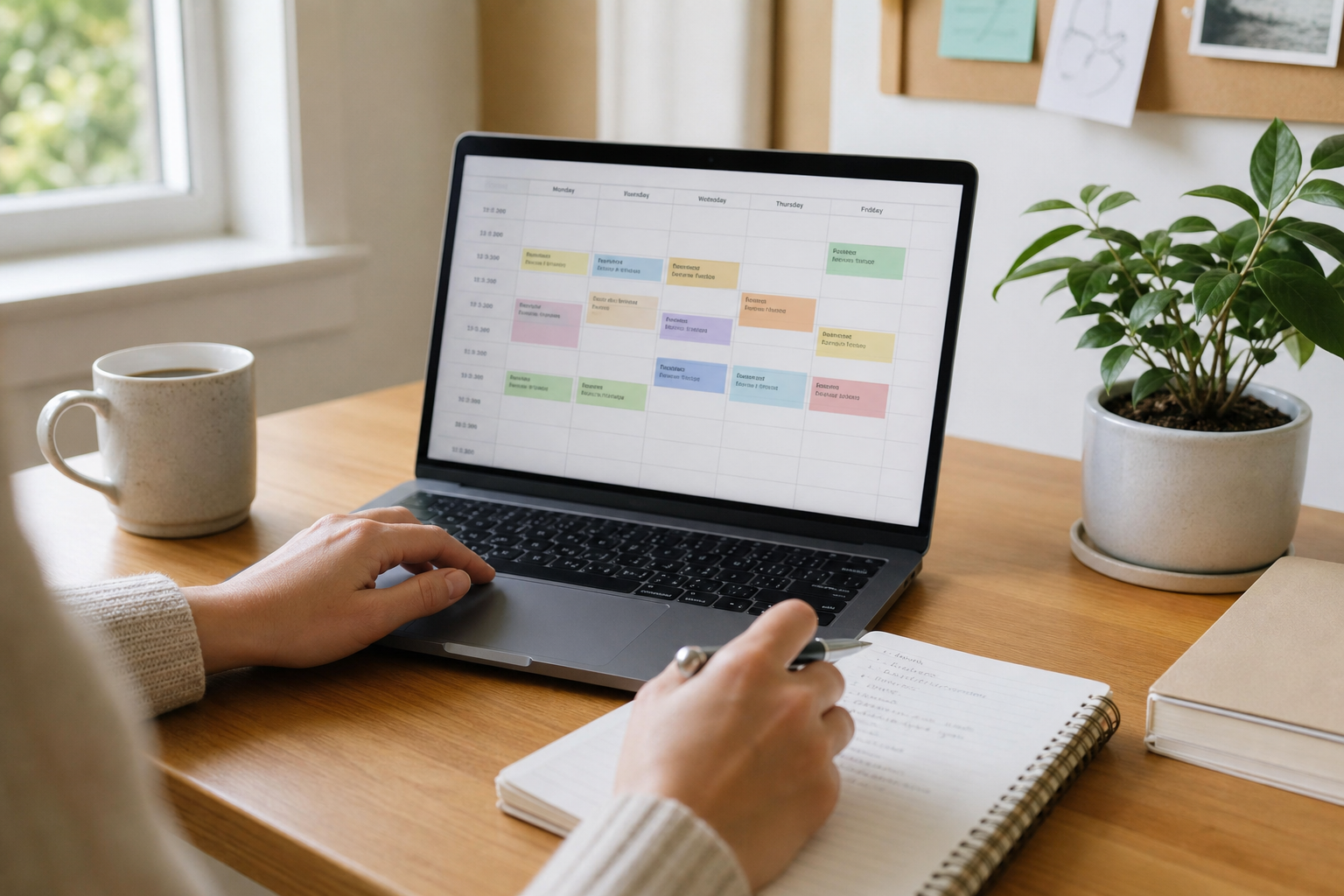
A simple planning calendar helps teams stay consistent with digital speech and language lesson plans each week.
Pairing Digital Lesson Plans with Literacy and Play-Based Activities
Story-based lesson plans naturally overlap with literacy-based therapy, since both use a shared book as the anchor for language targets. For a deeper look at that overlap, see literacy-based speech therapy activities for preschoolers.
Likewise, the play portion of Read, Model, Play connects directly to broader play-based practice. Clinicians who want more structured play ideas can review this guide to play-based language activities for speech therapy, or this walkthrough on how to build a simple core vocabulary routine for preschool speech sessions.
Frequently Asked Questions About Digital Speech and Language Lesson Plans
What are digital speech and language lesson plans?
Digital speech and language lesson plans are downloadable, ready-to-use materials such as illustrated stories, tip sheets, and planning calendars that clinicians use to model vocabulary or speech sounds during sessions. They replace from-scratch prep with reusable files that work across therapy rooms, classrooms, and homes.
How do digital speech and language lesson plans save SLPs time?
Because the stories, visuals, and modeling cues are already built, clinicians spend less time designing materials and more time delivering therapy. A short story paired with a planning guide can replace an hour of session prep.
What age group do these digital lesson plans typically support?
Little Speech Corner's resources are primarily designed for young communicators ages 2 to 7. The vocabulary, story length, and visual supports are scaled for preschool and early elementary language levels.
How does the Read, Model, Play approach work?
Read, Model, Play starts with about five minutes of shared reading focused on a core word, continues with adult modeling of that word, and ends with child-led play that reinforces the target language. The structure keeps sessions predictable while leaving room for genuine interaction.
What is included in the Core Stories Foundational 53-Pack?
The Foundational 53-Pack is a Teachers Pay Teachers bundle of 53 Core Stories paired with a Core Words guide and a suggested weekly planning sequence. Exact files and licensing should be confirmed on the current TPT listing before purchase.
How are Sound Stories different from Core Stories?
Core Stories model whole-word core vocabulary, often supporting AAC, while Sound Stories are sound-loaded narratives built around a specific speech sound a clinician selects. Both use shared reading, but Sound Stories emphasize repeated articulation practice in connected language.
Can digital lesson plans support AAC users?
Yes, Core Stories are designed with flexible modeling in mind, so clinicians can pair the story with speech-generating devices, picture boards, or other augmentative and alternative communication supports. The core word stays constant while the modeling method adapts to each learner.
Where can I download free speech and language lesson plan samples?
Little Speech Corner offers free samples, including the Apples for Anna Core Story, a planning calendar with a sample story, and SW and CH Sound Story samples, through the Little Speech Corner TPT store. These let clinicians test the format before buying a bundle.
How much time does a Core Story session usually take?
Shared reading and modeling typically take about five minutes, though this is a guideline rather than a guaranteed outcome. The remaining session time is spent in interaction and play built around the same target word.
What is a core word, and why does it matter in lesson planning?
A core word is a high-frequency word, like go, more, or stop, that learners can use across many contexts and communication methods. Building digital speech and language lesson plans around core words helps the same vocabulary transfer from therapy to classroom to home.
How do digital lesson plans compare to printable worksheets?
Worksheets often isolate a skill on paper, while digital story-based lesson plans embed the target word or sound inside a narrative and connected play. Many clinicians combine both, using stories for modeling and worksheets for independent practice.
What common mistakes should SLPs avoid when using digital lesson plans?
A common mistake is skipping the play portion and stopping after the story, which limits carryover. Another is choosing a target word or sound that does not match the student's current goals, so previewing materials against IEP targets matters.
How do digital speech and language lesson plans support classroom carryover?
Core Word Tip Sheets and planning calendars let classroom teams and families model the same vocabulary the SLP introduced in session. Consistent modeling across settings, rather than therapy alone, is what helps new words stick.
Where do I purchase Little Speech Corner's digital resources?
All Core Stories, Sound Stories, bundles, and free samples are available through the Little Speech Corner Teachers Pay Teachers store. Always confirm current pricing, file formats, and licensing on the live TPT listing.
Final Thoughts on Choosing Digital Lesson Plans
Ultimately, digital speech and language lesson plans work best when they fit smoothly into an existing routine rather than adding another system to manage. Core Stories, Sound Stories, and the supporting tip sheets from Little Speech Corner are built around one simple structure, Read, Model, Play, so clinicians, teachers, and families can all model the same vocabulary without extra training.
Before investing in a full bundle, try a free sample, preview the Foundational 53-Pack guide, and see how the five-minute story fits your caseload. In the end, well-chosen digital speech and language lesson plans save planning time while keeping sessions grounded in genuine interaction and play.
