
Early Intervention Speech Therapy Downloads for SLPs
Discover early intervention speech therapy downloads for ages 2-7, built on Read, Model, Play. Preview free samples and shop Core Stories on TPT today.

Early intervention speech therapy downloads give clinicians, teachers, and families a fast, repeatable way to model language with young children without building materials from scratch. Instead of relying on worksheets alone, these downloads often pair a short story with specific modeling steps. As a result, adults can introduce a single word or sound, show it in context, and then move straight into play where the child practices it on their own terms.
Little Speech Corner builds its resources around a method called Read, Model, Play. A short Core Story offers roughly five minutes of shared reading and core-vocabulary modeling. Afterward, the adult and child move into interaction and play, which is where much of the real language practice happens. This structure matters for busy school-based SLPs and overwhelmed classroom teams who need something ready to use the same day.
Direct answer: Early intervention speech therapy downloads are printable or digital story-based tools that help adults model core vocabulary or speech sounds with children ages 2 to 7. They typically combine a brief illustrated story, modeling guidance, and a follow-up play activity so skills carry over beyond the therapy room.
What Are Early Intervention Speech Therapy Downloads?
Early intervention speech therapy downloads are short, printable or digital resources designed to support a young child's communication growth during the critical early years. Specifically, they focus on either core vocabulary, which supports AAC and early sentence building, or targeted speech sounds, which support articulation practice. Because they are downloadable, clinicians can reuse them across sessions and families can access the same material at home.
According to the Centers for Disease Control and Prevention, early identification and intervention for communication delays can meaningfully change a child's developmental trajectory. Therefore, having ready-made, evidence-informed downloads on hand helps providers act quickly rather than spending planning time building materials from scratch.
Early intervention speech therapy downloads often start with a few minutes of shared reading before moving into play.
Why Story-Based Speech and Language Resources Work
Young children naturally pay closer attention to a story with pictures than to an isolated drill or flashcard. In addition, a story gives a core word or target sound a believable context, which makes it easier for a child to understand why the word matters. For example, a story about apples gives real meaning to the word "there" when a character points to where the apples fell.
Similarly, the American Speech-Language-Hearing Association notes that repeated, meaningful exposure to language in everyday contexts supports stronger vocabulary growth than isolated drills alone. Consequently, story-based downloads are not just convenient; they reflect how young children actually learn language best.
Teachers and parents can read more about why early support matters so much in this piece on early intervention, which outlines the broader reasoning behind acting early rather than waiting for a child to "catch up" on their own.
The Read, Model, Play Approach Behind Every Core Story
Every Core Story from Little Speech Corner follows the same three-part rhythm: read, model, and play. First, the adult shares the illustrated story in about five minutes. Next, the adult models the core word using whatever communication method fits the child, whether that is speech, sign, gesture, or an AAC device. Finally, the pair shifts into child-led interaction and play, where the word gets practiced in a low-pressure, natural way.
This structure is especially useful for SLPs working across early intervention, preschool, and elementary settings, since it scales from a one-on-one session to a small classroom group. Mrs. Gwen, the SLP behind Little Speech Corner, developed this approach from more than 20 years of clinical experience across these exact settings.
How to Use a Core Story in a Session
The following steps outline a simple, repeatable process for using any Core Story download during a therapy or classroom session:
- Preview the core word and story. Before the session, skim the illustrated pages and identify the single core word that repeats throughout the story so modeling feels natural rather than rehearsed.
- Share the story in about five minutes. Read the Core Story aloud with the child, pointing to illustrations and pausing briefly on the repeated core word so the child has time to notice it.
- Model the core word with the child's communication supports. Say, sign, or select the core word using whatever communication method the child uses, including speech, gesture, or an AAC device, so the modeling matches their system.
- Shift into child-led interaction and play. Move from the story into related play or activities, continuing to model the core word naturally as opportunities arise during the child's own choices and actions.
For a deeper look at how SLPs apply this kind of structured, flexible modeling across different settings, the article on early intervention with SLPs walks through practical classroom and clinic examples.

Digital early intervention speech therapy downloads can be used on a tablet, printed out, or both, depending on the setting.
Core Stories vs. Sound Stories: Choosing the Right Download
Not every child needs the same type of support, so Little Speech Corner offers two distinct kinds of story-based downloads. Core Stories target vocabulary and language development, while Sound Stories target specific speech sounds for articulation practice. Understanding the difference helps clinicians pick the right tool for each goal.
| Feature | Core Stories | Sound Stories |
|---|---|---|
| Primary goal | Core vocabulary and AAC modeling | Articulation and speech-sound practice |
| Best used for | Language delays, AAC learners, classroom modeling | Clinician-selected target sounds |
| Free sample | Apples for Anna (THERE) | SW and CH samples |
In practice, many SLPs use both across a caseload, selecting Core Stories for children working on vocabulary and AAC, and Sound Stories for children working on articulation goals. Furthermore, the related post on how SLPs structure early intervention sessions breaks down how clinicians decide which goal to prioritize first.
Free Early Intervention Speech Therapy Downloads to Try First
Before committing to a full bundle, it helps to test the Read, Model, Play structure with a free sample. Little Speech Corner offers several no-cost options so SLPs, teachers, and families can see the approach firsthand. These include the Apples for Anna Core Story, which introduces the core word "there," a planning calendar with a sample Core Story included, and SW and CH Sound Story samples for articulation practice.
These samples are especially useful for new clinicians or classroom teams who want to confirm the format fits their caseload before purchasing a larger collection. Visitors can preview the full catalog directly at Little Speech Corner before heading to the Teachers Pay Teachers store to download.
Building a Year of Core Vocabulary With the Foundational 53-Pack
For SLPs and teams wanting a ready-made system, the Core Stories Foundational 53-Pack bundles 53 individual Core Stories into one collection sold through TPT. Each story connects to a suggested Core Word of the Week sequence and an annual planning calendar, which helps teams model the same vocabulary consistently across therapy, classroom, and home settings.
However, it's worth noting that this bundle supports a broader vocabulary plan rather than replacing an individualized therapy program. Clinicians should still tailor word selection and pacing to each child's specific goals. Before purchasing, it's a good idea to confirm the current listing details, since exact included files and licensing terms are maintained on the TPT store itself.
Who Benefits From These Early Intervention Resources?
School-based and private-practice SLPs make up the primary audience for these downloads, since they need efficient, reusable materials across packed caseloads. In addition, special educators and classroom teams benefit from the Team Supports and Core Word Tip Sheets, which help non-SLP adults model the same vocabulary consistently. Families are secondary users but play an important carryover role once a clinician or teacher introduces a word at school.
For a broader look at how early support shapes long-term outcomes, the guide on early speech intervention explains why consistent modeling across settings matters so much during these early years. Readers looking for more printable resource ideas may also want to browse this roundup of printable speech and language resources for preschool SLPs.
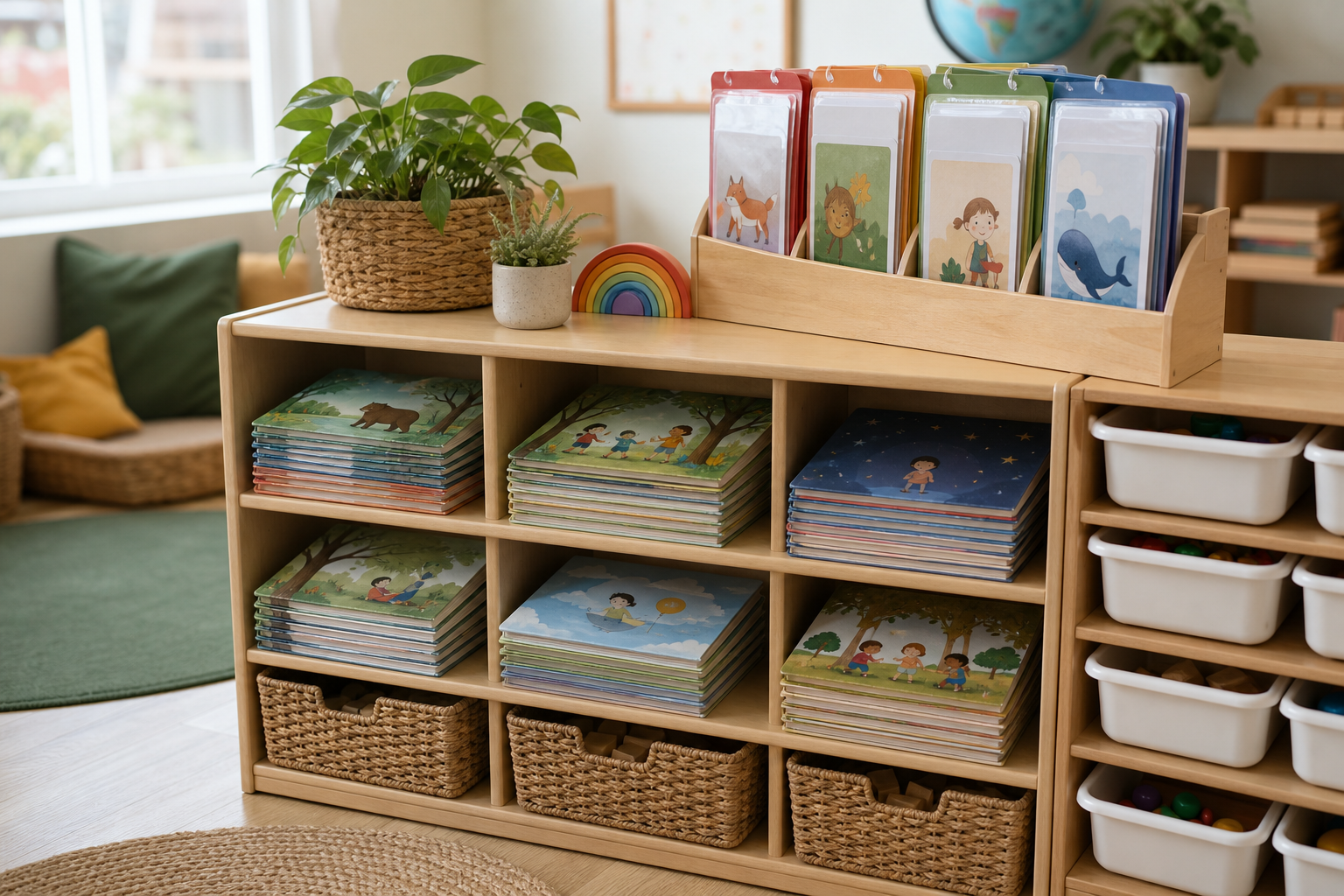
Printed and digital early intervention speech therapy downloads can be organized together for quick access during busy sessions.
Frequently Asked Questions About Early Intervention Speech Therapy Downloads
What are early intervention speech therapy downloads?
Early intervention speech therapy downloads are printable or digital story-based materials that clinicians, teachers, and families use to model vocabulary and speech sounds with young children. They typically pair a short illustrated story with modeling cues and follow-up play activities.
How do Core Stories support core vocabulary?
Each Core Story centers on one core word and repeats it throughout the illustrated narrative. This repetition gives adults natural chances to model the word in context before shifting into child-led play.
What age range do these resources target?
These resources are designed primarily for children ages 2 to 7, which covers early intervention, preschool, and early elementary settings. Adults adjust pacing and expectations based on each child's needs.
How is Read, Model, Play different from traditional worksheets?
Traditional worksheets often require a child to complete a task independently, while Read, Model, Play centers on an adult sharing a brief story and modeling language first. Interaction and play follow, so the child experiences the word in context rather than isolation.
Are Sound Stories the same as Core Stories?
No. Core Stories focus on core vocabulary and AAC-friendly modeling, while Sound Stories are illustrated narratives loaded with a clinician-selected speech sound for articulation practice. Both use shared reading as the starting point.
How much do early intervention speech therapy downloads cost?
Pricing varies by individual story or bundle, and current listings are maintained on the Little Speech Corner Teachers Pay Teachers store. Shoppers should check each listing for exact pricing, formats, and licensing before purchase.
Can families use these downloads at home?
Yes. Because each story is short and the modeling steps are simple, caregivers can repeat the same core word across home routines after a clinician or teacher introduces it. This supports carryover between therapy, classroom, and home.
Do these resources support AAC users?
Core Stories are built with flexible language modeling in mind, including augmentative and alternative communication (AAC) systems. Adults can model the target word on a child's AAC device or communication board while reading.
What's included in the Core Stories Foundational 53-Pack?
The Foundational 53-Pack is a ready-made collection of 53 Core Stories sold through TPT, connected to a suggested Core Word of the Week sequence and planning calendar. It is a supportive bundle, not a complete individualized therapy program.
How long does a Core Story session take?
A Core Story is designed to take about five minutes to read and model, though this is a general guideline rather than a guaranteed outcome. Interaction and play afterward can extend the session as long as engagement supports it.
What common mistakes should clinicians avoid with story-based downloads?
A common mistake is rushing through the story without pausing to model the core word in context. Another is skipping the play phase, which is where many children actually practice using the new vocabulary.
Where can I buy or download these resources?
Purchases and free downloads are completed through the Little Speech Corner Teachers Pay Teachers store. The main website at littlespeechcorner.com helps visitors preview and choose the right resource before heading to TPT.
Are there free samples available before purchasing?
Yes. Free samples include the Apples for Anna Core Story, a planning calendar with a sample Core Story, and SW and CH Sound Story samples. These let adults test the approach before committing to a full bundle.
How do Storytime Stories differ from Core Stories?
Storytime Stories and Story Builders are designed to focus on broader oral language and story understanding skills, while Core Stories target a single core word. Storytime Stories are currently in development and not yet available for purchase.
What makes story-based speech therapy downloads effective for young children?
Story-based downloads work well because shared reading naturally holds a young child's attention while repeating target language. Pairing that attention with modeling and play gives children multiple meaningful chances to hear and try new words.
Bringing It All Together
In the end, early intervention speech therapy downloads work best when they fit naturally into a busy clinician's day rather than adding another layer of prep work. The Read, Model, Play structure behind Core Stories and Sound Stories gives SLPs, teachers, and families a simple, repeatable way to model core vocabulary or practice target sounds in about five minutes, followed by meaningful play. Whether the goal is building a full year of vocabulary with the Foundational 53-Pack or simply testing a free sample first, these downloads offer a practical, evidence-informed starting point for supporting young communicators. For next steps, explore the full catalog at Little Speech Corner and preview a free Core Story before shopping the complete collection on TPT.
