
Home Carryover Speech Therapy Materials for Families
Explore home carryover speech therapy materials that support core vocabulary, AAC modeling, and target sounds. Preview free samples on TPT now.

Home carryover speech therapy materials help children practice core vocabulary and target speech sounds outside of regular sessions, so progress made with a speech-language pathologist (SLP) doesn't stay stuck in one room. When a classroom teacher, a grandparent, and a therapist all model the same word in the same gentle way, a child hears it far more often. In addition, these materials give busy adults a simple script to follow, even without a background in speech therapy.
Quick answer: Home carryover speech therapy materials are short, SLP-informed tools, such as illustrated Core Stories, Sound Stories, and tip sheets, that help families and educators model core vocabulary or target sounds consistently between therapy sessions.
What Are Home Carryover Speech Therapy Materials?
Home carryover speech therapy materials are resources built to extend therapy goals beyond the clinic or classroom. Rather than replacing therapy, they give parents, teachers, and caregivers a simple way to keep modeling the same vocabulary or sounds a child is already working on with their SLP.
At Little Speech Corner, this often looks like a short, illustrated Core Story built around one core word. Because the story takes about five minutes to share, it fits easily into a bedtime routine or a classroom transition. Afterward, a brief period of child-led play gives the word a real-world context, which tends to support generalization better than flashcard-style drilling alone.
These materials respect every communication mode. For children who use augmentative and alternative communication (AAC), tools or systems, including devices and picture boards, that support or replace spoken language, the goal is aided language modeling, not forced speech. According to the Wikipedia overview of AAC, these systems are meant to support, not restrict, a person's full communication.
Short shared stories make home carryover speech therapy materials easy to fit into daily routines.
Why Carryover Support Matters for Core Vocabulary and AAC
Therapy sessions are valuable, but they are brief compared to a child's whole week. As a result, the words and sounds practiced in session need many more repetitions elsewhere to truly stick. Consistent modeling across settings, sometimes called school and home carryover, helps a new skill move from "practiced with support" to "used independently."
Core vocabulary refers to the small set of high-frequency words, like go, more, want, or stop, that make up most of what people say across situations. Because these words appear constantly, modeling them at home has an outsized effect. For example, the word "go" can be modeled during a car ride, a board game, or a trip down the slide, all in the same afternoon.
Early language exposure also has a documented developmental window. The CDC's developmental milestones checklist notes that many children begin combining two words together by around 24 months of age, which underscores why consistent, everyday modeling matters so much during these early years.
How Read, Model, Play Brings Carryover Practice Home
Read, Model, Play is the structure behind every Core Story. First, an adult reads a short story aloud. Then, the adult models the target core word naturally, using the child's full communication system, including speech, gestures, or AAC. Finally, the pair moves into a few minutes of child-led play that echoes the story's theme.
This sequence works well at home because it asks very little from a busy caregiver. There are no worksheets to grade and no demand for the child to repeat anything on command. Instead, the adult simply narrates and models, the same way they might talk through making a snack or building a block tower.
Similarly, teachers can use the same five-minute structure during a classroom transition, which keeps the modeling consistent between school and home. For more ideas on blending play with language goals, see this guide to play-based language activities for speech therapy.
Choosing Speech Therapy Carryover Resources for Your Caseload
With so many printable and digital options available, it helps to start with a specific goal. SLPs often ask which resources make it easiest to hand something consistent to families without extra prep time. A good starting question is: does this material clearly show the adult what to say and do, or does it require significant explanation first?
For articulation goals specifically, Sound Stories pair a clinician-selected speech sound with repeated, naturally occurring opportunities to hear it in connected language. Because the SLP chooses the target sound ahead of time, families don't need to guess which productions to reinforce.
These resources provide educational support and do not replace individualized assessment, clinical judgment, or speech-language therapy. An SLP should select speech targets and cues for each child.
If you're comparing options broadly, this roundup of story-based speech therapy resources for young children walks through several formats side by side.
Steps to Use Core Stories for Home Carryover
Specifically, a simple four-step sequence tends to work well for most families and classrooms:
- Preview and choose a Core Story. Browse the Little Speech Corner TPT store or website guide to preview a Core Story that matches the child's current core word or target sound focus area.
- Share the story in about five minutes. Read the short illustrated story aloud while modeling the core word naturally, using the child's full communication system, including AAC supports when relevant.
- Model the core word during play. Carry the word into a short child-led play activity, repeating the model in context rather than asking the child to repeat it back on command.
- Send home a tip sheet for carryover. Share a Core Word Tip Sheet with family members or classroom staff so everyone models the same vocabulary across settings during the week.
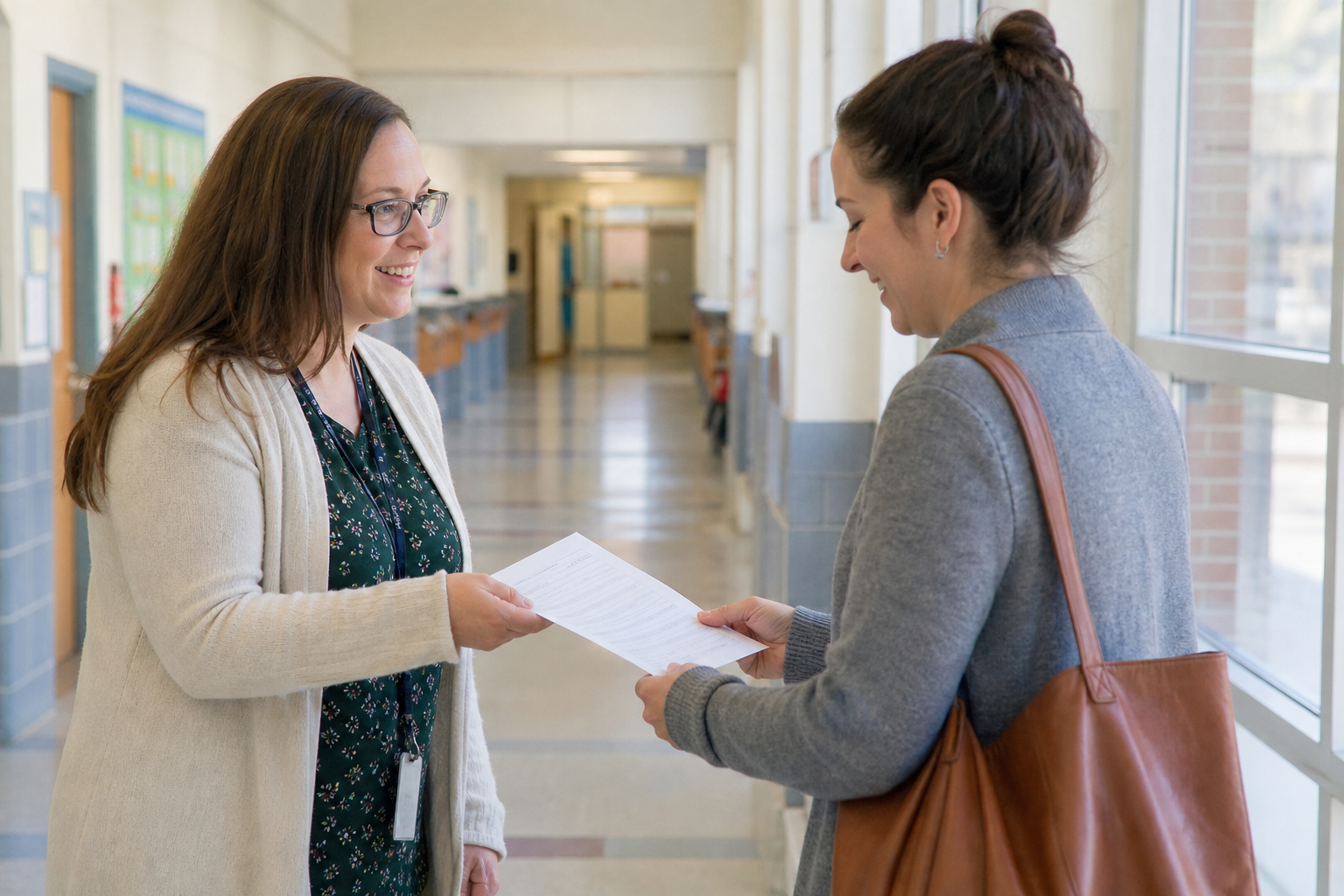
A quick tip sheet handoff keeps home carryover speech therapy materials consistent between classroom and household.
Core Stories and Sound Stories for School-to-Home Support
Core Stories and Sound Stories serve slightly different goals, though both follow a shared-reading format. Core Stories center on a single high-frequency word and often weave in AAC-friendly moments, while Sound Stories focus on one target sound chosen by the SLP, repeated throughout an illustrated narrative.
For SLPs managing a full caseload, the Core Stories Foundational 53-Pack offers a ready-made sequence tied to a suggested Core Word of the Week. This can reduce planning time considerably, since the weekly focus, modeling ideas, and story are already connected. Current bundle contents and licensing should always be confirmed on the TPT listing itself.
Free samples, including the Apples for Anna story built around the word THERE, along with SW and CH Sound Story samples, give families and clinicians a low-risk way to try the approach before committing to a full resource. In contrast, Storytime Stories and Story Builders are still in development and are not yet available for purchase.
Team Supports: Bridging School and Home Practice
Consistency across adults matters more than any single activity. Team Supports, including Core Word Tip Sheets and a planning calendar, exist specifically to help an entire team, SLP, classroom teacher, paraprofessional, and family, model the same vocabulary without needing a long training session.
A tip sheet typically lists a few natural ways to use the week's core word across common routines: snack time, outdoor play, or a car ride. Because the language is already scripted, a paraprofessional or grandparent can jump in confidently without needing a background in speech-language pathology.
For a deeper look at building this kind of bridge between settings, this article on carrying core vocabulary from therapy into the classroom outlines several practical formats SLPs rely on.
Common Mistakes to Avoid During Carryover Practice at Home
Even with good intentions, a few habits can quietly undermine carryover efforts. First, asking a child to repeat a word on demand often adds pressure rather than building a genuine connection to the word's meaning. Modeling the word yourself, repeatedly and naturally, tends to work better than requesting a repetition.
Second, restricting a child's access to their full AAC vocabulary during practice can limit communication rather than support it. A child should always be able to reach every word on their system, not just the one being targeted that week. Additionally, switching target words too frequently can prevent any single word from getting enough repetition to feel automatic.
Finally, treating these materials as a replacement for therapy, rather than a supplement to it, is a common misstep. For ideas on recognizing when extra support may be needed, this overview of language delay challenges offers helpful context for families and educators alike.
Finding the Right Printable and Digital Options
Many SLPs juggle printable visuals, digital stories, and tip sheets across a packed caseload. Therefore, it helps to browse a curated list rather than searching piecemeal. This guide to printable speech and language resources for preschool SLPs rounds up several practical formats worth previewing.
All current Little Speech Corner resources, including individual Core Stories, the Foundational 53-Pack, and Sound Stories, are available to preview and purchase through the Little Speech Corner website and its Teachers Pay Teachers store. The ASHA overview of AAC offers additional background for families who want to understand how modeling supports communication growth.
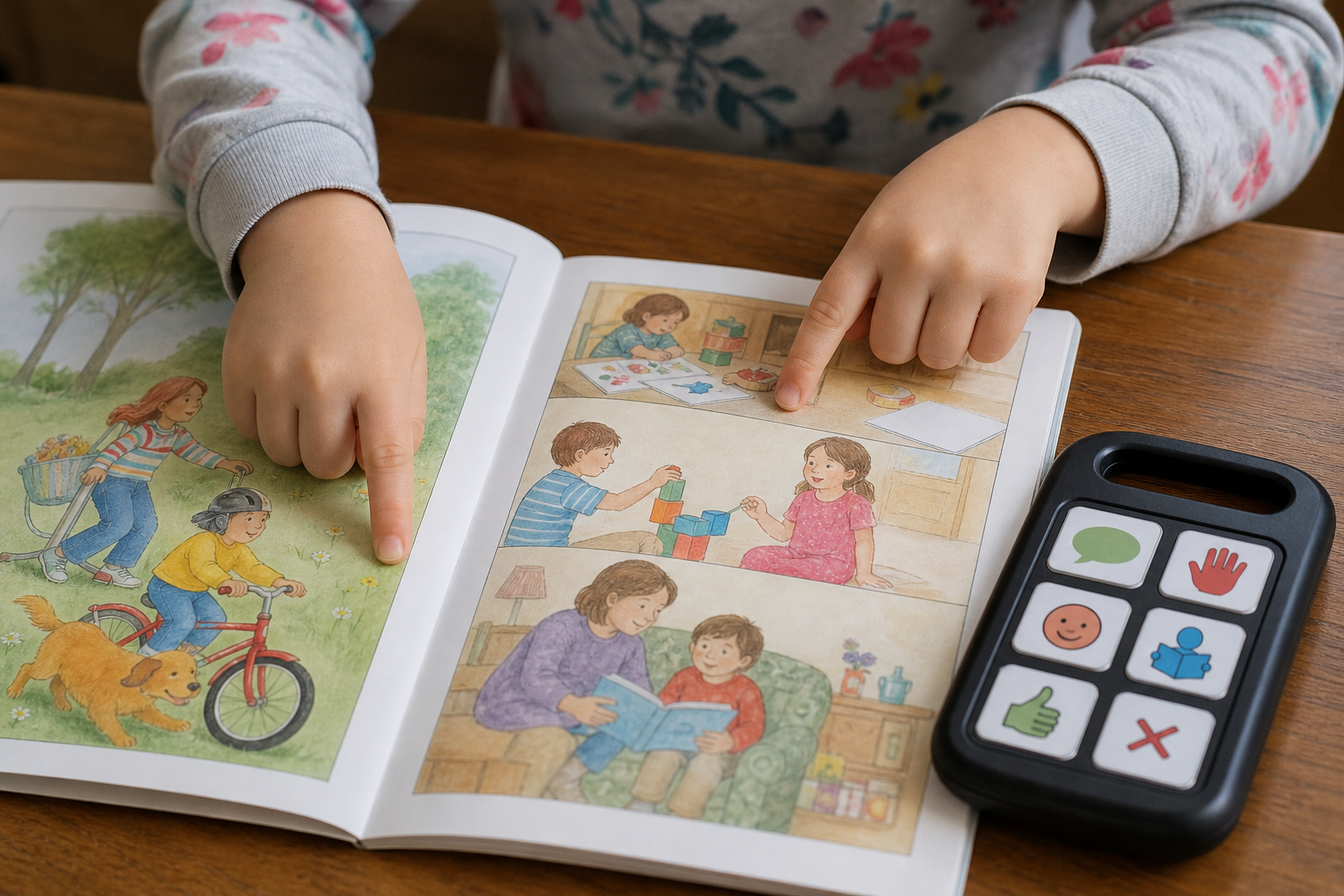
Pairing an AAC system with a short story is one practical way to use home carryover speech therapy materials.
Frequently Asked Questions About Home Carryover Speech Therapy Materials
What are home carryover speech therapy materials?
Home carryover speech therapy materials are resources, such as short stories, tip sheets, and modeling guides, designed to help children practice speech and language targets outside of therapy sessions. They help core vocabulary, AAC use, and target sounds move from the therapy room into everyday routines.
How do these materials support core vocabulary at home?
Core vocabulary materials typically pair a short story or visual with repeated modeling of a high-frequency word, like go, more, or stop. Families and teachers model the word naturally during shared reading and play rather than asking the child to repeat it on command.
Why is carryover important after a speech therapy session?
Carryover matters because therapy time is limited, and language grows through repeated, meaningful practice across settings. Without consistent modeling at home and school, new words or sounds introduced in a session may not generalize to daily communication.
How long does a Core Story take to share at home?
A Core Story is designed to take about five minutes to read and model, followed by a short period of child-led play. This is a general time estimate rather than a guaranteed outcome, since every child engages differently.
What is the difference between Core Stories and Sound Stories?
Core Stories focus on modeling a single core vocabulary word within a short narrative, often supporting AAC use. Sound Stories instead highlight a clinician-selected speech sound through repeated, sound-loaded language in an illustrated story.
Can families use home carryover speech therapy materials without an SLP?
Families can use general modeling materials like free samples and tip sheets, but a speech-language pathologist should select specific targets, cues, and goals for each child. These resources support practice; they do not replace individualized therapy.
How much do Little Speech Corner resources cost?
Pricing and bundle details are set and updated on the Little Speech Corner Teachers Pay Teachers store, so current listings should be checked directly on TPT before purchasing. Free samples are also available to preview the approach first.
What age range benefits most from these carryover materials?
These resources are primarily designed for young communicators around ages two through seven, including children who use AAC. Many SLPs, preschool teachers, and families use them to support early core vocabulary and articulation goals.
What common mistakes should caregivers avoid during home carryover practice?
A common mistake is pressuring a child to repeat a word instead of simply modeling it in context. Another is limiting access to a child's full AAC system during practice, which can unintentionally restrict communication rather than support it.
How does AAC fit into home carryover practice?
Augmentative and alternative communication, or AAC, refers to tools and systems that support or replace spoken language. Home carryover materials can incorporate aided language modeling, where an adult points to or activates words on a child's AAC system while talking.
What is Read, Model, Play?
Read, Model, Play is the approach behind Core Stories: a short shared story introduces a core word, an adult models that word using the child's communication system, and child-led play follows to reinforce the concept naturally.
Where can SLPs and families find these home carryover resources?
Little Speech Corner's digital resources, including Core Stories, the Foundational 53-Pack, and Sound Stories, are available for preview and purchase through the Teachers Pay Teachers store, with free samples linked from the website.
Do these materials replace speech therapy sessions?
No, these materials provide educational support and do not replace individualized assessment, clinical judgment, or speech-language therapy. An SLP should select speech targets and cues for each child.
How often should families model core words at home?
Many SLPs suggest focusing on one core word for about a week, modeling it repeatedly across daily routines like meals, play, and bedtime. Consistent, low-pressure exposure tends to support generalization better than occasional isolated drills.
What is a Core Word Tip Sheet?
A Core Word Tip Sheet is a short reference that suggests natural ways to model a specific core word across settings. It helps teachers, paraprofessionals, and family members use consistent language without needing extensive training.
Final Thoughts on Supporting Carryover at Home
Ultimately, home carryover speech therapy materials work best when they feel like a natural part of the day rather than an extra assignment. A short story, a few minutes of modeling, and some child-led play can do more for generalization than an hour of isolated drilling ever could. Above all, keeping every child's full communication system available, whether that's spoken words, gestures, or AAC, respects how each learner communicates best.
Because consistency across school and home makes the biggest difference, it's worth building a simple, repeatable routine with Core Stories, Sound Stories, and tip sheets from Little Speech Corner. Previewing a free sample on TPT is a low-pressure way to see whether this approach fits a particular child or classroom before exploring the full catalog of resources.
