
In-Home Speech Therapy San Gabriel Valley: Full Guide
In-home speech therapy San Gabriel Valley: what to expect, how to choose a provider, and tips to extend progress at home. Read our full guide.
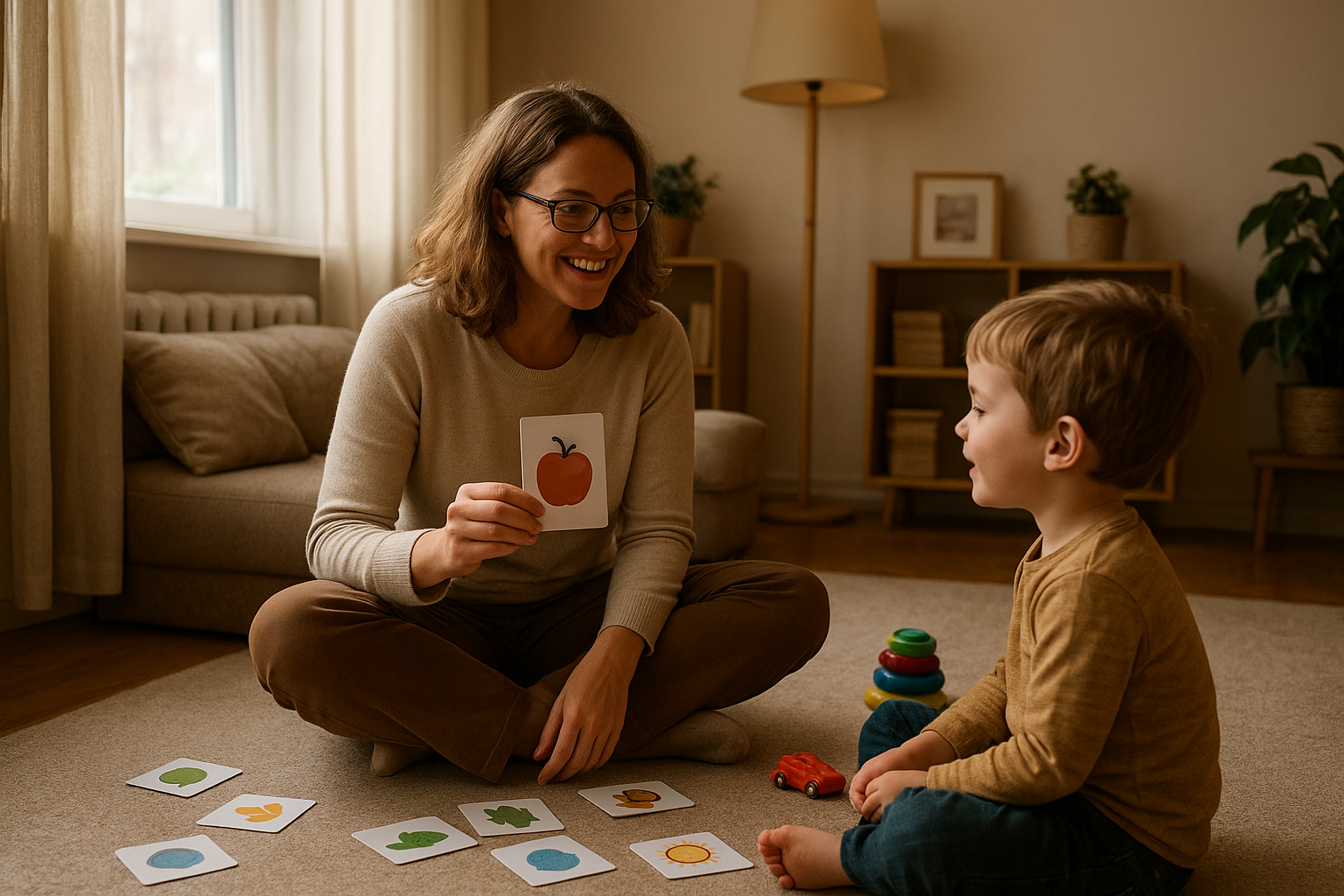
In-home speech therapy San Gabriel Valley families rely on brings personalized, one-on-one language support directly into a child's daily routine. Instead of driving to a clinic, a licensed speech-language pathologist visits the home, working with familiar toys, mealtime routines, and even siblings to build real-world communication skills. For young children ages 2 to 7, this approach often reduces stress and boosts carryover between sessions. Below, we explain how in-home speech therapy works locally, how to choose a provider, and how to pair professional visits with practice tools that keep progress moving.
In-home speech therapy San Gabriel Valley sessions often use familiar toys and spaces to build comfort and trust.
What Is In-Home Speech Therapy in San Gabriel Valley?
In-home speech therapy is a service model where a certified speech-language pathologist, often called an SLP, travels to a child's residence rather than treating the child in a clinic. In the San Gabriel Valley, this typically covers cities such as Pasadena, Alhambra, Arcadia, Monterey Park, and El Monte.
Because sessions happen in the child's natural environment, therapists can target skills using real objects and everyday routines rather than clinic-only props. For instance, a therapist might work on requesting language during snack time or practice articulation sounds while reading a favorite bedtime book. As a result, new skills often generalize faster than they would in an unfamiliar office setting.
According to the American Speech-Language-Hearing Association, early, consistent intervention plays a major role in long-term communication outcomes for young children. In-home visits make that consistency easier to maintain, especially for busy families juggling multiple appointments.
Benefits of Home-Based Speech Therapy for Young Learners
Home-based speech therapy offers several practical advantages beyond convenience. First, children often feel calmer in their own space, which can reduce resistance during sessions. Additionally, therapists can directly coach parents in real time, showing exactly how to prompt language during ordinary moments like getting dressed or playing with blocks.
Furthermore, in-home visits eliminate travel time and reduce exposure to illness in waiting rooms, which matters greatly for toddlers and preschoolers. Consequently, families frequently report fewer missed or rescheduled sessions compared to clinic-based care. Siblings can also be included naturally, which supports social communication goals in a low-pressure setting.
However, in-home therapy is not automatically better for every family; some children benefit from the structure and equipment available in a clinic. Therefore, it helps to discuss both options with a provider before deciding which format fits your child's needs best.
How the In-Home Speech Therapy Process Works
Most in-home speech therapy San Gabriel Valley providers follow a similar sequence from first contact to ongoing sessions. Understanding each step in advance can make the process feel less overwhelming for parents.
- Initial consultation: The family shares concerns, the child's age, and scheduling preferences with the provider.
- In-home evaluation: The SLP assesses speech sounds, language, and social communication through play-based observation.
- Personalized plan: Goals are built around the evaluation results and the family's daily routines.
- Weekly sessions: The therapist returns regularly for structured, play-based practice in the home.
- Caregiver coaching: Parents receive strategies and take-home materials to practice briefly each day.
In particular, that final step, home practice, is where many families see the biggest jump in progress. Skills practiced only once a week rarely stick; short daily repetition does far more for long-term growth.
Choosing an In-Home Speech Therapist in the San Gabriel Valley
Selecting the right provider matters just as much as choosing the service format. Above all, confirm that the therapist holds a current Certificate of Clinical Competence (CCC-SLP), the credential required to practice independently in speech-language pathology.
In addition, ask about experience with your child's specific needs, whether that is late talking, articulation, or augmentative and alternative communication (AAC) support for nonverbal or minimally verbal children. Reviews, referrals from pediatricians, and a short phone consultation can also reveal whether a therapist's communication style fits your family.
For a deeper walkthrough of this decision, our guide on choosing the right speech therapist covers specific questions to ask during a first call. Similarly, providers listed under local speech therapy services can help you compare options available near you.
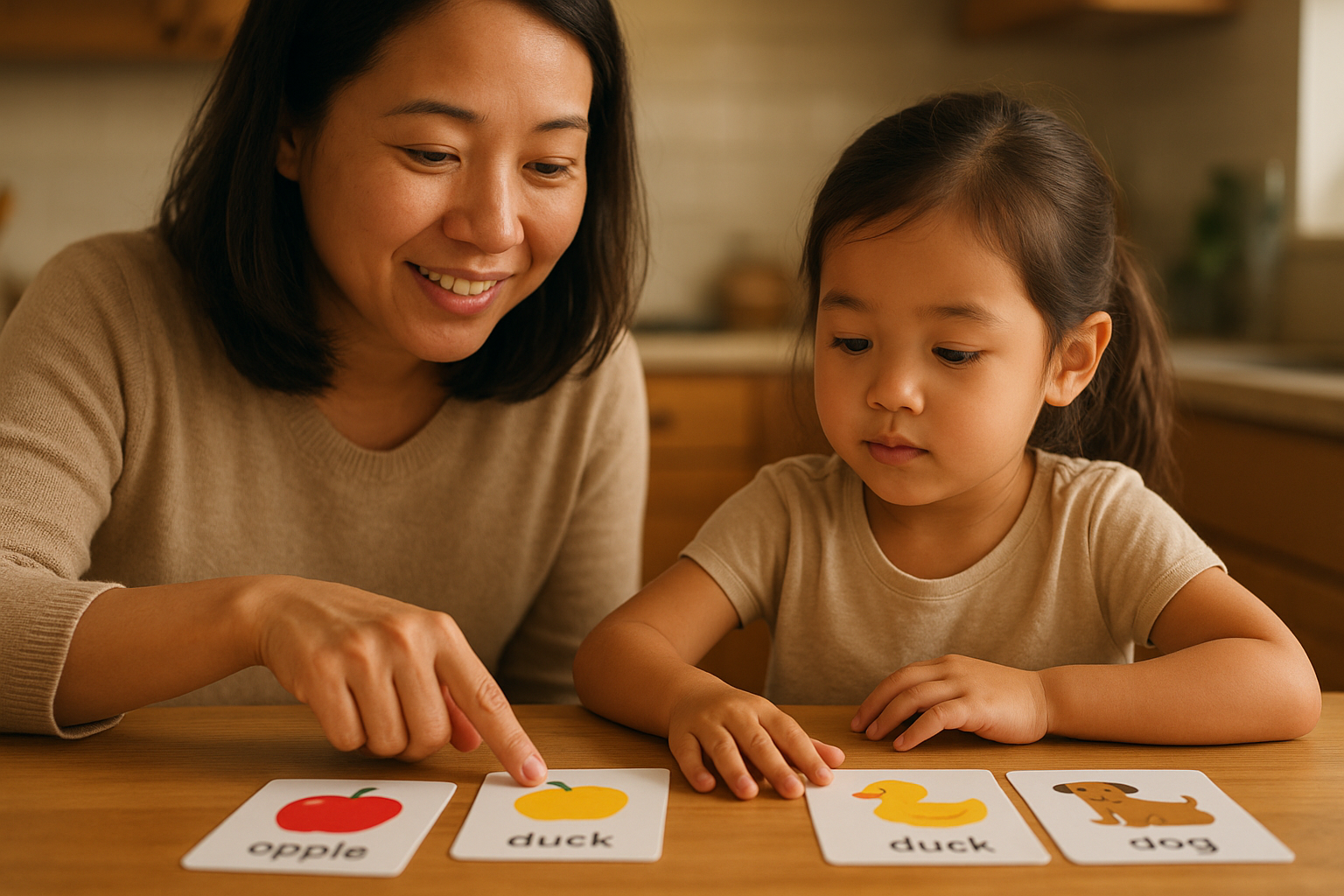
Daily core vocabulary practice supports progress between in-home therapy visits.
Supporting In-Home Sessions with Core Vocabulary Practice
Professional visits are essential, but daily practice between sessions carries most of the long-term weight. Core vocabulary refers to a small set of highly useful words, such as "go," "want," and "more," that children can combine to communicate across almost any situation.
Little Speech Corner, founded by Gwen Swire, M.A., CCC-SLP, a practicing school-based SLP with more than 20 years of experience, builds story-based resources around this idea. Its Core Stories use a "Read, Model, Play" approach: caregivers read a short story, model target words naturally, and then extend practice through simple play. These downloadable tip sheets and stories were designed for SLPs, classroom teams, and parents doing exactly the kind of home carryover that in-home therapy depends on.
Families working with an in-home therapist can bring these materials directly into sessions. Meanwhile, therapists themselves often look for ready-made, play-based tools that require no extra prep time. You can explore free introductory Core Vocabulary resources or browse the full activity library to see how story-based practice fits alongside professional therapy.
Cost and Insurance Considerations
Cost is often the first question families ask. Private-pay in-home sessions across Southern California generally range from about $100 to $200 per hour, depending on the therapist's experience level and travel distance within the San Gabriel Valley.
Some providers accept insurance directly, while others operate on a private-pay or sliding-scale basis. It is worth noting that speech-language disorders are common; the Centers for Disease Control and Prevention tracks communication milestones because delays are among the most frequently identified developmental concerns in early childhood. Because coverage varies so widely, it helps to call your insurance plan directly and ask specifically about in-home or out-of-network speech therapy benefits before booking an evaluation.
Common Mistakes to Avoid
Even well-meaning families sometimes slow their child's progress unintentionally. Below are a few patterns worth watching for.
First, skipping credential verification can lead to working with someone unqualified to diagnose or treat communication disorders, as defined in the field of speech-language pathology. Second, expecting rapid results after just a few sessions often leads to discouragement; most communication goals take consistent months of practice. Third, and perhaps most importantly, neglecting home practice between visits limits how much weekly therapy can actually achieve.
Finally, families sometimes forget to loop in preschool teachers or classroom teams. Consistent core vocabulary use across home and school settings, supported by shared tip sheets, tends to produce the strongest results overall.

Home-based speech therapy visits reach families across San Gabriel Valley neighborhoods.
Frequently Asked Questions About In-Home Speech Therapy San Gabriel Valley
What is in-home speech therapy?
In-home speech therapy is a service where a licensed speech-language pathologist visits a child's home to deliver individualized therapy instead of requiring travel to a clinic. Sessions use the family's own toys, routines, and spaces to build communication skills that transfer easily to daily life.
How does in-home speech therapy San Gabriel Valley work?
In-home speech therapy San Gabriel Valley providers typically start with a phone consultation, follow with an in-home evaluation, then schedule weekly visits built around play-based activities. Therapists also coach parents so practice continues between sessions.
Why choose in-home speech therapy over clinic-based sessions?
In-home therapy reduces travel stress, keeps young children in a comfortable setting, and lets therapists target real routines like mealtime or bedtime. As a result, many families see faster carryover of new skills.
How much does in-home speech therapy cost in San Gabriel Valley?
Private-pay in-home sessions in Southern California generally range from about $100 to $200 per hour, depending on the therapist's experience and travel distance. Some providers accept insurance or offer sliding-scale fees, so it helps to ask directly.
How long does an in-home speech therapy session typically last?
Most in-home sessions for young children last between 30 and 60 minutes. Shorter sessions often work best for toddlers, while older preschoolers may tolerate longer, more structured activities.
What ages qualify for in-home speech therapy?
Children from infancy through early elementary school, roughly ages 2 to 7, are the most common candidates for in-home speech therapy. Older children and even adults can also receive home visits when clinic access is difficult.
Is in-home speech therapy covered by insurance?
Coverage varies widely by plan and provider network, so it is important to verify benefits before starting. Some families use private pay, regional center funding, or school-based services alongside private in-home sessions.
What's the difference between in-home speech therapy and teletherapy?
In-home speech therapy involves a therapist physically present in the child's home, while teletherapy happens through a video call. In-home visits allow hands-on modeling and direct access to real household materials, which can benefit younger or more distractible children.
What common mistakes should families avoid when starting in-home speech therapy?
Common mistakes include skipping credential checks, expecting overnight results, and not practicing target skills between visits. Consistent, brief practice sessions at home make the biggest long-term difference.
What should I look for when choosing an in-home speech therapist?
Look for a therapist with a current CCC-SLP credential, experience with your child's specific needs, and a clear communication style with parents. Reading reviews and asking about their treatment approach also helps confirm a good fit.
Can parents participate in in-home speech therapy sessions?
Yes, and most therapists encourage it. Parent involvement during sessions helps caregivers learn strategies they can repeat throughout the week, which strengthens overall progress.
How can I support my child's progress between in-home speech therapy sessions?
Short, playful practice using core vocabulary tools, picture books, or story-based activities each day reinforces what the therapist teaches. Consistency matters more than length, so even five minutes of daily practice adds up.
Do I need a referral to start in-home speech therapy?
Some insurance plans require a physician referral, while private-pay providers often do not. It is best to ask the specific provider or your insurance plan directly before scheduling an evaluation.
Final Thoughts
In-home speech therapy San Gabriel Valley families choose offers a comfortable, practical way to build communication skills without the friction of clinic visits. In summary, the process usually moves from consultation to evaluation to weekly sessions, with home practice tying everything together. Above all, pairing professional visits with consistent daily practice, whether through caregiver coaching or story-based core vocabulary tools, tends to produce the most lasting results. If you are ready to start, review our available services, explore the Core Stories collection, or visit Little Speech Corner for free sample resources to support your child between sessions.