
Play Based Core Vocabulary Activities for AAC & Speech
Discover play based core vocabulary activities that build language skills through fun play. Try these SLP-approved ideas for AAC learners today.

Play based core vocabulary activities give children a natural, low-pressure way to practice the words they need most, whether they speak, sign, or use an AAC (augmentative and alternative communication) device. Instead of drilling flashcards, these activities weave core words like "go," "in," "more," and "stop" into everyday play so that language grows through joyful repetition. As a result, children get far more meaningful practice than a worksheet could ever offer, and the adults around them get a simple, repeatable framework to follow.
Quick answer: Play based core vocabulary activities is a term for structured play routines that intentionally target a small set of high-frequency words through toys, games, and pretend play rather than flashcards or worksheets. Because these words appear in almost every activity, play naturally creates the repetition children need to learn and generalize them.
What Are Play Based Core Vocabulary Activities?
In short, play based core vocabulary activities is the practice of teaching a small set of powerful, reusable words during ordinary play instead of isolated drills. These words, known as core vocabulary, make up a surprisingly large share of everyday communication. In fact, research on core vocabulary commonly cited by AAC specialists suggests that just 200 to 400 words account for roughly 80 percent of what people say in typical conversation.
Because core words like "go," "help," "in," and "more" show up constantly, they are far more useful to practice than single-topic nouns. Therefore, instead of teaching "dinosaur" or "birthday cake," play based approaches prioritize words that transfer across countless toys, games, and daily routines. For a deeper breakdown of which words to prioritize, the core words guide outlines a full starter list organized by developmental stage.
Simple toys like blocks and cars create endless chances for play based core vocabulary activities.
Why Play Is the Perfect Vehicle for Core Words
Play works so well for teaching core words because it is motivating on its own, which means children stay engaged far longer than they would during a formal drill. Additionally, play naturally repeats itself; a child who rolls a ball back and forth twenty times hears "go" and "stop" twenty times without ever feeling like they are being tested.
According to the American Speech-Language-Hearing Association, early language intervention that follows a child's natural interests tends to produce stronger, longer-lasting communication gains than adult-directed drills. For that reason, following a child's lead during play, rather than forcing a script, is considered a best practice among speech-language pathologists. You can learn more about building this kind of environment in the guide on how to create a language-rich environment at home.
Choosing the Right Core Vocabulary Words for Play
Before starting any activity, it helps to narrow down which core vocabulary words to target first. Generally, the most useful early words are those a child can apply across many different toys and settings, such as "go," "stop," "more," "in," "out," "up," and "all done." Consequently, a single word like "more" can be practiced during snack time, bath time, and block play without any extra planning.
Meanwhile, it is wise to avoid choosing too many target words at once. Two or three words per session is usually plenty, since the goal is deep, repeated practice rather than shallow exposure to a long list. Over time, as one set of words becomes automatic, new core words can be layered in gradually.
How to Build Play Based Core Vocabulary Activities Step by Step
Setting up an effective session does not require special training or expensive materials. Instead, the following steps offer a simple, repeatable structure that works for parents, teachers, and speech-language pathologists alike.
- Choose one or two core words to target during the play session, such as "go," "more," or "in," so the activity stays focused instead of overwhelming.
- Set up a simple play scenario, like a toy bin, sensory bin, or pretend kitchen, that naturally creates repeated opportunities to model the chosen words.
- Model the core words aloud or on an AAC device before expecting the child to use them, giving them a clear demonstration of how the word fits the moment.
- Pause and wait after modeling to give the child space to imitate or attempt the word on their own, resisting the urge to fill every silence.
- Expand on any attempt the child makes by adding one more word, turning "go" into "go car," to gently stretch their language further.
- Repeat the same core words across several different play activities throughout the week so the child hears and uses them in varied, meaningful contexts.
This "model, wait, expand" rhythm mirrors the Read, Model, Play approach used throughout Core Stories, where a story provides the built-in repetition and the adult supplies the modeling. You can explore this structure further at littlespeechcorner.com, where free introductory core vocabulary samples are available.
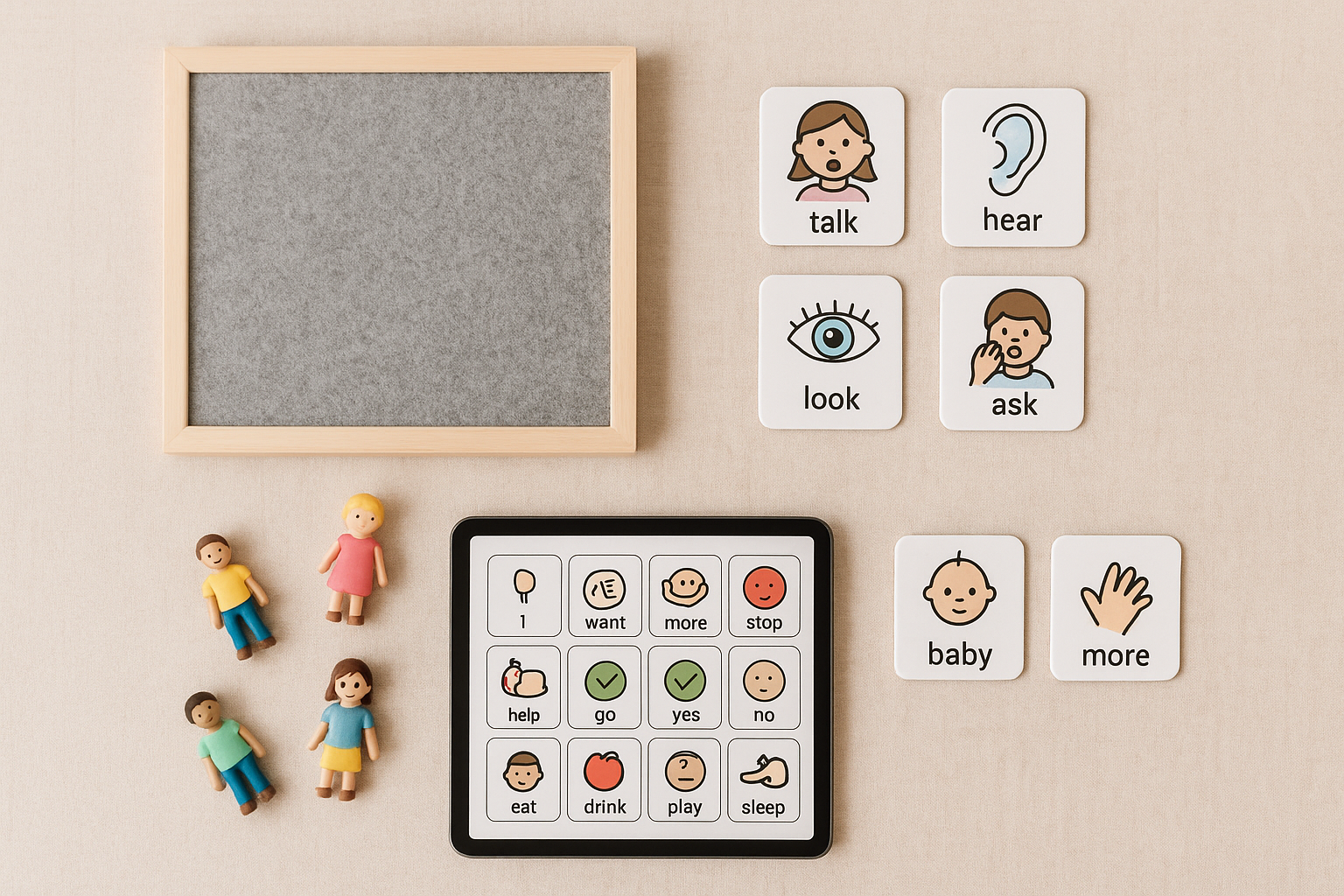
A well-planned play space makes core vocabulary practice feel effortless for both child and adult.
Play-Based Core Vocabulary Ideas for Home, School, and Therapy
Because core vocabulary applies everywhere, the same handful of words can be practiced across very different settings without needing new materials for each one.
At Home
Everyday routines like bath time, mealtime, and getting dressed are full of natural chances to model core words. For more ideas that fit easily into a busy family schedule, see these everyday activities to enhance toddlers' speech. It is also worth thinking about how digital devices fit into the picture, since balancing screen time matters for language growth too, as covered in this guide on balancing screen time and speech.
In the Classroom
Teachers can embed target words into circle time, centers, and transitions so the whole classroom team reinforces the same vocabulary throughout the day. A shared core-vocabulary calendar helps keep everyone consistent, which in turn strengthens carryover for every child in the room.
In Therapy Sessions
During individual or small-group sessions, speech-language pathologists often pair core vocabulary with a themed story or game to keep sessions focused yet flexible. This structure allows the same core words to be practiced within a fresh, engaging context each week.
Using AAC During Core Vocabulary Play
For children who use AAC, play based core vocabulary activities are especially valuable because the adult can model the target word directly on the device while the child plays. Specifically, this means pointing to or tapping the symbol for "go" right as the toy car moves, rather than only asking the child to produce the word.
Consistent modeling like this, sometimes called aided language input, is a well-documented AAC strategy. Furthermore, targeted articulation practice can run alongside core vocabulary play; resources like Sound Stories support specific sound production while core vocabulary activities build broader language use at the same time.
Common Mistakes to Avoid With Core Vocabulary Play
One frequent mistake is targeting too many words at once, which can dilute the repetition each word receives. Similarly, adults sometimes ask too many direct questions during play, such as "what is this?", when modeling the word naturally tends to invite more genuine attempts.
Another pitfall is abandoning an activity too quickly if a child does not respond right away. In contrast, giving a longer pause after modeling, sometimes several seconds, often gives the child exactly the time they need to process and respond.
Frequently Asked Questions About Play Based Core Vocabulary Activities
What are play based core vocabulary activities?
Play based core vocabulary activities are structured play routines that target a small set of high-frequency words, such as "go," "more," "in," and "stop," through toys, games, and pretend play instead of worksheets or drills. They give children repeated, natural chances to hear and use the same words across different situations.
How do I start play based core vocabulary activities at home?
Start by picking one or two core words and a favorite toy or game, then model the words out loud while you play together. Keep sessions short and follow the child's lead so the practice feels like play rather than a lesson.
Why is play considered an effective way to teach core vocabulary?
Play is effective because it is motivating and naturally repetitive, which means a child hears and attempts the same core word many times without feeling pressured. This repetition in a low-stress setting helps new words move into everyday use more quickly.
What is the difference between core vocabulary and fringe vocabulary?
Core vocabulary refers to a small set of versatile, high-frequency words like "go," "more," and "stop" that can be used across almost any activity or topic. Fringe vocabulary, on the other hand, includes specific nouns like "dinosaur" or "birthday" that are useful but tied to particular topics.
How much do core vocabulary resources typically cost?
Prices vary widely, but many downloadable core vocabulary packets and story sets range from a few dollars for a single resource to larger bundles priced higher for a full curriculum. Free introductory samples are also commonly available before purchasing a complete set.
How long should a play based core vocabulary session last?
Most sessions work well between five and fifteen minutes, especially for toddlers and preschoolers with shorter attention spans. Shorter, more frequent sessions throughout the week tend to build stronger word use than one long session.
What are common mistakes when doing play based core vocabulary activities?
A common mistake is targeting too many words at once, which can overwhelm both the adult and the child. Another frequent error is asking too many questions instead of modeling the word naturally within the play.
What core words should I target first?
Early core words often include "go," "stop," "more," "in," "out," "up," and "all done" because they apply across countless activities. Choosing versatile words first allows a child to use them in many different play contexts right away.
Can play based core vocabulary activities be used with AAC devices?
Yes, play based core vocabulary activities work especially well alongside AAC devices, since the adult can model the target word on the device before or as the child plays. This modeling helps the child connect the symbol or button to its meaning during a motivating activity.
What age group benefits most from play based core vocabulary activities?
Children between roughly two and seven years old tend to benefit most, since this is a critical window for expressive and receptive language growth. However, older learners who use AAC or are still building foundational vocabulary can also benefit from the same approach.
How is play based core vocabulary different from traditional flashcard drills?
Flashcard drills present words in isolation and often require rote repetition without a meaningful context. Play based core vocabulary activities, in contrast, embed the same words inside real actions and interactions, which supports more natural and lasting language use.
What toys work best for core vocabulary play?
Open-ended toys such as blocks, cars, play food, dolls, and simple cause-and-effect toys work especially well because they support many different core words. Toys with a single fixed use tend to limit the variety of words that can be modeled.
How often should core vocabulary be practiced through play?
Daily, brief practice tends to produce better results than occasional long sessions, since core words need frequent repetition across different settings. Weaving a few core words into everyday routines like snack time or bath time can make daily practice manageable.
Do play based core vocabulary activities work for children with autism?
Yes, play based core vocabulary activities are commonly used with autistic children, particularly when paired with their specific interests and motivators. Following the child's lead during play often increases engagement and the number of communication attempts.
How can teachers use play based core vocabulary activities in the classroom?
Teachers can embed core words into circle time, centers, and transitions by modeling the same target words consistently throughout the day. Using a shared core-vocabulary calendar across the classroom team helps ensure everyone reinforces the same words.
Bringing It All Together
In the end, play based core vocabulary activities succeed because they turn ordinary moments, a rolling ball, a snack, a bath, into rich language lessons without ever feeling like a lesson at all. By choosing a handful of versatile core words, modeling them consistently, and giving children space to respond, families, teachers, and speech-language pathologists can build meaningful communication skills together. Above all, consistency matters more than perfection, so even a few minutes of intentional play each day can move a child's language forward. For additional structured resources built around this same Read, Model, Play approach, explore what Little Speech Corner offers to support both sessions and home carryover. Further background on core vocabulary and AAC is also available through Wikipedia's overview of AAC, the American Speech-Language-Hearing Association, and the CDC's developmental milestones guide.