
Speech-Language Pathology Resources for Preschoolers Guide
Explore speech-language pathology resources for preschoolers: Core Stories and Sound Stories using Read, Model, Play. Preview free samples now.
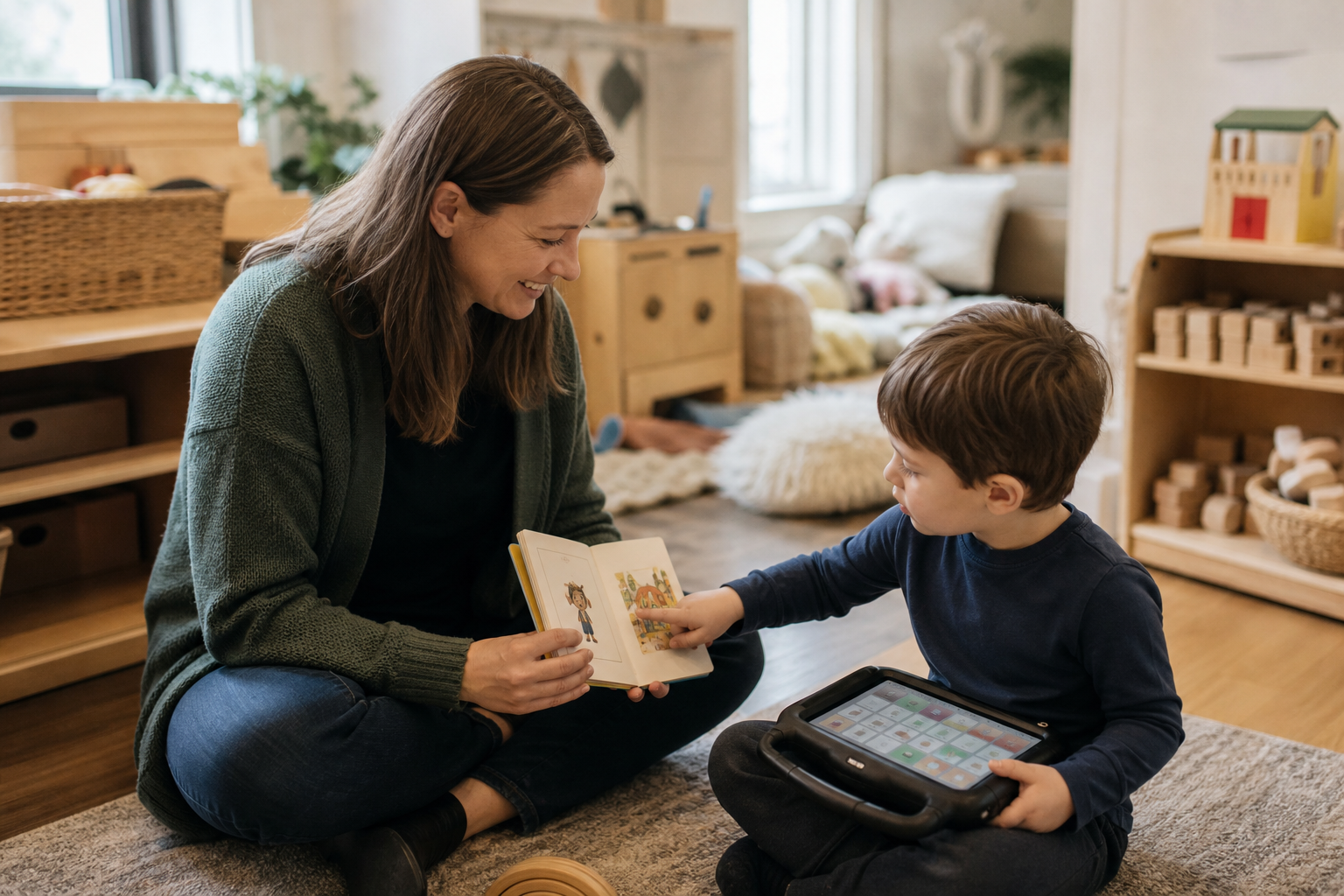
Speech-language pathology resources for preschoolers give speech-language pathologists (SLPs), special educators, and classroom teams practical tools for building early vocabulary, articulation, and communication skills in children roughly ages 2 to 7. Because young children learn best through repetition, play, and shared stories, these materials usually combine short narratives, visual supports, and hands-on activities rather than worksheets alone. This guide looks at the main types of resources available today, including Core Stories, Sound Stories, and classroom-ready team supports, and explains how to pick materials that fit a child's goals.
Quick Answer: Speech-language pathology resources for preschoolers are story-based or activity-based materials — such as Core Stories and Sound Stories — that SLPs and teachers use to model core vocabulary, build articulation skills, and support AAC users through brief, repeatable reading-and-play sessions.
What Are Speech-Language Pathology Resources for Preschoolers?
Speech-language pathology resources for preschoolers are defined as structured materials that support speech sound development, vocabulary growth, and functional communication in children between roughly ages 2 and 7. They range from clinical worksheets to illustrated storybooks, core-vocabulary boards, and sound-loaded narratives built for repeated practice. In particular, story-based formats like Core Stories and Sound Stories pair a short reading experience with guided modeling and play, which keeps young children engaged while still targeting specific therapy goals.
For example, a five-minute shared story can introduce a single core word or target sound several times in context, giving a child natural opportunities to hear and attempt it. As a result, many SLPs favor this format over isolated drill work, especially for preschoolers who need repetition wrapped in engaging, low-pressure interaction. You can preview this approach directly at Little Speech Corner, where sample stories are organized by core word and target sound.
Shared reading sessions like this are at the heart of story-based speech-language pathology resources for preschoolers.
Why Early Speech and Language Support Matters
Early intervention during the preschool years is widely considered a critical window for communication growth. According to the National Institute on Deafness and Other Communication Disorders (NIDCD), nearly 1 in 12 U.S. children ages 3 to 17 has experienced a disorder related to voice, speech, language, or swallowing within a given year. Consequently, the preschool stage often represents the first real opportunity to notice and respond to these needs.
Because the brain forms new connections rapidly during these early years, consistent and repeated language modeling can have an outsized impact. Public health programs such as the CDC's Learn the Signs. Act Early. initiative encourage caregivers to track developmental milestones closely for this reason. In addition, many early childhood special education teams build daily routines around short, structured language opportunities instead of infrequent, lengthy drills. For a closer look at this stage of development, see this guide on early intervention with SLPs.
The Read, Model, Play Approach to Core Stories
Core Stories are short, illustrated stories built around a single Core Word, paired with modeling ideas and follow-up activities. The method behind them, Read, Model, Play, is straightforward: an adult shares the story in about five minutes, models the target word using the child's own communication supports, and then carries the word into interaction and play. This structure supports flexible language modeling, including augmentative and alternative communication (AAC), a term referring to tools and strategies that help children who have limited or no spoken language communicate effectively.
This method was shaped by more than 20 years of clinical experience from Gwen Swire, M.A., CCC-SLP, known to many families as Mrs. Gwen, who holds ASHA certification and a California SLP license. Similarly, educators without a clinical background can follow the same simple sequence, which is one reason core-vocabulary approaches have become popular in both therapy rooms and general education classrooms. Teams looking for printable support materials may also find this roundup of printable speech and language resources for preschool SLPs helpful.
| Resource | Primary Focus | Best For |
| Core Stories | Core vocabulary + AAC modeling | Language goals, AAC users |
| Sound Stories | Target speech sound practice | Articulation and phonology goals |
| Team Supports | Cross-setting carryover | Classroom teams and families |
Sound Stories for Targeted Articulation Practice
Sound Stories are illustrated, sound-loaded narratives that give children repeated chances to hear and practice a clinician-selected speech sound in connected language, rather than in isolated word lists. Each story highlights target-word visuals and noticeable spelling or sound patterns, so a child encounters the same sound many times during one shared reading. Free samples for the SW and CH sounds are commonly available for SLPs who want to try the format first.
Unlike flashcard drills, this approach keeps articulation practice embedded in a story a child actually wants to hear again. Therefore, repeat readings become an asset rather than a chore, since each pass through the story offers another round of practice. For additional literacy-connected ideas, this collection of literacy-based speech therapy activities for preschoolers pairs well with sound-focused practice.
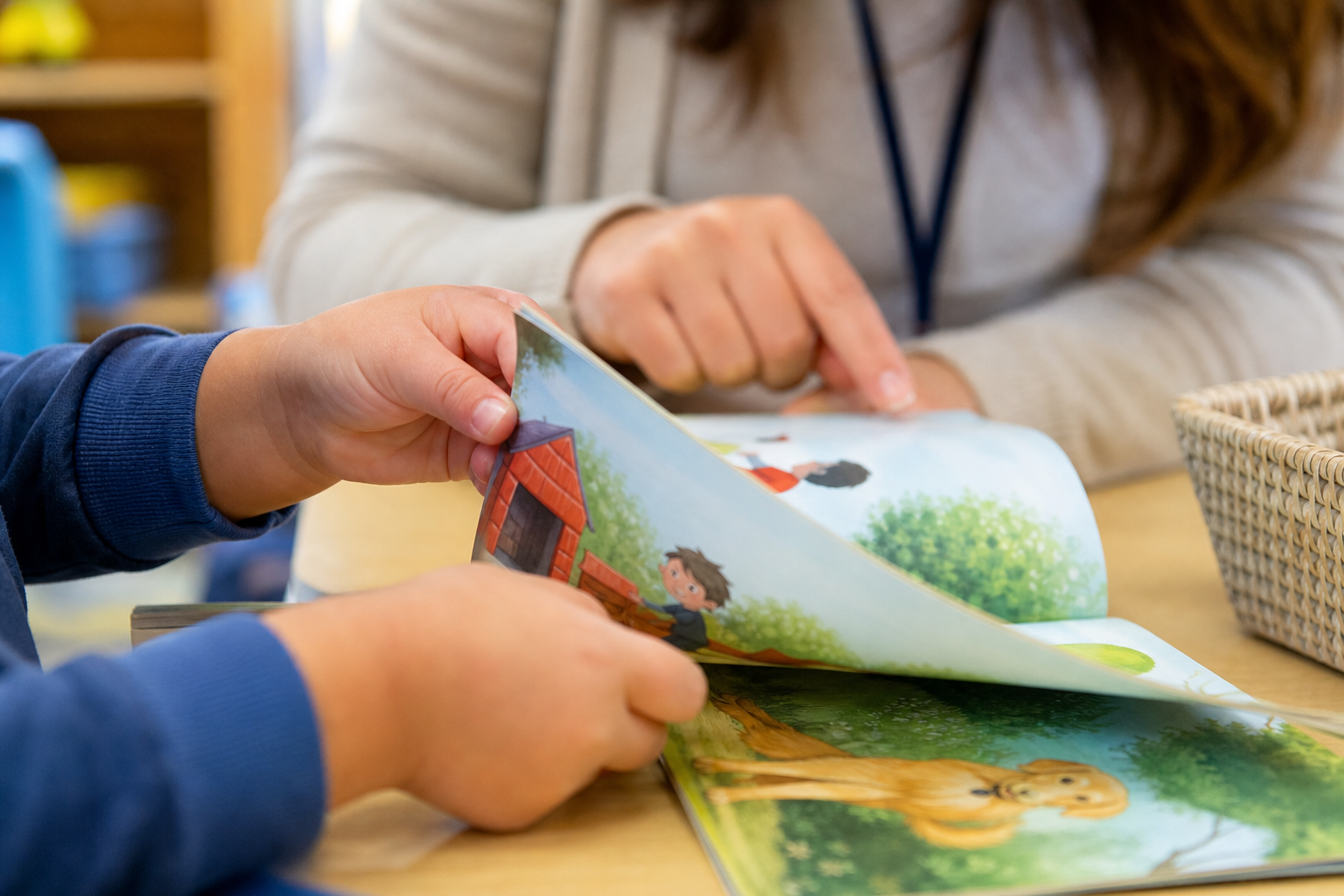
Repeated page-turns give children extra reps with a target sound in context.
Team Supports: Helping Classrooms and Families Model Language
Team Supports include core-word tip sheets and a planning calendar designed to help every adult around a child, from classroom teachers to parents, model the same shared vocabulary. In particular, this matters because a child who hears a target word only during a therapy session gets far fewer repetitions than one who hears it at home, in the classroom, and during therapy alike.
A weekly core-word sequence, such as the one included with the Core Stories Foundational 53-Pack, gives teams a simple shared plan without requiring extra training. Consequently, general education teachers and family members can contribute meaningfully to a child's progress even without clinical expertise. For more story-based ideas that work well across settings, see this list of story-based speech therapy resources for young children.
How to Choose Speech and Language Resources for Your Preschool Classroom
Selecting the right material does not need to be complicated. The following steps offer a simple way to match a resource to a child's needs:
- Identify the communication goal. Decide whether the priority is core vocabulary, AAC modeling, or a specific speech sound.
- Match the resource type to the goal. Choose Core Stories for vocabulary and AAC, or Sound Stories for articulation practice.
- Check flexibility for AAC and varied learners. Confirm the activity allows modeling through a child's existing communication supports.
- Preview a free sample first. Try a short session before committing to a full bundle purchase.
- Plan for repetition and carryover. Use a calendar or tip sheet to repeat the same target across settings for at least a week.
Above all, consistency across a full week tends to matter more than any single session. Short, five-minute activities fit easily into busy schedules, which is one reason this format has gained traction; see these five-minute speech and language activities for preschoolers for more examples.
Try Free Samples Before You Buy
Before committing to a full bundle, it helps to try a free sample. Available examples include the "Apples for Anna" Core Story built around the word THERE, a planning calendar with a sample Core Story included, and Sound Story samples for the SW and CH sounds. These free downloads make it easy to see how the Read, Model, Play structure feels in practice.
Once a sample feels like a good fit, the full catalog of Core Stories, the Foundational 53-Pack, and Sound Stories can be found through Little Speech Corner, with purchases and downloads completed through its Teachers Pay Teachers store. Specifically, it is worth confirming current pricing, file formats, and licensing terms on each listing before checkout, since bundle contents can be updated over time.
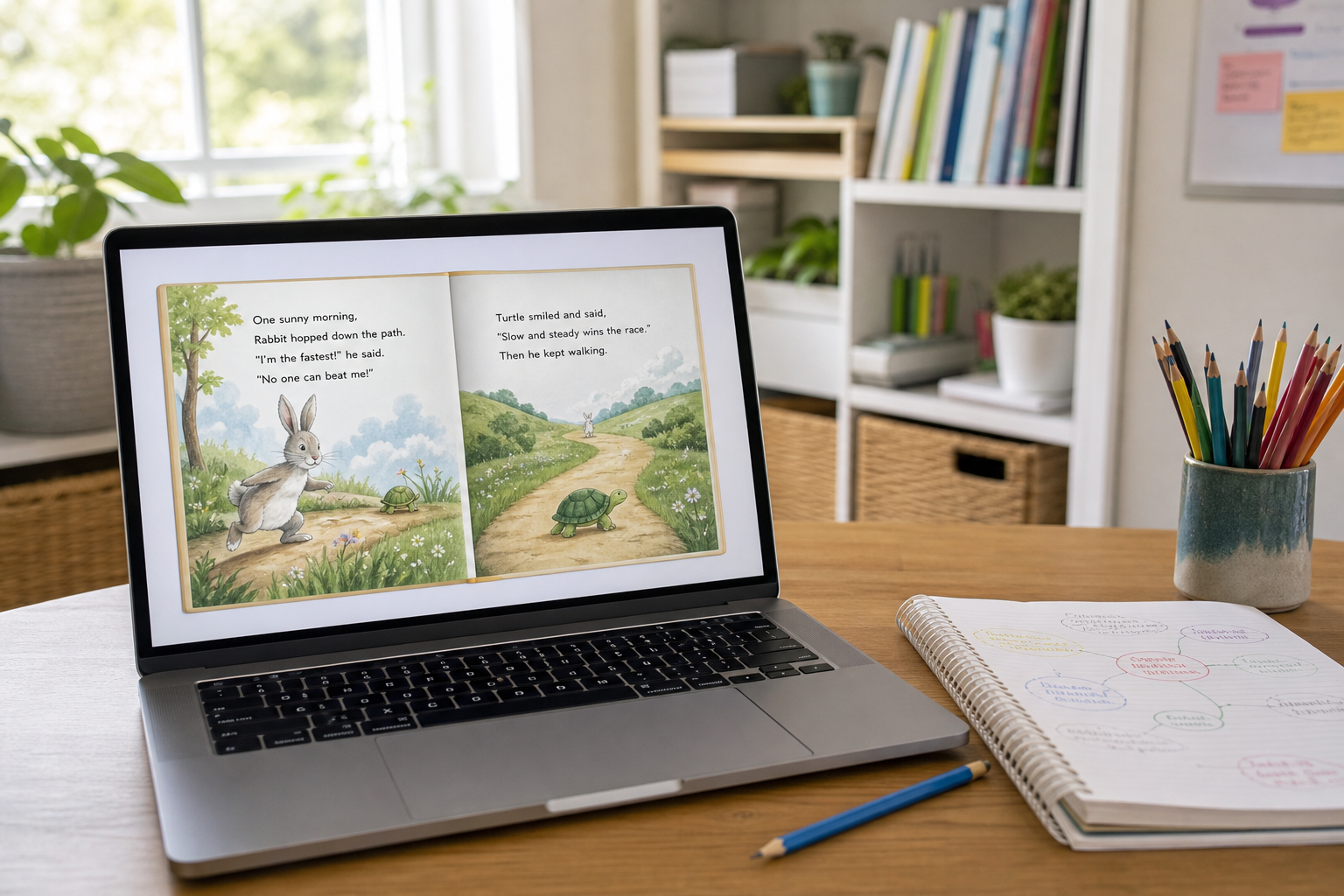
Previewing a free sample is a low-risk way to test speech-language pathology resources for preschoolers before purchasing a full set.
Frequently Asked Questions About Speech-Language Pathology Resources for Preschoolers
What are speech-language pathology resources for preschoolers?
Speech-language pathology resources for preschoolers are structured materials, such as story-based books, vocabulary boards, and sound-loaded narratives, that help children ages 2 to 7 build language, articulation, and communication skills. They are typically designed for use by SLPs, teachers, and families.
How do SLPs use story-based resources in therapy sessions?
SLPs usually read a short story aloud, model a target word or sound several times, and then follow the story with guided play or conversation. This Read, Model, Play sequence keeps sessions brief while still offering several chances to practice the target.
Why is the preschool period important for speech and language intervention?
The preschool years are a period of rapid brain development, so consistent language modeling during this window can have a meaningful long-term impact. Addressing needs early often reduces the intensity of support required later on.
What is the difference between Core Stories and Sound Stories?
Core Stories focus on a single core vocabulary word and support flexible language modeling, including AAC use. Sound Stories, by contrast, are illustrated narratives loaded with a clinician-selected speech sound for articulation and phonology practice.
How much do digital SLP resources typically cost?
Pricing varies by title, bundle size, and licensing, so it is best to check the current listing on the seller's Teachers Pay Teachers store before purchasing. Bundled collections are usually priced lower per item than individual titles.
How long does a Read, Model, Play session take?
A Core Story is designed to take about five minutes to read, followed by additional time for modeling and child-led play. The exact length can vary depending on the child's engagement and the setting.
What mistakes do adults make when modeling vocabulary for preschoolers?
A common mistake is modeling a word only once instead of repeating it naturally throughout an activity. Another is skipping the child's communication supports, such as an AAC device, when demonstrating the target word.
What are best practices for carryover at home?
Best practice involves repeating the same core word or sound across multiple settings, such as home, school, and therapy, using simple tip sheets as a reminder. Short, frequent practice tends to work better than occasional long sessions.
Can these resources support children who use AAC?
Yes, Core Stories are built to support flexible language modeling that includes augmentative and alternative communication (AAC) users. Adults can model the target word on a child's AAC system while reading and during play.
What ages benefit most from story-based speech resources?
Children roughly ages 2 to 7 tend to benefit most, since this range covers early core vocabulary development through early articulation and phonology goals. Materials are often adaptable for slightly older or younger learners depending on need.
Are free samples available before purchasing a full resource?
Yes, free samples such as a THERE Core Story, a sample from a core-vocabulary calendar, and SW and CH Sound Story samples are commonly offered. Trying a free sample first helps confirm a resource fits a child's goals before buying a bundle.
Where can I purchase speech-language pathology resources for preschoolers?
Digital Core Stories, Sound Stories, and bundles are typically purchased and downloaded through a Teachers Pay Teachers store. It is a good idea to confirm exact pricing, file formats, and licensing on the current listing before checkout.
Can classroom teachers use SLP resources without a therapist present?
Yes, many materials, including team supports and core-word tip sheets, are designed so classroom teams and families can model shared vocabulary even without an SLP in the room. This helps reinforce goals across more of a child's day.
What is included in a foundational Core Stories bundle?
A foundational bundle generally includes dozens of individual Core Stories paired with a suggested weekly core-word planning sequence and a yearly calendar. Exact contents and licensing details can differ, so it helps to confirm the current bundle listing.
Final Thoughts
Choosing the right speech-language pathology resources for preschoolers comes down to matching a format to a child's specific goal, whether that is core vocabulary, AAC modeling, or a target speech sound. Story-based options like Core Stories and Sound Stories make it easier to fit meaningful practice into short, repeatable sessions that fit real classroom and therapy schedules. Therefore, starting with a free sample, then building toward a fuller collection such as the Foundational 53-Pack, is a practical way for SLPs, educators, and families to find what works before committing to a full purchase.
