
Speech Sound Activities for Preschool: 7 Easy Ideas
Find speech sound activities for preschool that blend stories, modeling, and play practice. Explore Sound Stories samples from Little Speech Corner.
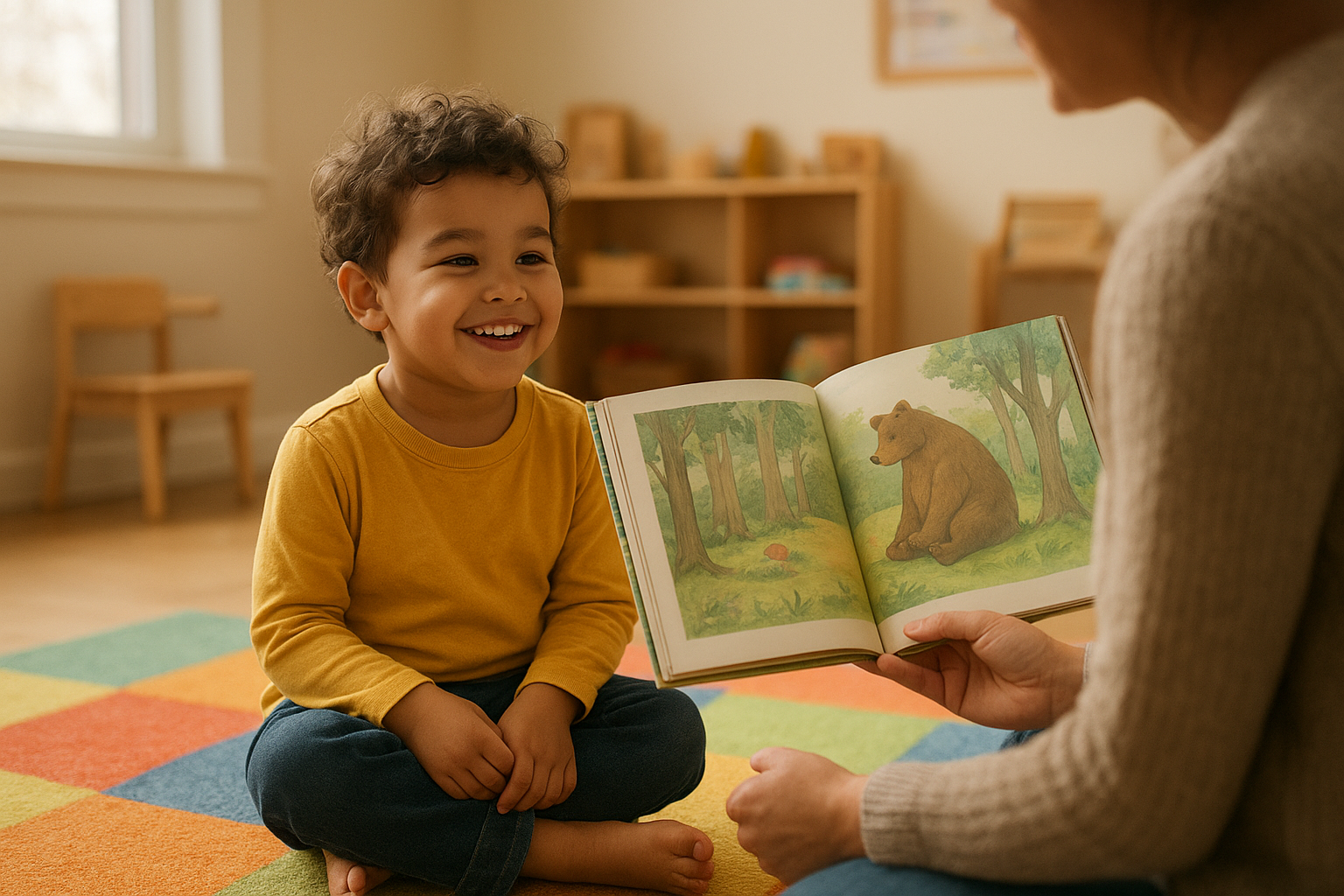
Speech sound activities for preschool give young children playful, repeated chances to practice the sounds they are still learning to produce clearly. For instance, a short story, a mirror game, or a snack-time word hunt can all turn ordinary moments into meaningful articulation practice. Because preschoolers learn best through play rather than drills, the most effective activities blend story, modeling, and hands-on interaction.
Quick answer: Speech sound activities for preschool are short, play-based practice opportunities—such as sound-loaded stories, mirror imitation, and repetition games—that help young children hear, produce, and generalize individual speech sounds in everyday routines.
A short, sound-loaded story is one of the easiest speech sound activities for preschool to start with.
What Are Speech Sound Activities for Preschool?
Speech sound activities for preschool are structured, low-pressure tasks designed to help children hear, imitate, and eventually produce specific sounds correctly. Unlike worksheet-style drills, these activities typically use stories, games, and everyday routines to make repetition feel natural rather than tedious.
In practice, this might look like reading a short story where the target sound appears repeatedly, then inviting the child to find or say similar words during play. According to the American Speech-Language-Hearing Association, most sounds follow a predictable developmental order, which is why clinicians and teachers often select activities based on a child's current sound inventory rather than a one-size-fits-all list.
Why Early Speech Sound Practice Matters
Clear speech helps preschoolers participate in conversations, follow classroom routines, and build confidence with peers. Therefore, early and consistent practice often supports smoother transitions into kindergarten literacy skills.
In addition, the Centers for Disease Control and Prevention notes that most children should be mostly understood by unfamiliar listeners by around age 4. When that is not happening, targeted speech sound activities for preschool—paired with professional guidance—can make a meaningful difference. Similarly, phonological development research summarized on Wikipedia shows that sound acquisition happens in a fairly consistent sequence, which helps explain why certain sounds are harder than others at this age.
The Read, Model, Play Approach to Sound Practice
Little Speech Corner's signature Read, Model, Play approach pairs a short Core Story or Sound Story—about five minutes of shared reading—with adult modeling of the target word or sound, followed by child-led interaction. As a result, children hear multiple natural repetitions before practicing on their own terms.
This same structure works well for children who use augmentative and alternative communication, since modeling can happen directly on a child's communication system. For a closer look at how this plays out session by session, the five-minute Core Story routines guide walks through a full example from start to finish.
7 Speech Sound Activities for Preschool Classrooms and Therapy Rooms
Below is a simple sequence that clinicians, teachers, and families can follow when introducing a new target sound. Each step builds on the last, moving from structured modeling toward independent, playful practice.
- Start with a sound-loaded story. Read a short, illustrated story that repeats the target sound naturally throughout the text so the child hears multiple examples in context.
- Use mirror play for sound shaping. Have the child watch their mouth in a small mirror while imitating the target sound, which helps them notice tongue and lip placement.
- Add a sound hunt around the room. Hide picture cards featuring the target sound around the space and have the child find and say each word aloud as they collect them.
- Pair sounds with core vocabulary words. Choose core words that contain the target sound so practice reinforces both articulation and functional, everyday communication at the same time.
- Practice sounds during snack time. Use naturally occurring snack words that contain the target sound, giving the child low-pressure repetition during a motivating daily routine.
- Use repetition games with visual supports. Play simple turn-taking games, such as matching or memory, using cards that show the target sound to build repetition without feeling like drill work.
- Send home a simple carryover card. Provide a short list of target words and a quick instruction so families or classroom teams can continue practice between structured sessions.
For teams looking to pair sound work with broader play-based goals, the play-based language activities guide offers additional ideas that complement this sequence.
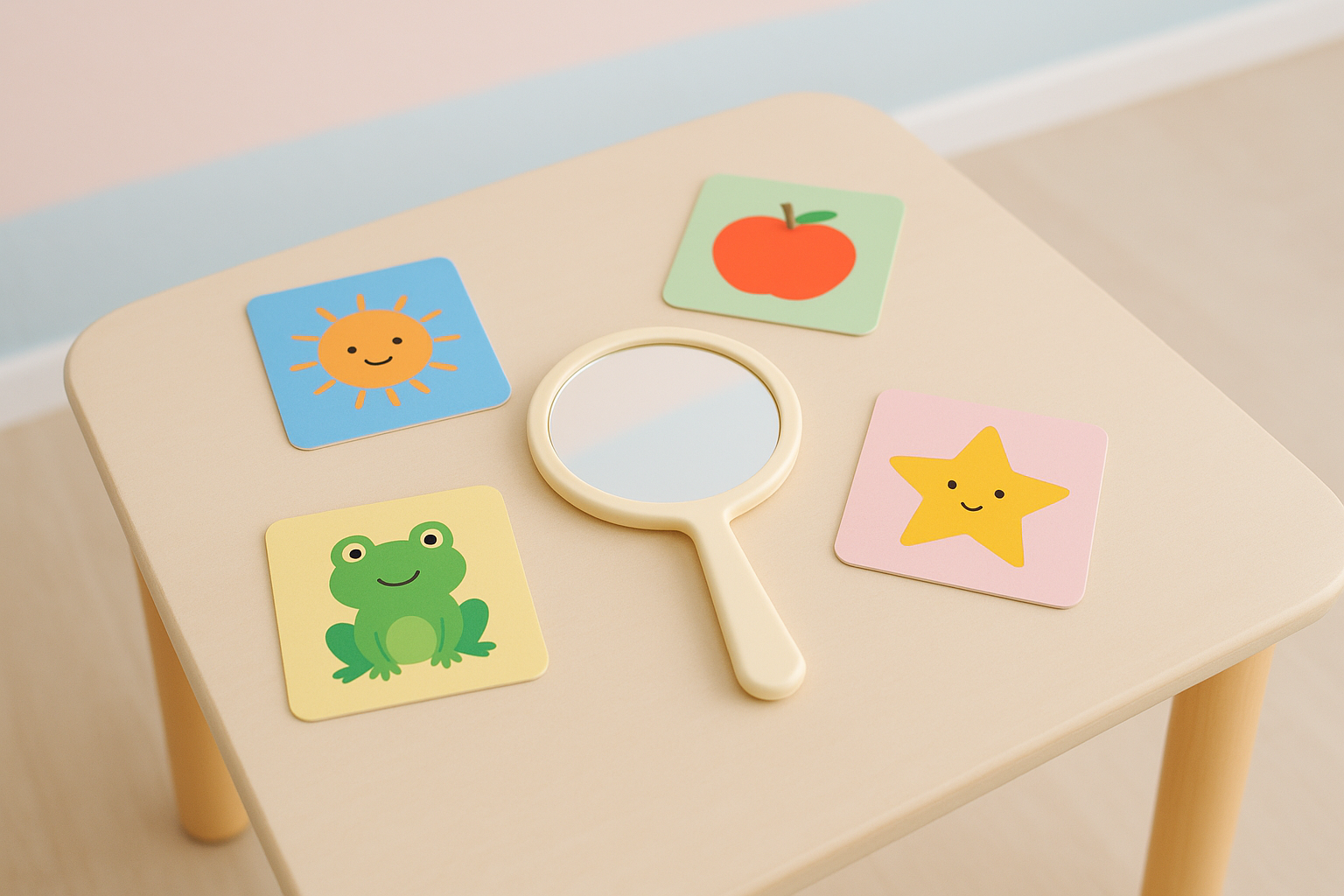
Simple tools like mirrors and picture cards support hands-on speech sound activities for preschool learners.
How to Choose Activities for Specific Target Sounds
Not every child needs the same sound at the same time, so clinicians typically select a target based on an assessment of the child's current sound inventory. Consequently, an activity built around the "s" sound will look different from one built around "r" or "ch."
Little Speech Corner's Sound Stories are organized by clinician-selected targets, which allows a teacher or SLP to match the story to the specific sound a child is working on. Free SW and CH samples make it easy to preview how a single sound can be woven throughout an entire narrative before committing to a full set.
Using Sound Stories to Extend Practice at Home and in Class
Sound Stories are illustrated, sound-loaded narratives created by Mrs. Gwen, a licensed SLP with more than 20 years of experience across early intervention, preschool, and elementary settings. Each story gives repeated opportunities to hear and practice a selected sound within connected, meaningful language rather than isolated word lists.
Because the stories are designed for shared reading, they transfer easily between the therapy room, the classroom, and the living room. Teams wanting a broader set of literacy-connected ideas can also explore the literacy-based speech therapy activities guide, while those supporting AAC users may find the AAC-friendly activities for preschool therapy resource especially useful. The full Sound Stories collection is available to browse and preview on the Little Speech Corner site.
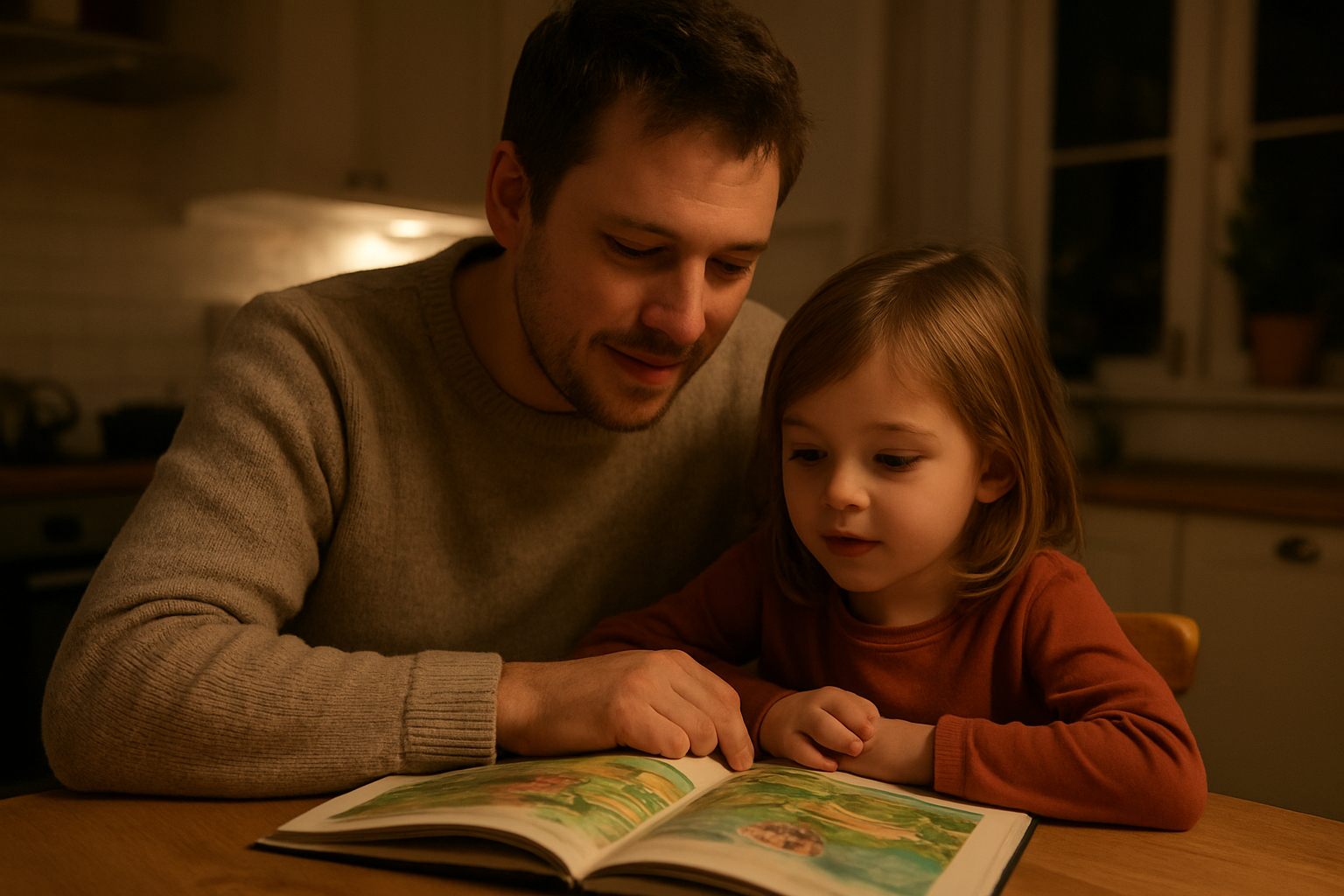
Carrying speech sound activities for preschool into the home helps reinforce classroom and therapy progress.
Common Mistakes to Avoid With Preschool Sound Practice
Even well-meaning adults can accidentally slow progress by correcting too frequently during play, which can make a child hesitant to talk at all. Instead, modeling the correct sound naturally, without demanding an immediate repeat, tends to keep the interaction positive.
Another common mistake is choosing a sound that is developmentally too advanced for the child's current stage. Furthermore, skipping repetition in favor of variety too quickly can limit how well a new sound generalizes. A brief, consistent routine—such as the approximately five-minute Read, Model, Play format—often works better than long, irregular sessions.
Frequently Asked Questions About Speech Sound Activities for Preschool
What are speech sound activities for preschool?
Speech sound activities for preschool are short, repeated practice opportunities that help young children produce individual sounds more clearly, often through stories, games, and modeling. They are typically guided by a parent, teacher, or speech-language pathologist.
How do I know if my preschooler needs speech sound practice?
A preschooler may benefit from extra practice if unfamiliar listeners struggle to understand them, or if certain sounds are consistently missing or swapped past the expected age. A speech-language pathologist can confirm whether a pattern is typical or needs targeted support.
What is the Read, Model, Play approach?
Read, Model, Play is a routine that pairs a short story with adult modeling of target vocabulary, followed by child-led interaction and play. It is the signature structure behind Little Speech Corner's Core Stories and Sound Stories.
How often should preschoolers practice speech sounds?
Short, frequent practice sessions, such as a few minutes several times a week, tend to be more effective than occasional long sessions. Consistency across home and classroom settings supports carryover.
What sounds do preschoolers typically master first?
Many preschoolers master early sounds such as m, b, p, h, and w before later-developing sounds like r, l, s, and th. Developmental timelines vary, so a professional evaluation is the best way to confirm individual progress.
How are speech sound activities different from general language activities?
Speech sound activities focus on how a child physically produces individual sounds, while language activities target vocabulary, grammar, and understanding. Both can overlap within the same story-based routine.
Can speech sound activities for preschool be used at home?
Yes, many speech sound activities for preschool are designed for home carryover, including simple sound hunts, mirror play, and short story readings. Parents and caregivers can reinforce skills introduced in therapy or the classroom.
What are Sound Stories?
Sound Stories are illustrated, sound-loaded narratives from Little Speech Corner that give children repeated chances to hear and practice a clinician-selected speech sound in connected language. Free SW and CH samples are available to preview the format.
How much do Sound Stories cost?
Pricing and licensing details for Sound Stories are listed on the Little Speech Corner Teachers Pay Teachers store and can vary by title or bundle. Checking the current TPT listing is the most accurate way to confirm cost.
How long does it take to see progress with speech sound practice?
Progress timelines depend on the child, the sound being targeted, and practice consistency, so there is no universal timeframe. A speech-language pathologist can set realistic, individualized goals based on an assessment.
What mistakes should I avoid when practicing speech sounds with preschoolers?
Common mistakes include correcting too often during play, choosing sounds that are too advanced, or skipping repetition. Short, positive, low-pressure practice tends to work better than drilling.
Are speech sound activities for preschool appropriate for AAC users?
Yes, speech sound activities for preschool can be adapted for children who use augmentative and alternative communication by pairing sound practice with core vocabulary modeling on their communication system. This keeps expressive goals connected to meaningful participation.
Final Thoughts
In summary, effective speech sound activities for preschool combine short stories, clear modeling, and plenty of low-pressure repetition rather than long drill sessions. Whether you are a classroom teacher, a private-practice SLP, or a parent looking to support carryover at home, starting with a sound-loaded story and building toward independent play tends to produce steadier progress. For a closer look at ready-made options, you can browse the full resource library at Little Speech Corner, preview free samples, and explore the Sound Stories collection created by Mrs. Gwen, M.A., CCC-SLP, to find the right fit for your learners.
