
Story Based Speech Therapy Activities for Ages 2-7
Discover story based speech therapy activities using core vocabulary and AAC to build language skills in young children. Explore free samples today.

Story based speech therapy activities use a repeated storybook or narrative as the foundation for building speech sounds, vocabulary, and language skills in young children. Instead of relying only on flashcards or drill lists, a clinician or caregiver reads the same story again and again, modeling target words each time. As a result, children hear rich, repeated language inside a context they actually enjoy, which makes new words and sounds easier to remember and use.
Quick answer: Story based speech therapy activities pair a repeated, predictable story with speech and language goals, letting children practice core vocabulary, AAC use, or articulation sounds through reading, modeling, and related play instead of isolated drills.
What Are Story Based Speech Therapy Activities?
Story based speech therapy activities are sessions or lessons organized around one narrative that gets read multiple times, with speech and language goals woven directly into the plot. For example, a story about a bear looking for his lost mitten might repeat the core word "more" every time he checks a new hiding spot. Therefore, the child practices that word in a meaningful sentence rather than in a random list.
This approach sits within the broader field of speech-language pathology, the professional discipline focused on assessing and treating communication and swallowing disorders, as described by the American Speech-Language-Hearing Association (ASHA). In particular, story-based formats are popular because they blend clinical goals with the natural, engaging structure of a book.
Story based speech therapy activities turn a simple picture book into a full language-building session.
Why Story-Based Speech and Language Activities Work
Story-based speech and language activities work because repetition inside a meaningful context helps new words stick. According to the National Institute on Deafness and Other Communication Disorders (NIDCD), nearly 1 in 12 children ages 3 to 17 in the United States has a disorder related to voice, speech, language, or swallowing. Consequently, many SLPs and teachers look for formats that keep children motivated across dozens of practice repetitions.
In addition, a small set of highly reusable core words makes up a large share of everyday spoken language. Because a story can be selected or written to feature those exact words repeatedly, children get many natural opportunities to hear and use them without the session feeling repetitive or boring. Similarly, embedding a target articulation sound into a fun character or plotline gives children a reason to keep practicing beyond a simple word list.
Above all, stories give children something to talk about. A child who struggles to generate spontaneous language often has plenty to say about a familiar, favorite story, which opens the door for genuine, functional communication practice.
How to Use Story Based Speech Therapy Activities in Sessions
Setting up story based speech therapy activities does not require complicated materials. Instead, following a simple, repeatable process helps both new and experienced clinicians stay consistent from session to session.
- Choose a repeatable story. Pick a short, predictable book that naturally repeats target core words or sounds throughout the plot.
- Set two or three clear goals. Narrow the focus to a small number of specific targets so the session stays manageable.
- Read and model the language. Read the story aloud while emphasizing target words or sounds, modeling on an AAC device or core board when relevant.
- Invite the child to participate. Pause at predictable moments so the child can fill in a word, turn a page, or activate the device.
- Extend with play-based practice. Follow the reading with related play, such as acting out the story with props, to reinforce the same targets in a new context.
This five-step routine mirrors the "Read, Model, Play" approach used throughout Little Speech Corner's Core Stories, where each story pairs a read-aloud with hands-on activities designed to reinforce the same vocabulary in a second, playful context.
Core Vocabulary and AAC in Story Based Activities
Core vocabulary refers to the small set of high-frequency words, such as go, more, stop, and in, that make up the majority of what people say every day. For children who use augmentative and alternative communication, or AAC, learning to navigate and combine these core words is often more valuable long term than memorizing dozens of specific nouns.
Story based speech therapy activities are particularly well suited to core vocabulary instruction because a single story can be written or chosen to repeat the same three or four core words many times. As a result, an AAC user gets dozens of natural, low-pressure opportunities to locate and activate the same buttons in a meaningful sentence. Little Speech Corner's Core Stories collection was built around exactly this idea, giving SLPs and classroom teams a ready-made way to target core vocabulary through repeated, engaging narratives.
For a closer look at how one specific story-based lesson unfolds in practice, this sample core vocabulary story demonstrates how a simple plot can be structured around a handful of reusable core words.
Sound Stories: Story-Driven Articulation Practice
While Core Stories focus on vocabulary and AAC, story-driven articulation practice takes the same narrative format and applies it to specific speech sounds instead. For instance, a story built around a snake character might repeat the /s/ sound dozens of times across a few pages, giving a child extensive practice without feeling like a drill sheet.
Little Speech Corner's Sound Stories resources apply this exact concept, embedding target sounds into short, engaging narratives so articulation practice stays motivating for children ages 2 to 7. Furthermore, because the format matches Core Stories, teams already familiar with one resource can adopt the other with minimal extra training.
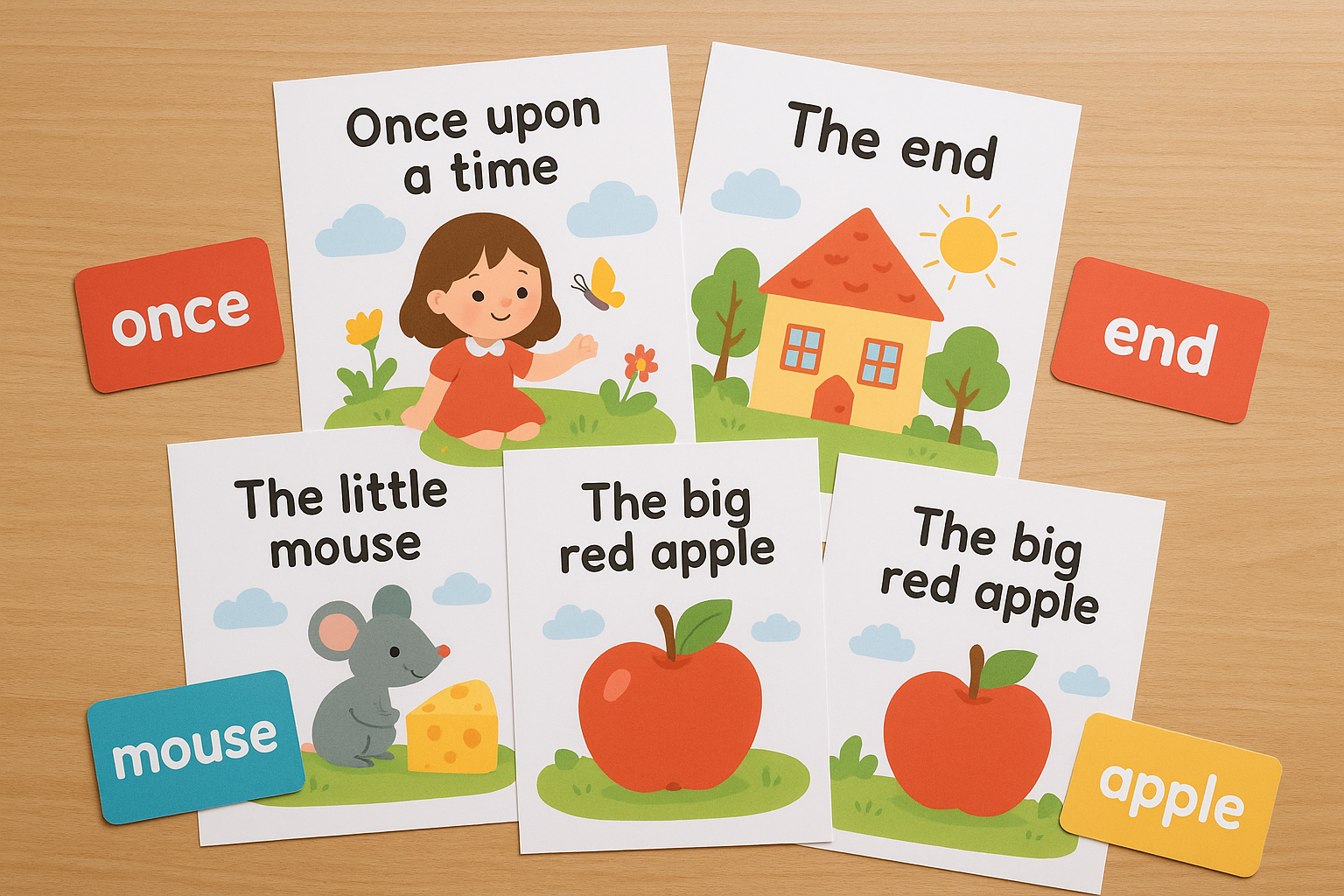
Printable story pages make it easy to repeat target words across multiple sessions.
Bringing Story-Centered Therapy Home and to the Classroom
Story-centered therapy works best when it does not stay locked inside a single therapy room. Instead, sharing the same story with classroom teachers and parents multiplies the number of meaningful repetitions a child receives each week. For guidance on setting up supportive routines at home, this article on how to create a language-rich environment offers practical, everyday strategies that pair naturally with story-based practice.
Children with autism spectrum disorder often respond particularly well to the predictability of a repeated story, since the consistent structure reduces uncertainty around what will happen next. For more background on supporting this population, see this overview of autism spectrum disorders and speech development.
Finally, families searching for additional in-person support can review this guide to finding speech therapy near me, which explains how to locate a qualified local provider to complement home and classroom practice.
Choosing the Right Story Based Speech Therapy Activities
Not every storybook makes a strong therapy tool. When evaluating story based speech therapy activities, look for a few specific features: repeated target vocabulary or sounds, simple and predictable plots, and an accompanying play-based extension activity. Above all, the story should hold a young child's attention across multiple repeated readings, since repetition is where much of the learning happens.
Little Speech Corner offers a free introductory Core Vocabulary sample story for teams who want to try the approach before committing to a full bundle, such as the Core Stories Foundational 53-Pack. Because the format stays consistent across every story, SLPs, classroom teams, and caregivers can move between resources without needing to relearn a new system each time.
Frequently Asked Questions About Story Based Speech Therapy Activities
What are story based speech therapy activities?
Story based speech therapy activities are sessions built around a repeated storybook or narrative that gives an SLP or teacher natural, meaningful chances to target speech sounds, vocabulary, and language goals. Instead of isolated drills, the child practices skills while listening to, retelling, or acting out a story.
How do story based speech therapy activities support core vocabulary?
A repeated story naturally uses high-frequency core words like more, go, stop, and in throughout the plot, so children hear and practice them many times in context. This repetition helps core vocabulary transfer into spontaneous, everyday communication.
Why are story based speech therapy activities effective for AAC users?
Story based speech therapy activities give AAC users predictable, repeated language models paired with a device or core board, which builds confidence and reduces the guesswork of finding new vocabulary each session. The familiar story structure also frees up cognitive energy for practicing navigation and combining words.
What age range benefits most from story based speech therapy activities?
Children roughly ages 2 to 7 tend to benefit most, since this is when early language, articulation, and social communication skills are developing rapidly. However, older students with language delays or autism can also benefit from adapted story-based formats.
How long should a story-based speech therapy session last?
Most story-based sessions run between 20 and 30 minutes, which is enough time to read the story, model target words, and add a related play activity. Shorter 10 to 15 minute versions work well for classroom carryover or home practice.
What is the difference between story-based activities and traditional drill-based therapy?
Traditional drill-based therapy usually isolates a skill through repeated flashcards or word lists, while story based speech therapy activities embed that same skill inside a meaningful, engaging context. As a result, many children stay more motivated and generalize skills faster with story-based formats.
How much do story based speech therapy resources typically cost?
Digital story-based resources for SLPs commonly range from a few dollars for a single story to larger bundled packs priced between $20 and $60. Free introductory samples are often available before committing to a full bundle.
What common mistakes should be avoided when using story-based speech therapy activities?
A common mistake is changing the story every session, which removes the repetition children need to internalize new words. Another is skipping the play-based follow-up, which is where much of the real practice and generalization happens.
Can parents use story based speech therapy activities at home?
Yes, parents can absolutely use story based speech therapy activities at home by reading the same story repeatedly and modeling target words during daily routines. Consistency between home and therapy sessions significantly boosts carryover.
How do Sound Stories differ from Core Stories?
Sound Stories are designed to target specific articulation sounds within a narrative, while Core Stories focus on building core vocabulary and AAC use. Both follow a similar story-based format but serve different primary goals.
What best practices help make story-based speech therapy activities successful?
Repeating the same story across several sessions, modeling rather than quizzing, and pairing the story with a hands-on play activity are all best practices. In particular, following a consistent read, model, play routine helps children know what to expect and stay engaged.
How often should story based speech therapy activities be used in a week?
Using the same story two to four times per week, across therapy, classroom, and home settings, tends to produce the strongest results. Frequent, varied exposure across settings supports faster generalization of new language skills.
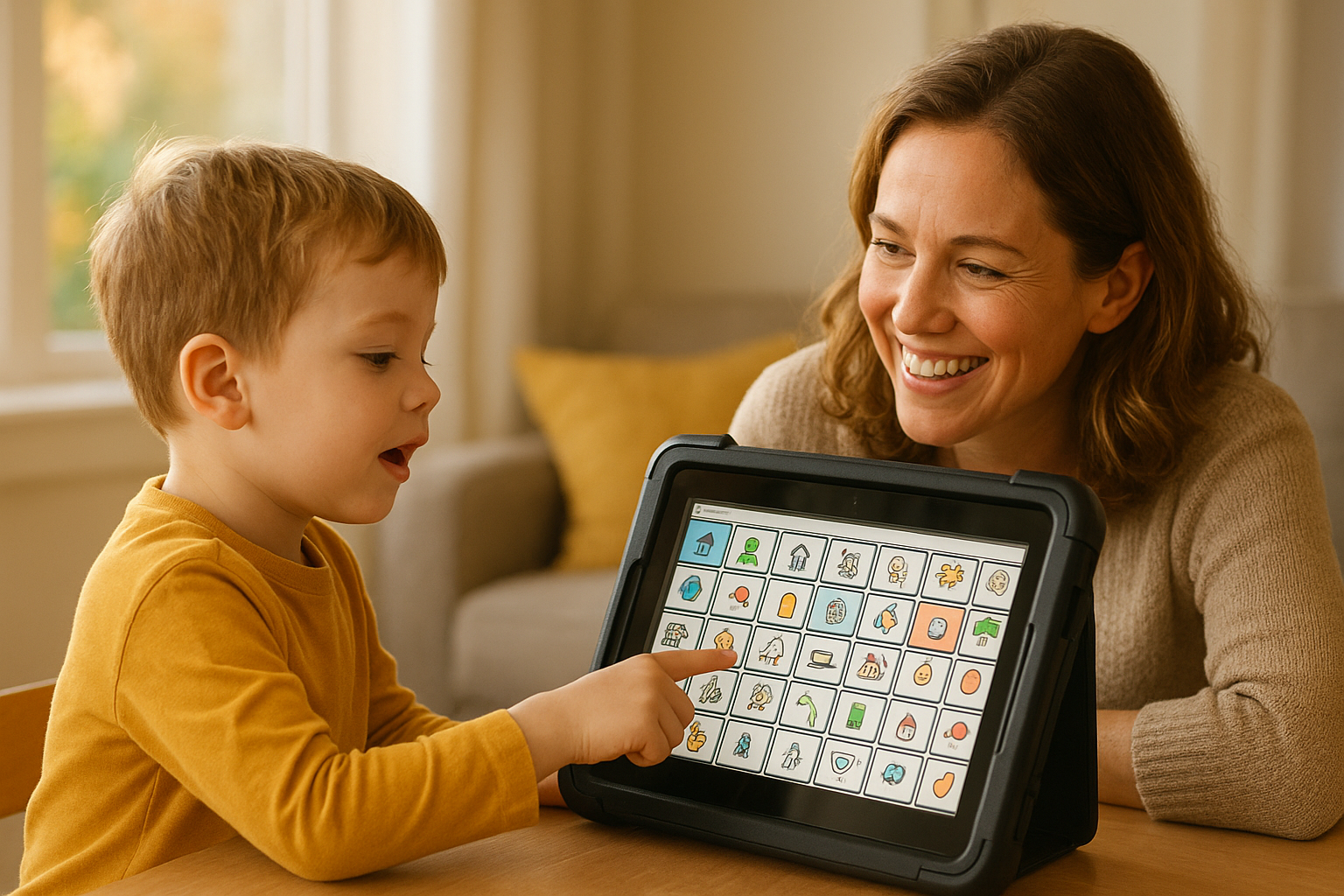
Extending story based speech therapy activities into the home supports faster carryover of new skills.
Key Takeaways on Story Based Speech Therapy Activities
In summary, story based speech therapy activities give SLPs, teachers, and caregivers a practical way to combine clinical goals with engaging, repeatable narratives. Because a single story can carry core vocabulary, AAC practice, or targeted articulation sounds, children get many meaningful repetitions without the fatigue that often comes with drill-based work. Therefore, teams looking to boost engagement and generalization across sessions, classrooms, and home routines may find that shifting toward a story-centered format pays off quickly. Resources like Core Stories and Sound Stories from Little Speech Corner offer a ready-made "Read, Model, Play" framework for putting story based speech therapy activities into practice right away.