
Clinician-Selected Articulation Practice Materials Guide
Learn how clinician-selected articulation practice materials work, what to look for, and how story-based sound practice fits in. Preview free samples.

Clinician-selected articulation practice materials are speech sound resources that a speech-language pathologist (SLP) chooses and adapts for a specific child's target sounds. The SLP, not the worksheet, decides what to practice. This guide shows what to look for and how story-based options fit in.
Quick answer: Good articulation materials give plenty of natural exposure to chosen sounds, stay flexible, and keep play and communication at the center. The SLP selects targets and cues for each child.
What Are Clinician-Selected Articulation Practice Materials?
They are resources built so an SLP can plug in the right sounds for the right child. Instead of a fixed program, the clinician picks target speech sounds, word positions, and cues.
This matters because speech sound errors differ from child to child. For background on speech sound disorders, see the American Speech-Language-Hearing Association. You can also explore our guide to phonological processes for pattern-based thinking.
Why Clinical Judgment Comes First
A resource can supply great content, but it cannot assess a child. Targets, cues, and goals should come from evaluation and ongoing observation.
Therefore, the best materials make the SLP's job easier rather than replacing it. They offer clear visuals, repeated exposure, and room to adjust.
These resources provide educational support and do not replace individualized assessment, clinical judgment, or speech-language therapy. An SLP should select speech targets and cues for each child.
An SLP shares an illustrated story as part of articulation practice.
What to Look for in Articulation Practice Materials
Not every resource suits every caseload. In particular, check these features:
- Flexibility, so you can choose the target sounds.
- Connected language, not only isolated words.
- Clear visuals that point out target words.
- Low-pressure use that does not require repetition.
- Easy carryover for classrooms and families.
Our roundup of resources for busy school-based SLPs covers more selection tips.
Story-Based Sound Practice for Young Children
Stories give children a reason to listen. Sound-loaded stories repeat target sounds naturally inside a narrative, so practice feels like reading rather than drill.
Little Speech Corner Sound Stories are illustrated, sound-loaded narratives for clinician-selected articulation and speech-sound practice. They describe target-word visuals, noticeable spelling and sound patterns, shared reading, and clinician-selected follow-up. Mrs. Gwen, Gwen Swire, M.A., CCC-SLP, created them from more than 20 years of SLP experience. That background shapes the design; it is not an endorsement or validation of any outcome.
For more on this format, read about printable articulation stories.
How to Use a Sound Story Step by Step
- Confirm the target sounds and cues with the SLP before you begin.
- Preview the story and note the target words and visuals.
- Read together, welcoming any communication mode the child uses.
- Model target sounds naturally and pause so the child can join in.
- Move into child-led play and weave in target words, then share notes with the team.
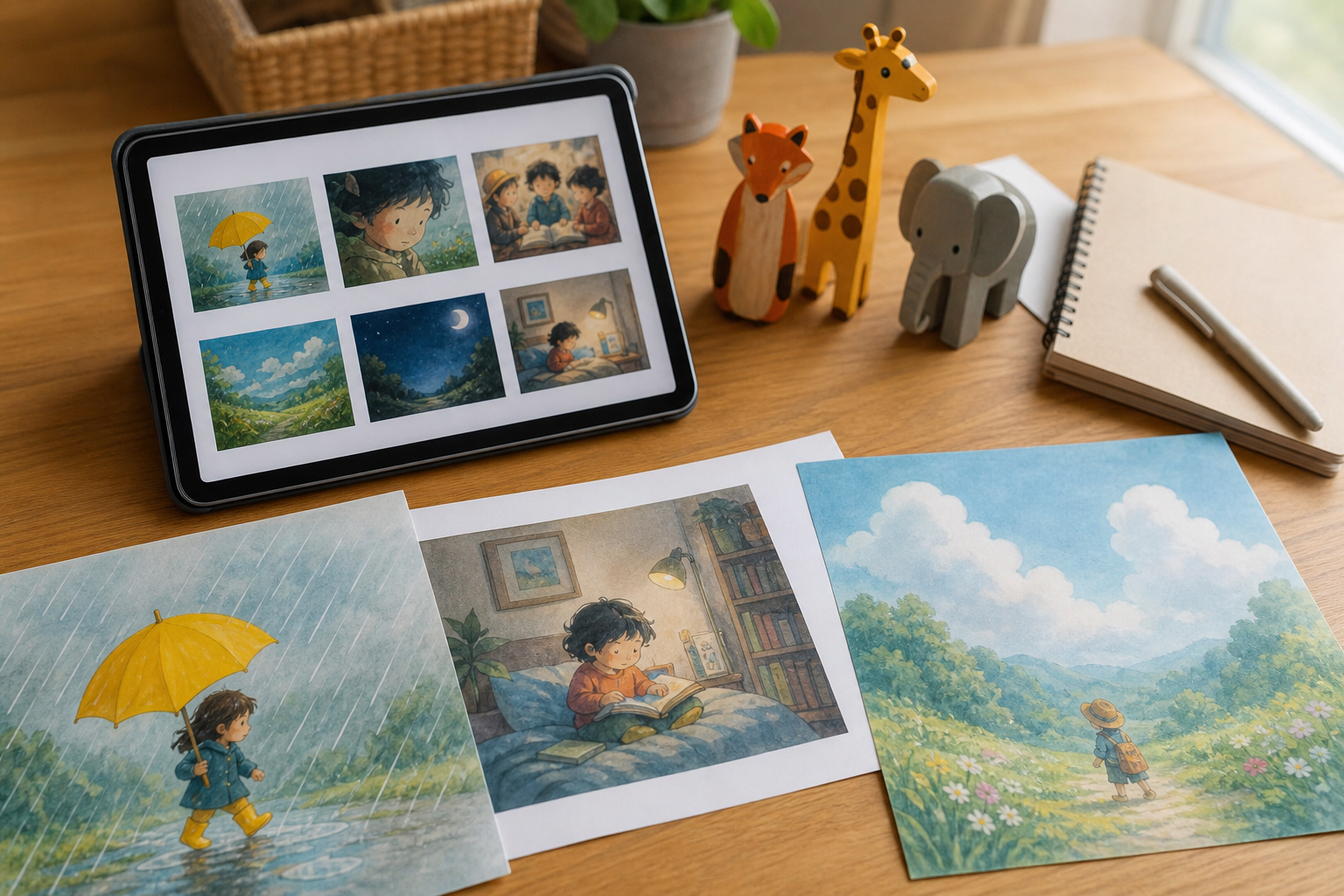
Story pages and toys set up for play after reading.
Respecting Every Communication Mode
Some children use augmentative and alternative communication (AAC), such as picture boards or speech-generating devices. Keep the child's full AAC vocabulary available at all times.
Also, follow the child's lead. Invite, model, and wait. Never force a child to speak.
Preview Before You Buy
Free SW and CH Sound Story samples let you test the format with your own caseload. Downloads and purchases happen in the Little Speech Corner store on Teachers Pay Teachers (TPT). Browse the full approach at Little Speech Corner, and confirm each TPT listing for current details and licensing before sharing with a team.
If you serve preschoolers, see these printable resources for preschool SLPs and our look at story-based resources for young children.
Frequently Asked Questions
What are clinician-selected articulation practice materials?
They are articulation resources that an SLP chooses and adapts for a specific child's target sounds. The SLP decides the sounds, cues, and level of support.
Why should an SLP choose the targets?
Speech sound errors have different causes and patterns. An SLP uses assessment and clinical judgment to pick targets that fit the individual child.
What ages are these materials usually for?
Little Speech Corner resources are designed primarily for young communicators, ages 2 to 7. The SLP decides whether a given story suits a particular learner.
How are Sound Stories different from flashcards?
Sound Stories place target sounds in connected, illustrated narratives rather than isolated words. Children hear the sounds repeatedly in a meaningful context.
Do I need to make the child repeat every word?
No. Child-led, low-pressure interaction is recommended. Model the sounds and invite participation without requiring repetition.
Can I use articulation stories with a child who uses AAC?
Yes, with the child's full communication system available at all times. Augmentative and alternative communication (AAC) includes tools like picture boards and speech-generating devices, and the SLP can plan how to combine them with sound practice.
Are there free samples to preview?
Yes. Free SW and CH Sound Story samples are available through the Little Speech Corner Teachers Pay Teachers (TPT) store.
Where do I get Sound Stories?
Purchases and free downloads are completed through the Little Speech Corner TPT store. Check each listing for current details.
How long should a story-based session take?
A shared reading can fit in a few minutes, followed by interaction and play. Length should flex to the child's attention and engagement, and no timing is tied to outcomes.
What is a common mistake with articulation practice materials?
A common mistake is choosing targets from a worksheet instead of an assessment. Another is drilling so heavily that play and communication suffer.
Can families use these materials at home?
Families can share stories for fun and carryover when the SLP has guided which sounds to highlight. Materials support but do not replace therapy.
Can I share one purchase with my whole school team?
Check the current TPT listing for licensing terms before sharing a resource across staff or a school. Licensing varies by listing.
Conclusion
Clinician-selected articulation practice materials work best when the SLP chooses the targets and the resource supplies warm, repeatable exposure. Look for flexibility, connected language, clear visuals, and low-pressure play. Try a free Sound Story sample on TPT to see whether the format fits your caseload.
