
Core Vocabulary Activities for Preschool That Work
Discover core vocabulary activities for preschool using Read, Model, Play storytelling. Try a free Core Story sample and build AAC-friendly routines today.
Core vocabulary activities for preschool give young children repeated, playful chances to use the same small set of powerful words across daily routines. For speech-language pathologists (SLPs), special educators, and classroom teams, these activities turn a handful of flexible words, like go, more, stop, and all done, into tools a child can use almost anywhere, from circle time to snack time. Because core words appear across so many contexts, practicing them through stories, songs, and play builds language that actually generalizes beyond a single lesson. This guide walks through what core vocabulary activities for preschool look like, why they matter for both verbal and AAC-using learners, and how a simple Read, Model, Play approach can put them into daily practice.
What Are Core Vocabulary Activities for Preschool?
Core vocabulary activities for preschool are short, repeatable exercises, such as shared stories, songs, and guided play, that model a small set of high-frequency words a child can reuse across many situations. Rather than teaching single-use nouns, these activities focus on flexible words like want, go, and more that work in almost every sentence. Over time, repeated modeling helps preschoolers initiate communication more independently, whether they speak, sign, or use AAC.
In practice, this looks like reading a short, illustrated story that features one target word, then pausing to model that word with the child's own communication system. Afterward, adults extend the word into play, snack time, or a transition routine so the child hears it repeated in a new context. Because the same word shows up again and again throughout the day, children have far more chances to notice it, imitate it, and eventually use it on their own.
Why Core Vocabulary Matters for Preschool Communication
Research on early language and AAC suggests that a surprisingly small set of words accounts for most of what preschoolers actually say. For example, resources summarized by PrAACtical AAC note that roughly 200 to 400 flexible core words make up a large share of everyday spoken language, often cited at around 80 percent across contexts. Consequently, focusing therapy and classroom time on this smaller word set tends to produce more communication payoff than teaching a long list of topic-specific nouns.
This matters even more for children who use AAC. According to the American Speech-Language-Hearing Association (ASHA), consistent exposure to the same core vocabulary across settings helps AAC users build motor planning and faster access on their device or board. In addition, preschoolers between roughly ages 2 and 7 are at a developmental stage where the CDC's early language milestones emphasize rapid vocabulary growth, making this window especially valuable for repeated core-word practice.
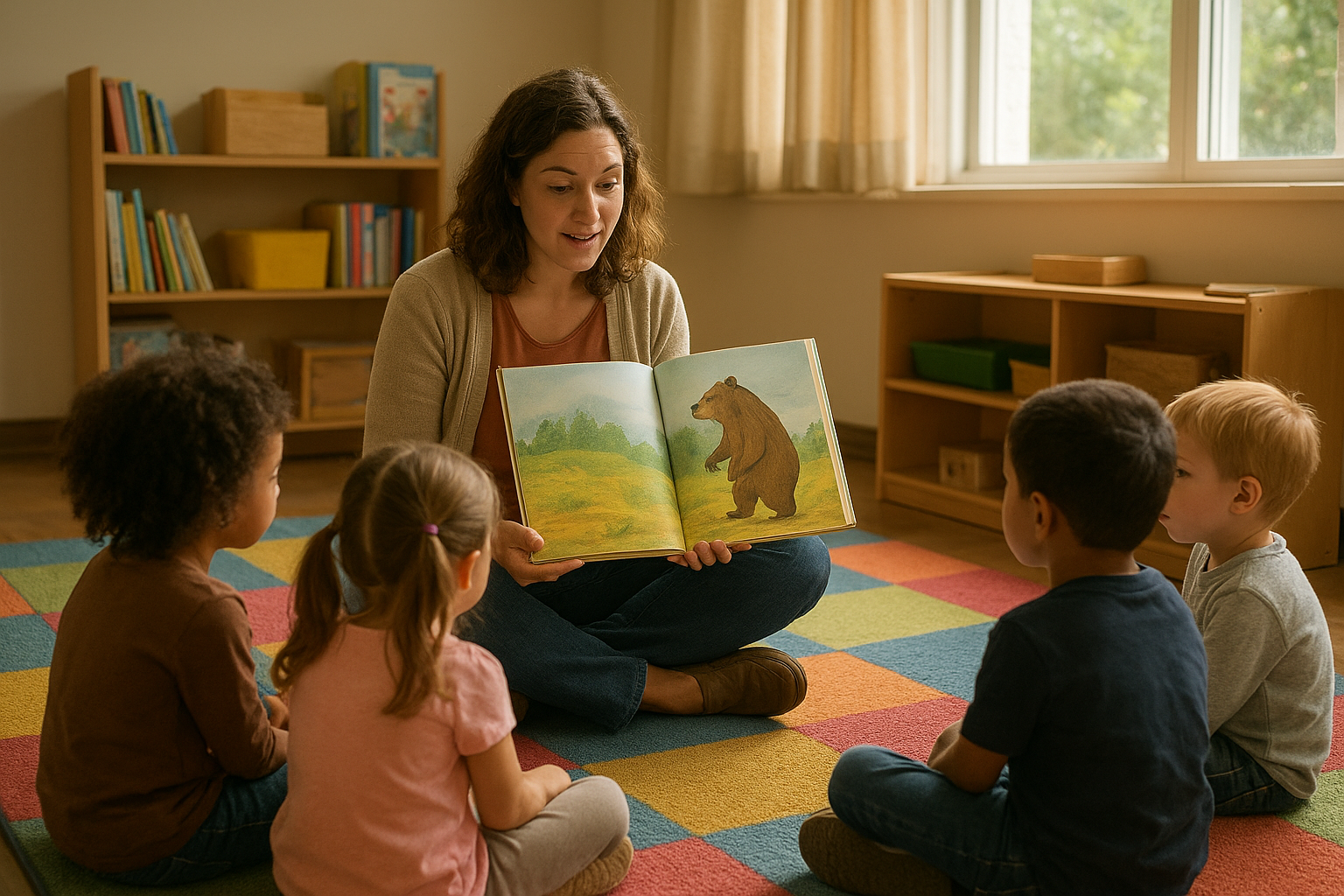
Shared reading is one of the simplest core vocabulary activities for preschool classrooms.
The Read, Model, Play Approach
Little Speech Corner's Read, Model, Play approach, developed by Gwen Swire, M.A., CCC-SLP, offers one practical structure for running core vocabulary activities for preschool. A short Core Story provides about five minutes of shared reading and core-word modeling; that length is a helpful starting point rather than a promised outcome, since every child engages differently. Afterward, the adult models the target word using the child's communication supports, then shifts into child-led play so the word gets used again in a new, motivating context.
Specifically, the steps below outline how a single session can flow from story to play:
- Choose one flexible core word, such as go or more, that fits an upcoming classroom routine, therapy goal, or home activity for the child.
- Share a short, illustrated Core Story in about five minutes, pointing to pictures and repeating the target word naturally throughout the reading.
- Pause after reading and model the core word again using the child's own communication method, whether that is speech, sign, or an AAC device.
- Transition into child-led play that lets the child use the same core word in a new context, giving repeated, motivating chances to practice it.
- Reinforce the same core word across several days in the classroom, therapy room, and home so the child hears and uses it in varied situations.
For a closer look at pairing this structure with play, the guide on teaching core vocabulary during play-based speech therapy walks through additional examples session by session. Similarly, the breakdown of five-minute speech and language activities for preschoolers shows how short routines fit into a packed classroom schedule.
Core Word Activities for AAC and Preschool Classrooms
For children who use augmentative and alternative communication (AAC), a low-tech or electronic system that supports communication beyond speech, core vocabulary activities work best when the target word is modeled directly on the child's own device or board. In particular, adults should model the word themselves before expecting the child to produce it, since AAC learners need to see the word used naturally many times first.
Because consistency matters so much for AAC learners, pairing a Core Story with the same core word across the classroom, therapy room, and home helps the child locate and combine that word faster over time. The collection of best AAC activities for preschool speech therapy sessions offers further examples tailored specifically to device and board users.
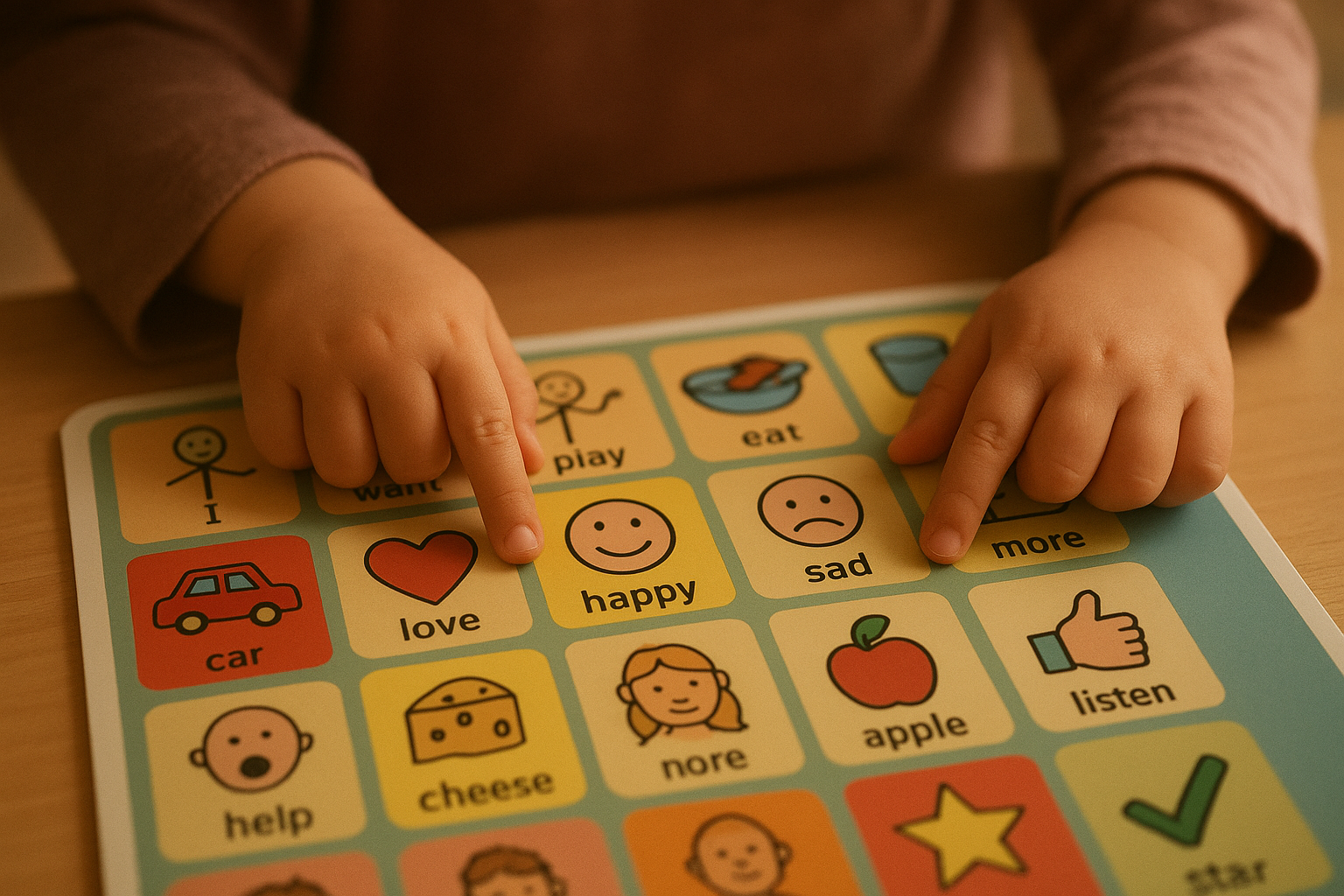
AAC boards work well alongside core vocabulary activities for preschool play routines.
Five Core Vocabulary Games for Preschool Circle Time
Snack Time Core Word Play
During snack, model more and all done while passing out crackers or juice. Above all, keep the pace slow so the child has time to respond with speech, a gesture, or an AAC selection.
Core Vocabulary Story Time
Use a short Core Story focused on one word, then invite the group to repeat that word together on each page. As a result, even quieter children get low-pressure repetition without being singled out.
Outdoor Core Word Games
Stop-and-go games on the playground naturally fit the words stop, go, and more. Therefore, outdoor time becomes another chance to model the same core word children heard earlier that day.
Core Word Art and Sensory Play
Sensory bins and art tables offer natural chances to model in, out, and more while a child explores materials. In contrast to flashcard drills, this keeps modeling connected to real, motivating actions.
Technology-Free Core Vocabulary Songs
Simple repetitive songs that use go, stop, and more let the whole class practice together without any materials at all. For instance, a basic "ready, set, go" chant can be repeated several times in a row for extra exposure.
Building a Core Vocabulary Routine for Preschool Speech Sessions
Consistency tends to matter more than variety when building a lasting routine. Specifically, choosing one core word per week and supporting it with a story, a tip sheet, and a few repeated activities gives children far more exposure than switching targets daily. For a full walkthrough, the article on how to build a simple core vocabulary routine for preschool speech sessions breaks down a sample weekly schedule step by step.
Team supports, such as core-word tip sheets and a planning calendar, help classroom teachers, aides, and family members model the same word without constant check-ins. Little Speech Corner's Core Stories Foundational 53-Pack connects this idea to a suggested Core Word of the Week sequence across a full year, which is especially useful for school-based SLPs planning ahead. Printable supports for AAC classrooms specifically are covered further in the guide to core vocabulary printables for AAC classroom use.
Common Mistakes to Avoid
One common mistake is modeling a core word only once, then moving on before the child has a chance to notice it. Another is waiting for a child to initiate communication before modeling anything at all, rather than modeling first and inviting a response afterward. Finally, rotating target words too quickly, before a child has had several days of exposure, tends to slow progress rather than speed it up.
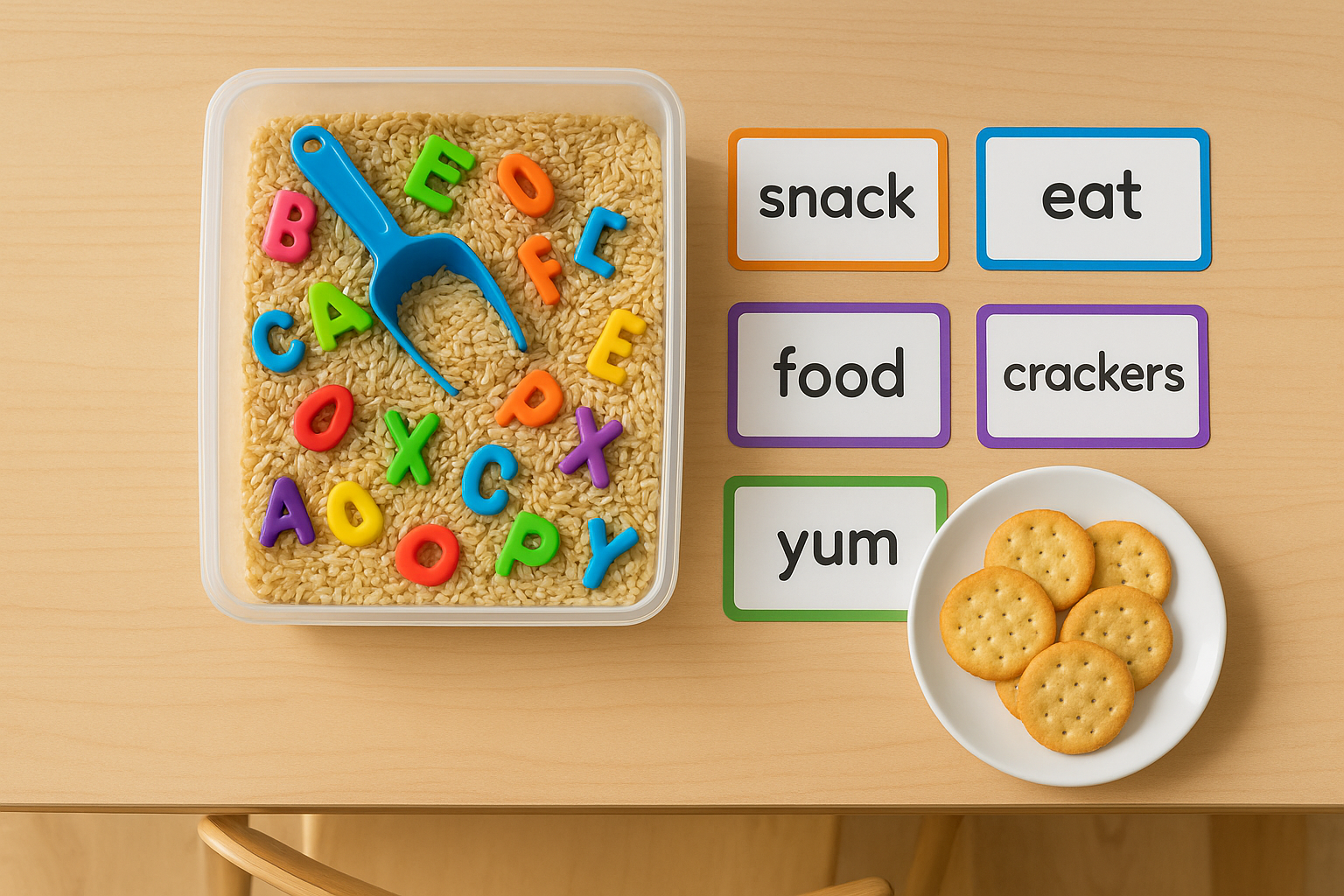
Visual word cards make core vocabulary activities for preschool easy to repeat at snack time.
Free Resources and Tools to Try
Before committing to a full bundle, many SLPs and teachers prefer to try a sample first. Little Speech Corner offers a free Core Story titled Apples for Anna, which models the core word THERE, along with a planning calendar featuring a sample story and free SW and CH Sound Story samples for articulation practice. Visitors can preview the full approach and browse available resources at Little Speech Corner before deciding which collection fits their caseload.
Purchases and downloads, including the Core Stories Foundational 53-Pack and individual Sound Stories, are completed through the Little Speech Corner store on Teachers Pay Teachers. Therefore, checking the current TPT listing is the best way to confirm exact file formats, licensing terms, and pricing before buying.
Frequently Asked Questions About Core Vocabulary Activities for Preschool
What are core vocabulary activities for preschool?
Core vocabulary activities for preschool are short, repeatable exercises that model a small set of flexible, high-frequency words a child can reuse across many situations. Examples include shared stories, songs, and guided play built around words like go, more, want, and stop.
How do core vocabulary activities support AAC users?
Core vocabulary activities give AAC users repeated practice locating and combining the same core words on their device or board. Because the vocabulary stays consistent across activities, children build motor planning and confidence faster than with rotating topic words.
Why do core words work better than teaching only nouns?
Core words such as go, more, and stop can be used across countless situations, while nouns like dog or truck apply to only one context. As a result, core vocabulary generalizes more quickly into spontaneous communication at home, school, and therapy.
How long should a daily core vocabulary activity take?
Many routines use a short five-minute shared story to introduce a core word, followed by extended play and interaction. The five-minute length is a helpful starting point rather than a guaranteed outcome, since engagement varies by child.
What age range benefits most from core vocabulary activities for preschool?
Children roughly ages 2 to 7 benefit most, since this is when early language, symbolic play, and AAC use typically develop. However, older learners building foundational language skills can also benefit from the same core-word approach.
What is the difference between core vocabulary and fringe vocabulary?
Core vocabulary consists of a small set of flexible words used across many topics, while fringe vocabulary includes specific, topic-related words like pizza or dinosaur. In practice, sessions often pair a core word focus with occasional fringe words tied to a theme.
How much does a core vocabulary resource like the Foundational 53-Pack cost?
Pricing and included files for bundles such as the Core Stories Foundational 53-Pack are set and updated on the Little Speech Corner Teachers Pay Teachers store. Because listings can change, it is best to check the current TPT page for exact pricing and licensing details.
What common mistakes do adults make when modeling core words?
A common mistake is modeling a core word only once instead of repeating it naturally throughout an activity. Another frequent error is waiting for a child to initiate before modeling at all, rather than modeling first and inviting a response afterward.
How can classroom teams stay consistent with core vocabulary modeling?
Teams can stay consistent by sharing a simple tip sheet or weekly planning calendar that lists the current core word and example phrases. Consequently, teachers, aides, and family members can all model the same word in different settings during the same week.
Can core vocabulary activities for preschool work for verbal children too?
Yes, core vocabulary activities for preschool support both AAC users and verbal children, since every young communicator benefits from flexible, reusable words. Verbal children often use the same stories and play routines to expand sentence length and word combinations.
How is a Core Story different from a typical storytime book?
A Core Story is intentionally short, around five minutes, and built to model one specific core word repeatedly through text and illustrations. A typical storytime book usually covers broader vocabulary and is not structured around a single, repeated target word.
What is the best way to start a core vocabulary routine for preschool speech sessions?
Start by choosing one core word that fits an upcoming routine, then pair it with a short story and a related play activity. From there, repeat that same word across several days or settings before introducing a new target.
In summary, core vocabulary activities for preschool work best when they stay simple, repeatable, and consistent across the people in a child's day. Starting with one flexible core word, modeling it through a short story, and then carrying that same word into play, snack time, and home routines gives children many natural chances to learn it. Whether a classroom team is just getting started or looking to deepen an existing routine, trying a free sample story or exploring a resource like the Core Stories Foundational 53-Pack is a practical next step toward more consistent, effective core vocabulary activities for preschool.