
Core Word Handouts: A Practical Guide for SLPs & Teachers
Core word handouts help SLPs and teachers model shared vocabulary together. Explore free samples and ready-made resources from Little Speech Corner.
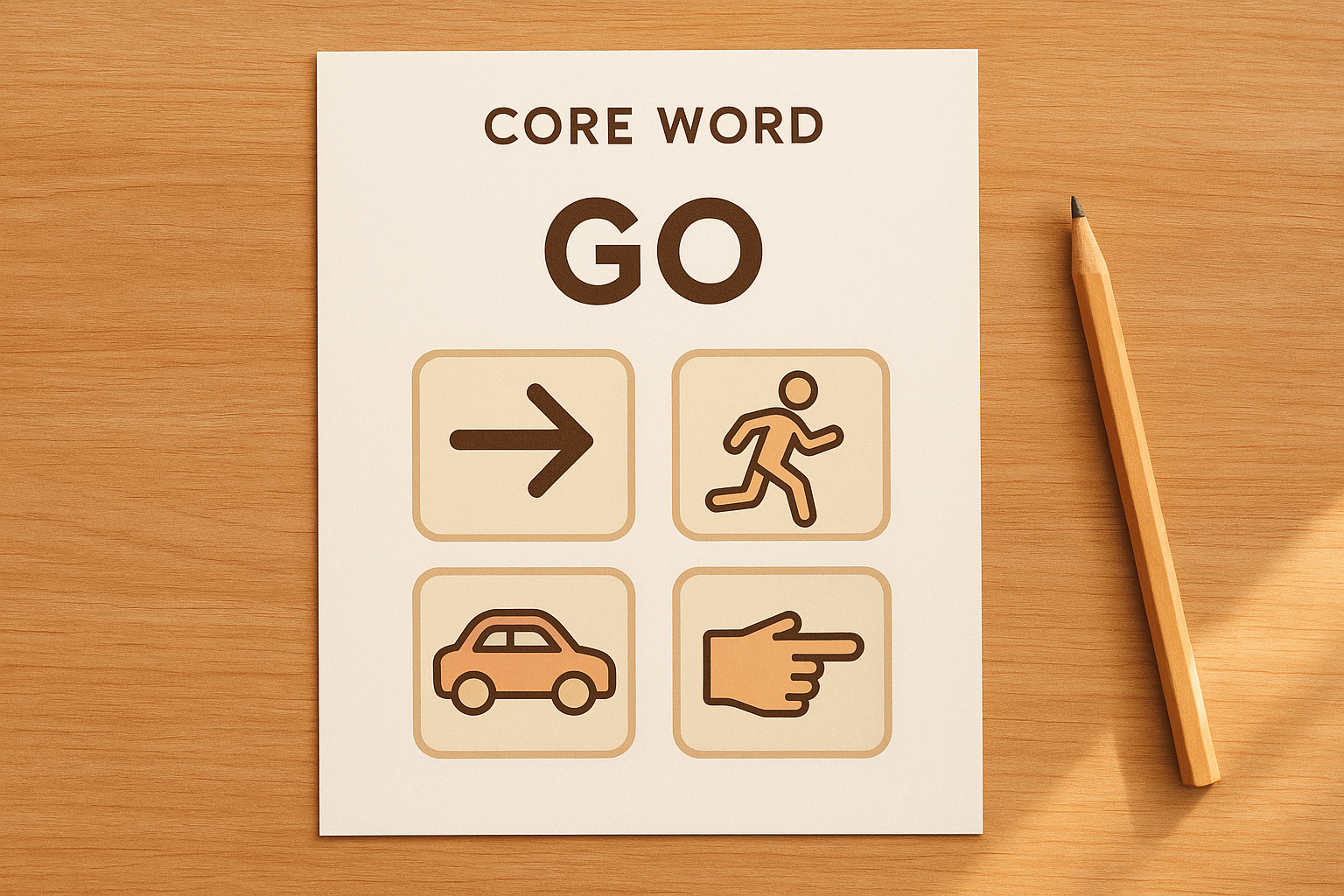
Core word handouts are the simple tip sheets that many speech-language pathologists (SLPs), teachers, and families use to stay consistent about which words a young communicator is practicing each week. Rather than juggling long vocabulary lists, a core word handout zooms in on one powerful word, such as GO, MORE, or STOP, and offers real modeling ideas adults can use right away. For teams supporting children ages two to seven, this focused approach often makes the difference between scattered exposure and language that actually sticks.
At Little Speech Corner, this idea sits at the heart of the Read, Model, Play approach: a short Core Story introduces a target word, and a matching handout or tip sheet carries that word into classroom routines, home carryover, and AAC (augmentative and alternative communication) use. The sections below unpack what core word handouts are, why they matter, and how to put them to work.
Quick answer: Core word handouts are short, single-word tip sheets that give SLPs, teachers, and families consistent, practical phrases for modeling a high-frequency vocabulary word during daily routines, play, and shared reading.
What Are Core Word Handouts?
Core word handouts are brief reference sheets built around a single core vocabulary word. Unlike broad vocabulary worksheets, each handout typically includes the target word, a few example sentences, and simple ways to model that word across daily moments, from snack time to circle time.
Core words themselves are the small set of high-frequency words, like GO, IN, STOP, and MORE, that make up a large share of everyday communication. Because these words are so flexible, they pair well with AAC systems, spoken language, and sign. For background on how augmentative communication systems use this kind of vocabulary, ASHA's overview of AAC is a helpful starting point, and the core vocabulary entry on Wikipedia offers a broader linguistic explanation.
Core word handouts keep modeling focused on one word at a time.
Why Core Vocabulary Tip Sheets Matter for Early Communicators
Young children, particularly those between ages two and seven, often need repeated exposure before a new word becomes part of their own expressive language. Consequently, scattering attention across dozens of vocabulary words each week can slow that process down.
Core word handouts solve this by narrowing the target to one word, which in turn allows every adult in a child's day, parents, teachers, and therapists alike, to model it the same way, at the same time. As a result, the child hears and sees the word far more often than a single therapy session could provide alone. The CDC's developmental milestones resource notes that language growth in early childhood depends heavily on this kind of repeated, everyday exposure rather than isolated instruction.
In addition, a focused handout removes guesswork. Instead of wondering what to model next, a classroom aide or grandparent can glance at a one-page sheet and know exactly what phrase to try during snack time or story time.
How Core Word Handouts Support AAC Use
For children who use AAC, a core word handout can show exactly where a target word sits on a communication board or device. Therefore, every adult modeling that word can point to the same symbol, which builds a shared, predictable system around the child rather than several inconsistent ones.
The Read, Model, Play Approach and Core Word Handouts
Little Speech Corner's signature method, Read, Model, Play, pairs a short Core Story, about five minutes of shared reading, with hands-on modeling and child-led play. Core word handouts fit naturally into the second step: once the story introduces a target word, the handout gives adults specific phrases and routines for continuing to model it afterward.
For example, a story built around the word GO might end with a handout suggesting phrases like "Ready, set, go!" during a game, or "Let's go outside" during transitions. Because the handout mirrors the story's vocabulary, the child encounters the same word in multiple meaningful contexts across one day.
Teams that want to see this approach in action can review the Core Words Guide, which connects individual Core Stories, the Foundational 53-Pack, and team modeling supports into one planning sequence.
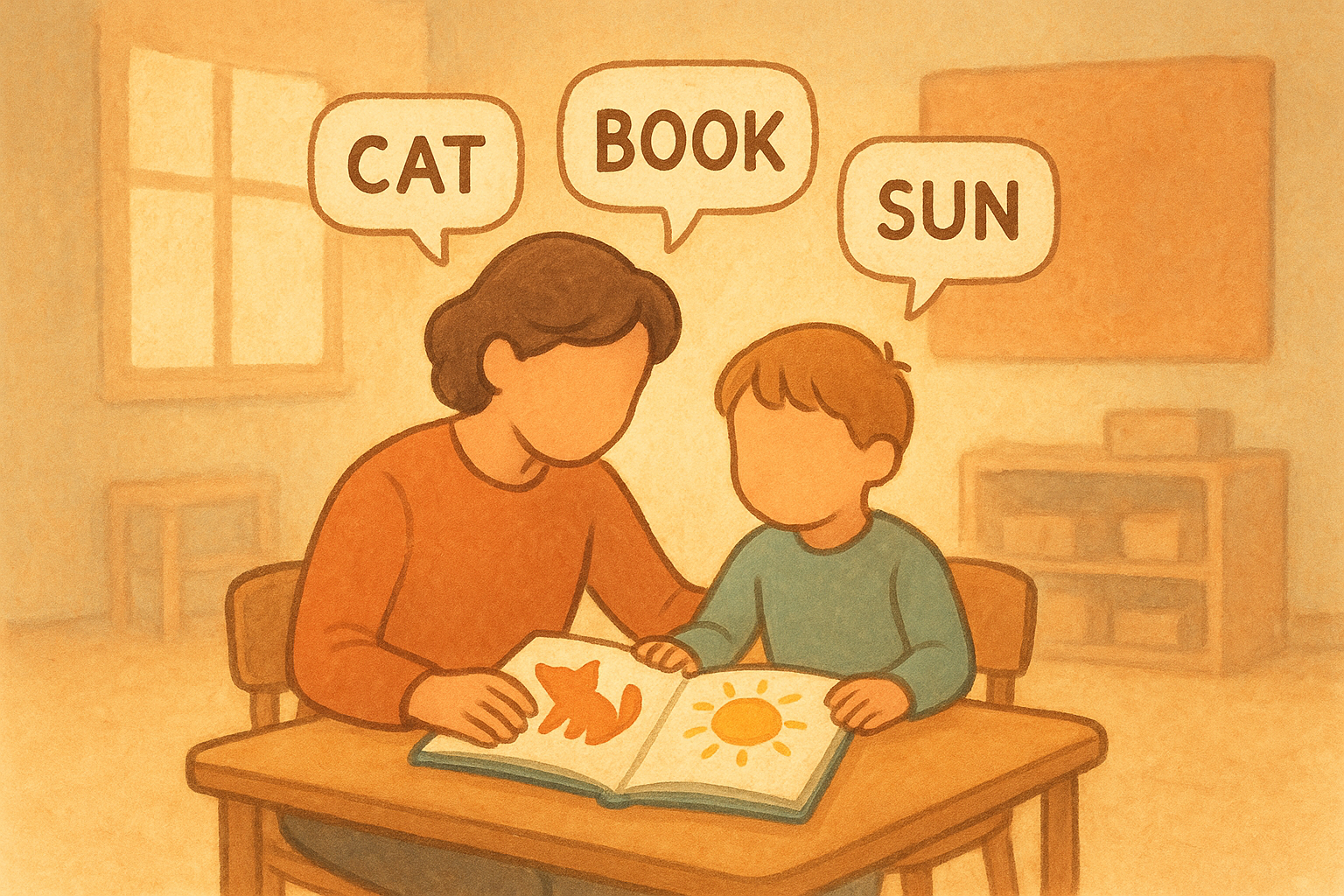
Shared reading gives core word handouts a natural starting point.
How to Use Core Word Handouts: A Step-by-Step Process
Introducing a core word handout works best as a short, repeatable routine. Specifically, the following five steps help teams move from selecting a word to handing off consistent modeling across settings.
- Choose one target word. Pick a single core word, such as GO, MORE, or STOP, that fits the child's current goals and everyday routines rather than selecting several at once.
- Pair the handout with a short story. Use a brief Core Story or picture book, around five minutes, to introduce the word in a meaningful context before reviewing the handout's ideas.
- Model the word during play. Follow the child's lead and use natural opportunities to say, sign, or select the target word several times without demanding a response.
- Share the handout with the team. Send the same handout to classroom staff and family members so the word gets modeled consistently across settings that week.
- Rotate on a schedule. Once the word feels established, move to the next word in a planned calendar rather than adding new targets too soon.
Choosing Core Vocabulary Resources That Fit Your Caseload
Not every classroom or caseload needs the same format. Some SLPs prefer standalone core word handouts for quick planning, while others want a full-year sequence already mapped out. In either case, matching the resource to the setting matters more than the format itself.
For a deeper comparison of handout formats and what each one covers, the guide to core vocabulary handouts for teachers and parents breaks down several practical options side by side.
Teams planning AAC-focused language goals may also benefit from reviewing broader core vocabulary teaching materials for AAC language, which look beyond single handouts to full teaching sets. Similarly, for SLPs who want illustrated stories alongside their tip sheets, the roundup of core vocabulary books for SLPs and teachers is a useful companion resource.
The Foundational 53-Pack as a Planning Anchor
For teams that want a ready-made sequence rather than building one word at a time, the Core Stories Foundational 53-Pack bundles 53 Core Stories into one collection sold through Teachers Pay Teachers (TPT). It connects to a suggested Core Word of the Week calendar, which gives a full year of planning without starting from scratch. As always, it's worth confirming the current bundle listing for exact file formats and licensing before purchase.
Free Core Word Handout Samples to Try First
Before committing to a full bundle, many teams prefer to test the format with a free sample. Little Speech Corner offers a free Core Story, "Apples for Anna," built around the word THERE, along with a sample core-vocabulary calendar that shows how a weekly planning sequence looks in practice.
These samples, along with SW and CH Sound Story previews for articulation practice, are available through the Little Speech Corner TPT store. Visiting littlespeechcorner.com first is a useful way to see which free sample matches a current therapy or classroom goal before downloading.

A planning calendar helps teams rotate core word handouts week to week.
Frequently Asked Questions About Core Word Handouts
What are core word handouts?
Core word handouts are short printable or digital tip sheets that list a single high-frequency word, such as GO or MORE, along with ideas for modeling it during daily routines. They help SLPs, teachers, and families stay consistent about which words to highlight each week.
How do core word handouts support AAC users?
Core word handouts show adults exactly where a target word sits on a communication board or device, which makes it easier to model naturally during play or reading. Consistent modeling across settings is widely cited as a key support for building AAC use over time.
Why use core word handouts instead of a long vocabulary list?
A long list can overwhelm busy classrooms and households, while a single-word handout keeps everyone focused on one achievable target. This narrower focus tends to support more repetition, and repetition is what helps a new word stick.
How much time does it take to introduce a core word handout?
Many teams pair a core word handout with a short shared reading activity, such as the roughly five-minute Core Story format used in the Read, Model, Play approach. Reviewing the handout itself only takes a few minutes before a session or lesson.
What age range benefits most from core word handouts?
Core word handouts are generally designed for young communicators, often between ages two and seven, who are building early expressive and receptive language. However, the same strategy can be adapted for older students who use AAC or need extra vocabulary support.
How do core word handouts differ from core vocabulary books?
Core vocabulary books are full illustrated stories built around a theme, while core word handouts are shorter reference sheets focused on one word and its modeling opportunities. Many teams use both together, pairing a story for shared reading with a handout for quick reminders.
Can core word handouts be used in the classroom and at home?
Yes, core word handouts are typically written in plain language so classroom teams, paraprofessionals, and family members can use them without specialized training. This shared language is exactly what helps a target word transfer from a therapy room into everyday routines.
How much do core word handouts typically cost?
Pricing and bundle details vary by listing, so current cost and licensing should always be confirmed on the seller's Teachers Pay Teachers page before purchase. Free sample handouts are also commonly offered so teams can preview the format first.
What's the best way to plan a year of core word handouts?
A weekly or monthly core-word calendar helps teams rotate through a planned sequence instead of choosing words randomly. Pairing that calendar with a foundational set of handouts, like a 53-word bundle, gives a full year of ready-made targets.
Are core word handouts only for speech-language pathologists?
No, core word handouts are built for whole teams, including classroom teachers, special educators, and family members, not only licensed SLPs. The goal is shared, consistent modeling across every adult in a child's day.
What common mistakes should be avoided when using core word handouts?
A common mistake is introducing too many new words at once, which dilutes repetition and slows progress. Another is treating the handout as a worksheet for the child rather than a modeling guide for the adult.
How do core word handouts fit into the Read, Model, Play approach?
In Read, Model, Play, a short Core Story introduces the target word through about five minutes of shared reading, and the matching handout gives adults extra modeling phrases to use during the play that follows. Together they connect a story moment to real carryover.
Where can SLPs find free core word handout samples?
Free samples, including a Core Story and a sample modeling calendar, are commonly offered through a creator's Teachers Pay Teachers store so teams can test the format before buying a full set. Checking a resource's guide page first can also clarify what's included.
How many core words should a handout target at once?
Most core-word programs focus on one word per handout to keep modeling simple and repeatable across a week. Once a word is well established, teams typically rotate to the next target rather than introducing several words at the same time.
What's the difference between core word handouts and Sound Stories?
Core word handouts focus on vocabulary and language modeling, while Sound Stories are illustrated narratives built around specific speech sounds for articulation practice. They target different goals, so many SLPs use both depending on a child's current therapy focus.
Bringing It All Together
Ultimately, core word handouts work because they ask for less, not more. By narrowing attention to a single, flexible word, they make it realistic for therapists, teachers, and families to model the same vocabulary consistently across a child's whole week. That consistency, more than any single session, is often what moves language forward for young communicators and AAC users alike.
Whether a team starts with a free sample, a single Core Story, or the full Foundational 53-Pack, the same principle applies: pick one word, model it everywhere, and rotate on a plan. For SLPs and classroom teams ready to put core word handouts into practice, exploring the available Core Stories, Sound Stories, and team supports on Little Speech Corner's TPT store is a practical next step toward consistent, shared vocabulary modeling.