
Core Word Stories: Teach Vocabulary with Read, Model, Play
Core word stories help SLPs and teachers model core vocabulary through short, engaging narratives. Explore free samples and the full collection today.
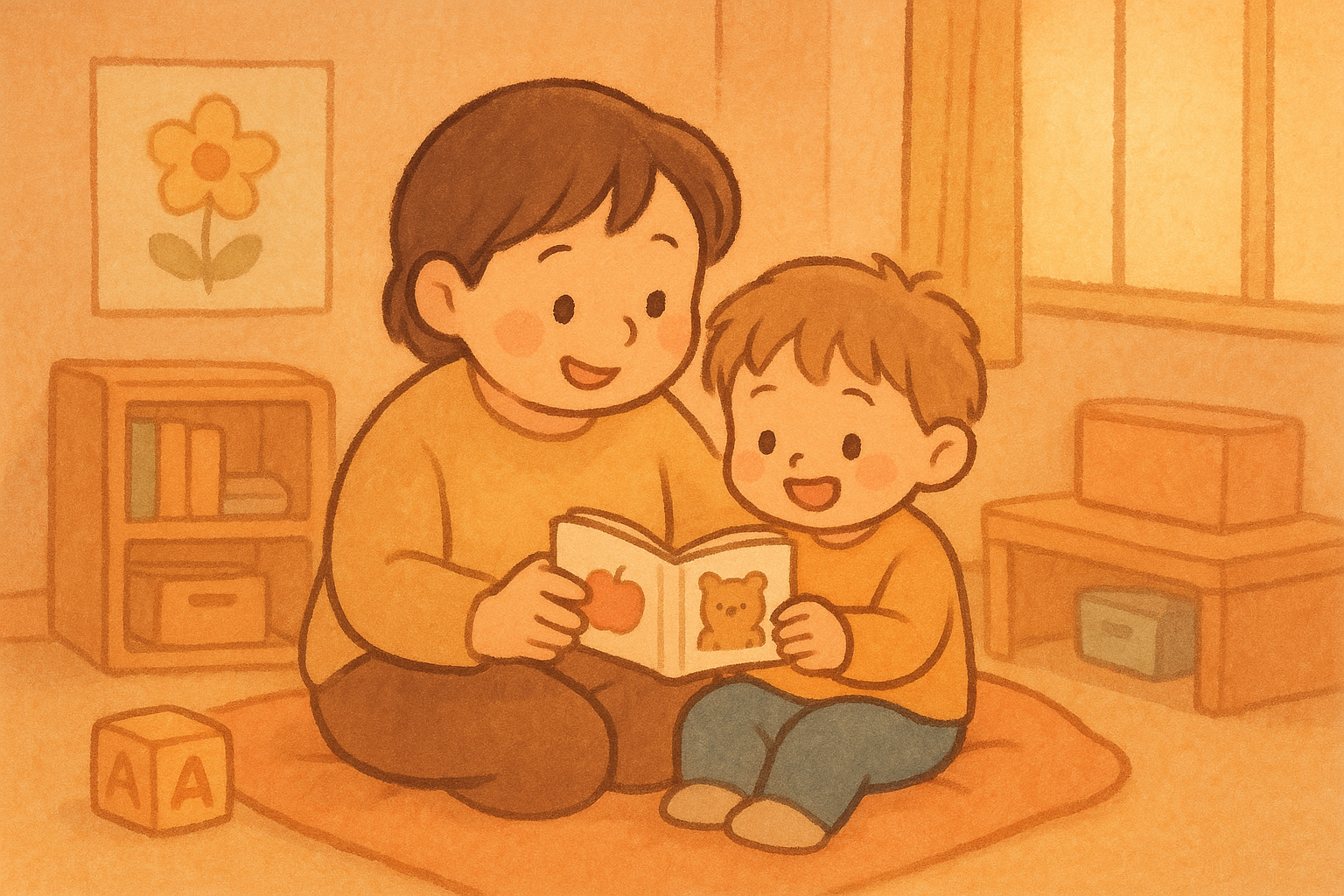
Core word stories are short, illustrated narratives built around a single high-frequency "core" word—like go, more, or stop—that children use across nearly every activity of their day. Developed by speech-language pathologists (SLPs) and early childhood specialists, these stories give adults an easy script for modeling powerful vocabulary during a few shared minutes of reading. Little Speech Corner's Core Stories pair this format with the Read, Model, Play approach, combining a brief story with hands-on interaction. As a result, therapists, teachers, and families gain a repeatable routine for building early language skills, including for children who use augmentative and alternative communication (AAC).
What Are Core Word Stories?
In short, core word stories are brief picture books organized around one core vocabulary word so adults can model it naturally, then invite the child to use it right away in play. Each story typically takes about five minutes to read aloud, though pacing varies by child and setting.
Because the target word repeats throughout the text and illustrations, children hear it in several different sentence contexts within a single sitting. This format reflects decades of research on core vocabulary, the small set of words that make up a large share of everyday communication. According to the American Speech-Language-Hearing Association (ASHA), building functional communication around frequently used words supports generalization across settings more effectively than teaching isolated vocabulary in drills. Core word stories take advantage of that pattern by weaving one target word through an engaging plot, which gives children repeated, meaningful exposure rather than flashcard-style repetition.
Core word stories give adults an easy script for modeling high-frequency vocabulary.
Why Core Vocabulary Narratives Build Stronger Communicators
In addition, core vocabulary narratives work well because they combine two things young children need most: predictable structure and genuine interaction. For example, a simple plot about a character who wants more, stops, or goes somewhere gives children multiple natural chances to hear and eventually produce the target word. Similarly, because core words function across contexts, a word practiced in a story about snack time can transfer easily to the playground, the dinner table, or a classroom circle.
Furthermore, this approach matters significantly for children who use AAC. Specifically, Read, Model, Play encourages adults to model the core word using the exact communication system the child uses, whether that is a speech-generating device, picture exchange, or spoken language. Research summarized in Wikipedia's overview of augmentative and alternative communication highlights that consistent adult modeling is one of the most effective strategies for helping early communicators learn new vocabulary. As a result, pairing a short story with hands-on modeling gives adults a sustainable way to build that consistency without creating new materials every day.
How Read, Model, Play Brings Core Word Stories to Life
Read, Model, Play breaks every session into manageable parts. Below is a simple four-step sequence adults can follow with any core word story.
- Share the Core Story. Read the short, illustrated story aloud in about five minutes, pointing to or activating the core word each time it appears in the text and pictures.
- Model the target word. Say or select the word using the child's own communication system, whether that is spoken language, a speech-generating device, or picture symbols, so the model matches how the child communicates.
- Move into child-led play. Set the book aside and use related toys or materials so the child can practice the word inside motivating, low-pressure play rather than a drill.
- Reinforce across the week. Use a core-word tip sheet or planning calendar so classroom staff and family members model the same word at home and school throughout the week.
For a full breakdown of weekly planning, the Core Words Guide walks through how to sequence target vocabulary across a semester, which is especially useful for teams coordinating across therapy, classroom, and home settings.
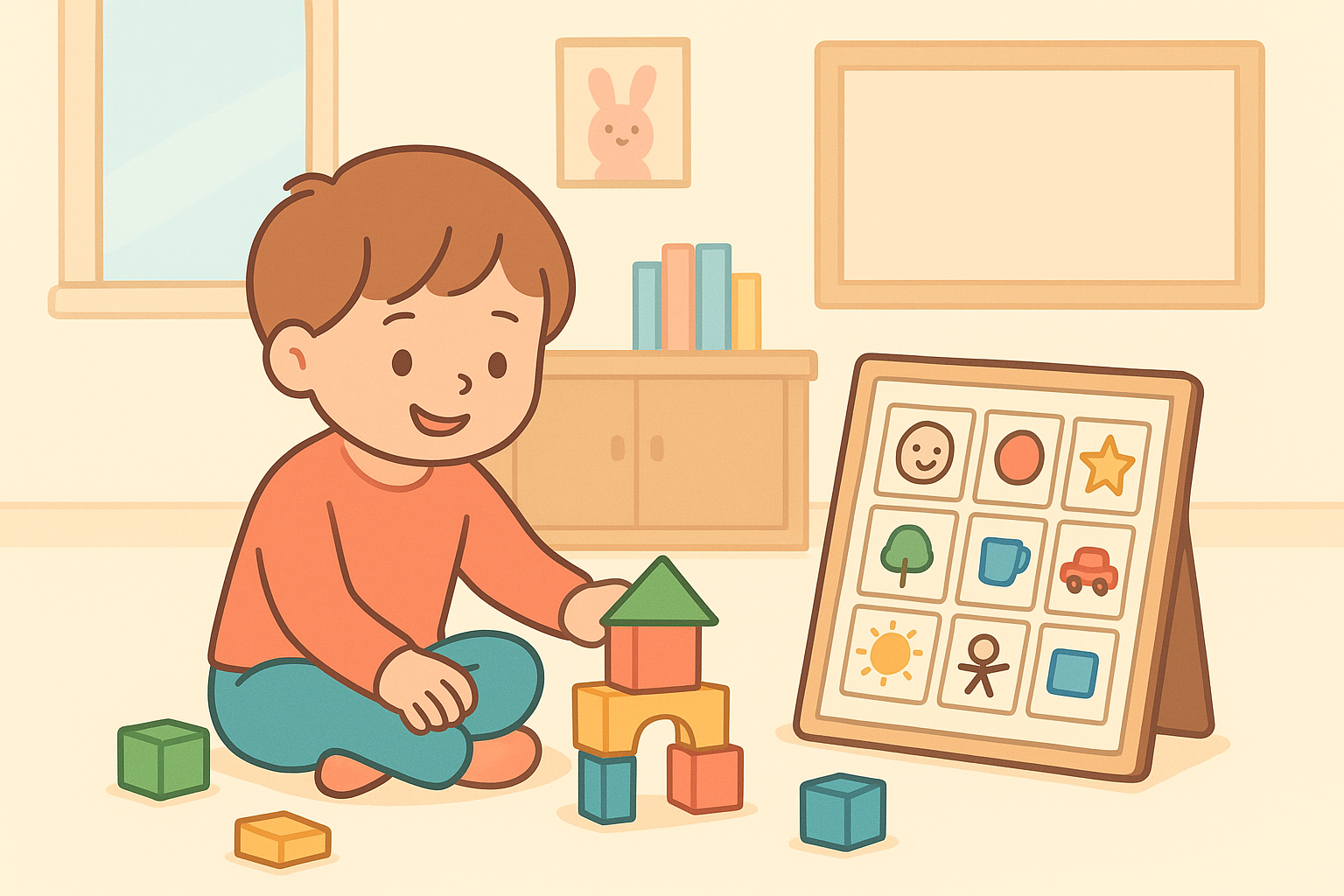
The Read, Model, Play sequence turns one target word into real practice during play.
Using Core Vocabulary Stories in Therapy Sessions and Classrooms
In speech therapy sessions, clinicians often choose a core word story that matches a student's current goal, then extend the story's vocabulary into language or articulation activities as needed. In contrast, classroom teachers may use the same story during circle time, inviting the whole group to practice the word chorally before moving into center-based play. For a deeper look at session-level planning, the guide on teaching core vocabulary through stories offers additional scaffolding ideas for SLPs.
Families benefit from this consistency too. Because each story pairs with a tip sheet, caregivers do not need specialized training to model the same word correctly at home. Therefore, many SLPs send a tip sheet home alongside the story so the target word gets practiced across every environment a child experiences during the week. The resource roundup on core vocabulary handouts for teachers and parents compiles several of these carryover tools in one place.
Core Word Stories vs. Sound Stories: What's the Difference?
Core word stories and Sound Stories share a similar illustrated-narrative format, yet they target different goals. Core word stories focus on a single high-frequency vocabulary word to support language development and AAC modeling. Sound Stories, in contrast, are illustrated, sound-loaded narratives built around a specific speech sound, such as /s/ or /ch/, giving clinicians a tool for articulation practice rather than vocabulary building.
Consequently, an SLP might select a core word story when a goal centers on expressive language or AAC use, while reaching for a Sound Story when a child needs repeated practice producing a particular speech sound in connected language. For a closer comparison of how these story types fit into a broader therapy plan, see how SLPs teach core vocabulary through short stories.
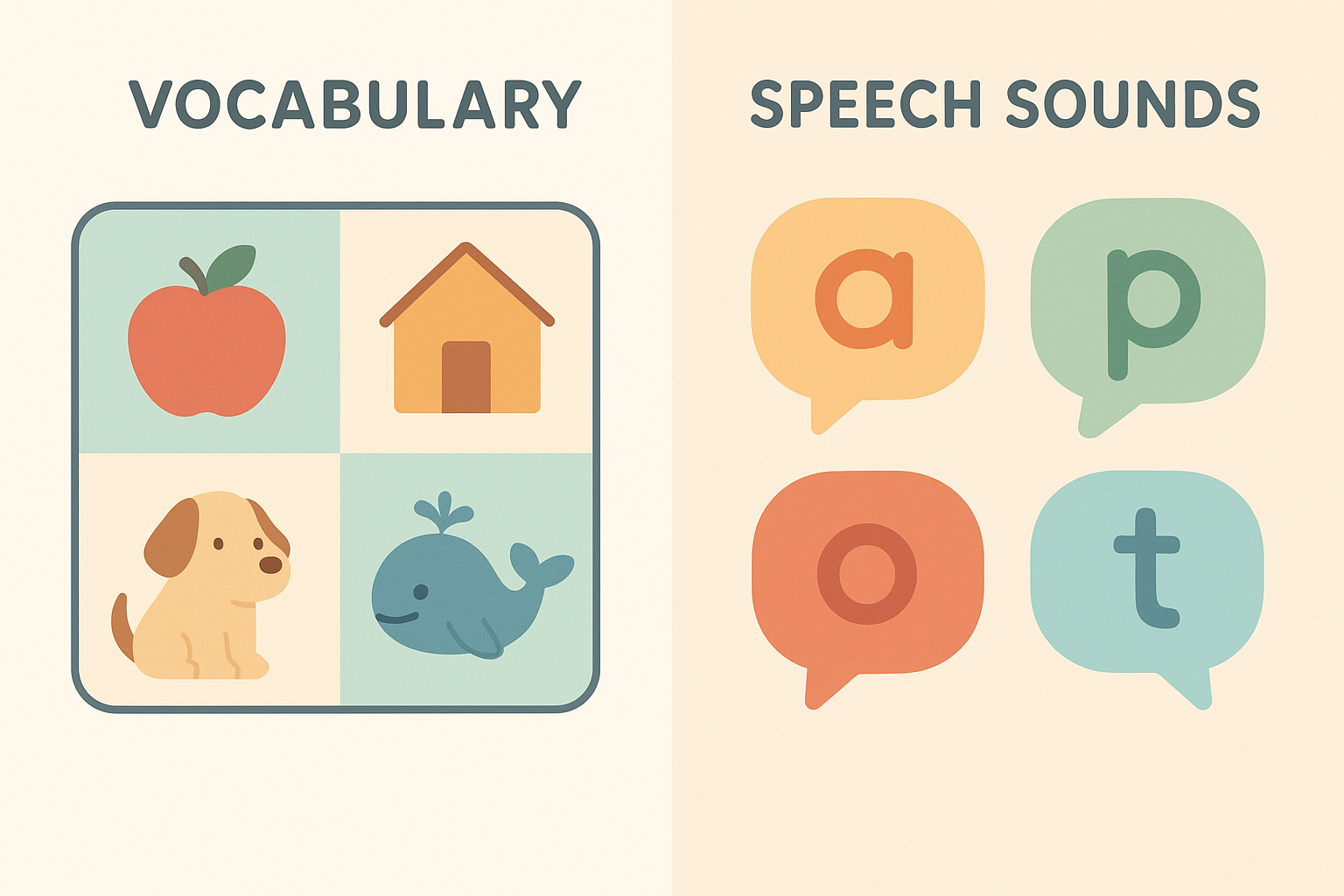
Core word stories and Sound Stories share a format but target different therapy goals.
Choosing the Right Core Word Picture Books for Your Learners
Selecting the right title starts with the child's current goals and communication system. For beginners, choose a story built around an early-developing word such as go, more, or stop. For learners further along, a story introducing a more nuanced word like different or because can stretch expressive language further.
Little Speech Corner's catalog of digital resources organizes individual Core Stories by target word, making it easier to browse by current goal rather than searching title by title. The Core Stories Foundational 53-Pack bundles a year's worth of titles with a suggested Core Word of the Week sequence, useful for programs that want a ready-made scope and sequence rather than building one from scratch. Free samples, including the Apples for Anna story built around the word there, are available for anyone who wants to try the format before purchasing a full collection through the Little Speech Corner Teachers Pay Teachers store.
Frequently Asked Questions About Core Word Stories
What are core word stories?
Core word stories are short, illustrated narratives organized around one high-frequency vocabulary word, designed to help adults model that word naturally during about five minutes of shared reading. They pair with hands-on play afterward so children can practice the word right away.
How do core word stories support language development?
Core word stories give children repeated exposure to a single target word across different sentences and pictures within one sitting. This repetition, combined with authentic play, helps children understand and eventually use the word across multiple settings.
What is the Read, Model, Play approach?
Read, Model, Play is Little Speech Corner's signature method for using core word stories. It starts with a short story, continues with adult modeling of the target word using the child's own communication system, and ends with child-led play that reinforces the vocabulary.
Who typically uses core word stories?
Speech-language pathologists, early childhood special educators, and classroom teams most often use core word stories, generally with children between ages two and seven. Families also use them at home to support carryover between sessions.
Can core word stories support children who use AAC?
Yes. Core word stories are designed to support flexible language modeling, including augmentative and alternative communication. Adults can model the target word on a speech-generating device, picture symbols, or spoken language, depending on how the child communicates.
How are core word stories different from Sound Stories?
Core word stories target vocabulary and language development around a single high-frequency word, while Sound Stories target a specific speech sound for articulation practice. Both use an illustrated-narrative format, but the clinical goal behind each one differs.
Where can I find core word stories to purchase?
Individual Core Stories, the Core Stories Foundational 53-Pack, and Sound Stories are all available through the Little Speech Corner Teachers Pay Teachers store. Free samples are also available for anyone who wants to try the format first.
How much do core word stories cost?
Pricing varies by individual title and bundle, and current details are listed on each product's Teachers Pay Teachers page. It is best to check the live listing before purchasing, since pricing and included files can change.
How long does it take to use a core word story in a session?
Most core word stories take about five minutes to read aloud, though pacing depends on the child and the setting. The follow-up modeling and play period can extend well beyond that initial reading time.
What is the Core Stories Foundational 53-Pack?
The Core Stories Foundational 53-Pack is a ready-made bundle of 53 individual Core Stories sold through Teachers Pay Teachers. It connects to a suggested Core Word of the Week sequence and an annual planning calendar for teams that want a full year of material in one purchase.
What common mistakes should adults avoid when using core word stories?
A common mistake is treating the story as a one-time read rather than an ongoing modeling opportunity. Skipping the play portion, or modeling the target word using a different communication method than the child's own system, can also limit how much the child benefits.
How often should core word stories be used?
Many programs use one core word story per week, paired with a planning calendar so the same word gets modeled consistently at home, in the classroom, and during therapy. Consistent, repeated exposure across settings tends to matter more than any single session.
Are free core word story samples available?
Yes. Little Speech Corner offers free samples, including the Apples for Anna story built around the word there, plus a sample calendar and SW and CH Sound Story samples, through its Teachers Pay Teachers store.
Can classroom teachers use core word stories without an SLP present?
Yes. Core word stories are designed to be accessible to classroom teams, not only clinicians. Tip sheets and planning calendars help teachers model the same vocabulary used in therapy sessions, which supports consistency across a child's day.
What age range benefits most from core word stories?
Core word stories are designed primarily for children ages two through seven, a period when early vocabulary and core word use grow rapidly. According to the National Institute on Deafness and Other Communication Disorders, early language exposure during these years plays a significant role in later communication skills.
Bringing It All Together
Core word stories give SLPs, educators, and families a simple, repeatable way to build early vocabulary through just a few minutes of shared reading and play. Because each story centers on one functional word, modeling stays focused and manageable, whether the setting is a therapy room, a preschool classroom, or a family's living room. Above all, pairing a short story with the Read, Model, Play sequence turns a single core word into dozens of real opportunities for communication across the week. To explore available titles, bundles, and free samples, visit the Little Speech Corner Teachers Pay Teachers store and start building a collection of core word stories suited to your learners.