
Downloadable Speech Therapy Lesson Plans That Work
Explore downloadable speech therapy lesson plans using Read, Model, Play. Preview Core Stories and free samples from Little Speech Corner now.

Downloadable speech therapy lesson plans give speech-language pathologists (SLPs), special educators, and classroom teams ready-to-use materials for building language and articulation skills in young children, usually between ages 2 and 7. Instead of building a session from scratch every week, a clinician can open a story-based plan, follow a short reading-and-modeling sequence, and move straight into guided play. As a result, prep time shrinks while consistency across sessions improves.
Little Speech Corner, founded by Gwen Swire, M.A., CCC-SLP (known as Mrs. Gwen), builds these resources around a signature method called Read, Model, Play. In addition, her 20-plus years of experience across early intervention, preschool, elementary, and family settings shapes the practical details inside every story and tip sheet.
What Are Downloadable Speech Therapy Lesson Plans?
Downloadable speech therapy lesson plans are digital, print-or-screen-ready materials that walk a clinician or teacher through a focused language or articulation activity. Typically, each plan includes an illustrated story, a target word or sound, and a short set of follow-up activities.
Unlike generic worksheets, these plans are usually built around a single core word or speech sound so the adult can model it repeatedly in one short sitting. Consequently, the child hears the target in context rather than in isolation, which supports more natural carryover into everyday talk.
Why Story-Based Lesson Plans Work for Young Communicators
Young children learn language best through meaningful, repeated exposure rather than isolated drills. For example, hearing the word "there" modeled inside a short story about apples gives the word a context, a picture, and an emotional hook that a flashcard cannot provide.
Research on early core vocabulary suggests that a small set of high-frequency words accounts for a large share of what young children say across settings, with some estimates placing core words at roughly 80 percent of everyday spoken and AAC-supported communication. Because of this, many story-based speech therapy lesson plans deliberately anchor an entire session around just one core word rather than spreading attention across many targets. The American Speech-Language-Hearing Association (ASHA) similarly emphasizes that consistent, functional vocabulary exposure supports stronger generalization for children with speech and language needs.
The Read, Model, Play Approach Explained
Read, Model, Play is the organizing framework behind every Core Story. First, the adult reads a short illustrated story aloud, which usually takes about five minutes. Then, the adult models the target core word using whatever communication method fits the child, including speech, sign, or an AAC device. Finally, the session shifts into child-led play that reuses the same word in a new, motivating context.
How to Use a Core Story in Session
The following numbered sequence outlines a typical way to implement one of these downloadable speech therapy lesson plans during a therapy block or classroom circle time.
- Choose a Core Story built around a core vocabulary word that matches the child's current communication goal and the classroom or home focus for the week.
- Read the illustrated story aloud for about five minutes, pausing at natural moments to model the target word verbally or on the child's AAC system.
- Move into guided, child-led play that reuses the same core word in a fresh context, giving repeated low-pressure chances to hear and attempt it.
- Share the matching core-word tip sheet with caregivers or the classroom team so the same vocabulary gets modeled across more settings that week.
A short, story-based session is at the heart of downloadable speech therapy lesson plans built on Read, Model, Play.
Types of Printable Speech Therapy Materials to Explore
Not every resource targets the same skill, so it helps to understand the main categories available before choosing one for a session plan.
| Resource Type | Primary Focus | Best Used For |
|---|---|---|
| Core Stories | Core vocabulary and AAC modeling | Early language, AAC learners, preschoolers |
| Sound Stories | Clinician-selected speech sounds | Articulation practice in connected narrative |
| Team Supports | Core-word tip sheets and calendars | Classroom and home carryover |
Clinicians comparing options can also review the best printable speech and language resources for preschool SLPs for a broader look at what works well in early childhood caseloads, or browse printable articulation stories for speech therapy wins when articulation is the primary goal.
Core Stories Foundational 53-Pack: A Ready-Made Bundle
For SLPs who want a full set of core-word lesson plans in one purchase, the Core Stories Foundational 53-Pack offers 53 stories sold as a bundle on Teachers Pay Teachers. The accompanying Core Words guide connects the collection to a suggested Core Word of the Week sequence and an annual planning calendar.
However, it is worth noting that this bundle functions as a foundational toolkit rather than a complete, individualized therapy program. Therefore, clinicians should still adjust pacing, word selection, and supports to match each child's goals. Exact included files and licensing terms should be confirmed on the current TPT listing before purchase.
How to Choose the Right Speech and Language Lesson Plans
Selecting the right resource depends on the child's goals, setting, and current communication method. In particular, consider whether the priority is vocabulary growth, AAC modeling, or articulation practice.
For vocabulary and AAC goals, an individual Core Story or the full 53-Pack is usually the better starting point. In contrast, when the goal is speech sound production, a Sound Story targeting the specific sound in error gives more repeated, connected practice opportunities. For broader activity ideas, the best literacy-based speech therapy activities for preschoolers can help round out a weekly plan alongside story-based targets.
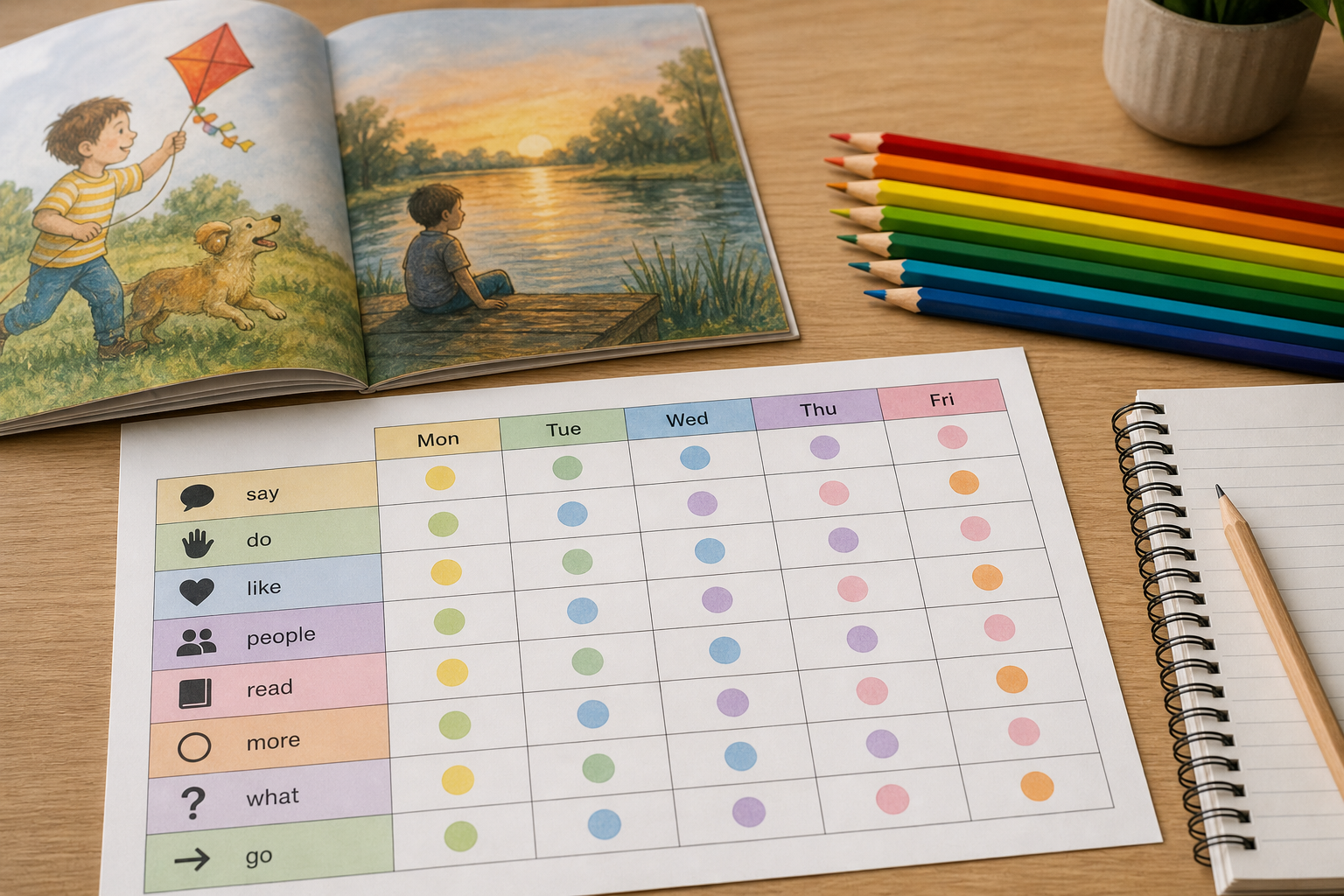
Printable planning tools help SLPs sequence weekly core-word targets alongside story-based sessions.
Free Samples to Try Before You Buy
Before committing to a full collection, many clinicians like to preview the format and tone of a resource. Little Speech Corner offers several free samples, including the Apples for Anna Core Story focused on the word "there," a core-vocabulary calendar with a sample story attached, and SW and CH Sound Story samples for articulation practice.
These free downloads, along with the full catalog, are available through Little Speech Corner, which links out to the Teachers Pay Teachers store for purchases and downloads. Additionally, readers researching broader story-based options may find it useful to compare story-based speech therapy resources for young children before deciding which bundle fits a caseload.
A Note on In-Development Collections
Storytime Stories and Story Builders, which will focus on oral language and story understanding, are currently in development and not yet available for purchase. Meanwhile, clinicians researching private therapy options alongside classroom materials can review background context in the speech therapy near me guide, though private services remain a secondary reference point rather than the focus of this product line.
Who Creates These Resources?
Gwen Swire, M.A., CCC-SLP, holds ASHA CCC-SLP certification, California SLP licensure, and a Clinical or Rehabilitative Services Credential. She earned both her M.A. and B.A. in Communication Disorders from California State University, Fullerton, and brings more than two decades of hands-on clinical experience to every story and tip sheet she designs. For background on the broader field, the Wikipedia overview of speech-language pathology offers useful general context, while the CDC's developmental milestones page is a helpful reference for understanding typical early language growth.
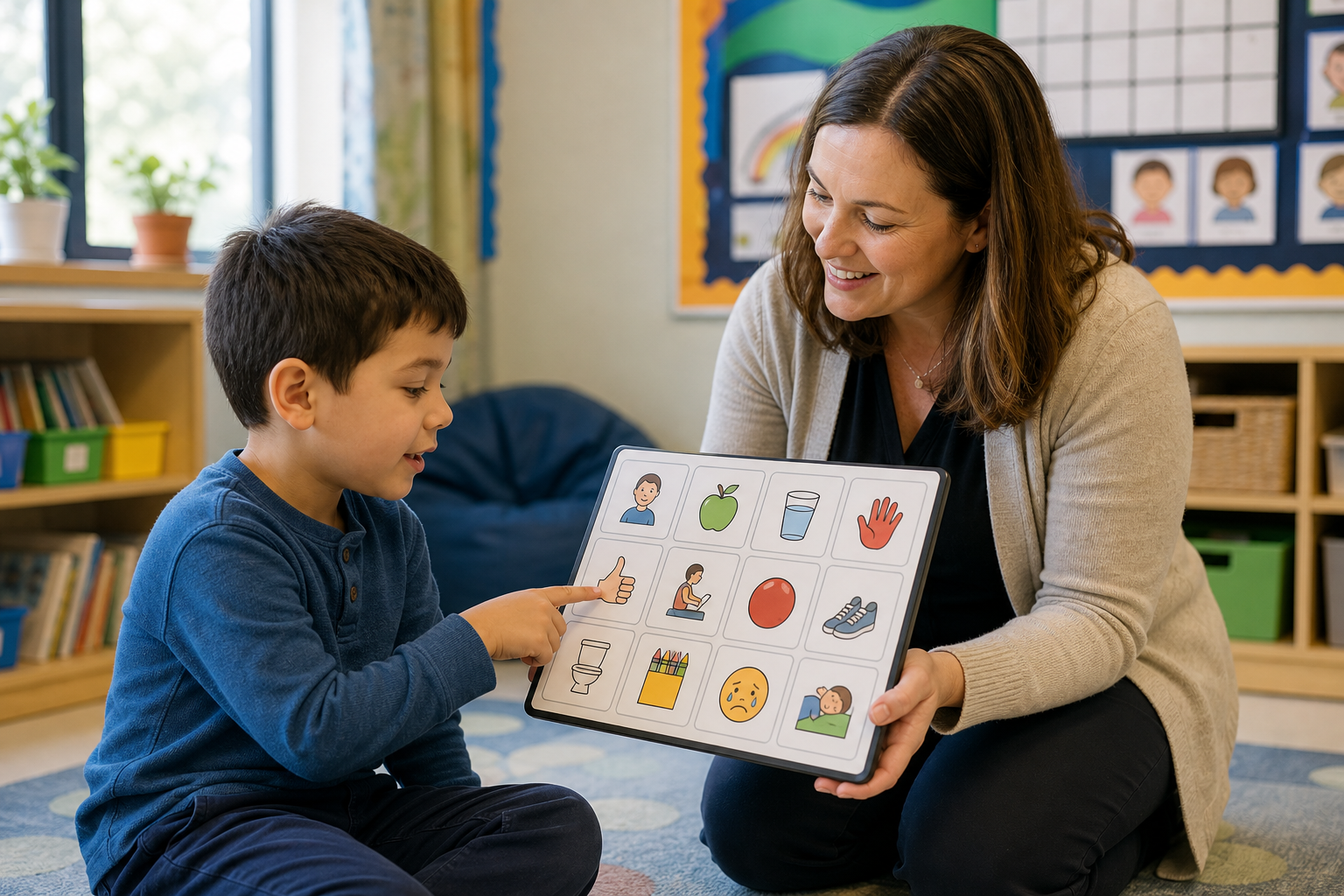
Classroom teams can model the same core vocabulary used in downloadable speech therapy lesson plans throughout the day.
Frequently Asked Questions About Downloadable Speech Therapy Lesson Plans
What are downloadable speech therapy lesson plans?
Downloadable speech therapy lesson plans are digital, ready-to-print or ready-to-screen materials that guide a clinician or teacher through a language or articulation activity. They typically include a story, target vocabulary or sounds, and suggested modeling or practice steps.
How do Core Stories fit into a speech therapy session?
A Core Story is read aloud in about five minutes while the adult models a single core word using the child's communication supports. After reading, the session moves into interaction and child-led play built around that same word.
Why do core vocabulary words matter in early language intervention?
A small set of core words accounts for a large share of everyday spoken and AAC-supported communication, so repeated modeling of those words builds functional language quickly. Focusing sessions on one core word at a time also keeps instruction consistent across settings.
What is the difference between Core Stories and Sound Stories?
Core Stories center on a single core vocabulary word to support language and AAC modeling, while Sound Stories are illustrated narratives loaded with a specific speech sound for articulation practice. Both use shared reading, but they target different clinical goals.
How much do downloadable speech therapy lesson plans typically cost?
Pricing varies by title, bundle size, and current TPT listing, so individual stories and bundles like the Core Stories Foundational 53-Pack should be checked on the store page for exact pricing. Free samples are available for clinicians who want to try the approach first.
How long does a Read, Model, Play session take?
The shared reading portion is designed to take about five minutes, though this is a guideline rather than a guaranteed outcome. The follow-up modeling and play portion can be extended or shortened based on session time and the child's engagement.
What age range benefits most from story-based speech therapy lesson plans?
These materials are primarily designed for young communicators roughly ages 2 to 7, including early intervention, preschool, and early elementary learners. Clinicians can adjust expectations and vocabulary complexity to fit each child's developmental level.
What mistakes should clinicians avoid when using printable speech therapy materials?
A common mistake is introducing too many target words in one session instead of repeating a single core word across contexts. Another is skipping the play-based follow-up, which is where generalization of the modeled language actually happens.
What best practices help carry core vocabulary into the classroom and home?
Sharing a core-word tip sheet with teachers and caregivers helps everyone model the same vocabulary in different settings during the same week. Consistent exposure across the classroom, therapy room, and home significantly increases practice opportunities for the child.
Can downloadable speech therapy lesson plans support AAC users?
Yes, Core Stories are written to support flexible language modeling, including modeling through augmentative and alternative communication (AAC) systems. The adult models the target word on the child's communication device or board while reading and during play.
Is the Core Stories Foundational 53-Pack suitable for a full year of therapy?
The 53-Pack is organized around a suggested weekly core-word sequence, which can support planning across much of a school year. It functions as a foundational collection rather than a complete individualized therapy program, so clinicians should still tailor goals to each learner.
Where can I find free samples before purchasing speech therapy lesson plans?
Little Speech Corner offers free samples including the Apples for Anna Core Story, a core-vocabulary calendar with a sample story, and SW and CH Sound Story samples. These let clinicians try the Read, Model, Play approach before buying a full collection.
Final Thoughts
In summary, downloadable speech therapy lesson plans give SLPs, educators, and classroom teams a practical way to turn a short story into a focused language or articulation session. Through the Read, Model, Play approach, a five-minute shared reading leads naturally into modeling and child-led play, which keeps sessions engaging without sacrificing clinical structure.
Ultimately, whether the goal is core vocabulary growth, AAC modeling, or speech sound practice, starting with a free sample or the Core Stories Foundational 53-Pack is a low-risk way to see whether this story-based format fits a caseload or classroom.
