
Language Modeling Tip Sheets for Educators: Use Guide
Language modeling tip sheets for educators help teams model core words the same way all day. Learn how to choose and use them, then explore the options.
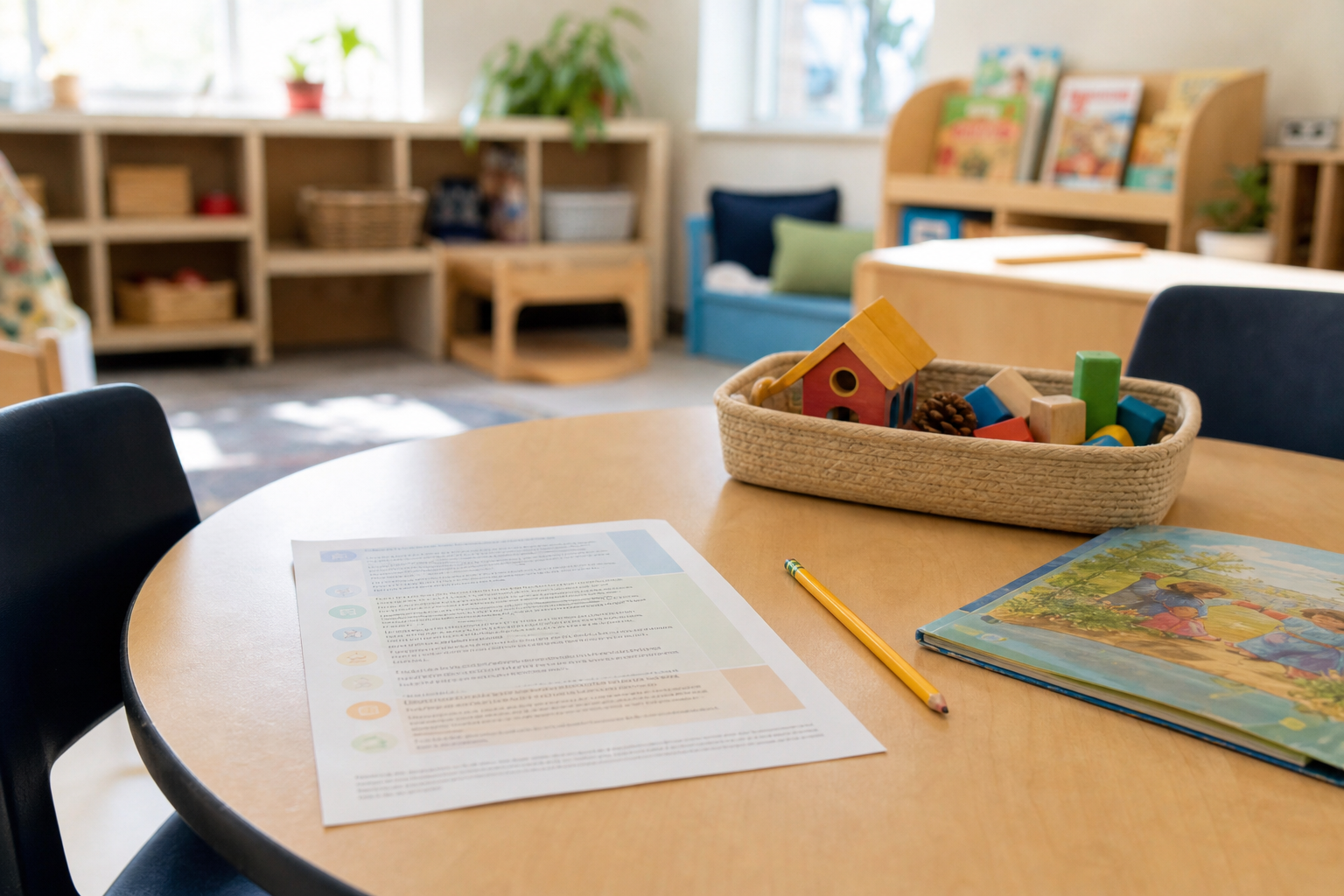
Language modeling tip sheets for educators are short guides that help every adult in a classroom model the same words in the same friendly way. They turn a good idea, like core-vocabulary modeling, into something a busy team can actually do on a Tuesday morning.
Quick answer: Pick one core word, give the whole team the same tip sheet, and model the word during two or three routines. Keep it playful, keep the child's full communication system available, and never require repetition.
What Are Language Modeling Tip Sheets for Educators?
They are adult-facing handouts that explain how to model a target word or phrase during daily routines. A good one names the word, offers sample phrases, and suggests where the word fits naturally.
Core word tip sheets are one common type. Core vocabulary means the small set of high-frequency words, like go, more, and there, that people use in many situations. As a result, one word can be modeled all day long.
Why Shared Modeling Matters for Young Communicators
Young learners hear language from many adults. However, when each adult uses different words, the learner gets a scattered picture. A shared sheet keeps the message steady.
This matters most for children who use augmentative and alternative communication (AAC). AAC covers any tools or strategies, from gestures and picture boards to speech-generating devices, that support communication. The American Speech-Language-Hearing Association (ASHA) describes AAC as a way to support or replace speech.
Aided language modeling is a key strategy here. The adult speaks and points to symbols on the child's system, so the child sees how the word is found and used. The child is invited, never pushed, to join in.
What Should a Good Core Word Tip Sheet Include?
Look for clear, usable parts rather than long explanations. Specifically, check for these:
- One focus word, stated plainly
- Short example phrases an adult can say naturally
- Routine ideas, such as snack, circle, play, or transitions
- A reminder to model on the child's communication system
- Room for the team to adapt words to each learner
In addition, a sheet should respect every communication mode. Gestures, signs, AAC, and speech all count.
A simple tip sheet and a short story can anchor a week of core word modeling.
How to Use Core Word Tip Sheets: Step by Step
- Pick one core word with your SLP that fits your learners and routines.
- Share the same sheet with teachers, aides, and families.
- Plan two or three moments in the day where the word fits naturally.
- Model without pressure by saying the word and pointing to it on the child's system during child-led play.
- Check in as a team and decide whether to keep, adjust, or change the word.
For more on short routines, see this guide on teaching core vocabulary through short stories.
Pairing Tip Sheets with a Read, Model, Play Routine
Little Speech Corner, created by Gwen Swire, M.A., CCC-SLP, known as Mrs. Gwen, pairs shared reading with adult modeling. The Read, Model, Play approach uses a Core Story of about five minutes, then moves into interaction and child-led play. The five minutes is a routine length, not a promised outcome.
A tip sheet then helps the rest of the team carry the same word into other parts of the day. For example, after a story about the word there, an aide might point and say, "Look, it's over there," while the child plays with blocks.
Little Speech Corner's Team Supports include core-word tip sheets and a planning calendar for this kind of school and home carryover. Digital resources are available through the Little Speech Corner Teachers Pay Teachers (TPT) store, and free samples are available too. You can explore the options on the Little Speech Corner site.

Shared reading gives adults a natural moment to model core words.
Common Mistakes to Avoid
A few habits can undercut modeling. Therefore, watch for these:
- Quizzing the child or asking for repetition
- Limiting access to the child's full AAC vocabulary
- Using different phrases for the same word across adults
- Adding too many words at once
Instead, model, wait, and enjoy the play. You can find more ideas in these simple carryover tools and in this list of books and activities for modeling core vocabulary.
Sharing Handouts with Teachers and Families
Families often want to help but are unsure where to start. A one-page sheet with a word and three phrases is a friendly entry point. For comparisons, read about core vocabulary handouts for teachers and parents.
Before sharing a resource beyond your own classroom, confirm the current TPT listing's licensing terms.
These resources provide educational support and do not replace individualized assessment, clinical judgment, or speech-language therapy. An SLP should select speech targets and cues for each child.
Frequently Asked Questions
What are language modeling tip sheets for educators?
They are short, adult-facing guides that show how to model a target word or phrase during daily routines. They help classroom teams use the same vocabulary in the same way.
What is a core word tip sheet?
It focuses on one high-frequency word, such as go, more, or there. It usually gives example phrases and ideas for where to model the word.
What is core vocabulary?
Core vocabulary is the small set of common words used across many situations, such as want, stop, and look. These words combine with others to say many different things.
What does AAC mean?
AAC stands for augmentative and alternative communication. It includes tools or strategies, from gestures to speech-generating devices, that support or replace speech.
What is aided language modeling?
An adult talks while pointing to symbols on the child's AAC system. The child sees how words are found and used, with no pressure to respond.
How many core words should a team model at once?
Many teams start with one word at a time so everyone stays consistent. Your SLP can help decide the right pace for your learners.
Should children have to repeat the word?
No. Modeling means the adult shows the word in use. The child can respond in any way that works for them, including AAC, gestures, or play.
How do tip sheets support school and home carryover?
A shared sheet gives teachers, aides, and families the same example phrases. That makes it easier for the child to hear and see the word in several places.
How are tip sheets different from a Core Story?
A Core Story is a short illustrated story to share with a child. A tip sheet is a guide for adults on how to model the word across the day.
How long does a modeling routine take?
Read, Model, Play uses a Core Story of about five minutes, followed by interaction and play. Tip sheet modeling can fit into routines you already have.
What mistakes should teams avoid?
Avoid quizzing the child, limiting access to their full AAC vocabulary, and using different phrases across adults. Keep it playful and consistent.
Can I share a tip sheet with my whole school?
Check the current TPT listing for licensing before sharing beyond your own classroom. Terms can vary by resource.
Do tip sheets replace speech therapy?
No. They are educational support and do not replace individualized assessment or therapy. An SLP should choose targets and cues for each child.
Conclusion
Language modeling tip sheets for educators make shared vocabulary practical. Choose one word, give the team the same sheet, model during real routines, and keep every communication mode open to the child. Then check in, adjust, and try the next word. To see what is available, visit Little Speech Corner and try a free sample.
