
Core Vocabulary Tip Sheets: Simple Carryover Tools
Core vocabulary tip sheets help SLPs, teachers, and families model shared core words consistently. Browse free samples and planning tools today.
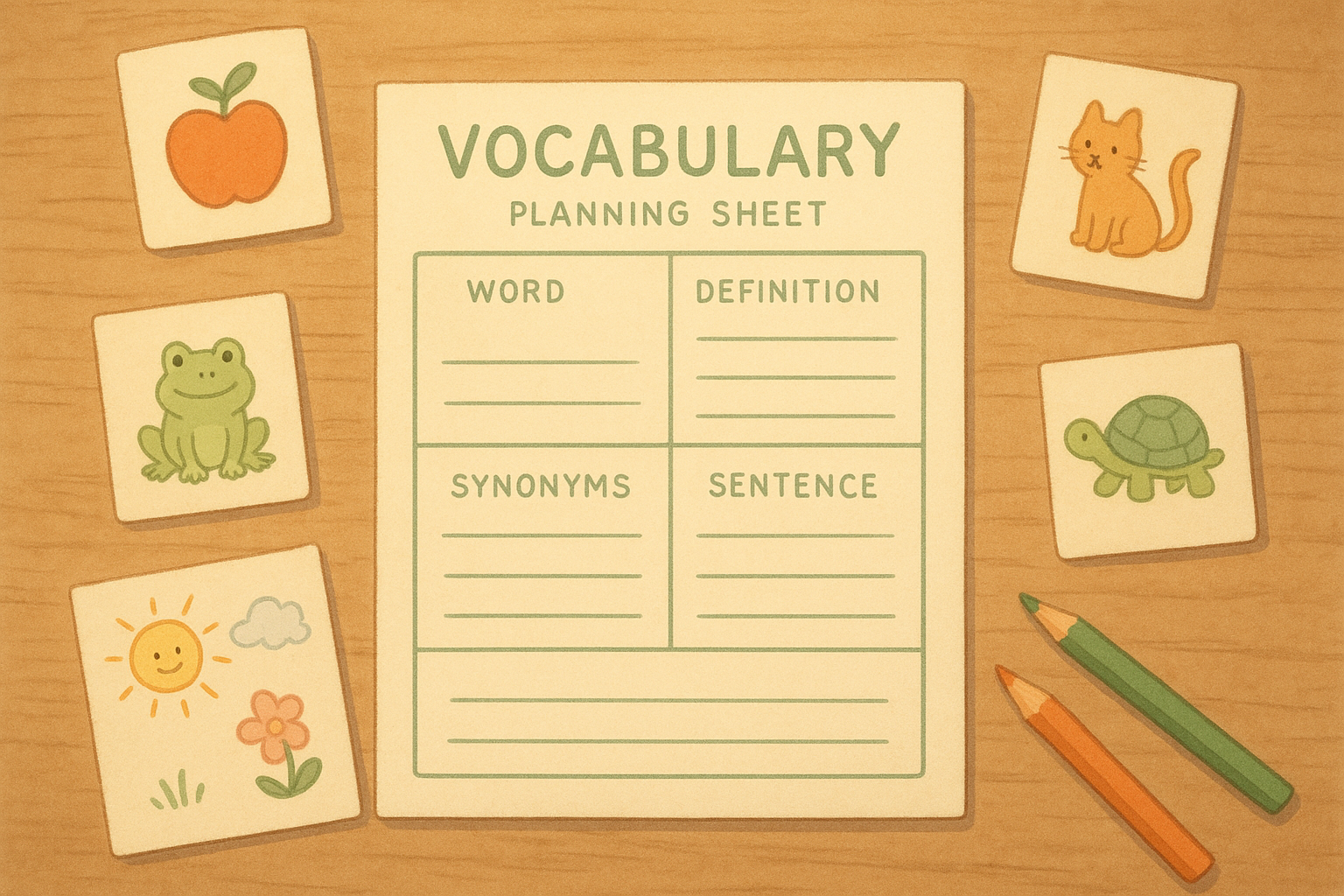
Core vocabulary tip sheets are one-page reference guides that help speech-language pathologists (SLPs), teachers, and families model the same small set of high-frequency words in consistent, natural ways throughout the day. Instead of leaving word choice and phrasing to chance, a tip sheet gives every adult around a child the same script, the same AAC button location, and a handful of ready-to-use ideas. For school teams and busy households juggling therapy goals, classroom routines, and home carryover, that consistency can make a real difference in how often a child hears and attempts a target word.
Quick answer: Core vocabulary tip sheets list a target core word, example phrases, and routine ideas so therapists, teachers, and caregivers model that word the same way across settings. They are typically paired with a short shared story and a weekly planning calendar to build repetition over time.
What Are Core Vocabulary Tip Sheets?
Core vocabulary tip sheets are brief, printable guides built around a single core word, such as GO, MORE, STOP, or IN. Each sheet typically lists several example sentences, suggested daily routines, and a reminder of where that word sits on an AAC (augmentative and alternative communication, a system or device that supports communication for children who use little or no speech) device. Because the format is short, a busy teacher or family member can read it in a minute or two and start modeling immediately. Unlike a plain word list, a tip sheet answers the practical question every adult eventually asks: what do I actually say? For example, instead of simply noting "target word: MORE," a tip sheet might suggest modeling it during snack time ("more crackers?"), during play ("more bubbles!"), and during a transition ("more time, please"). That specificity is what makes the resource useful in a classroom, a therapy room, and a kitchen table all in the same week.
Core vocabulary tip sheets pair word lists with example phrases and routine ideas for everyday modeling.
Why Shared Core Word Modeling Matters
Research into AAC and early language consistently points to a surprising fact: a relatively small set of words does most of the communicative work. According to clinical AAC literature summarized by the American Speech-Language-Hearing Association (ASHA), core vocabulary words account for a large majority of what people say in everyday conversation, because they can be combined flexibly across countless topics. As a result, teaching a handful of core words well often supports more spontaneous communication than teaching dozens of specific nouns. That is exactly why shared, team-wide modeling matters so much. If a therapist models "go" during a session but the classroom aide and the family each use different words or phrasing, a young communicator gets a diluted, inconsistent signal. In contrast, when everyone references the same core vocabulary tip sheet, the child hears the identical word, phrase, and gesture pattern repeated across many more moments in the day than any single adult could provide alone.
How Core Vocabulary Planning Tools Reduce Guesswork
Many SLPs and teachers already understand the value of core vocabulary in theory, but translating that into daily practice is where plans often stall. A planning tool, such as a weekly calendar paired with tip sheets, removes the guesswork by assigning one word per week and listing concrete modeling ideas. In addition, a visual Core Words guide can help teams see how an individual word fits into a broader yearlong sequence, rather than treating each word as an isolated lesson.
How Core Vocabulary Tip Sheets Support AAC and Classroom Teams
For children who use AAC, consistency is not a minor convenience; it is central to building independent communication. A 2009 overview of AAC vocabulary strategies by clinician Gail Van Tatenhove, frequently cited in the field, notes that a core set of roughly 300 to 400 words can make up the vast majority of daily communicative output across ages and contexts. When tip sheets specify exactly where a target word sits on a child's device, paraeducators and family members who are less familiar with the AAC layout can model it correctly without needing to search the screen mid-conversation. Classroom teams benefit in a similar way. A general education teacher may only see a student with complex communication needs for part of the day, so a one-page tip sheet becomes a fast way to stay aligned with therapy goals without attending every session. For a deeper look at how core vocabulary fits AAC instruction specifically, this guide to core vocabulary teaching materials for AAC and language walks through additional supports beyond tip sheets alone.
Connecting Tip Sheets to Shared Reading
Tip sheets rarely work best in isolation. Pairing a target word with a short, story-based activity gives children a meaningful context for hearing that word repeated several times in a row. The Read, Model, Play approach, for instance, uses an approximately five-minute Core Story to introduce a word through shared reading, then moves into interaction and child-led play where the tip sheet's suggested phrases naturally come into use. Consequently, the story becomes the "why" behind the word, while the tip sheet provides the "how" for the rest of the day.
How to Use Core Vocabulary Tip Sheets: A Step-by-Step Process
Introducing a new core word does not need to be complicated. The following sequence, commonly used by SLPs and classroom teams, keeps the process simple enough to repeat weekly throughout a school year.
- Choose one target core word. Select a single high-frequency word, such as GO, MORE, or STOP, so that every adult can focus their modeling on the same target rather than splitting attention across several words at once.
- Share the tip sheet with the full team. Distribute the sheet to teachers, paraprofessionals, and family members, and spend a few minutes walking through the example phrases and the word's location on any AAC system together.
- Model the word during a short shared story. Use a brief, illustrated story to introduce the word naturally, pointing to the AAC symbol or saying the word aloud several times as the story unfolds.
- Carry the word into play and daily routines. Follow the story with child-led play or a familiar routine, such as snack time or a transition, where adults repeat the same word in fresh, natural contexts.
- Review progress and rotate the focus word. After about a week, check in as a team on whether the child is attempting the word independently, then move to the next word on the planning calendar.
Core Vocabulary Tip Sheets vs. Other Core Word Planning Tools
It helps to see how tip sheets compare with other common core vocabulary resources, since teams often use several tools together rather than choosing just one.
A bare core word list simply names the target vocabulary for a given week or unit, without offering phrasing examples. A yearlong planning calendar sequences many words across a school year but does not, by itself, tell an adult what to say in the moment. Core vocabulary tip sheets fill that specific gap by pairing each word with ready phrases and routine ideas. For teams who want the fuller picture, including story-based modeling, a guide to teaching core vocabulary through stories explains how narrative-based practice and tip sheets reinforce one another rather than competing for attention. Similarly, teams interested in printed or published core vocabulary books may find this guide to core vocabulary books for SLPs and teachers useful as a companion resource.
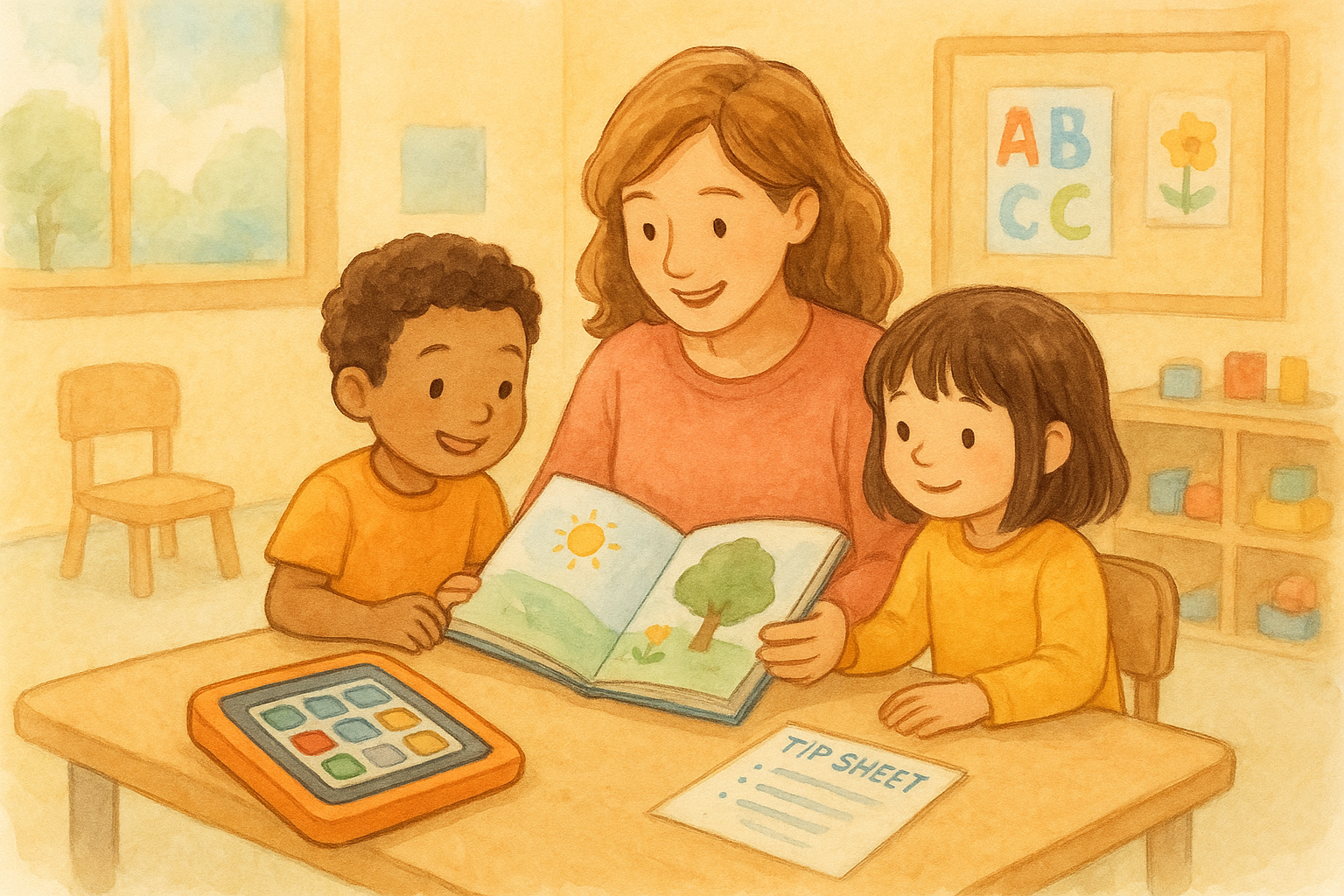
Pairing a shared story with a tip sheet gives adults both the context and the exact wording for a target core word.
Where to Find Core Vocabulary Tip Sheets and Free Samples
For SLPs and teachers getting started, free samples offer a low-pressure way to see how a tip sheet fits into an existing routine before committing to a full set. Little Speech Corner, for instance, offers a free core-vocabulary calendar with a sample Core Story, giving teams a preview of how word-of-the-week planning works in practice. Those exploring a fuller, ready-made sequence often look at the Core Stories Foundational 53-Pack, which connects a full year of core words to a suggested weekly planning sequence and accompanying team supports. As always, it is worth confirming the exact files, formats, and licensing on the current product listing before purchasing, since digital bundles are updated periodically. You can preview the full approach and browse available resources directly at Little Speech Corner, where downloads and purchases are completed through the brand's Teachers Pay Teachers store.
Building a Simple Home-School Connection
Families do not need formal training to use a tip sheet effectively. Because the language is written in plain, everyday phrasing, a parent or grandparent can glance at the sheet before dinner and know exactly which word to model and how. In turn, that small daily habit, repeated across a week, often does more for carryover than an occasional reminder from a therapist alone. Teams that want to formalize this connection might also review broader guidance on core vocabulary, such as the U.S. Department of Education's resources on early communication development, available through official CDC developmental milestones pages, which provide helpful context for where a child's expressive language typically falls at a given age.
Frequently Asked Questions About Core Vocabulary Tip Sheets
What are core vocabulary tip sheets?
Core vocabulary tip sheets are one-page guides that show adults how to model a specific core word, such as GO or MORE, across daily routines. They typically include example phrases, play ideas, and AAC button locations so every adult models the same word in the same way.
How do core vocabulary tip sheets support AAC users?
Core vocabulary tip sheets support AAC users by giving every communication partner the exact wording and device location for a target word. Consistent modeling across home, school, and therapy helps a child see the word used often enough to attempt it independently.
Why is core vocabulary important for young communicators?
Core vocabulary is important because a small set of high-frequency words can be combined to express thousands of different messages. Teaching these flexible words first gives young communicators more ways to participate in conversation than teaching single nouns alone.
How are core vocabulary tip sheets different from core word lists?
A core word list simply names the target vocabulary, while a tip sheet explains how to use that word throughout the day. Tip sheets add example sentences, routine suggestions, and modeling prompts that a list alone does not provide.
Are core vocabulary tip sheets free or do they cost money?
Some core vocabulary tip sheets are offered as free samples, while fuller sets or bundles are sold as paid downloads. Always confirm current pricing and included files on the specific product listing before purchasing.
How long does it take to introduce a new core word using a tip sheet?
There is no fixed timeline, since children progress at different rates, but many teams rotate a new core word weekly to balance repetition with variety. A short daily routine, such as a five-minute shared story, can support that weekly focus.
What mistakes do teams make when using core vocabulary tip sheets?
A common mistake is handing out a tip sheet without reviewing it together, which leads to inconsistent modeling. Another is changing the target word too often, which does not give the child enough repeated exposure to attempt it independently.
What is the best way to use core vocabulary tip sheets in a classroom?
The best approach is to post the tip sheet where every adult can see it, model the target word during natural activities, and revisit it during team meetings. Pairing the sheet with a short shared story or play routine reinforces the word further.
Can families use core vocabulary tip sheets at home?
Yes, families can use core vocabulary tip sheets at home to mirror the same word and phrasing used at school or in therapy. This shared approach helps a child hear and practice the word across more settings each day.
How do core vocabulary tip sheets connect to Core Stories?
Core vocabulary tip sheets often pair with Core Stories, which are short illustrated stories built around the same target word. The story provides a few minutes of shared reading and modeling, and the tip sheet extends that same word into play and routines.
What ages benefit most from core vocabulary tip sheets?
Core vocabulary tip sheets are generally designed for young communicators between about ages two and seven, including preschool and early elementary learners. They also work well for any beginning communicator regardless of exact age.
Do core vocabulary tip sheets work for children without AAC devices?
Yes, core vocabulary tip sheets work for verbal children as well, since the modeling strategies apply to spoken language too. The same target word and example phrases simply get modeled aloud instead of, or alongside, an AAC system.
How often should core vocabulary tip sheets be updated or rotated?
Many teams rotate to a new core vocabulary tip sheet weekly, following a planning calendar, though some words may need two or three weeks for less frequent communicators. Consistency across the rotation period matters more than the exact length of time.
Bringing It All Together
In summary, core vocabulary tip sheets solve a very practical problem: they help every adult around a young communicator model the same high-frequency word in the same way, all day long. Rather than leaving carryover to chance, a tip sheet pairs a target word with ready phrases, routine ideas, and an AAC reference point that a teacher, paraeducator, or family member can pick up in minutes. When paired with a short shared story and a simple weekly planning calendar, these tip sheets turn an abstract goal, like "build core vocabulary," into a repeatable daily habit. For teams ready to put this into practice, exploring a free sample calendar or the Core Stories Foundational 53-Pack is a reasonable next step toward more consistent core word modeling across every setting a child moves through.