
Core Vocabulary Calendar: Plan Core Words All Year
Discover how a core vocabulary calendar helps SLPs and teachers plan weekly core words all year, with a free sample from Little Speech Corner.
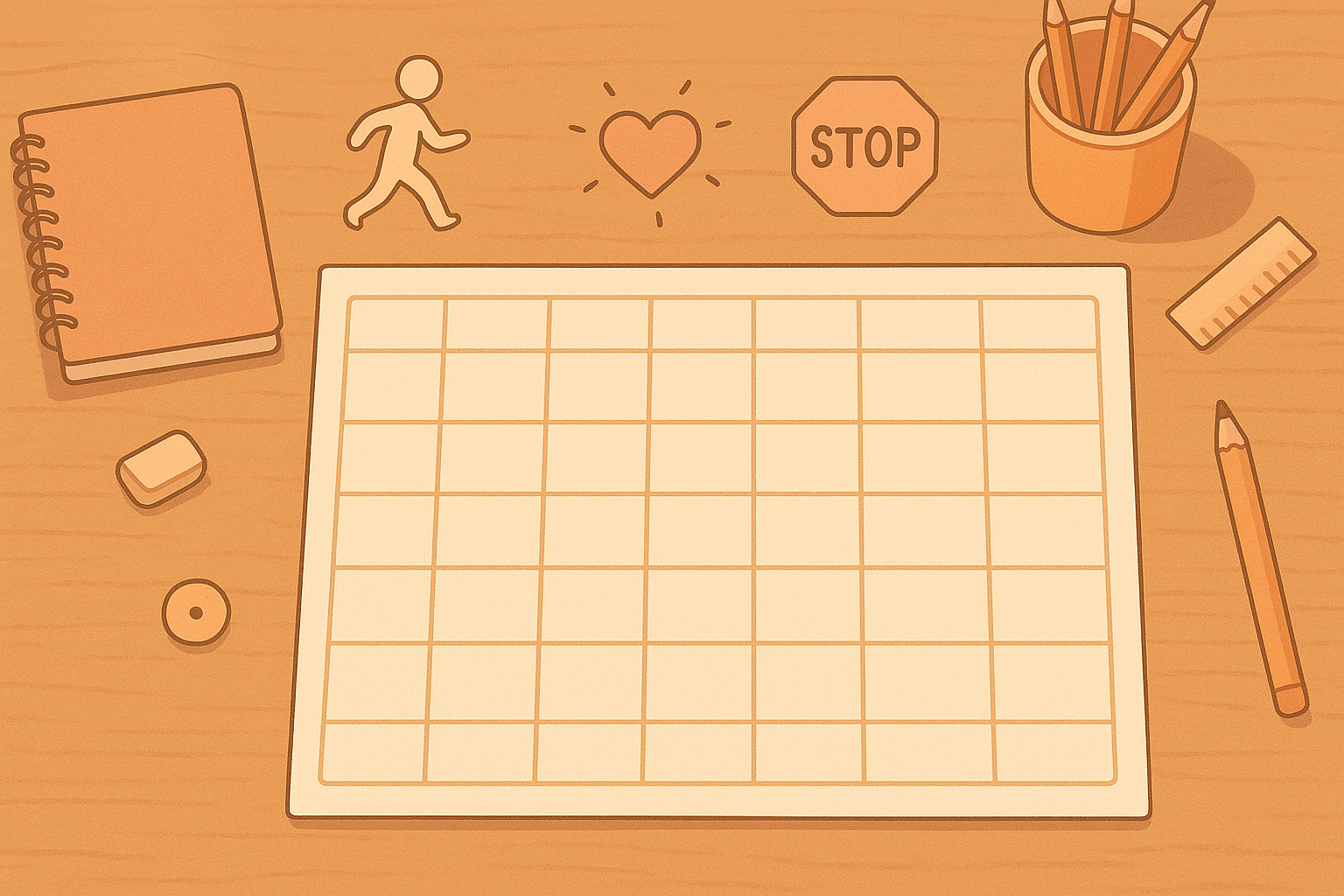
A core vocabulary calendar is a year-long planning tool that helps speech-language pathologists, classroom teams, and families decide which core words to model each week. Instead of choosing new vocabulary on the fly, every adult in a child's day follows the same weekly focus, so the target word shows up during therapy, in the classroom, and at home. This kind of shared sequence is especially useful for young communicators between ages 2 and 7, including children who use augmentative and alternative communication, often called AAC.
Quick answer: A core vocabulary calendar assigns one high-frequency word, like "go" or "more," to each week or month, so adults across a child's routines can model that same word consistently. In turn, this repetition helps young learners build flexible, generalizable language faster than scattered, unplanned vocabulary targets.
What Is a Core Vocabulary Calendar?
At its simplest, a core vocabulary calendar is a grid or list that pairs each week of the school year with one core word. Core words are the small set of high-frequency words, such as go, want, stop, and more, that children use across many different situations, unlike nouns that only apply to one topic. Consequently, these words appear on nearly every AAC communication board and classroom word wall.
Because core words show up everywhere, a shared calendar prevents the common problem of every adult modeling different vocabulary in isolation. The Core Words Guide from Little Speech Corner breaks down how a suggested weekly sequence connects to related stories, tip sheets, and play ideas for ages 2 to 7.
A core vocabulary calendar maps one core word to each week of planning.
Why a Weekly Core Word Calendar Supports Language Growth
Research on augmentative and alternative communication suggests that a relatively small set of core words accounts for a large share of everyday communication. The American Speech-Language-Hearing Association (ASHA) notes that core vocabulary intervention is a widely used approach precisely because these words are so reusable across settings. As a result, repeated modeling of the same word tends to build stronger, more flexible language skills than isolated vocabulary lessons.
In addition, the Centers for Disease Control and Prevention highlights that consistent, everyday language exposure plays a meaningful role in early communication development between ages 2 and 5, according to its Learn the Signs. Act Early. milestones program. A weekly core word calendar puts that principle into practice by giving adults a predictable, low-effort way to repeat the same target throughout a child's day.
Specifically, when a classroom teacher, an SLP, and a parent all model the word "help" during the same week, the child encounters it far more often than if each adult picked a different target. For children learning AAC, this also means the same symbol gets modeled repeatedly on a communication board, which supports more confident, independent use over time.
How to Build a Core Vocabulary Planning Calendar
Building a usable calendar does not require a complicated system. Below is a simple process many SLPs and teachers follow when creating or adapting a core vocabulary planning calendar for their own caseload or classroom.
- Pick a core word list. Start with a small, flexible list of high-frequency core words such as go, more, stop, and help, choosing words that show up naturally across daily routines and play.
- Map words across weeks. Assign one core word to each week or short block of time on a calendar grid, spacing out similar word types so the sequence builds variety across the year.
- Pair each word with a shared story. Attach a short Core Story or familiar book to each week's target word so adults have a built-in way to model it during about five minutes of shared reading.
- Share the calendar across settings. Distribute the same calendar to the classroom team, therapy providers, and family members so everyone supporting the child models the identical word during the same week.
- Model, play, and adjust as needed. Use the target word during guided play and daily interactions, then revisit or extend any week where the learner needs more repetition before moving to the next core word.
Using a Core Vocabulary Calendar with AAC and Core Stories
For children who use AAC, a core vocabulary calendar gives adults a clear reason to model specific buttons or symbols on a device each week instead of browsing randomly. Because most AAC systems already organize core words in a consistent location, the calendar simply tells everyone which symbol to highlight first during modeling.
Little Speech Corner's Read, Model, Play approach builds directly on this idea. A short Core Story provides about five minutes of shared reading and core-word modeling, which then flows into interaction and child-led play. The core vocabulary teaching materials for AAC and language guide explains how this pairing works in more detail, including ideas for adapting stories to different AAC systems and access methods.
Team Supports, including core-word tip sheets, further extend the calendar by giving classroom aides and family members quick reference points for modeling the same word outside of therapy sessions.

Pairing each week of the calendar with a short Core Story supports Read, Model, Play in therapy and the classroom.
Free Core Vocabulary Calendar Sample and Related Resources
Teams who want to try this approach before committing to a full collection can start with a free sample. Little Speech Corner offers a free core-vocabulary calendar paired with a sample Core Story, alongside the free "Apples for Anna" story built around the core word THERE. Both are available through the Little Speech Corner website, which links directly to the Teachers Pay Teachers store for downloads.
For additional planning ideas, the story-based speech therapy activities for ages 2–7 article offers practical ways to extend a weekly word beyond the calendar itself, while the core vocabulary books guide suggests existing children's books that naturally repeat common core words.
Core Stories Foundational 53-Pack and the Weekly Calendar Sequence
For teams ready to commit to a full year of planning, the Core Stories Foundational 53-Pack is a ready-made collection sold through Teachers Pay Teachers. It includes 53 Core Stories connected to a suggested Core Word of the Week sequence, which lines up naturally with a core vocabulary calendar structure.
Rather than describing this bundle as a complete, individualized therapy program, it is best understood as a foundational framework that still benefits from each team's clinical judgment and adaptation. Confirming the current TPT listing before purchase helps clarify exact file formats and licensing terms, since these details may be updated over time.
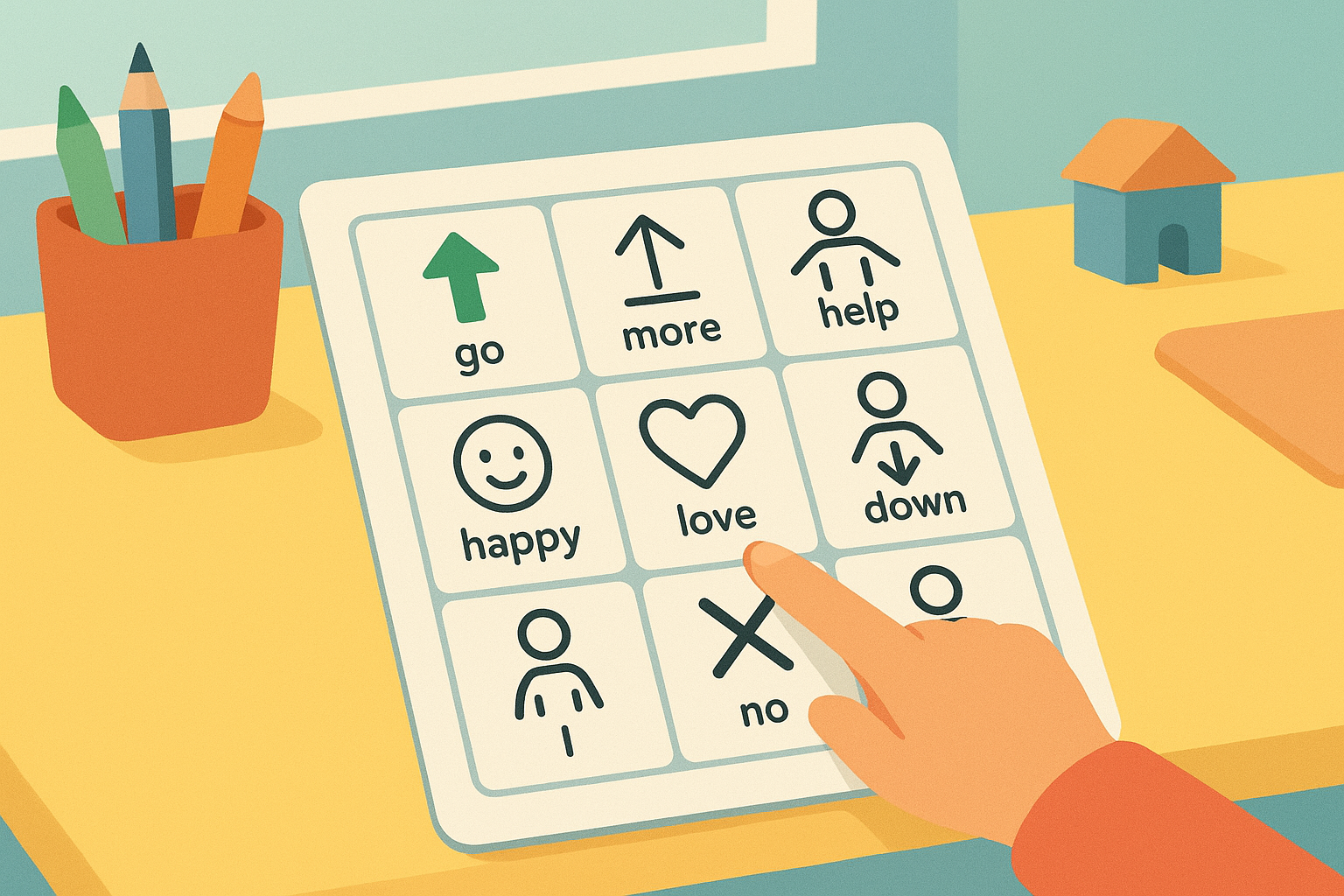
Core words modeled during a planning calendar often match the same symbols available on a child's AAC board.
Frequently Asked Questions About Core Vocabulary Calendar Planning
What is a core vocabulary calendar?
A core vocabulary calendar is a weekly or monthly schedule that assigns one core word to model consistently across therapy, classroom, and home settings. It helps adults stay coordinated so a child hears and sees the same high-frequency word repeated in daily routines.
How is a core vocabulary calendar different from a therapy data sheet?
A therapy data sheet tracks a child's individual progress on specific goals, while a core vocabulary calendar is a shared planning tool for an entire classroom, caseload, or family. The calendar guides what word to model next; the data sheet records how a specific learner responded.
How many core words should a weekly calendar include?
Most weekly calendars focus on just one core word at a time so adults and children can repeat it often without feeling rushed. Spending a full week or two on a single word usually allows for more natural repetition across different activities.
Why do SLPs and teachers use a shared core word schedule?
A shared schedule keeps everyone supporting a child on the same page, so the target word shows up consistently in therapy, the classroom, and at home instead of in just one setting. This consistency tends to support faster, more generalized learning.
Can a core vocabulary calendar be used with AAC learners?
Yes, a core vocabulary calendar works well with learners who use AAC because core words are usually already available on communication boards and devices. Planning a weekly focus simply helps adults model those same buttons or symbols more intentionally.
How long does it take to see carryover from calendar modeling?
Carryover timelines vary by child, so a core vocabulary calendar does not promise a fixed outcome. Many teams notice that repeated weekly modeling across settings supports more consistent use of a target word over time, though progress depends on the individual learner.
What age group benefits most from a core vocabulary calendar?
Core vocabulary calendars are especially practical for young communicators between ages 2 and 7, since this is when many children are building their earliest expressive and AAC vocabularies. The same planning approach can also support older learners who are still developing core word use.
Does Little Speech Corner's core vocabulary calendar have a cost?
Little Speech Corner offers a free core vocabulary calendar sample with a sample Core Story, available through its Teachers Pay Teachers store. Check the current TPT listing for exact pricing, formats, and licensing on any paid planning materials.
What common mistakes happen when teams skip a shared calendar?
Without a shared calendar, different adults often model unrelated vocabulary at the same time, which can dilute repetition and confuse the learner. Teams may also unintentionally skip less obvious core words in favor of nouns, missing chances to build flexible, generalizable language.
How does a core vocabulary calendar connect to the Core Stories Foundational 53-Pack?
The Core Stories Foundational 53-Pack includes a suggested Core Word of the Week sequence that pairs naturally with a core vocabulary calendar. Each week's story and related activities line up with the calendar's planned focus word.
What is the best way to introduce a new core word each week?
A practical approach is to start with a short, shared story that naturally repeats the target word, then model it during play and daily routines. This mirrors the Read, Model, Play approach, which begins with about five minutes of shared reading before moving into interaction.
Where can I download a free core vocabulary calendar sample?
A free sample calendar with an included Core Story is available through Little Speech Corner's Teachers Pay Teachers store, linked from the Little Speech Corner website. It gives teams a firsthand look at how the weekly planning structure works before trying a full collection.
Bringing It All Together
A core vocabulary calendar gives SLPs, teachers, and families a simple, shared way to plan which words to model each week, rather than guessing or working in isolation. By pairing that weekly focus with a short, repeatable story and consistent modeling across settings, young communicators get far more exposure to the words that matter most for everyday communication. Whether a team starts with a free sample or moves into a full collection like the Core Stories Foundational 53-Pack, the underlying idea stays the same: consistency beats novelty when building early language and AAC skills. For teams ready to try this approach, Little Speech Corner's resources offer a practical starting point for turning a core vocabulary calendar into daily practice.