
Speech Therapy Story Books: A Guide for SLPs & Parents
Discover how speech therapy story books build core vocabulary and language skills for kids ages 2-7, plus tips to choose the best ones for therapy.
Speech therapy story books are a cornerstone tool that speech-language pathologists (SLPs), early childhood educators, and parents use to build vocabulary, grammar, and social communication skills in young children. Specifically, these books weave target words and speech sounds into a simple, repeated narrative so a child hears and practices the same skill many times without it feeling like drill work. At Little Speech Corner, this approach shapes every Core Story and Sound Story created for children ages 2 to 7. In the sections below, you will learn what makes these books effective, how to choose the right ones, and how to put them to work at school or at home.
What Are Speech Therapy Story Books?
Speech therapy story books are picture books built intentionally around specific language or speech goals, such as core vocabulary, articulation sounds, or sentence structure. Unlike general storybooks, every page is designed to give a child repeated, meaningful chances to hear and use a target skill.
In practice, these books often use predictable, repeated sentence frames so children can anticipate and eventually produce the target language themselves. For example, a core vocabulary story might repeat the word "go" on nearly every page, while a Sound Stories book might weave the "s" sound through a single silly storyline. As a result, therapy time doubles as storytime, which keeps young children engaged far longer than isolated drill cards typically do. According to the American Speech-Language-Hearing Association (ASHA), roughly 5% of children entering first grade show noticeable speech sound disorders, which is one reason early, engaging practice materials matter so much.
A dedicated reading corner makes it easy to reach for speech therapy story books during any session.
Why Core Vocabulary Story Books Matter for Language Growth
Core vocabulary story books focus on the small set of high-frequency words that make up most of everyday spoken language, including words like "want," "more," and "help." Because these words appear constantly across settings, mastering them gives children a flexible foundation for communication long before they build a large vocabulary of nouns.
In addition, core vocabulary works especially well for children who use augmentative and alternative communication, often shortened to AAC, a term for tools and strategies that support or replace spoken language. Since core words typically occupy fixed, easy-to-find locations on an AAC device or board, repeated story exposure helps a child build muscle memory alongside meaning. Therefore, a single well-designed story can reinforce both vocabulary and device navigation at the same time. Similarly, classroom teams benefit because core vocabulary generalizes across circle time, snack time, and play, rather than staying locked inside one themed unit. For a closer look at how story-based materials support these goals, the best story-based speech therapy resources for young children guide offers a helpful next step.
How to Choose the Best Speech-Language Story Books for Your Caseload
Choosing the right speech-language story books starts with matching the book's structure to a child's current goals rather than picking titles at random. For instance, a child working on early core words needs short, highly repetitive text, while a child refining a specific speech sound needs a story where that sound appears often and naturally.
Beyond content, practical features matter too. Above all, look for books that include built-in visual supports, simple illustrations, and companion activities, since these extras make it easier to extend practice beyond the story itself. Consequently, many SLPs and classroom teams prefer downloadable bundles that include a core-word tip sheet or planning calendar alongside the stories, because these supports keep goals consistent between the therapy room, the classroom, and home. The Centers for Disease Control and Prevention tracks early language milestones through its developmental milestones resource, which can help teams confirm that a chosen book's complexity fits a child's current stage. If you want a real-world example of a themed story designed around these principles, Little Lily shows how one character can anchor an entire set of core vocabulary lessons.
The Read, Model, Play Method for Story-Based Speech Therapy
The Read, Model, Play method turns a single story into a structured mini-lesson rather than a passive read-through. In particular, this sequence gives children repeated input, a clear model of the target skill, and a chance to practice through play, which mirrors how children naturally acquire language.
- Read the story aloud, pausing on core vocabulary words and target sounds so the child hears clear models before being asked to respond.
- Model the target words or sounds yourself first, using simple phrases and visual supports like AAC boards so the child sees the words in action before producing them.
- Invite the child to play with the story's theme through related toys, drawing, or repeated phrases, giving them low-pressure chances to practice the new words.
- Repeat the story across several sessions or days, since multiple exposures help children move new vocabulary from recognition into spontaneous use.
- Track progress by noting which words or sounds the child imitates independently, then adjust story selection to target the next skill in the sequence.
Because this cycle repeats naturally across a week, it fits easily into short sessions without feeling rushed. For activity ideas that pair directly with this method, the story-based speech therapy activities for ages 2-7 collection offers ready-to-use play extensions.
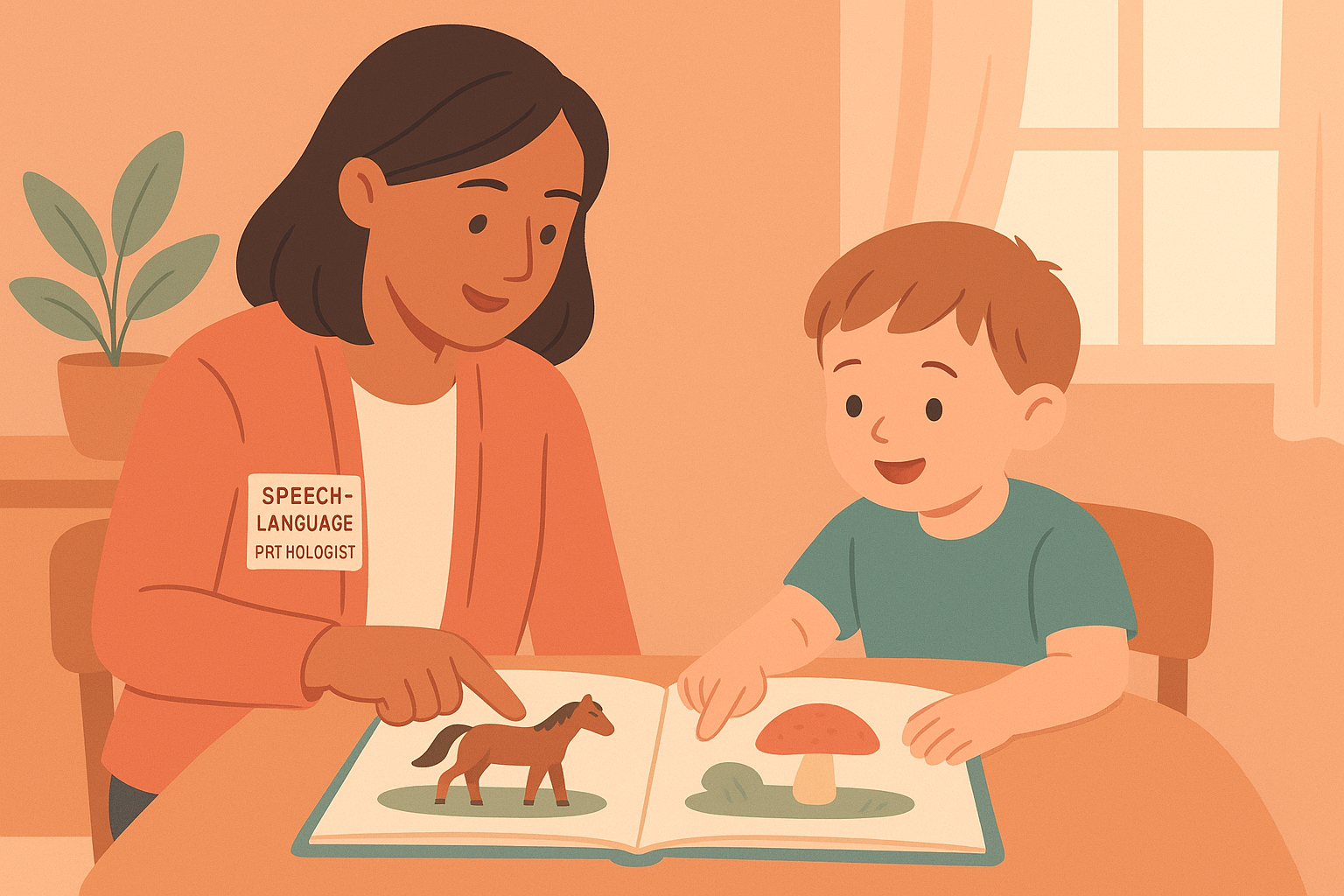
Modeling target words during the story keeps the Read, Model, Play cycle natural and engaging.
Using Speech Therapy Story Books for Targeted Articulation Practice
While core vocabulary stories build functional language, speech therapy story books can also target a single speech sound within an engaging plot. Sound Stories, for example, weave a chosen sound throughout a short narrative so a child practices it dozens of times without realizing they are drilling.
This approach works well because repetition inside a story feels purposeful rather than mechanical, which tends to hold a young child's attention far longer than flashcards alone. Furthermore, pairing a specific sound with a memorable character or silly plot twist gives children a mental hook that makes the sound easier to recall outside the session. Explore the full Sound Stories collection for examples built around individual speech sounds, each designed to slot directly into a short therapy block or home practice routine.
Bringing Story-Based Language Books Into School and Home Routines
Consistency between settings is one of the strongest predictors of progress, so story-based language books work best when they travel between the therapy room, the classroom, and the home. For instance, sending the same story home that was used in a session gives caregivers an easy, low-pressure way to continue modeling target words at dinner or bedtime.
Classroom teams can follow the same logic by rotating one themed story across circle time, centers, and small groups throughout a week. As a result, a child hears and practices the same target words in several meaningful contexts rather than just once. One example of this cross-setting approach in action is Little Lily's Language Leap story, which pairs a single narrative with follow-up prompts for both school and home use. Teams who want a broader starting point can also try a free introductory set before committing to a full bundle, which makes it easier to confirm fit before purchase.

Sending the same speech therapy story books home helps bridge school and family practice.
Frequently Asked Questions About Speech Therapy Story Books
What are speech therapy story books?
Speech therapy story books are picture books specifically designed or selected to target vocabulary, grammar, articulation, or social communication goals during therapy. They often repeat core words or target sounds throughout the text so children get many natural practice opportunities.
How do speech therapy story books support core vocabulary learning?
These books repeat high-frequency core words like "go," "more," and "stop" across every page, giving children repeated exposure in meaningful contexts. Consequently, children begin to recognize and use these words across many different situations, not just within the story itself.
Why do SLPs prefer story-based materials over flashcards?
Stories provide natural context and emotional engagement that flashcards cannot offer, which helps children connect words to real meaning. In addition, stories support multiple goals at once, including vocabulary, sequencing, and social language.
What age range benefits most from speech therapy story books?
Children ages 2 to 7 typically benefit most, since this window covers rapid vocabulary growth and early sentence development. However, older children with language delays can also benefit from simplified, repetitive story structures.
How much do speech therapy story books usually cost?
Digital story-based resources often range from free sample sets to around $10 to $30 for a themed bundle, depending on the number of stories and included materials. Many SLPs start with a free introductory set before purchasing a larger bundle.
How long should a story-based therapy session last?
Most story-based sessions run between 15 and 30 minutes, which is long enough to read, model target words, and add a play-based follow-up activity. Shorter sessions work well for very young children with limited attention spans.
What is the difference between speech therapy story books and regular picture books?
Regular picture books are written for general enjoyment, while speech therapy story books are built around specific core vocabulary, target sounds, or language structures. As a result, every page offers intentional opportunities to model and practice a skill.
Can parents use speech therapy story books at home?
Yes, parents can use these books at home to reinforce skills their child is working on in therapy or the classroom. Above all, consistent repetition between sessions and home reading helps new words transfer into everyday communication.
What is the Read, Model, Play approach?
The Read, Model, Play approach involves reading a story aloud, modeling target words or sounds, and then inviting the child to play out the story's theme. This three-step cycle gives children both input and low-pressure practice opportunities.
What common mistakes should be avoided when using story books in therapy?
A common mistake is moving through a story too quickly without pausing to model or wait for the child's response. Similarly, choosing stories that are too long or text-heavy for a child's attention span can reduce engagement.
Are speech therapy story books useful for AAC users?
Yes, story books paired with core vocabulary are especially useful for children who use augmentative and alternative communication, since the repeated words map directly onto communication boards or devices. This repetition helps AAC learners build familiarity with button locations and word meanings.
How do Sound Stories differ from Core Stories?
Sound Stories focus on targeted articulation practice for specific speech sounds, while Core Stories emphasize core vocabulary and functional language use. Many SLPs use both types together to address a child's full range of speech and language goals.
How often should speech therapy story books be used each week?
Using the same story two to four times per week allows enough repetition for children to internalize target words without becoming bored. Therefore, rotating a small set of stories regularly tends to work better than introducing a new book every session.
Final Thoughts
In summary, speech therapy story books give SLPs, educators, and parents a flexible, engaging way to build core vocabulary, support AAC use, and target specific speech sounds, all within a format young children already love. Because they combine repetition with genuine storytelling, these books tend to hold attention longer than drills while still delivering focused, measurable practice. Whether you are building a therapy caseload plan, stocking a classroom shelf, or looking for carryover activities at home, starting with a well-structured set of speech therapy story books, paired with the Read, Model, Play method, gives children many natural chances to grow their language skills week after week.