
AAC Modeling Activities for Speech-Language Therapy
Discover AAC modeling activities that build core vocabulary through story-based play. Try free samples and shop therapy-ready resources today.
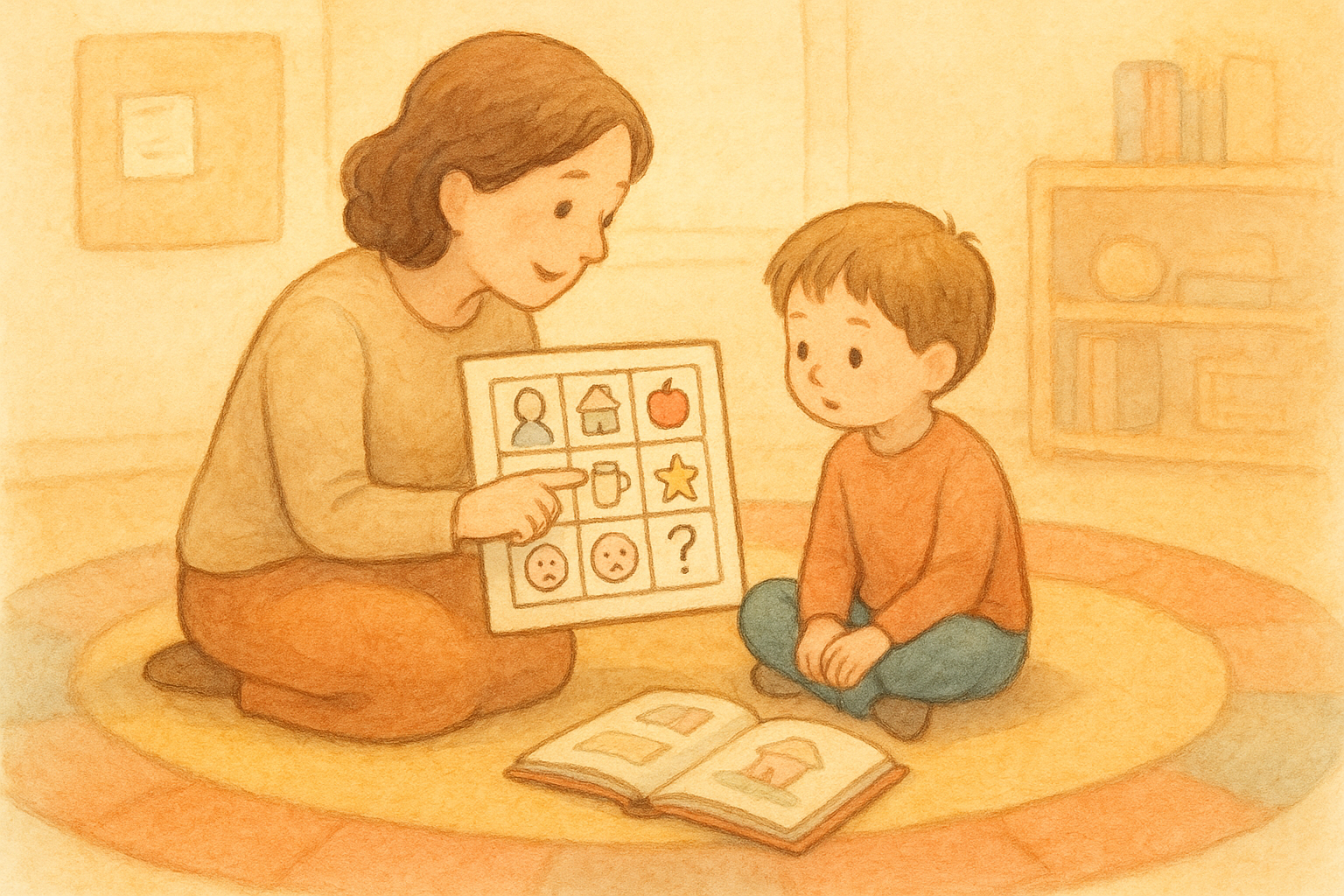
AAC modeling activities are the small, repeatable moments when an adult uses a child's augmentative and alternative communication (AAC) system — such as a communication board, app, or speech-generating device — to demonstrate words in real time. For speech-language pathologists, special educators, and classroom teams, these activities turn ordinary routines into language-building opportunities. In fact, consistent adult modeling is widely considered one of the most supported strategies for helping young communicators build core vocabulary and eventually use AAC more independently. This guide explains what these activities look like, why they matter, and how to weave them into story-based play.
Quick Answer: AAC modeling activities are structured opportunities where an adult uses a child's AAC system to demonstrate words during reading, play, and daily routines. Done consistently, this shows real-time language use so children can learn by watching before they are expected to communicate independently.
What Are AAC Modeling Activities?
AAC modeling activities are intentional moments when an adult points to, selects, or activates words on a child's communication system while talking out loud. Specifically, the adult "models" language the same way hearing children learn spoken words — by seeing it used over and over in meaningful contexts, rather than being asked to produce it on command.
Unlike a one-time demonstration, genuine modeling happens continuously across a day. For example, an SLP might model the core word MORE while rolling a ball, and a teacher might model GO during a hallway transition. As a result, children begin connecting symbols with meaning long before they attempt to use the device themselves.
This approach is sometimes called aided language input or aided language stimulation. Regardless of the term, according to the American Speech-Language-Hearing Association, the underlying goal stays the same: show the language, rather than simply asking for it.
Shared reading offers natural openings for AAC modeling activities before, during, and after the story.
Why Core Vocabulary Modeling Supports Early Communicators
Core vocabulary refers to the small set of high-frequency words — like GO, MORE, STOP, and HELP — that show up across nearly every activity. Because these words are so versatile, they offer the biggest return on modeling time compared with single-use nouns.
Research summarized by the ASHA Practice Portal on AAC consistently points to adult modeling as a key factor in expressive language growth. Therefore, SLPs and teachers who model core words during natural play, rather than isolated drills, tend to see stronger carryover into daily communication. For context on how early vocabulary typically develops, the CDC's developmental milestones note that many two-year-olds say around 50 words, which highlights how much ground core vocabulary modeling needs to help cover for children who communicate differently.
In addition, modeling core vocabulary gives children a flexible toolkit. A single word like GO can request a turn, describe a train, or ask to leave a room, depending on context. Consequently, teaching one word well pays off across dozens of situations, which is far more efficient than teaching only nouns tied to a single activity. This is also why core vocabulary teaching materials for AAC and language focus so heavily on repetition of a small word set.
The Read, Model, Play Approach to AAC Modeling
At Little Speech Corner, Mrs. Gwen built the Read, Model, Play approach specifically around this kind of AAC modeling. First, a short Core Story offers about five minutes of shared reading built around one core word. Then, the adult models that word using the child's AAC system or communication supports throughout the story. Finally, the story opens into child-led play, where the same word gets modeled again in a brand-new context.
This structure gives busy SLPs and classroom teams a ready-made script for modeling without planning from scratch. For a closer look at how AAC fits into this approach, the AAC resource hub walks through specific strategies session by session, and the team support tip sheets help classroom staff model the same words consistently at home and school.
How to Model AAC Using the Read, Model, Play Approach
Below is a simple four-step process that fits inside a single short session, whether it happens in therapy, a classroom corner, or at home.
- Choose one core word before the session. Select a single high-frequency word, such as GO or MORE, based on the child's current goals, and preview where it appears on their communication system so modeling stays fast and accurate.
- Read the Core Story while modeling the word. Share the short story aloud, and each time the target word appears in the text, activate or point to that same word on the child's AAC device or board at the same time.
- Narrate during play without requiring a response. Move into child-led play and keep modeling the word in new contexts, like rolling a car and saying go, without demanding that the child imitate it right away.
- Expand naturally when the child communicates. When the child uses any form of communication, respond by modeling a slightly longer phrase with the same core word to show how it can grow and combine with others.
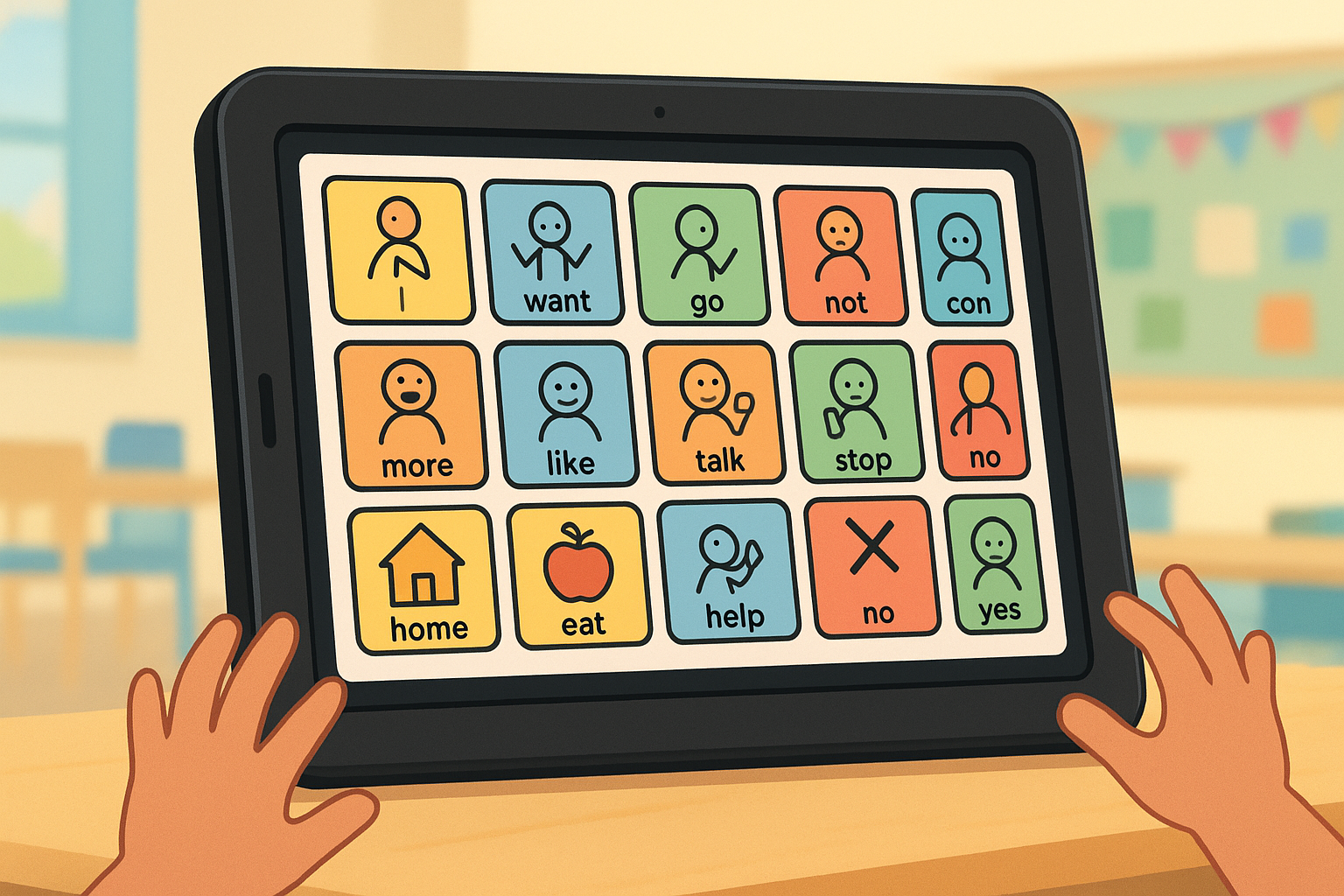
Previewing word locations on the device makes AAC modeling activities quicker and more natural in the moment.
7 AAC Modeling Activities to Try This Week
Once the basic technique feels comfortable, these seven settings offer easy entry points for practicing AAC modeling activities throughout a typical day.
- Core Story read-alouds: Model one word repeatedly during a five-minute shared story.
- Snack time requests: Model MORE and FINISHED while sharing snacks or drinks.
- Transition modeling: Model GO and STOP while lining up or moving between activities.
- Tip sheet carryover: Send a core-word tip sheet home so families model the same word.
- Sound Story crossover: Pair modeling with a Sound Story when a child has articulation goals too.
- Word of the Week calendar: Rotate a new core word weekly using a shared planning calendar.
- Peer modeling in small groups: Have a peer or sibling model the word alongside the adult.
AAC Modeling Tips for Classrooms and Care Teams
Modeling works best when it is shared across every adult in a child's day, rather than confined to a single therapy session. Specifically, a therapist can introduce a word, but a paraeducator, classroom teacher, and family member all need the same cue to model it consistently.
Team Supports and core-word tip sheets exist precisely for this reason. They give non-SLP staff a quick reference for where a word lives on a device and how to model it without overthinking the process. Similarly, resources like the guide to core vocabulary books for SLPs and teachers can help teams choose books that already contain the target word repeated naturally.
Above all, keep expectations realistic. A new core word rarely needs weeks of isolated drilling; instead, it typically needs dozens of brief, natural exposures across settings. For additional strategies and session ideas, Little Speech Corner's AAC modeling articles cover specific scenarios in more depth.
Common Mistakes That Limit AAC Modeling Success
Even experienced teams can fall into a few predictable traps. First, testing the child — asking "what is this?" instead of simply modeling — can turn a learning moment into pressure. Instead, try narrating what you see and do.
Second, modeling only nouns instead of flexible core words limits how often the word actually applies across the day. Third, giving up too soon when a child doesn't respond right away overlooks the fact that modeling supports comprehension long before expressive use appears. Consequently, patience and repetition matter more than any single clever activity.
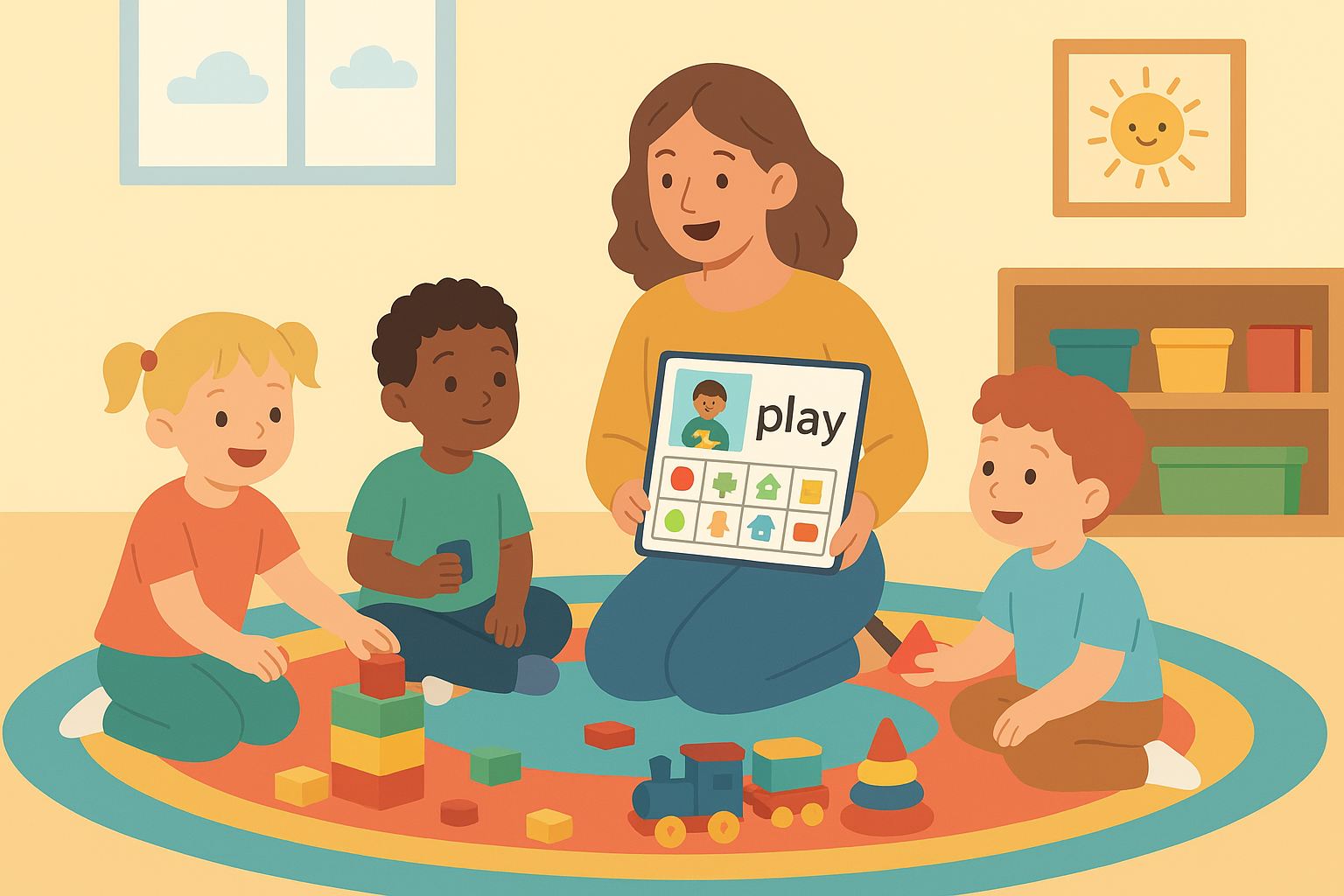
Group play settings give teachers extra chances to repeat AAC modeling activities naturally.
Frequently Asked Questions About AAC Modeling Activities
What are AAC modeling activities?
AAC modeling activities are moments when an adult uses a child's AAC system to demonstrate words during play, reading, or daily routines. The goal is to show language in action so the child can learn through repeated, meaningful exposure before being asked to communicate independently.
How often should AAC modeling activities happen during the day?
AAC modeling works best when it happens often, ideally across many short moments rather than one long session. Many SLPs and teachers aim to model a target word dozens of times across a day during routines like meals, play, and transitions.
Why is AAC modeling important for nonspeaking or minimally speaking children?
Modeling gives nonspeaking or minimally speaking children a consistent example of how their communication system works in real situations. Without this input, children may not learn where words are located or how they combine to express ideas.
What is the difference between AAC modeling and AAC teaching drills?
AAC modeling means the adult demonstrates the word without requiring an immediate response, while drills typically ask the child to imitate or produce the word right away. Modeling builds understanding first, which often leads to more natural, independent use later.
How long should an AAC modeling session last?
A focused modeling session can be as short as five minutes, similar to the Core Story portion of the Read, Model, Play approach. Shorter, frequent sessions tend to work better than occasional long ones because they keep the target word fresh throughout the day.
Can classroom teachers do AAC modeling activities without an SLP present?
Yes, classroom teachers and support staff can model AAC throughout the day once an SLP identifies target words and shows the basic technique. Consistency across settings, not just therapy time, is often what helps a child generalize a new word.
What core words should I model first?
Most SLPs begin with a small set of flexible, high-frequency words such as GO, MORE, STOP, and HELP, because these words apply across many activities. Starting narrow and modeling one word consistently tends to be more effective than introducing many words at once.
Do AAC modeling activities require an expensive AAC device?
No, AAC modeling can happen with low-tech tools like paper communication boards, picture cards, or printed core word sheets, not just dedicated devices. The modeling technique matters more than the specific tool, which makes it accessible for many budgets.
What mistakes should SLPs and teachers avoid when modeling AAC?
Common mistakes include testing the child instead of modeling, only modeling nouns instead of flexible core words, and giving up if the child doesn't respond right away. AAC modeling activities work best when adults treat modeling as ongoing input, not a quiz.
How does the Read, Model, Play approach support AAC modeling activities?
Read, Model, Play pairs a short Core Story with built-in opportunities to model a single core word, then carries that same word into child-led play. This structure gives busy adults a ready-made way to practice AAC modeling without extra planning.
Can AAC modeling activities also support articulation or speech sound goals?
Yes, many SLPs combine core vocabulary modeling with separate sound-focused practice, such as illustrated Sound Stories, when a child has both language and articulation goals. The two approaches can run alongside each other during the same session or week.
How do I track progress with AAC modeling activities?
Simple tracking often includes noting how many times a word was modeled, whether the child looked at or touched the symbol, and any spontaneous use across the week. Over time, increases in spontaneous use are generally viewed as a meaningful sign of progress.
What age range benefits most from AAC modeling activities?
AAC modeling activities are commonly used with children from toddler age through early elementary school, roughly ages two through seven, though the strategy applies more broadly. Early, consistent modeling is often recommended as soon as a child is introduced to an AAC system.
Where can I find free AAC modeling activity samples?
Free samples, such as a Core Story and a core-vocabulary planning calendar, are available for download through Little Speech Corner's TPT store. These samples give SLPs and teachers a low-risk way to try the Read, Model, Play approach before purchasing a full set.
Bringing AAC Modeling Activities Into Everyday Practice
In summary, AAC modeling activities work best as small, frequent moments spread across reading, play, and daily routines rather than a single scheduled drill. Because core words like GO, MORE, and STOP apply across so many situations, modeling them consistently gives children the richest possible exposure to their communication system. The Read, Model, Play approach, along with supporting tip sheets and planning calendars, gives SLPs, educators, and families a shared, repeatable way to model these words together. For more information on building these habits into daily sessions, visit Little Speech Corner to explore Core Stories, Sound Stories, and free samples available through the TPT store.