
AAC Parent Handouts: Simple Core Word Carryover Tips
Discover AAC parent handouts that simplify core-word modeling at home. Browse free samples and SLP-designed resources from Little Speech Corner today.
AAC parent handouts give families a simple, visual way to carry core vocabulary and augmentative and alternative communication (AAC) strategies from therapy sessions into daily routines. For many parents, a short page of modeling ideas is easier to use than a lengthy therapy report. In fact, these handouts work best when they pair a familiar story or routine with just one or two target words. This article explains what AAC parent handouts are, how speech-language pathologists (SLPs) build them, and how families can use them at home, at school, and during play.
What Are AAC Parent Handouts?
AAC parent handouts are one-page or short printable guides that translate a child's AAC goals into easy home strategies. Typically, they list a target core word, a few model sentences, and two or three play-based activities. As a result, caregivers without clinical training can model AAC consistently without needing a full therapy background.
According to the American Speech-Language-Hearing Association (ASHA), AAC includes every tool and strategy — from gestures to speech-generating devices — that supports communication for people with complex communication needs. Consequently, a handout only works well when it reflects the exact system a child already uses, whether that is a picture board, a core vocabulary device, or an AAC app. You can read a broader overview of these systems on Wikipedia's AAC entry as background before building a handout.
Why Core Vocabulary Handouts Support AAC Carryover at Home
Core vocabulary refers to the small set of high-frequency words — like more, go, stop, and help — that make up most everyday communication. Core vocabulary research commonly cited in the AAC field suggests that roughly 80 percent of everyday communication relies on just a few hundred words, which is why many SLPs build core vocabulary handouts around a single word at a time instead of a long list. In addition, repetition matters. Specifically, a child often needs many meaningful exposures to a new word before it shows up in their own expressive language.
Therefore, handouts that repeat one word across a story, a snack routine, and a bath time script give families that repetition naturally, rather than requiring a separate "practice session." For example, Little Speech Corner's Core Stories use a Read, Model, Play approach: a short story introduces the core word, the adult models it using the child's AAC system, and play reinforces it afterward. This structure lines up closely with how effective core vocabulary handouts are meant to work. Furthermore, pairing a handout with a visual story, as described in this guide to core vocabulary teaching materials for AAC language, can help teams stay consistent across home and classroom settings.
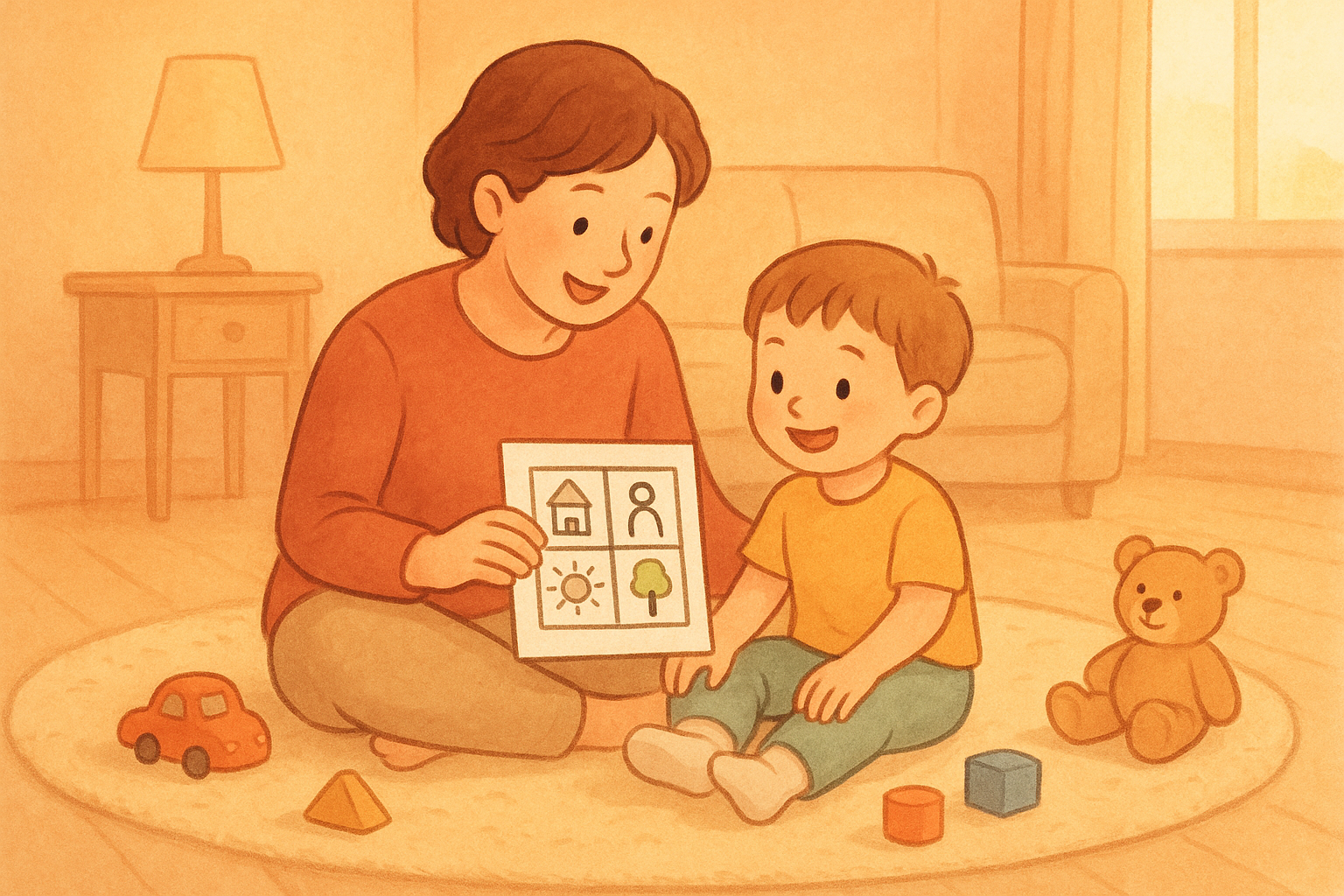
AAC parent handouts turn a single core word into a shared reading and play moment at home.
How to Create Effective AAC Parent Handouts: A Step-by-Step Process
Building a usable handout does not require fancy design skills. Instead, it requires a clear, repeatable structure that any caregiver can follow in under five minutes. The steps below outline a process SLPs and educators can adapt for almost any core word or routine.
- Choose one core word or communication goal. Select a single high-frequency core word, such as go, more, or help, rather than listing several goals at once so caregivers can focus their modeling.
- Pick a familiar routine or story. Tie the target word to a routine the family already does daily, like snack time or bath time, or attach it to a short, predictable story they can read together.
- Add visual supports matching the child's AAC system. Include a picture, symbol, or device button that matches exactly what the child uses, since mismatched visuals confuse caregivers and slow down modeling at home.
- Write two or three model phrases. Give caregivers short, exact phrases to say and show, such as pointing to the AAC symbol for more while saying the word aloud during a snack.
- Include a simple carryover activity. End the handout with one quick play idea that naturally repeats the target word several times, turning a single modeling moment into ongoing practice throughout the day.
Using Core Word Tip Sheets and Read, Model, Play at Home
Core word tip sheets work alongside individual handouts to give families a broader weekly plan. Rather than focusing on just one word, a tip sheet might outline a Core Word of the Week alongside a planning calendar, so the whole team — classroom, home, and therapy room — models the same vocabulary. This is exactly the structure behind Little Speech Corner's team supports, which pair core-word tip sheets with a suggested yearly sequence.
Similarly, the Read, Model, Play approach keeps this consistent across settings. A short Core Story provides about five minutes of shared reading and core-word modeling, followed by interaction and child-led play; this is a flexible routine rather than a guaranteed outcome. For a deeper look at how these tools fit together, Little Speech Corner's guide to core vocabulary handouts for teachers and parents compares formats in more detail, and the site's AAC resource hub gathers related articles in one place.
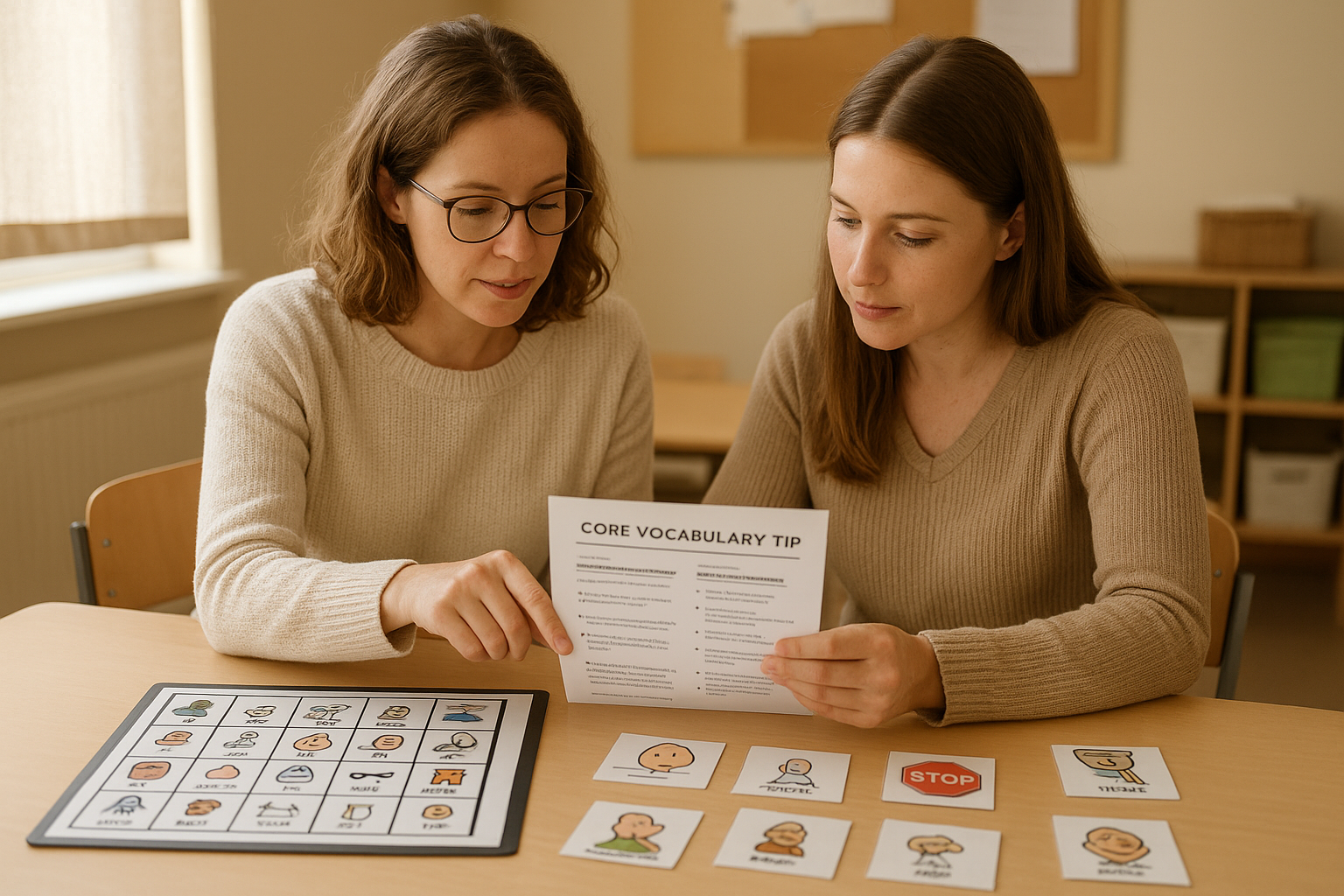
Core word tip sheets help classroom teams model the same vocabulary families use at home.
Common Mistakes with AAC Communication Handouts
Even well-intentioned AAC communication handouts can fall flat if they try to do too much at once. Above all, a handout crammed with ten vocabulary words rarely gets used consistently, because caregivers don't know where to start. Similarly, visuals that don't match the child's actual device or board create confusion instead of clarity.
Another frequent issue is skipping the modeling step entirely. Handouts that only describe a word, without showing exactly how to model it with the child's AAC system, leave caregivers guessing. In contrast, handouts with one word, one visual, and one clear example sentence tend to get used far more often. Finally, avoid promising specific results or timelines, since progress with AAC varies by child, goal, and amount of practice across home and school settings. The CDC's developmental milestones resource offers helpful general context for families wondering what communication growth can look like at different ages.
Free AAC Parent Handouts and Resources to Try
Before committing to a full set of resources, it often helps to preview the format. Little Speech Corner offers a free THERE Core Story, a sample core-vocabulary calendar, and SW and CH Sound Story samples through its Teachers Pay Teachers store, giving SLPs and families a low-risk way to test the Read, Model, Play structure firsthand.
For a broader library, the Core Stories Foundational 53-Pack bundles a full year of core-word stories with a suggested weekly planning sequence, though it's worth confirming the current listing details on TPT before purchase. If you're also supporting articulation goals, the related practical guide to AAC books for speech therapy offers additional context on pairing print materials with AAC modeling. You can explore the full catalog directly on Little Speech Corner's website.
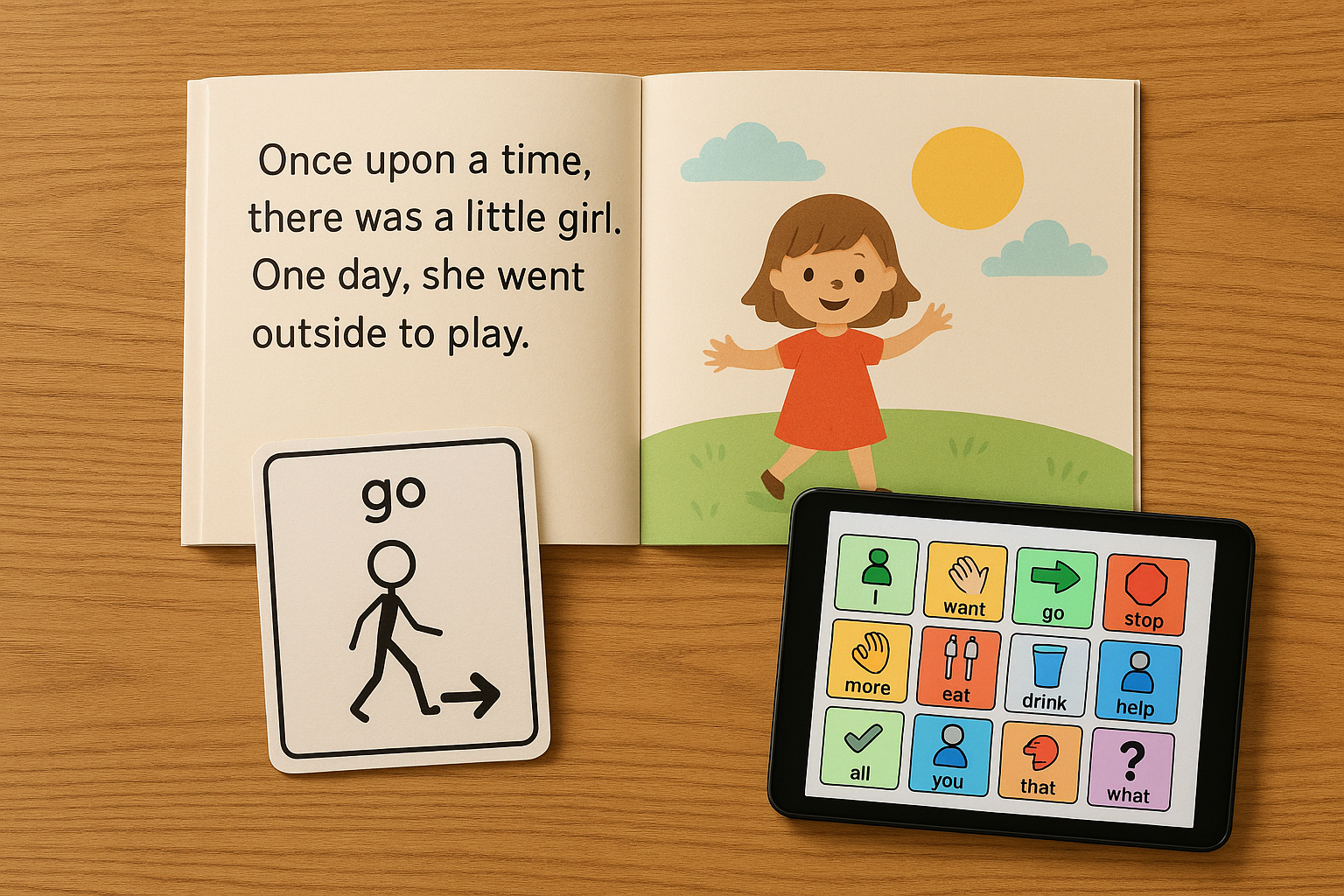
Free samples let families and SLPs preview AAC parent handouts before choosing a full resource set.
Frequently Asked Questions About AAC Parent Handouts
What are AAC parent handouts?
AAC parent handouts are short printable guides that turn a child's augmentative and alternative communication (AAC) goals into easy, everyday strategies. They typically list one target word, a few model phrases, and a simple activity caregivers can use right away.
How do AAC parent handouts support communication at home?
They give caregivers a clear, repeatable script for modeling language during routines like meals, bath time, or play. This repetition helps a child hear and eventually use the target word in real situations, not just in therapy sessions.
What should a good AAC handout include?
A strong handout names one core word, shows how to model it using the child's own AAC system, and suggests two or three natural moments to practice. Visual supports that match the child's device or board are essential.
How is Read, Model, Play used with AAC handouts?
Read, Model, Play pairs a short story with hands-on modeling and follow-up play. A caregiver reads a brief story, models the core word using AAC, then extends that word into a play activity the same day.
What is the difference between AAC parent handouts and core vocabulary tip sheets?
AAC parent handouts often focus on one specific goal or story, while core vocabulary tip sheets usually cover a broader weekly or monthly plan across several words. Many teams use both together for consistent modeling.
How often should parents use AAC handouts at home?
Short, frequent use works better than occasional long sessions. Most SLPs recommend modeling the target word several times a day during routines that already happen naturally, such as snack time or getting dressed.
Can AAC parent handouts help children who don't use AAC devices yet?
Yes, handouts can also model gestures, pictures, or low-tech communication boards for children who are still being evaluated for AAC. The same core-word structure applies regardless of the system.
What are common mistakes when creating AAC handouts for parents?
Common mistakes include listing too many words at once, using visuals that don't match the child's actual AAC system, and giving instructions without a real-life example. Handouts work best when they are short and specific.
How much do AAC parent handouts cost?
Pricing varies by creator and bundle. Little Speech Corner offers both free samples and paid resources, such as individual Core Stories and the Foundational 53-Pack, through its Teachers Pay Teachers store, so it's best to confirm current listing details there.
Where can SLPs find free AAC parent handouts?
Many SLP resource creators offer free samples to preview their approach. Little Speech Corner, for example, provides a free THERE Core Story and a sample core-vocabulary calendar that demonstrate the handout format before purchase.
How long does it take to see progress using AAC handouts?
Progress varies widely by child and communication goal, so handouts should never promise a specific timeline. Consistent, repeated modeling across home and school settings generally supports steadier progress than occasional use.
Are AAC parent handouts only for speech-language pathologists?
No, handouts are designed for anyone supporting a young communicator, including classroom teachers, paraeducators, and family members. SLPs typically create or select them, but the whole team can use them for consistent modeling.
What is core vocabulary and why does it matter for AAC handouts?
Core vocabulary refers to the small set of high-frequency words, like go, more, and stop, that make up most everyday communication. Handouts built around core words give children flexible language they can reuse across many situations.
How do Core Stories relate to AAC parent handouts?
Core Stories pair a short illustrated story with a single core word, following the Read, Model, Play approach. They function like an extended AAC parent handout, giving caregivers a built-in script and activity for modeling.
What makes Little Speech Corner's approach to AAC handouts different?
Little Speech Corner, created by SLP Gwen Swire (Mrs. Gwen), structures handouts and stories around a single core word with built-in modeling and play steps. The Read, Model, Play framework keeps handouts short, practical, and easy for families to use consistently.
Bringing It All Together
AAC parent handouts work best when they stay small, specific, and tied to real moments in a child's day. Rather than overwhelming families with long word lists, the most useful handouts focus on one core word, one clear model phrase, and one easy activity. In turn, that simplicity is exactly why the Read, Model, Play structure behind Little Speech Corner's Core Stories pairs so naturally with handout-style carryover. Whether a team starts with a free sample or builds toward the Foundational 53-Pack, consistent, well-matched AAC parent handouts give every adult in a child's life the same simple script to follow.