
AAC Vocabulary Modeling Resources for Early Learners
Explore AAC vocabulary modeling resources for ages 2–7: what to look for, how Read, Model, Play works, and free samples to try. Preview a story today.

AAC vocabulary modeling resources are materials that help adults show young communicators how words work on an augmentative and alternative communication (AAC) system. If you are an SLP or educator building a toolkit, the right resource saves prep time and keeps modeling natural. Below, Mrs. Gwen's team at Little Speech Corner explains what to look for and how to use them.
Quick answer: Choose resources that center on core words, fit your learner's own AAC system, and invite play instead of demands. Short stories, tip sheets, and a shared plan for the whole team work well together.
What Are AAC Vocabulary Modeling Resources?
They are stories, tip sheets, calendars, and activity ideas built around words a child can use on an AAC system. AAC includes picture boards, speech-generating devices, signs, and gestures. The goal is to give adults easy, repeatable ways to model.
Modeling means the adult touches or selects a word while speaking. Many people call this aided language modeling. The child sees how the word works. No one asks for a performance.
Shared reading gives adults a natural moment to model core words.
Why Core Vocabulary Comes First
Core words are small, flexible words like more, go, stop, and help. They appear in many settings. As a result, one word can be modeled all day.
In contrast, a long list of topic nouns often works only in one activity. For that reason, many teams start with core vocabulary. For more ideas, see these AAC core vocabulary activities for early communicators.
What to Look for in Core-Vocabulary Modeling Materials
Not every resource fits every learner. Therefore, check a few features before you choose.
- One clear core word per story or activity.
- Repeated, natural use of that word in the pictures and text.
- Ideas for play, not drills or quizzes.
- Flexibility for any communication mode, including speech, signs, boards, and devices.
- A way to share the word with classroom and home teams.
Additionally, look at the preview before you buy. Our guide to core vocabulary teaching materials for AAC language walks through this in more detail.
How Read, Model, Play Works
Read, Model, Play is the approach behind Little Speech Corner's Core Stories. A short story takes about five minutes to share. Then the adult models the word and follows the child into play. The five minutes describes the routine, not a promised result.
Step-by-Step: Modeling One Core Word
- Choose one core word that fits the learner, and find it on the child's AAC system.
- Read the short story, pointing out the word in the pictures and text.
- Touch the word on the AAC system as you say it. Do not ask for repetition.
- Move into child-led play and model the word again when it fits.
- Share the word with teachers and family so everyone models the same vocabulary.
A Quick Example
Say the word is go. During play with cars, you touch go and say, "Go!" Then you pause. If the child smiles, pushes the car, or presses a button, you have a communication moment. All of those responses count.
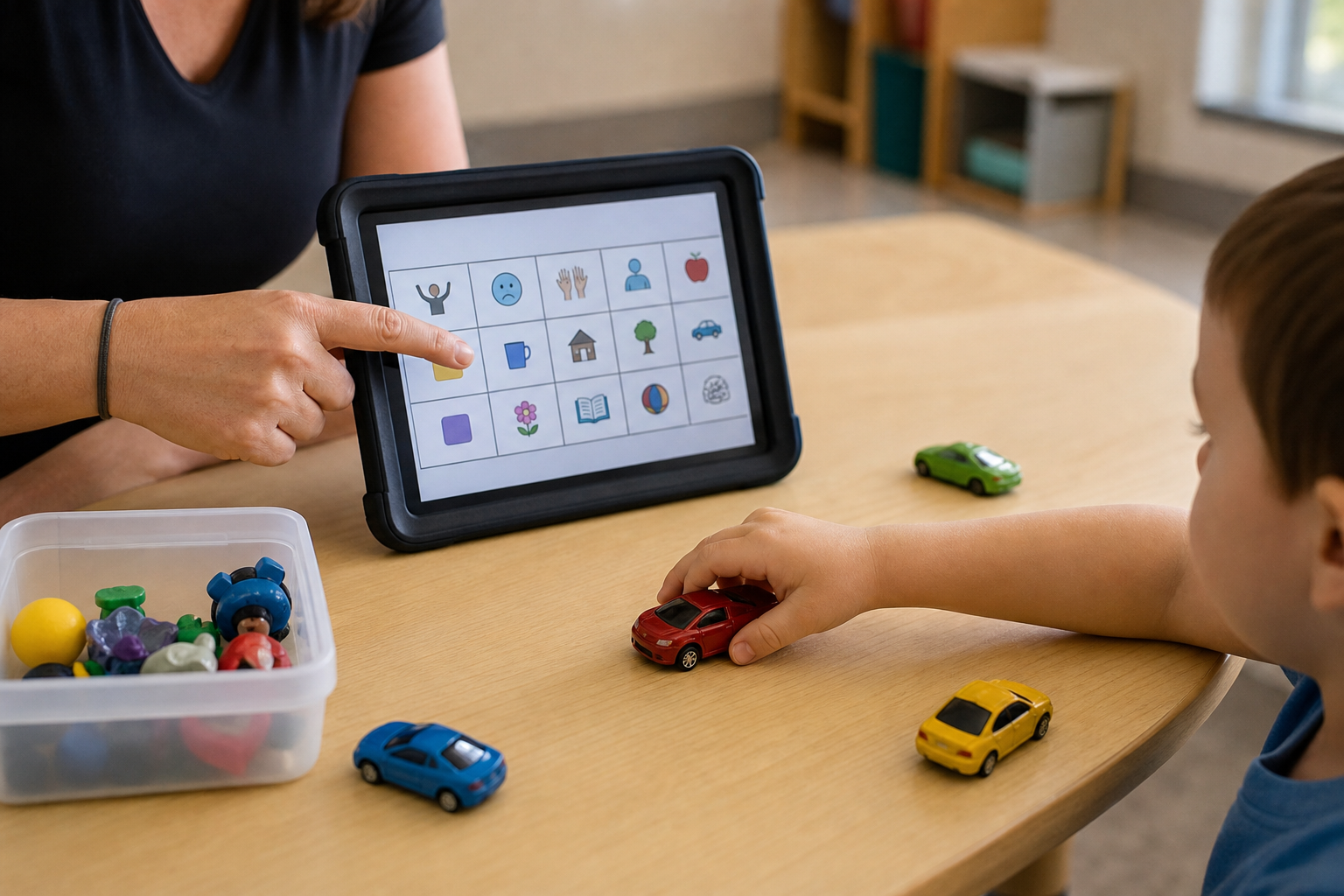
Child-led play offers real reasons to model a core word again and again.
Resources Available Through Little Speech Corner
Little Speech Corner offers downloadable resources, completed through its Teachers Pay Teachers (TPT) store. Confirm prices, formats, and licensing on the current listing.
- Individual Core Stories: short illustrated stories built around one core word.
- Core Stories Foundational 53-Pack: a bundle with a suggested Core Word of the Week sequence. It is not a complete individualized therapy program.
- Sound Stories: sound-loaded narratives for clinician-selected articulation practice.
- Team Supports: Core Word Tip Sheets and a planning calendar.
Storytime Stories and Story Builders are in development and are not available yet. Gwen Swire, M.A., CCC-SLP, has more than 20 years of SLP experience. That background shapes the materials, but it is not an endorsement or validation of any specific outcome.
Sharing Vocabulary Across School and Home
Modeling works best when many adults do it. Consequently, Team Supports give teachers, aides, and caregivers the same core word and simple tips. Verify TPT licensing before sharing files with staff or schoolwide.
You may also like this practical SLP guide to AAC books and these books and activities for modeling core vocabulary.
Respectful Modeling Habits
- Keep the child's full AAC vocabulary available at all times.
- Invite, never force, a response.
- Accept every mode of communication.
- Follow the child's interests.
These resources provide educational support and do not replace individualized assessment, clinical judgment, or speech-language therapy. An SLP should select speech targets and cues for each child.
Try a Free Sample First
Free examples include Apples for Anna (THERE), a calendar with a sample Core Story, and SW and CH Sound Story samples. A free download is an easy way to see the style. Visit Little Speech Corner to find the links to the TPT store.
Frequently Asked Questions
What are AAC vocabulary modeling resources?
AAC vocabulary modeling resources are materials that help adults show how to use words on an AAC system during shared activities. Stories, tip sheets, and planning calendars are common examples.
What does AAC stand for?
AAC stands for augmentative and alternative communication. It includes tools and strategies such as picture boards, speech-generating devices, signs, and gestures that support communication.
What is aided language modeling?
Aided language modeling is when a communication partner points to or selects words on the child's AAC system while speaking. The child is invited, not required, to join in.
What are core words?
Core words are common words such as more, go, stop, and help that are used across many situations. They make up a large share of everyday talk.
Which ages are these resources designed for?
Little Speech Corner resources are designed primarily for young communicators ages 2 to 7. An SLP or educator should adjust words and expectations to fit each learner.
How long does a Read, Model, Play session take?
The shared reading portion takes about five minutes, followed by interaction and child-led play. The five minutes describes the routine, not a promised outcome.
Do children have to repeat the word?
No. Modeling means showing the word, not requiring repetition. Children can respond in any mode they choose, and their full vocabulary stays available.
Can I use these resources with any AAC system?
The modeling approach is flexible, but device or app compatibility is not claimed. Check how the target word is organized on your learner's system and adapt as needed.
Are there free samples to try?
Yes. Free examples include Apples for Anna (THERE), a calendar with a sample Core Story, and SW and CH Sound Story samples through Teachers Pay Teachers.
Where do I get the resources?
Purchases and free downloads are completed through the Little Speech Corner store on Teachers Pay Teachers. Confirm listing details such as formats and licensing there.
What is the Core Stories Foundational 53-Pack?
It is a TPT bundle of 53 Core Stories with a suggested weekly core-word planning sequence. It is not a complete individualized therapy program.
Do AAC vocabulary modeling resources replace therapy?
No. These resources provide educational support and do not replace individualized assessment, clinical judgment, or speech-language therapy.
What is a common mistake when modeling AAC?
A common mistake is quizzing the child or limiting the vocabulary available. Model naturally and keep the full communication system open.
Conclusion
Strong AAC vocabulary modeling resources center on core words, respect every communication mode, and make it easy for the whole team to model together. Start with one word, one short story, and plenty of child-led play. Then try a free sample to see whether the Read, Model, Play style fits your learners.
