
Articulation Stories: A Practical Guide for SLPs & Teachers
Discover how articulation stories build speech sound practice into engaging narratives. Try free Sound Stories samples from Little Speech Corner.
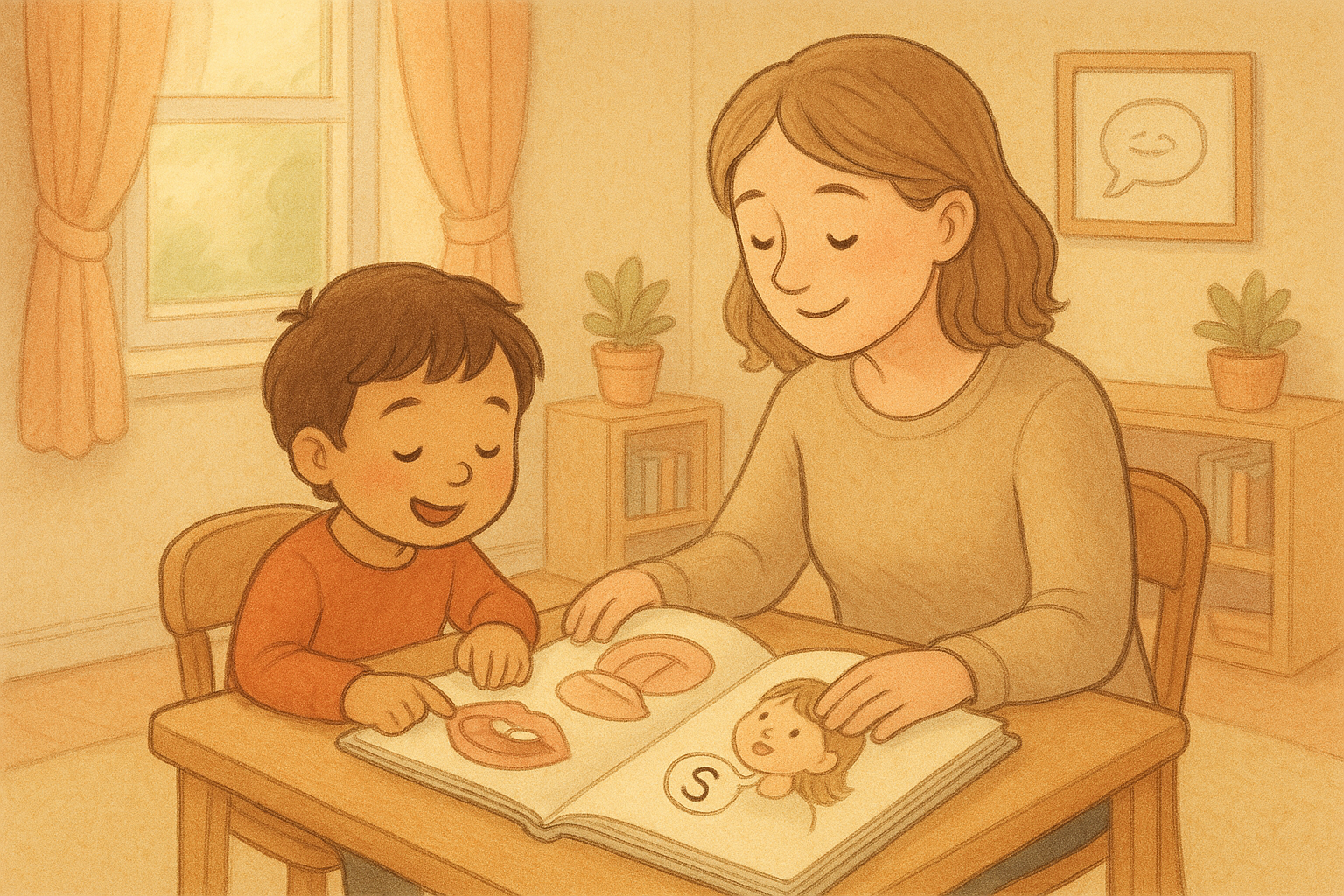
Articulation stories are short, illustrated narratives built around a single target speech sound, and they give young children repeated, natural chances to hear and practice that sound inside connected language rather than isolated drill lists. For speech-language pathologists (SLPs) and early childhood teams, this approach blends shared reading with clinician-selected articulation and speech-sound practice. In fact, sound-loaded narratives like these can turn a routine artic goal into something a child actually wants to read again. This guide explains what articulation stories are, how to use them in therapy, and how to choose the right set for your caseload.
Quick answer: Articulation stories are illustrated, sound-loaded books that let a child hear and practice a target speech sound many times during one shared reading, then carry that practice into play and conversation. They work alongside, not instead of, traditional drill when appropriate.
Shared reading with articulation stories gives children repeated, natural practice with a target sound.
What Are Articulation Stories?
Articulation stories are illustrated books where nearly every sentence contains a word with the clinician-selected target sound. For example, a /s/-focused story might repeat words like "sun," "soap," and "sing" across a short, engaging plot instead of asking a child to repeat the same word on a flashcard.
This approach matters because speech sound production, the physical process of shaping breath and mouth movement into a specific sound, often develops faster with meaningful repetition than with rote drill alone. According to the American Speech-Language-Hearing Association (ASHA), most English consonant sounds are typically mastered by around age 8, though individual timelines vary widely. Articulation stories give SLPs a way to pack dozens of natural repetitions of a target sound into a single five-to-ten-minute shared reading, without the practice feeling like homework.
Each story is usually illustrated and sound-loaded, meaning target-sound words are paired with clear pictures the child can point to or imitate. As the adult reads, they pause briefly on target words, modeling clear production before moving the story forward. Consequently, the child hears the correct sound pattern many times in a row, in context, which supports both auditory discrimination and motor planning for speech sounds.
Because the stories stay short and playful, they fit easily into a 20 to 30 minute therapy session, a classroom circle time, or a few minutes of home carryover. Little Speech Corner's Sound Stories collection, for example, is built specifically around this clinician-selected, sound-loaded structure, with free SW and CH samples available to preview the format before committing to a full set.
Why Speech Sound Narratives Support Carryover
Speech sound narratives work because they connect artic practice to something a child cares about: the story itself. In contrast, a flashcard drill asks a child to repeat a word with no context, which can feel repetitive and unmotivating after just a few minutes.
Specifically, stories give adults three built-in opportunities within a single reading: modeling, imitation, and generalization. First, the adult models the target sound clearly while reading aloud. Next, the child often joins in spontaneously, labeling pictures or finishing predictable phrases. Finally, because the story has a plot and characters, the child is more likely to retell it later, at home or in the classroom, extending practice well beyond the original session.
Research summarized by the National Institute on Deafness and Other Communication Disorders (NIDCD) notes that most speech sound disorders in young children improve with consistent, structured practice, particularly when that practice happens across multiple settings and communication partners. Articulation stories make that cross-setting consistency easier, since the same sound-loaded story can travel from the therapy room to the classroom to the dinner table.
Additionally, because stories are visual and narrative, they naturally support children who use augmentative and alternative communication (AAC) or who are still building core vocabulary. The adult can model target words using the child's own communication system while reading, so speech sound practice and language modeling happen together rather than competing for session minutes.
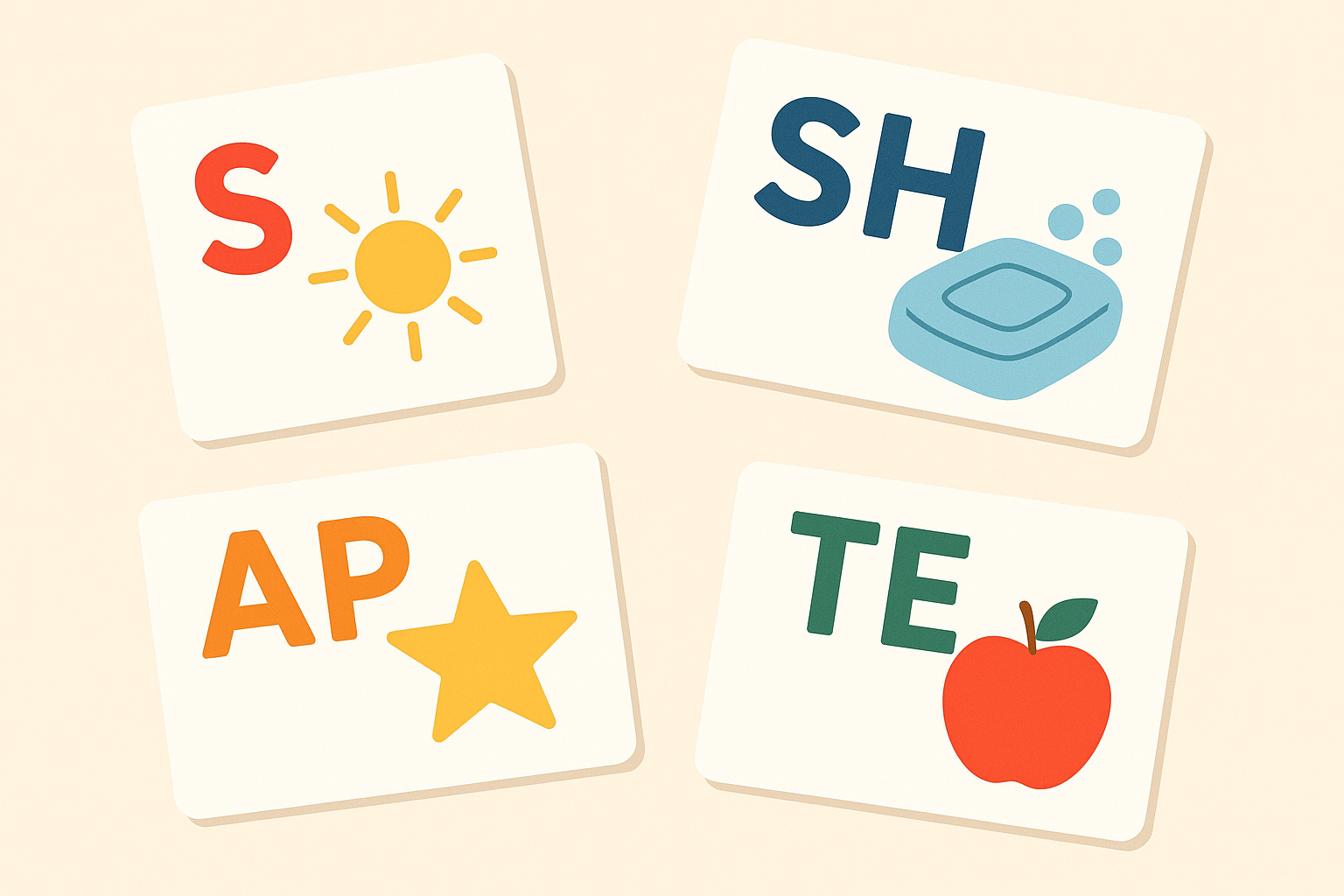
Sound-loaded pages pair a target word with a clear picture to support imitation.
How to Use Articulation Stories in Speech Therapy
Using articulation stories well takes a bit more than reading the words aloud. The following steps outline a simple, repeatable process many SLPs and classroom teams use during a session.
- Select the target sound and story level. Choose a story loaded with the specific sound a child is working on, and confirm the vocabulary and sentence length match the child's current understanding.
- Preview the story before the session. Skim the pages first so target-sound words are easy to spot and emphasize naturally while reading aloud to the child.
- Read the story and highlight target words. Read at a relaxed pace, pausing slightly on each target-sound word so the child hears a clear, correct model multiple times.
- Model and prompt production during natural pauses. Invite the child to imitate a target word, point to a picture, or finish a predictable line, adjusting support based on how independently they respond.
- Extend practice into play or conversation. After the story, use related toys, drawing, or simple conversation to carry the target sound into less structured, spontaneous talking.
Choosing the Right Articulation Stories for Your Caseload
Choosing the right articulation stories for your caseload starts with matching sound, interest, and format to each child's goals. For instance, a kindergarten classroom working on multiple sounds may need a small set covering several targets, while a private-practice SLP might want a deeper set of /r/ or /s/ stories for a handful of clients.
Above all, look for stories that are clinician-selected, meaning an SLP has deliberately loaded the text with the target sound in varied word positions, rather than simply mentioning the sound once or twice. If you are new to story-based practice, the guide on printable articulation stories for speech therapy outlines practical ways to introduce the format in both therapy rooms and classrooms.
Similarly, the roundup of the best story-based speech therapy resources for young children compares formats so teams can decide what fits their caseload size and session structure. For a specific example of a sound-loaded character in action, the Little Lily story page shows how one illustrated character carries a target sound through a full narrative arc.
Whichever set you choose, confirm the current listing for included sounds, formats, and licensing before purchasing, since collections are periodically updated.
Articulation Stories vs. Traditional Drill Practice
Traditional drill practice, repeating a target word or sound in isolation many times, still has a place in articulation therapy, particularly for building initial motor patterns. However, articulation stories and drill are not competitors; they serve different purposes at different points in treatment.
Drill tends to work well early on, when a child needs very controlled, high-repetition practice to establish a new sound. By contrast, articulation stories shine once a child can produce the sound with some support and needs practice generalizing it into connected speech, sentences, and conversation.
As a result, many SLPs blend both approaches across a treatment plan: a few minutes of focused drill to warm up a sound, followed by a sound-loaded story to practice that same sound in a more natural, motivating context. This mirrors the "Read, Model, Play" structure used across Little Speech Corner's broader catalog, where a short shared story leads into interactive, child-led practice rather than stopping at isolated repetition.
Free Articulation Story Samples to Try First
Before committing to a full set, it helps to try a free sample first. Little Speech Corner offers free SW and CH Sound Story samples, which let SLPs and teachers preview the sound-loaded story format with zero cost or commitment.
Meanwhile, if your caseload also focuses on core vocabulary and AAC alongside articulation goals, the SLP guide on teaching core vocabulary through stories explains how a similar story-based structure supports language modeling for young communicators. Many teams use both approaches side by side: Core Stories for vocabulary and modeling, and Sound Stories for clinician-selected articulation practice.
To explore the full current collection, including available target sounds and formats, visit Little Speech Corner directly and review the Sound Stories page before purchasing through the Little Speech Corner Teachers Pay Teachers store. Previewing a free sample first is a low-risk way to confirm the format fits your specific caseload and setting.
A dedicated reading corner makes it easy to reach for articulation stories throughout the day.
Frequently Asked Questions About Articulation Stories
What are articulation stories?
Articulation stories are illustrated, sound-loaded narratives built around one target speech sound, giving a child repeated practice hearing and saying that sound inside a connected, meaningful story instead of isolated drill words. They are commonly used by SLPs and early childhood teams.
How do articulation stories work in speech therapy?
An adult reads the story aloud, pausing on target-sound words to model clear production, then invites the child to imitate, point to pictures, or finish predictable lines before extending the sound into play or conversation.
Why use stories instead of flashcards for articulation practice?
Stories hold a child's attention longer than isolated flashcards and embed the target sound in natural sentences. Consequently, this supports generalization from single-word drill to connected, conversational speech.
What age range benefits most from articulation stories?
Articulation stories work well for young children, generally ages 2 through 7, since this is when most speech sound goals are actively targeted in early intervention, preschool, and early elementary settings.
How are articulation stories different from traditional drill-based practice?
Traditional drill repeats a target word in isolation to build an initial motor pattern. Articulation stories, on the other hand, practice that same sound inside sentences and a plot, which supports carryover into real speech.
Do articulation stories cost money?
Pricing depends on the specific collection and listing. Free samples are often available to preview the format, while full sets, such as Little Speech Corner's Sound Stories, are typically purchased through a Teachers Pay Teachers listing.
How long does one articulation story session take?
Most shared readings take roughly five to ten minutes, which fits easily into a short therapy block, a classroom circle time, or a few minutes of home carryover practice.
What common mistakes should SLPs avoid when using sound-loaded stories?
A common mistake is reading too quickly without pausing on target words, which limits modeling opportunities. Another is choosing a story with vocabulary or sentence length that is too advanced for the child's current level.
What are best practices for selecting a target sound story?
Match the story's target sound to the child's current goal, confirm the vocabulary fits their comprehension level, and preview the story before the session so target words are easy to spot while reading.
Can parents use articulation stories at home?
Yes, many stories are designed for shared reading, so parents can read the same story used in therapy to reinforce the target sound across settings, which supports faster, more consistent progress.
Are articulation stories only for speech therapy, or can teachers use them too?
Classroom teachers and special educators commonly use articulation stories during small-group or whole-class reading time to reinforce speech sound goals alongside an SLP's individual therapy plan.
What sounds are typically covered in articulation story collections?
Collections often target commonly addressed sounds such as S, SW, CH, and R, though the specific sounds available vary by collection, so it is worth checking the current listing before choosing one.
How many articulation stories should a caseload include?
There is no fixed number. Many SLPs keep a small set covering their most frequently targeted sounds, then add stories for less common targets as individual caseload needs change.
Where can I find free articulation story samples?
Free SW and CH Sound Story samples are available from Little Speech Corner, offering a no-cost way to preview the sound-loaded story format before purchasing a full collection.
Do articulation stories replace traditional artic drill entirely?
No, articulation stories work best alongside drill rather than replacing it. Drill helps establish a new sound, while stories help generalize that sound into connected, natural speech.
Final Thoughts on Articulation Stories
In summary, articulation stories give SLPs, teachers, and families a motivating way to practice a target speech sound without relying only on repetitive drill. Because the sound is loaded naturally into a short, illustrated narrative, children get meaningful repetition while staying engaged with the story itself.
Ultimately, whether you blend stories with traditional drill or lean mainly on sound-loaded narratives, the goal stays the same: helping a young communicator produce their target sound more confidently across settings. Previewing a free sample, such as the SW or CH Sound Story, is a simple first step toward deciding whether articulation stories fit your caseload and classroom routine.