
Articulation Stories for Preschool: A Practical Guide
Explore articulation stories for preschool that pair sound practice with story-based play, plus free Sound Story samples from Little Speech Corner.
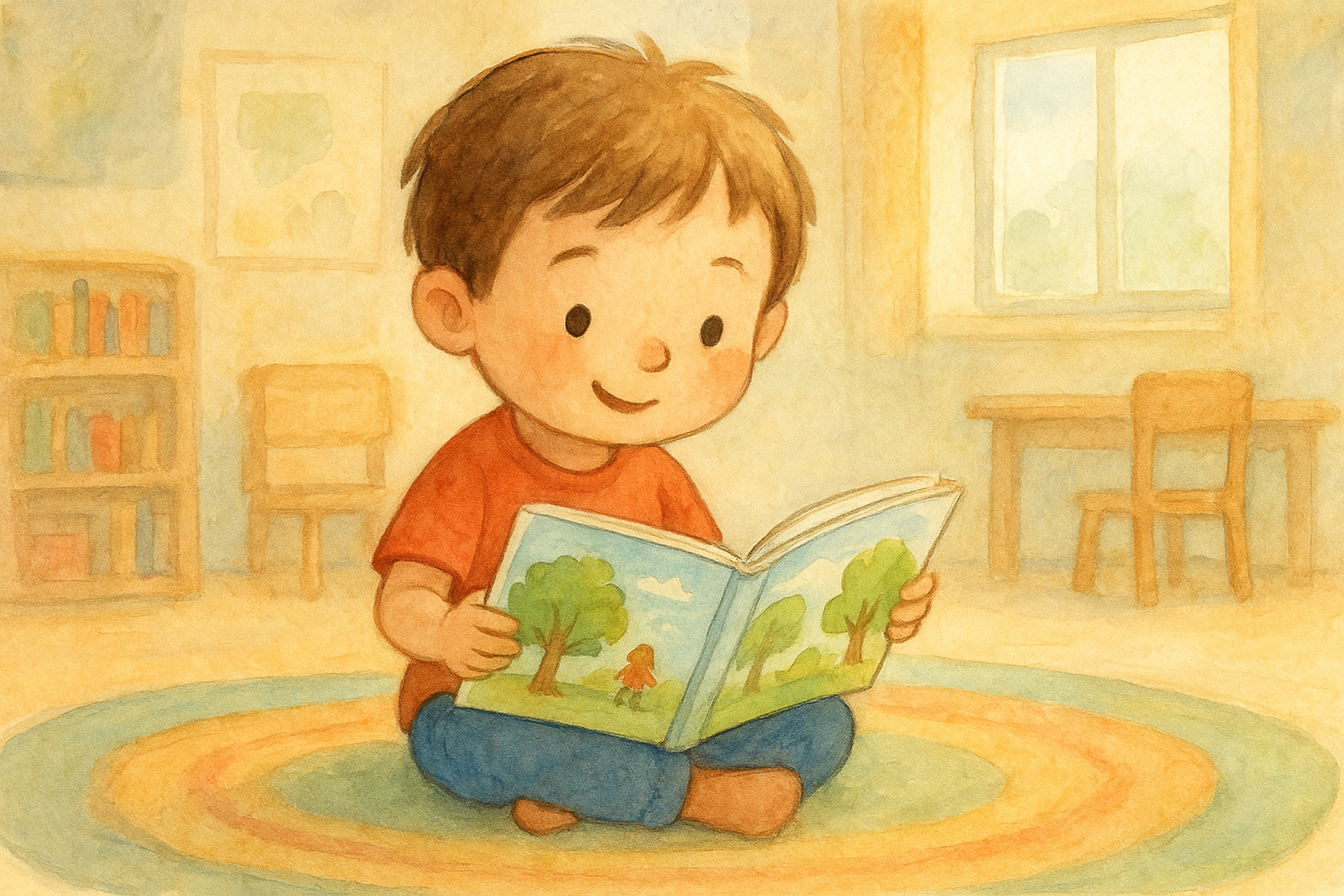
Articulation stories for preschool are short, illustrated narratives that give young children repeated chances to hear and practice a specific speech sound inside a meaningful story, rather than through isolated drill work. These stories are designed to make sound practice feel like reading time, not a clinical exercise. In the sections below, you will learn what articulation stories look like, why they work for young communicators, and how to choose and use them well.
Shared reading time is often the starting point for articulation stories for preschool.
What Are Articulation Stories for Preschool?
Articulation stories for preschool are brief, sound-loaded books built around one target speech sound, such as S, R, L, SW, or CH. Each page repeats the target sound several times through illustrations and simple text, so a child hears and attempts it in a natural reading flow.
Unlike a stack of flashcards, a story gives the sound a purpose. For example, a character might search for something that starts with the target sound, which keeps a young child curious about what comes next. As a result, practice can last longer without feeling repetitive.
According to the National Institute on Deafness and Other Communication Disorders, speech sound disorders are among the most common communication concerns in early childhood. Therefore, engaging, story-based formats can help sustain the repeated practice that sound development often requires.
Why Story-Based Speech Sound Practice Works
Young children generally respond well to narrative structure. A story with a beginning, middle, and end gives a child a reason to stay engaged, which matters because articulation goals usually require many repetitions over time.
In addition, illustrations give visual support for sounds that can be tricky to hear in isolation. A picture of a snake next to the word "snake," for instance, reinforces the S sound without requiring a child to rely on listening alone.
Speech-language pathologists, often called SLPs, also use this format because it naturally invites interaction. A child can point, comment, or attempt the word independently, which shifts practice from passive listening to active participation.
For a closer look at how story-based formats compare across different speech therapy resources, see this guide on story-based speech therapy resources for young children.
The Read, Model, Play Approach
Little Speech Corner's signature approach, Read, Model, Play, structures articulation and core-vocabulary practice around three simple steps. First, an adult shares a short story, often around five minutes, that is loaded with a target sound or word.
Next, the adult models the target clearly during reading, including through a child's augmentative and alternative communication (AAC) system when relevant. Finally, the story moves into child-led play, where the same target can be practiced again in a less structured setting.
This approach is intentionally flexible. Mrs. Gwen, the SLP behind Little Speech Corner, designed it so clinicians, teachers, and families could use the same short activity across very different settings. You can preview the full approach on the Little Speech Corner website.
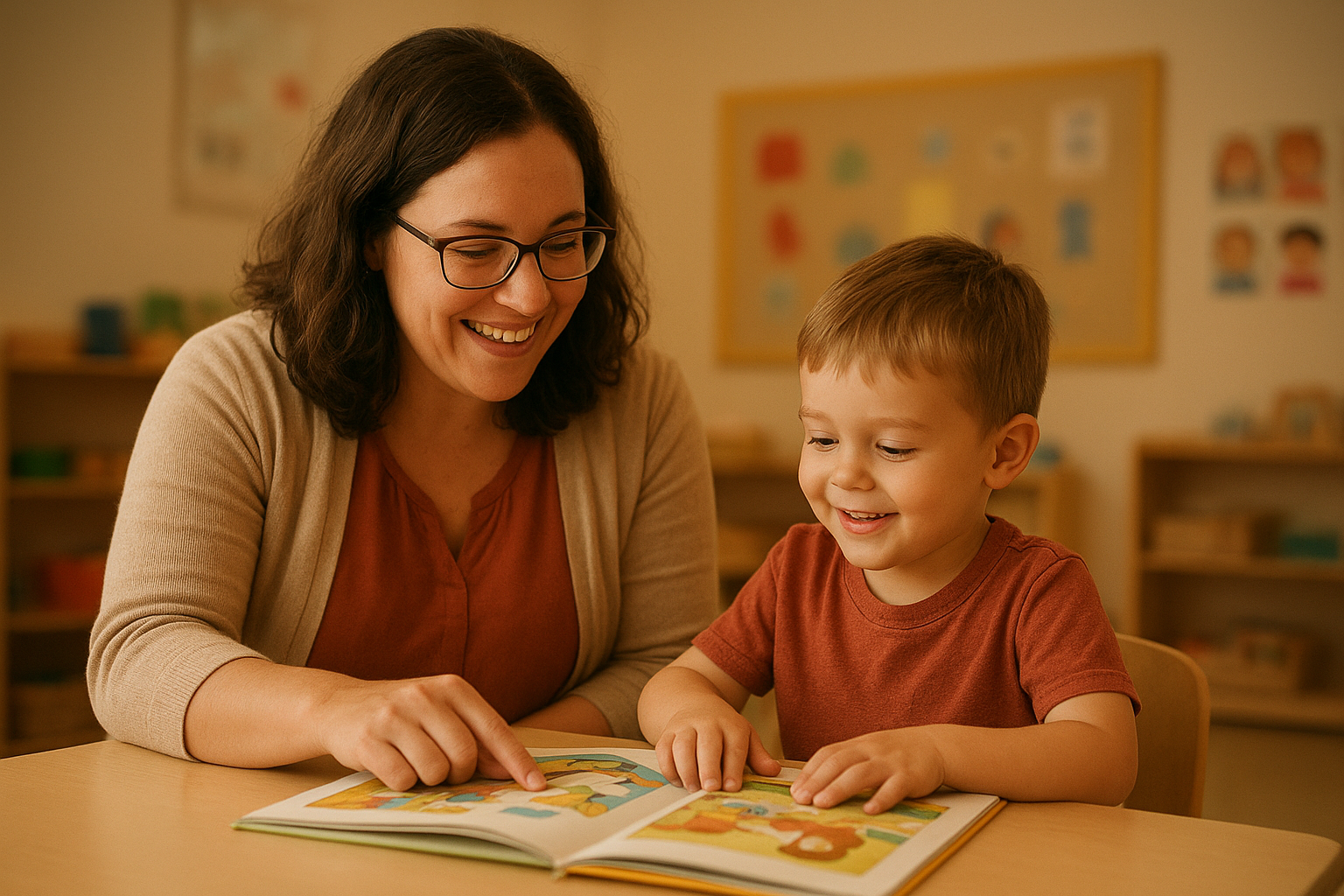
Modeling the target sound during reading is a core part of the Read, Model, Play approach.
How Sound Stories Support Preschool Articulation Practice
Little Speech Corner's Sound Stories are illustrated narratives built specifically for clinician-selected articulation and speech-sound practice. Each story repeats a chosen target sound through visuals, noticeable spelling patterns, and connected sentences, rather than single disconnected words.
Free samples for the SW and CH sounds are available, which makes it easy to try the format before browsing additional targets. Specifically, a clinician can preview how the story handles repetition and pacing before selecting a full set for a caseload.
A typical session using a sound-loaded story generally follows this sequence:
- Select a story that matches the child's current target sound and goal position.
- Read the story aloud for about five minutes, modeling the sound each time it appears.
- Pause to practice target words together before continuing the story.
- Extend the sound into play using story characters or related objects.
- Send home a short tip sheet so caregivers can reinforce the same sound.
For a deeper look at how printable, sound-based formats are being used in practice, this piece on printable articulation stories for speech therapy wins is a helpful next read. You can also browse current targets directly on the Sound Stories page.
Choosing the Right Preschool Speech Sound Story
Choosing well starts with the child's current goal, not just an available title. Above all, the story's target sound should match what a child is actively working on, whether that is an early-developing sound or a later one that typically emerges closer to school age.
Attention span matters too. A story with busy illustrations might overwhelm a younger child, while an older preschooler may need slightly longer text to stay engaged. Consequently, previewing a story before a session can save time.
It also helps to think about setting. A classroom team may want a story that pairs with a shared vocabulary calendar, while a private-practice SLP might prioritize a tight set of target words for a 30-minute session. For ideas on short, flexible activities that fit either setting, see these five-minute speech and language activities for preschoolers.
Using Articulation Stories for Preschool at Home and School
Articulation stories for preschool work best when they are used consistently rather than occasionally. For example, reading the same sound-loaded story a few times across a week allows a child to build familiarity, which can make independent attempts at the sound easier.
Teachers and families do not need formal SLP training to read a story aloud, but a simple guide helps. A short tip sheet that highlights which words to emphasize gives non-specialists a clear way to support practice without guesswork.
In classrooms, pairing sound stories with a shared core-vocabulary routine can reinforce both articulation and broader language goals at the same time. This guide on teaching core vocabulary through stories outlines how that pairing can work across a week.

Pairing sound-loaded stories with a shared planning tool supports carryover across the week.
Common Mistakes to Avoid
One common mistake is reading through a story too quickly, which skips the pause points needed for actual sound practice. Slowing down, even briefly, gives a child the chance to notice and attempt the target sound.
Another mistake is selecting a story based on theme alone rather than the target sound itself. A story about dinosaurs is fun, but it only supports articulation goals if the target sound actually appears often throughout the text.
Finally, skipping the play extension can limit carryover. Reading is valuable, but the American Speech-Language-Hearing Association notes that generalization to everyday speech typically benefits from varied, repeated practice beyond a single structured activity.
Frequently Asked Questions
What are articulation stories for preschool?
Articulation stories for preschool are short, illustrated narratives loaded with a target speech sound so a child hears and practices it repeatedly within a meaningful context. They differ from flashcard drills because the practice happens through shared reading and play.
How do articulation stories differ from traditional flashcard drills?
Flashcards isolate a sound in single words with little context. Story-based practice, in contrast, embeds the same sound in sentences and pictures a child can follow, which often sustains attention longer.
What speech sounds can be targeted with sound-loaded stories?
Clinicians typically choose a story built around one target sound, such as S, R, L, SW, or CH. Little Speech Corner's Sound Stories include free SW and CH samples, with more targets available on TPT.
How long should a preschool articulation story session last?
Shared reading often takes about five minutes, followed by practice and play. This is a general guideline rather than a guaranteed outcome, since pacing should match the individual child.
Can articulation stories support children who use AAC?
Yes, story-based modeling can be adapted alongside augmentative and alternative communication systems. An adult can model target words on a device while reading, supporting both sound practice and vocabulary growth.
What age range benefits most from story-based articulation practice?
This format generally suits young learners, commonly ages 2 through 7. Pacing and story length should still be adjusted to match a child's attention span and current goals.
How much do Sound Stories cost on Teachers Pay Teachers?
Pricing, formats, and licensing are listed directly on the Little Speech Corner Teachers Pay Teachers store and can change over time. It is best to check the current listing before purchasing.
What is the difference between Sound Stories and Core Stories?
Sound Stories target a clinician-selected speech sound for articulation practice. Core Stories, in contrast, center on a single core vocabulary word to support broader language use, including AAC modeling.
How often should preschoolers practice articulation stories at home?
Short, consistent practice tends to help more than occasional long sessions. Reading one sound-loaded story a few times a week can reinforce what is modeled in therapy or the classroom.
What mistakes should adults avoid when using articulation stories?
A common mistake is rushing through the story without pausing on target words. Choosing a sound that does not match a child's current goal is another frequent error.
Are articulation stories effective for classroom speech therapy?
Story-based practice fits naturally into classroom speech therapy because it blends sound work with reading routines teachers already use. As a result, it can support carryover between pull-out sessions and the classroom.
How do I choose the right articulation story for a child's target sound?
Start by confirming the child's current target sound and position within a word. Then select a story that repeats that sound frequently and fits the child's interests and attention level.
Can parents use articulation stories for preschool without SLP training?
Parents and caregivers can read articulation stories for preschool at home, especially with a tip sheet outlining which words to emphasize. However, an SLP should still determine the specific sound goals.
What is the Read, Model, Play approach?
Read, Model, Play pairs a short shared story with adult modeling of a target sound or word, followed by child-led play. It is designed to make practice feel natural rather than clinical.
Where can I find free articulation story samples?
Little Speech Corner offers free samples, including SW and CH Sound Story previews and a free Core Story called Apples for Anna, available through its Teachers Pay Teachers store.
Final Thoughts
Articulation stories for preschool offer a simple way to turn repeated sound practice into something a young child actually wants to do. By combining a short, illustrated narrative with modeling and play, adults can target specific speech sounds without relying on isolated drills.
Whether you are an SLP building a caseload plan, a teacher supporting a classroom routine, or a caregiver reinforcing practice at home, starting with a free sample is a low-risk way to see how the format fits a child's goals. You can preview current Sound Story and Core Story options through Little Speech Corner and its Teachers Pay Teachers store.