
Printable Core Vocabulary Books for AAC & Classrooms
Printable core vocabulary books combine story-based reading with AAC modeling for therapy and classrooms. Explore free samples and resource guides.

Printable core vocabulary books are short, story-based resources that pair a single high-frequency word with illustrated narratives adults can read aloud in a few minutes. For speech-language pathologists, classroom teachers, and families supporting young communicators, these printable core vocabulary books offer a simple, repeatable way to model language, including for children who use augmentative and alternative communication (AAC), a term for tools and strategies that support or replace spoken language. Rather than relying on isolated flashcards, a well-designed core vocabulary book embeds the target word in context that naturally leads into play.
Because these resources are downloadable, they travel easily between the therapy room, the classroom, and the kitchen table. As a result, the same word can be modeled consistently by every adult in a child's day, which matters more than any single session.
Quick answer: Printable core vocabulary books are downloadable, story-based texts organized around one core word, used with a short shared-reading routine to model that word for AAC users, classrooms, and families before moving into interactive play.
What Are Printable Core Vocabulary Books?
In short, printable core vocabulary books are illustrated stories built around one high-frequency word, such as go, more, want, or stop. Each page repeats the target word in a slightly different context, giving the reader multiple natural chances to model it.
Unlike generic picture books, these texts are designed specifically for language modeling. Consequently, the vocabulary stays limited and predictable, which helps children notice the target word and begin using it themselves. Many versions also include related activity ideas so the word carries beyond the page.
Printable core vocabulary books use repeated illustrations to reinforce one target word per story.
Why Core Vocabulary Printables Support AAC and Classroom Language
Core vocabulary refers to a small set of high-frequency words that show up across almost every topic and setting. According to core vocabulary research frequently cited by AAC specialists, a relatively small bank of words, often estimated around a few hundred, accounts for the majority of everyday spoken and AAC-supported communication. The ASHA Practice Portal on AAC outlines why repeated, functional exposure to these words matters for learners who use AAC.
Because core vocabulary printables focus on just one word per story, they make that repeated exposure manageable. In addition, the same core-word focus can be modeled in a classroom circle time, a therapy session, and at home, which builds consistency across a child's whole day. For broader context on how communication skills typically develop, the CDC's developmental milestones page is a useful reference for families and educators alike.
Furthermore, core vocabulary books work well alongside existing AAC systems. A full overview of augmentative and alternative communication is available on Wikipedia's AAC entry for anyone newer to the concept.
How Printable Core Vocabulary Books Fit Into Read, Model, Play
At Little Speech Corner, Mrs. Gwen built the Read, Model, Play routine specifically around printable core vocabulary books. First, an adult reads the Core Story aloud in about five minutes. Then, the adult models the target word using whatever communication system the child already relies on, whether that is spoken language, a core board, or a speech-generating device.
After the story, the session shifts into interaction and child-led play. This final phase matters because it gives the child a chance to initiate the word themselves, rather than only hearing it modeled. Similarly, classroom teams can run the same routine during a transition or small-group activity, which keeps the modeling consistent without adding a long lesson plan.
You can preview this full approach, including sample pages and planning tools, directly at Little Speech Corner before choosing a collection to purchase.
Step-by-Step: Using Printable Core Vocabulary Books in a Session
Although the routine is simple, following a consistent sequence helps adults model the target word effectively every time. The steps below outline a typical five-step process.
- Select a printable core vocabulary book based on the target core word and the learner's communication needs, including any current AAC system.
- Read the story aloud in about five minutes, modeling the target word using the child's own communication supports.
- Point to related vocabulary or symbols in the illustrations as the target word repeats across the pages.
- Move into child-led play or a related activity, prompting new opportunities to use the core word again.
- Send the printable core vocabulary book or a tip sheet home or to classroom teams for consistent reinforcement that week.
Over time, repeating this five-step sequence with a new word each week builds a predictable rhythm that both children and adults come to recognize.
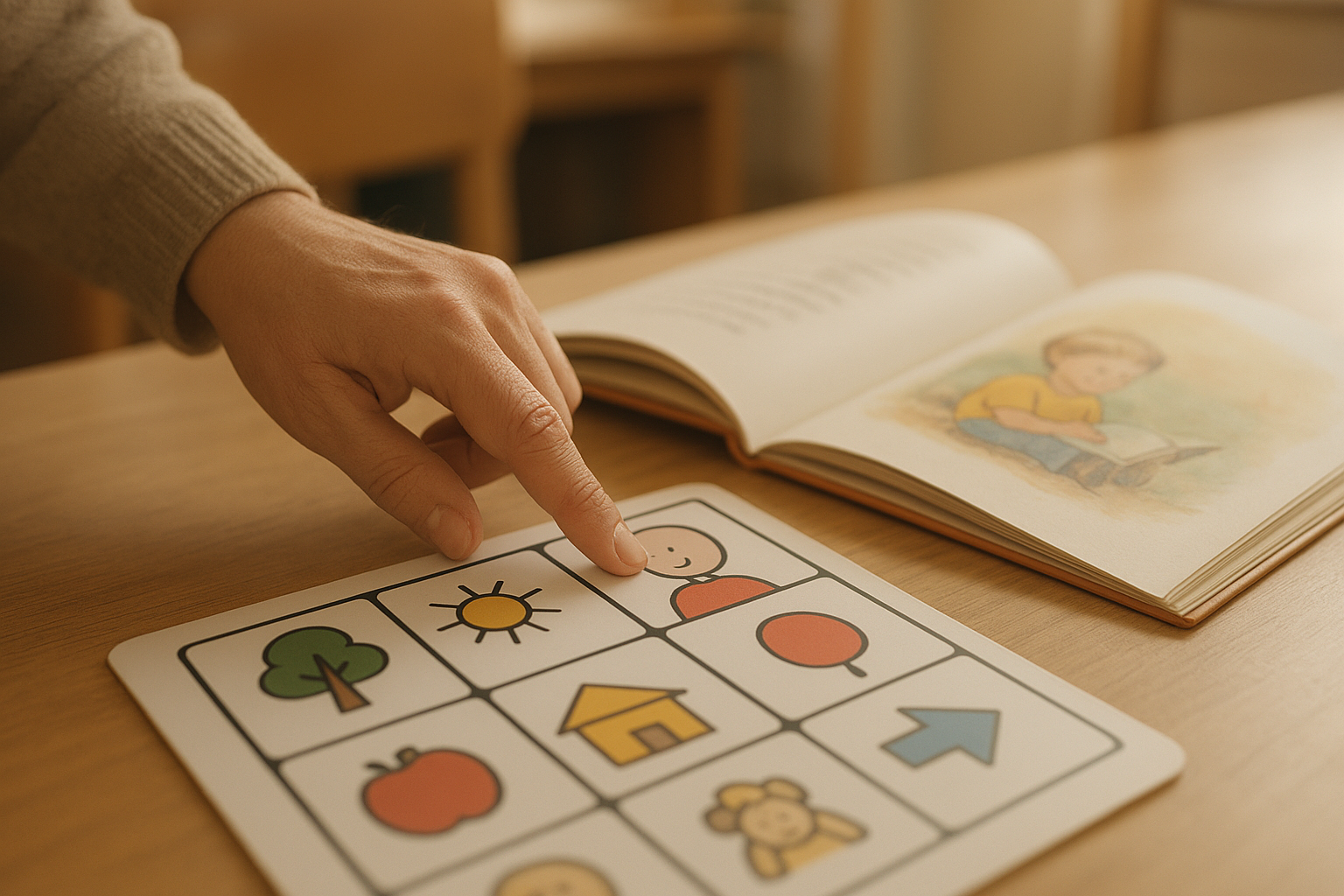
Pairing a printable core vocabulary book with an AAC board keeps modeling consistent for AAC users.
Choosing the Right Core Vocabulary Book Collection
Choosing between individual titles and a larger bundle depends mostly on how much structure a team wants. Individual Core Stories work well when a clinician is targeting one specific word for a short stretch of time. In contrast, the Core Stories Foundational 53-Pack offers a ready-made collection organized around a suggested weekly core-word sequence, which suits teams who want a full year of planning built in.
For educators comparing collections, two helpful starting points are this guide to core vocabulary books for SLPs and teachers and this roundup of core vocabulary handouts for teachers and parents. Specifically, it helps to confirm the current bundle listing on TPT for included files and licensing details before purchasing, since those specifics can change.
Teams that also want speech-sound practice alongside vocabulary modeling may want to pair core vocabulary printables with Sound Stories, which are illustrated, sound-loaded narratives chosen by a clinician for articulation goals rather than core-word modeling.
Free Printable Core Vocabulary Resources to Try First
Before committing to a full collection, it often helps to try a free sample. A free THERE-focused Core Story and a core-vocabulary planning calendar are both available to preview the Read, Model, Play routine firsthand.
In addition, free SW and CH Sound Story samples let teams compare the two resource types side by side. For practical classroom ideas on introducing printables like these, this guide on core vocabulary printables for AAC classroom use covers setup tips, and this resource on teaching core vocabulary during play-based speech therapy expands on the play phase of the routine.
Finally, teams supporting multiple classrooms may appreciate this collection of core vocabulary teaching materials for AAC language, which rounds out tip sheets and planning tools for consistent modeling.
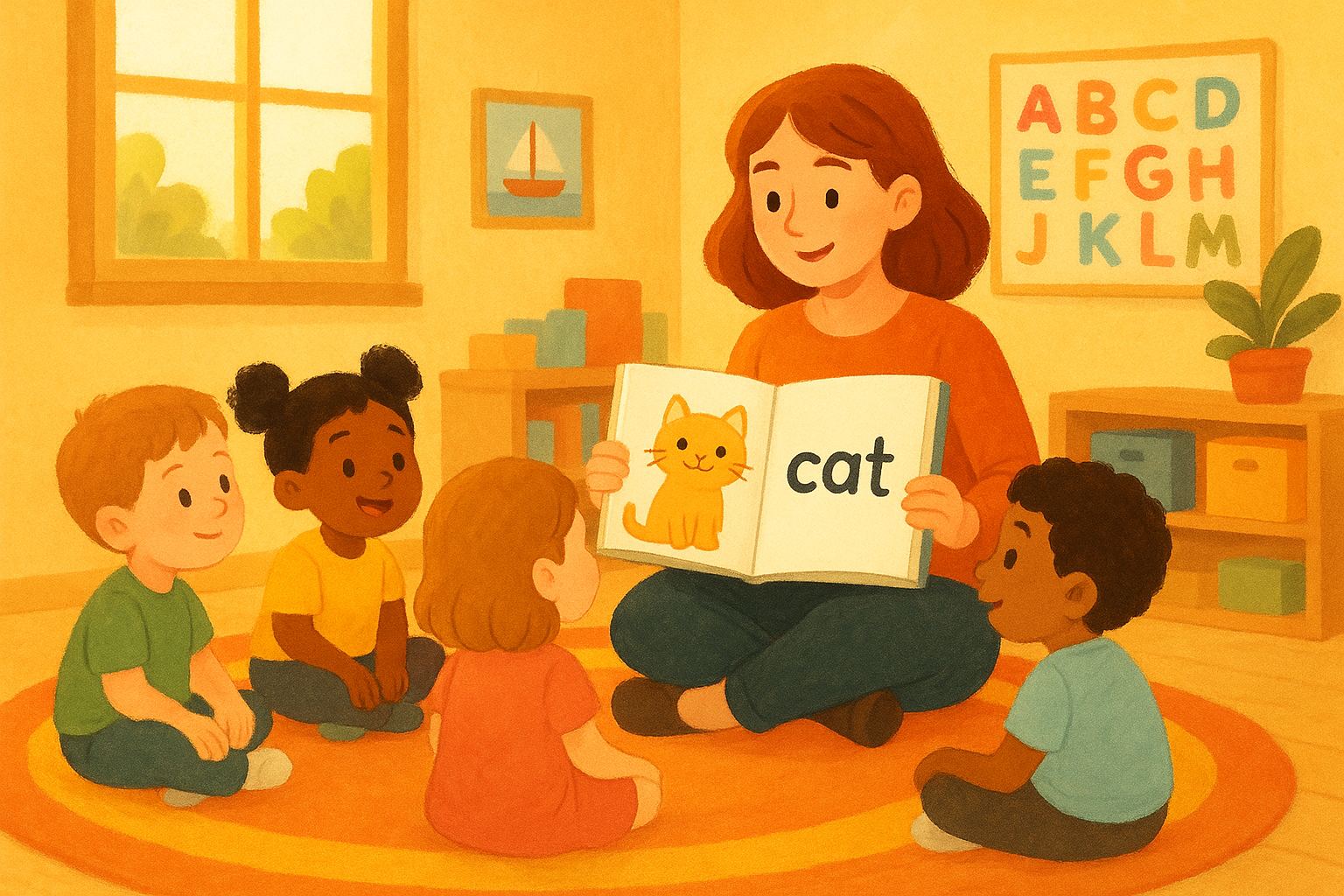
A short, five-minute reading routine makes printable core vocabulary books practical for busy classrooms.
Frequently Asked Questions About Printable Core Vocabulary Books
What are printable core vocabulary books?
Printable core vocabulary books are short, downloadable stories built around a single high-frequency word, such as go, more, or stop. Adults read them aloud and model the target word using the child's communication system, including AAC.
How do printable core vocabulary books support AAC users?
They give AAC users repeated, meaningful exposure to a core word inside a story context, which supports language modeling. The adult points to the symbol or activates the device each time the word appears, reinforcing its use beyond the page.
Who typically uses printable core vocabulary books?
Speech-language pathologists, special educators, classroom teachers, and families use printable core vocabulary books. They fit therapy sessions, small-group instruction, and home carryover for young communicators.
What age range benefits most from core vocabulary printables?
Core vocabulary printables are generally designed for children around ages 2 to 7, including early communicators and emerging AAC users. Adults can adjust pacing and expectations for individual learners.
How much do printable core vocabulary books cost?
Pricing varies by individual title and bundle size, and it is set on the seller's current marketplace listing. Always check the specific TPT listing for exact pricing, file formats, and licensing before purchasing.
How long does a core vocabulary book session usually take?
A shared reading of one printable core vocabulary book typically takes around five minutes, followed by interactive modeling and play. That timing is a general guide rather than a guaranteed outcome for every learner.
What is the difference between core vocabulary books and sound stories?
Core vocabulary books center on one high-frequency word for language modeling and AAC use. Sound stories, by contrast, are sound-loaded narratives chosen by a clinician to target specific articulation or speech-sound goals.
What is the Read, Model, Play approach?
Read, Model, Play is a three-part routine: share a short story, model the target core word using the child's own communication supports, and then move into child-led interaction and play to practice the word in context.
Can printable core vocabulary books be used with AAC devices?
Yes. Adults can model the target word on a communication board or speech-generating device while reading, pairing the printed page with the child's existing AAC system for consistent, functional modeling.
What is the Core Stories Foundational 53-Pack?
It is a bundled collection of 53 Core Stories sold through TPT, organized around a suggested weekly core-word sequence. It is intended as a foundational resource set rather than a complete individualized therapy program.
Are free printable core vocabulary books available to try first?
Yes, free samples such as a THERE-focused Core Story and a core-vocabulary planning calendar are available to preview before purchasing a full collection.
What common mistakes should adults avoid with core vocabulary printables?
A common mistake is modeling the target word only once instead of repeating it throughout the story and play. Skipping the follow-up play phase also reduces opportunities for the child to practice the word independently.
How can classroom teams stay consistent when using core vocabulary printables?
Teams stay consistent by sharing the same target word across the classroom, therapy room, and home using tip sheets or a planning calendar. Agreeing on one word per week helps everyone model it the same way.
Where can I purchase printable core vocabulary books?
Printable core vocabulary books and bundles are sold through the Teachers Pay Teachers store, where listings include current pricing, formats, and licensing details.
Why use a story-based approach instead of flashcards for core vocabulary?
Stories embed a core word in meaningful context, which supports generalization better than isolated flashcard drills. A story also naturally leads into interactive play, giving the child a reason to use the word again.
Bringing It All Together
In summary, printable core vocabulary books give SLPs, teachers, and families a practical, low-prep way to model high-frequency words across therapy, classroom, and home settings. Because each book centers on one word and pairs naturally with AAC systems, the Read, Model, Play routine stays simple to repeat week after week. Whether a team starts with a free sample or moves into a fuller collection like the Core Stories Foundational 53-Pack, the goal stays the same: consistent, meaningful modeling that helps young communicators use core words on their own.