
Speech Pathology Printable Intervention Aids: A Guide
Learn how speech pathology printable intervention aids support core vocabulary and articulation practice. Preview free samples and choose with confidence.

Speech pathology printable intervention aids are a practical way to bring shared vocabulary and sound practice into sessions, classrooms, and homes. This guide explains what they are, how to choose them, and how to use one in about ten minutes.
Quick answer: Speech pathology printable intervention aids are downloadable stories, tip sheets, and calendars that help adults model language and practice speech sounds. They work best when an SLP chooses the targets and the child's full communication system stays available.
What Are Speech Pathology Printable Intervention Aids?
Speech pathology printable intervention aids are downloadable, print-ready materials that support speech and language work. Examples include illustrated stories, core-word tip sheets, and planning calendars.
They save prep time. In addition, they give teams a shared set of words to model. Because they are digital, you print only what you need.
These resources provide educational support and do not replace individualized assessment, clinical judgment, or speech-language therapy. An SLP should select speech targets and cues for each child.
A printed story shared at a child's pace is one of the simplest speech pathology printable intervention aids to start with.
Types of Printable Speech Therapy Materials
Core vocabulary stories
Core vocabulary means the common words, like go, more, and in, that people use across many settings. Short stories built around one Core Word give adults a natural way to model it. Many learners use augmentative and alternative communication (AAC), which includes picture boards and speech-generating devices. Adults can model the same word on the child's system while reading.
For more on this topic, see this post on core vocabulary printables for AAC classroom use.
Sound-loaded stories for articulation
Sound Stories are illustrated narratives with many examples of a chosen speech sound. They offer repeated listening and practice in connected language. The SLP selects the target sounds and follow-up cues. You can read more in this look at printable articulation stories.
Team supports
Tip sheets and calendars help teachers, paraprofessionals, and caregivers use the same words. As a result, practice carries over beyond the session.
How to Choose Printable Intervention Resources
Start with the learner, not the file. Consider these questions:
- Does the material fit the child's age, interests, and communication mode?
- Can the targets be adjusted by an SLP?
- Is there a preview or free sample to try first?
- Do the licensing terms match how your team will use it?
Furthermore, check the current listing for file contents and usage rights before you buy. The guide to printable speech and language resources for preschool SLPs offers more selection ideas.
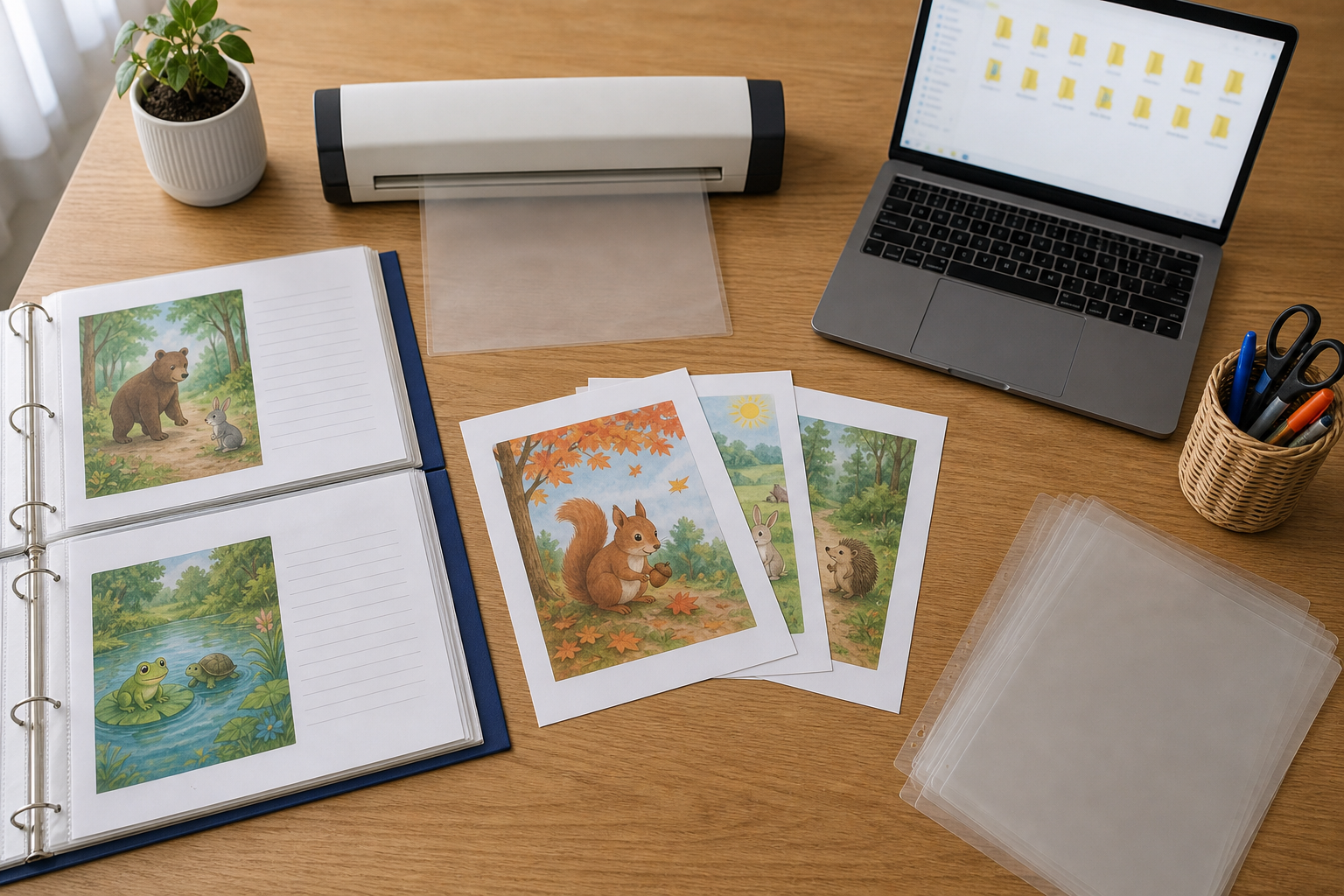
Preparing printable materials ahead of time keeps sessions relaxed and flexible.
How to Use a Printable Story: Read, Model, Play
Read, Model, Play is the approach behind Little Speech Corner's Core Stories. A short story takes about five minutes. Then the adult follows the child's lead in play. The five minutes describes the routine, not a promised result.
- Choose the target. Pick a Core Word or speech sound that fits the learner. An SLP should select speech targets and cues.
- Read the story. Share the pages together and point out the pictures and the target word.
- Model the word. Use the child's full communication system, including AAC. Do not require repetition.
- Move into play. Follow the child's lead and use the word naturally as chances come up.
- Share with the team. Pass along the word and a tip so modeling continues at school and home.
Printable Aids for Busy Clinicians and Classrooms
Caseloads are full, so planning matters. A weekly Core Word of the Week sequence can reduce decision fatigue. The Core Stories Foundational 53-Pack is a bundle of 53 Core Stories on Teachers Pay Teachers (TPT) with a suggested weekly planning sequence. It is not a complete individualized therapy program.
You can also browse speech therapy resources for busy school-based SLPs and story-based resources for young children.
Who Creates These Resources?
Little Speech Corner was created by Gwen Swire, M.A., CCC-SLP, known as Mrs. Gwen. She has more than 20 years of experience across early intervention, preschool, elementary school, and family settings. Her credentials reflect her professional background. They are not an endorsement or validation of any specific product. Visit Little Speech Corner to preview resources and try a free sample, such as the THERE Core Story or the SW and CH Sound Stories. Downloads are completed through TPT.
Storytime Stories and Story Builders are in development and are not available yet.
For professional background on the field, the American Speech-Language-Hearing Association and the AAC overview on Wikipedia are useful starting points.
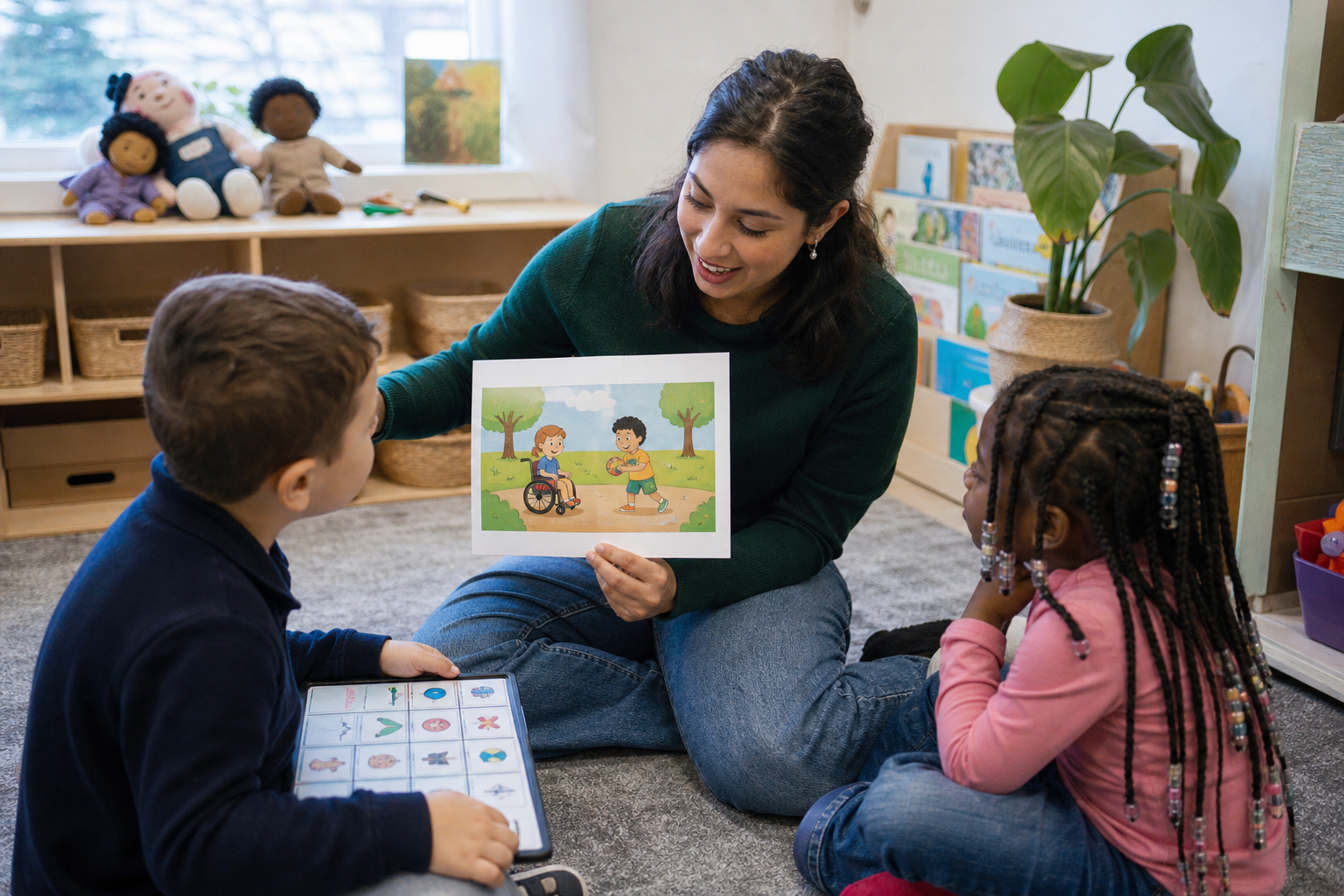
Classroom teams can model the same words, whichever way a child communicates.
Frequently Asked Questions
What are speech pathology printable intervention aids?
They are downloadable materials, such as illustrated stories, tip sheets, and calendars, that an SLP or educator uses to support speech and language practice. Speech pathology printable intervention aids supplement, but do not replace, individualized therapy.
Who uses printable intervention aids?
School-based and private-practice SLPs, early childhood special educators, classroom teams, and caregivers use them. Most are designed for young communicators, often ages 2 to 7.
Are printable aids a substitute for speech therapy?
No. They provide educational support and do not replace individualized assessment, clinical judgment, or speech-language therapy.
What is core vocabulary?
Core vocabulary is the small set of common words, like go, more, and in, that people use across many situations. These words make up a large share of everyday talk.
How do printables support AAC users?
Adults can model the same words on the child's AAC system while reading. The child's full vocabulary stays available at all times.
What is Read, Model, Play?
It is an approach where a short story is shared for about five minutes, the target word is modeled, and the adult then follows the child's lead in play. The five minutes is a routine length, not a promised outcome.
How do I choose a speech sound target?
An SLP should select targets and cues based on assessment of each child. Printable sound stories then give repeated, connected exposure to the chosen sound.
Should children repeat the words after me?
No. Modeling invites participation without requiring repetition. Children may respond in any communication mode they use.
Can families use printable aids at home?
Yes, caregivers can read the story and model words during play. Checking with the child's SLP about targets is a helpful first step.
Where can I try a free sample?
Little Speech Corner offers free samples, including a THERE Core Story and SW and CH Sound Stories, through its Teachers Pay Teachers store.
Should I check licensing before sharing files with staff?
Yes. Confirm the current TPT listing before sharing files with a team or school, since licensing terms vary by resource.
What mistakes should I avoid with printable aids?
Avoid pressuring a child to speak, limiting access to their full AAC vocabulary, or treating a printable as a complete program. Match the material to the learner instead.
Conclusion
Speech pathology printable intervention aids work best as flexible supports: short stories, tip sheets, and calendars that help adults model words and practice sounds with young learners. Choose materials that fit the child, let an SLP set the targets, keep every communication mode open, and try a free sample first. Then carry the words into play and across the team.
