
Story-Based Speech Therapy Lesson Plans: A Simple Guide
Build story-based speech therapy lesson plans with a simple Read, Model, Play routine. See the steps, examples, and free samples to try today.
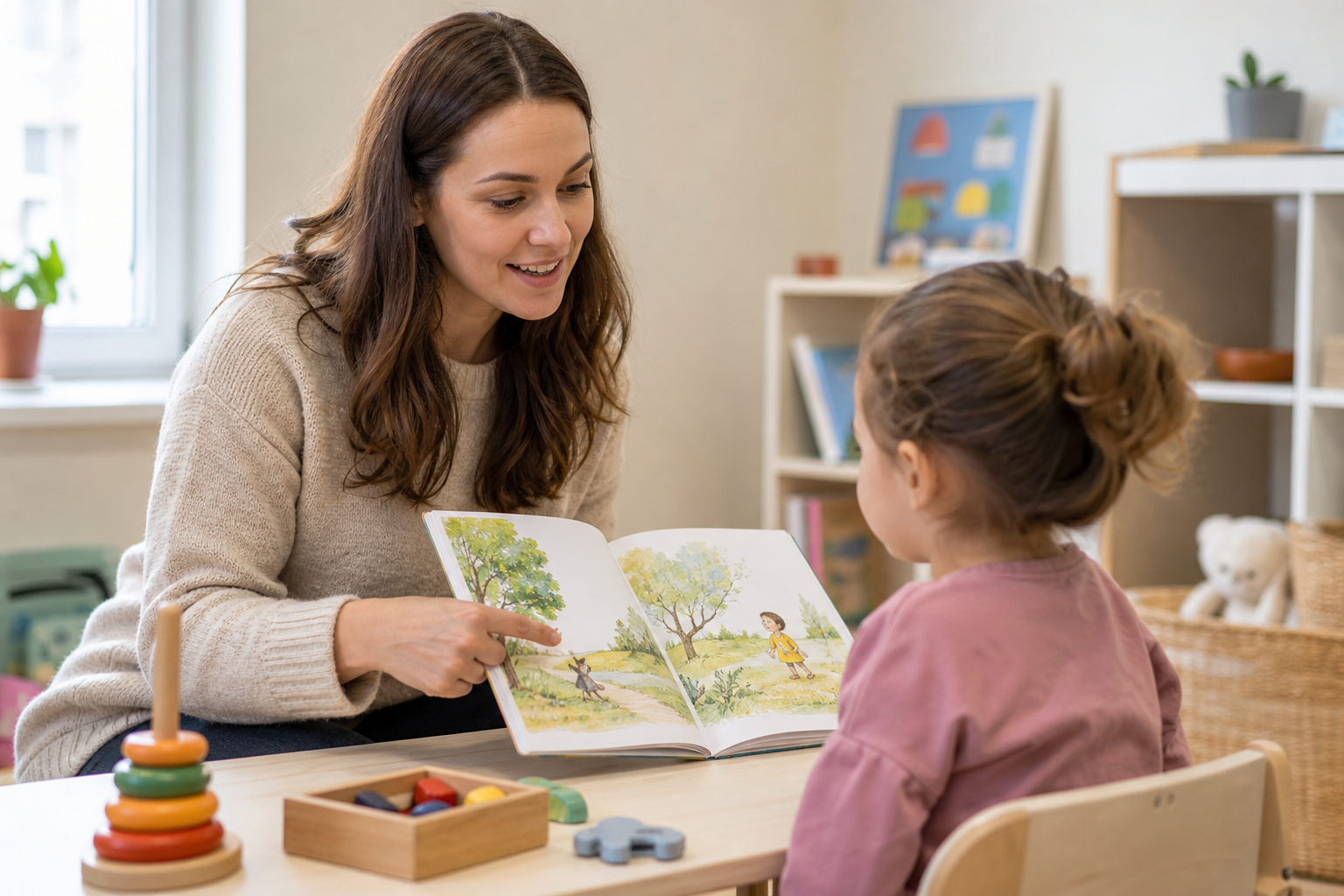
Story-based speech therapy lesson plans are session plans that use a short, illustrated story as the anchor for language or speech-sound practice. For busy SLPs and educators, a story gives you a ready structure: read it, model the target, then play. This guide shows how to build one, with examples you can adapt.
Quick answer: Pick one target, choose a story that repeats it, read for about five minutes, model the target in context, and follow the child's lead in play. Keep every communication mode open.
What Are Story-Based Speech Therapy Lesson Plans?
They are plans where a story carries the vocabulary, sounds, and context. Instead of drilling isolated items, you give the child a meaningful, repeated experience. As a result, words show up with pictures, actions, and characters.
For a deeper look at choosing materials, see this guide to story-based speech therapy resources for young children.
A short shared reading moment can anchor an entire story-based session.
Why Use a Story as the Session Anchor?
Stories offer natural repetition. Moreover, they give adults an easy way to comment, point, and pause. Children can look, gesture, use AAC, or speak, and every response counts.
AAC stands for augmentative and alternative communication. It includes picture boards, communication books, and speech-generating devices. Aided language modeling means the adult points to or selects symbols while speaking, so the child sees how the system works.
The Read, Model, Play Routine
Read, Model, Play is the approach behind the Core Stories at Little Speech Corner. A short Core Story takes about five minutes. Then the adult models the core word and moves into child-led play. The five minutes is a planning guide, not a promised outcome.
| Step | What it looks like |
|---|---|
| Read | Share the story, pause, point, and comment. |
| Model | Use the target word naturally, including on the child's AAC. |
| Play | Follow the child's lead and keep modeling in short comments. |
How to Build a Story-Based Session Plan, Step by Step
- Choose a focus: one core word or one clinician-selected speech sound.
- Set up supports, including the child's full communication system and a few related toys.
- Read the story in about five minutes, pausing so the child can respond in any mode.
- Model the target in the story and right after it.
- Move into child-led play, and keep your comments short.
- Plan carryover by sharing the word with teachers and caregivers.
Lesson Plans for Core Vocabulary
Core words are the common, flexible words children use all day, such as "go," "more," and "there." A free example is Apples for Anna, a Core Story that focuses on THERE. During play, you might say "Apple over there!" while pointing to the symbol on the child's AAC system.
Notice that nothing requires repetition. You model; the child chooses how to join. For more, read this SLP guide to teaching core vocabulary through stories.
If you want a planned sequence, the Core Stories Foundational 53-Pack on Teachers Pay Teachers (TPT) pairs with a suggested Core Word of the Week plan. Confirm the current listing for included files and licensing before you share it with a team.
Lesson Plans for Articulation Practice
Sound Stories are illustrated, sound-loaded narratives. They give repeated chances to hear and practice target speech sounds in connected language. The SLP picks the sounds and cues, then uses the story for shared reading and follow-up.
Free SW and CH samples let you preview the format. Explore the Sound Stories collection or read about printable articulation stories.
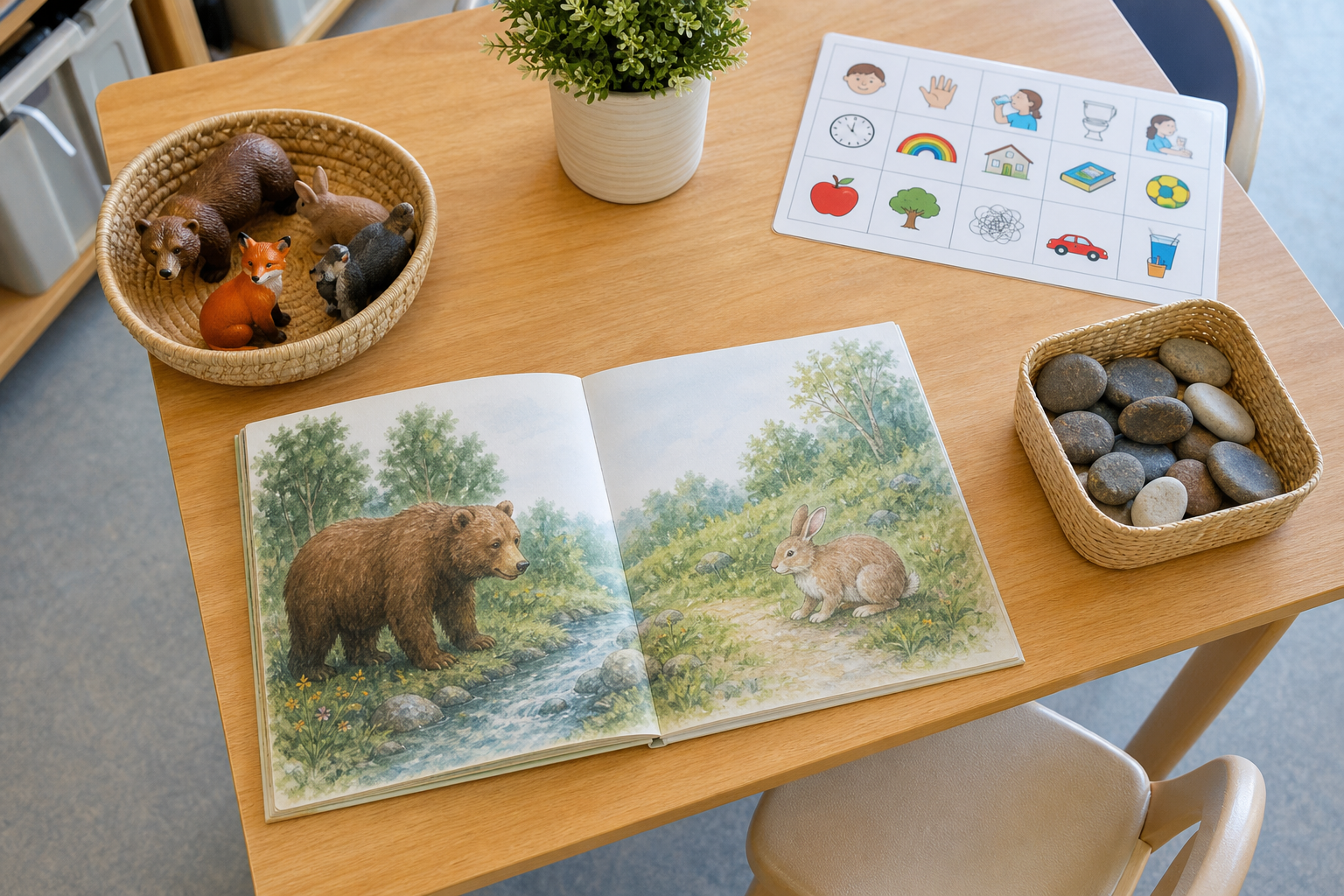
Simple materials keep the focus on the story and the child's lead.
Add Play and Carryover
Play is where words become useful. Try ideas from these play-based language activities. Then pass the week's word to the classroom team and family. Core Word Tip Sheets and a planning calendar help everyone model the same vocabulary.
For reliable background on communication needs and AAC, visit ASHA.
These resources provide educational support and do not replace individualized assessment, clinical judgment, or speech-language therapy. An SLP should select speech targets and cues for each child.
Frequently Asked Questions
What are story-based speech therapy lesson plans?
They are session plans built around a short story. The story supplies the vocabulary or speech sounds, and the plan adds modeling, interaction, and play.
How long should a story-based lesson be?
Many SLPs plan about five minutes for the story and then let interaction and play fill the rest of the session. Adjust to the learner's attention and energy.
What is Read, Model, Play?
It is a routine from Little Speech Corner. Adults read a short Core Story, model core vocabulary, and then move into child-led play.
What age range do these plans suit?
Little Speech Corner resources are designed mainly for children ages 2 to 7. You can adapt the structure to the learner in front of you.
Can I use stories with AAC?
Yes. Augmentative and alternative communication (AAC) includes tools like picture boards and speech-generating devices. Model on the child's AAC system and keep their full vocabulary available.
How do I choose a core word for a story?
Core words are common, flexible words such as go, more, and there. An SLP can choose one that fits the child's goals and daily routines.
How do stories support articulation practice?
Sound-loaded stories repeat selected target speech sounds in connected language. An SLP should choose the targets and cues for each child.
Do children have to repeat words after the adult?
No. Modeling means the adult uses the word in context. Children can respond with speech, gestures, AAC, or by simply listening.
How is a story-based plan different from a worksheet plan?
A story gives meaning and repetition in context. Worksheets often isolate practice, while stories connect words to characters, pictures, and play.
How do I support carryover at school and home?
Share the week's core word with the team and caregivers. Tip sheets and a planning calendar can help everyone model the same word.
Are there free samples to try?
Yes. Free examples include Apples for Anna (THERE), a calendar with a sample Core Story, and SW and CH Sound Story samples through Teachers Pay Teachers.
What are common mistakes when planning story-based lessons?
Common mistakes include targeting too many words, pressuring repetition, and limiting the child's communication options. Keep the focus small and the play child-led.
Conclusion
Story-based speech therapy lesson plans work best when they stay simple: one focus, one short story, clear modeling, and child-led play. Keep every communication mode available, and share the target with the team. When you are ready, try a free sample from Little Speech Corner on TPT and see how the routine fits your caseload.
