
Core Vocabulary Planning for Educators: A Simple Guide
Core vocabulary planning for educators made simple: build a weekly plan, model key words, and support AAC with Read, Model, Play. Try free samples today.
Core vocabulary planning for educators is the practice of mapping out which high-frequency words a classroom or caseload will target, model, and revisit over time. Instead of chasing a new theme every week, teachers and speech-language pathologists (SLPs) pick a small, flexible set of words — such as go, more, and stop — and build daily routines around them. As a result, children get repeated, predictable exposure to the vocabulary that shows up most often in everyday life.
Many school teams struggle with this because planning time is limited and caseloads are large. However, a simple weekly structure can make core vocabulary feel manageable rather than overwhelming. This guide walks through what core vocabulary planning for educators actually involves, why it matters for young communicators, and how to set up a plan that works across the classroom, therapy room, and home.
Quick Answer
Core vocabulary planning for educators means choosing a handful of high-frequency words, scheduling them across weeks or months, and modeling each word consistently through shared stories, visuals, and play so children — including those who use AAC — hear and practice it everywhere.
What Is Core Vocabulary Planning for Educators?
Core vocabulary planning for educators is the organized process of selecting a limited set of frequently used words and deciding, in advance, how and when those words will be taught. Rather than introducing random new vocabulary each day, a team agrees on a target word and sticks with it long enough for children to practice it in multiple contexts.
Specifically, this often includes a calendar of weekly or monthly words, a shared story or activity for each word, and a plan for modeling the word across classroom centers, therapy sessions, and home routines. In particular, this matters for children who use augmentative and alternative communication (AAC), a term the American Speech-Language-Hearing Association and related sources use to describe tools and strategies that support communication beyond speech alone. When a plan is in place, adults know exactly which button or symbol to model before the activity even begins.
Why Core Word Planning Matters for Young Communicators
Core words make up a surprisingly large share of everyday spoken language. According to research summarized by the American Speech-Language-Hearing Association (ASHA), a relatively small set of words accounts for a majority of the words used in typical conversation, which is why teaching core vocabulary offers more flexible payoff than teaching isolated topic words alone.
In contrast, fringe vocabulary — specific nouns like dinosaur or birthday cake — only applies to one topic or activity. Therefore, a child who learns ten fringe words might only be able to talk about one subject, while a child who learns ten core words can combine them in dozens of ways across many situations. Consequently, many SLPs and early childhood teams prioritize core vocabulary planning for educators as a foundation before layering in topic-specific language.
Furthermore, consistent core-word modeling benefits typically developing talkers, late talkers, and AAC users alike. Above all, the goal is not to drill isolated words but to weave them naturally into stories, songs, and play so children see the words used purposefully.
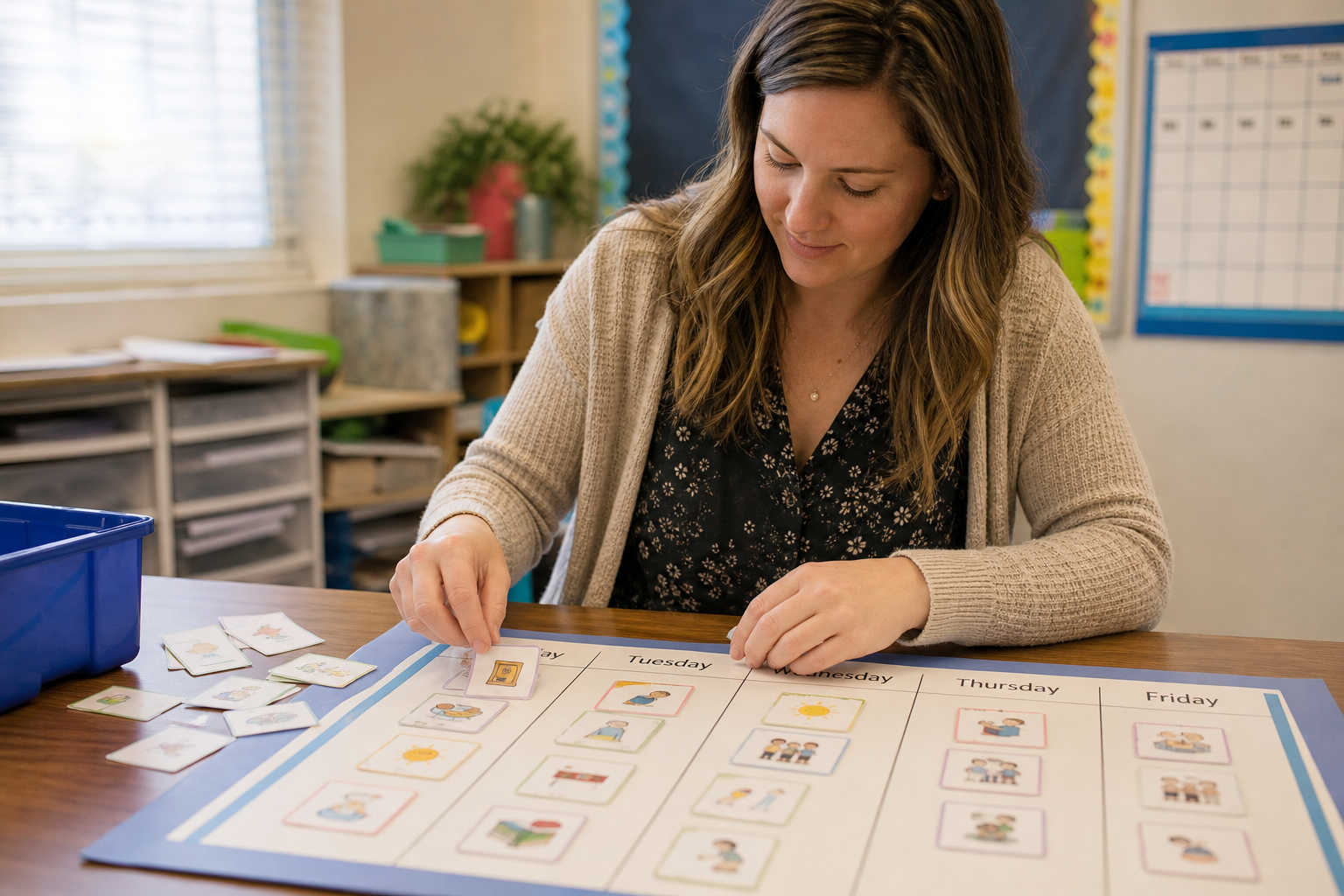
A simple weekly calendar can anchor core vocabulary planning for educators across a busy classroom schedule.
How to Build a Core Vocabulary Plan: A Step-by-Step Process
Building a workable plan does not require a complicated system. Instead, the following steps outline a practical sequence that classroom teams and SLPs can adapt to their own schedule.
- Gather baseline information. Review each child's current communication skills, preferred activities, and any AAC system in use before choosing words, so the plan fits real needs rather than a generic list.
- Select a small set of core words. Choose one to three high-frequency words that apply across many activities, such as go, more, or help, rather than narrow, topic-specific terms.
- Map the words onto a calendar. A visual calendar — weekly, monthly, or spanning a full year — keeps every adult on the same page about which word is active right now.
- Choose a shared story or activity. Pick a short, repeatable story, song, or hands-on task that naturally uses the target word several times during one sitting.
- Model the word across settings. Use a brief shared-reading and modeling routine, then carry the word into play, snack time, or circle time so it shows up more than once a day.
- Track use and adjust. Note how often a child attempts or uses the word independently, then decide whether to continue or rotate to a new target.
Teams that want a ready-made starting point rather than building a calendar from scratch can review a core vocabulary calendar built to plan core words across a full year, which pairs a suggested weekly sequence with a sample story.
Choosing the Right Core Words for Your Group
Not every core word fits every group right away. For example, a toddler classroom might start with action words like go and stop, while an elementary small group might be ready for words like because or different. Similarly, AAC users may need their device's vocabulary layout checked first, so the target word is easy to locate and model on the page or screen they already use.
As a general rule, it helps to pick words that children already show some interest in, even if they are not yet saying or selecting them independently. In addition, watching which words come up naturally during play can reveal strong starting points that a printed list might miss.
Bringing Plans to Life With Read, Model, Play
Once a word is chosen, the next question is how to model it without adding a long lesson to an already full day. One approach, called Read, Model, Play, uses about five minutes of shared reading paired with core-word modeling, followed by interaction and child-led play. This short routine is built into Core Stories, illustrated short stories that each focus on a single core word and include related activity ideas.
Because the reading portion is brief, it fits into a classroom transition, a therapy session opener, or a quick home routine. Afterward, the play phase gives children a natural, low-pressure chance to try the word themselves. Teams exploring this structure can preview the approach and browse available titles directly on the Little Speech Corner website before deciding which stories match their current core-word calendar.
Supporting AAC Users Through Consistent Core Vocabulary Modeling
For children who communicate with AAC, a clear plan matters even more. Without a plan, adults may not know which symbol or button to point to during an activity, which can lead to inconsistent or missed modeling opportunities. With a plan in place, however, every adult — teacher, aide, SLP, and family member — can model the same core word on the device at roughly the same time each week.
Specifically, this consistency gives the AAC user repeated exposure to one target across settings, which research on language learning generally supports as more effective than scattered, one-time exposure. Teams looking for ready-made materials that pair core vocabulary with AAC-friendly visuals can review core vocabulary teaching materials designed for AAC and language modeling to see how a story-based approach supports this kind of carryover.

Modeling the same target word across settings supports AAC users and verbal communicators alike.
Tools and Resources for Core Vocabulary Lesson Planning
Several practical tools can cut down the time it takes to plan core vocabulary across a classroom or caseload. A core-word planning calendar offers a ready sequence for the year, while simple tip sheets give classroom staff and family members quick reminders of how to model a word without extra training.
For SLPs who want a full year of material without building every story from scratch, a bundled collection such as the Core Stories Foundational 53-Pack pairs 53 short, illustrated Core Stories with a suggested Core Word of the Week sequence. Exact contents and licensing details are listed on the current Teachers Pay Teachers (TPT) listing, so it is worth checking that page before purchasing. Teams wanting a weekly structure specifically can also review a weekly planning guide built around Core Word of the Week books, and classroom teams managing carryover between settings may find a set of simple core vocabulary tip sheets for carryover useful as a quick reference.
In addition, free samples make it easy to test the approach before committing to a full resource. A free Core Story focused on the word there, a sample calendar, and sample Sound Stories targeting the SW and CH sounds are all available for preview and download.
| Planning Tool | Best Used For |
|---|---|
| Core vocabulary calendar | Setting a year-long sequence of target words |
| Core Stories (individual) | Modeling one word in a short shared-reading routine |
| Foundational 53-Pack | Covering a full year of core words without separate purchases |
| Tip sheets | Quick reminders for classroom staff and families |
Avoiding Common Pitfalls in Core Vocabulary Planning for Educators
Even a well-intentioned plan can stall if a few common pitfalls creep in. First, targeting too many words at once tends to dilute repetition, which makes it harder for any single word to stick. Second, modeling a word in only one setting — say, therapy but not the classroom — limits how often a child actually hears it.
Third, skipping the play or interaction phase after a shared story removes the chance for children to try the word themselves in a low-pressure moment. As a result, core vocabulary planning for educators works best when the same small set of words travels across the classroom, therapy room, and home, with every adult modeling it the same way. Teams building their first routine may find it helpful to start small; one option is reviewing a simple core vocabulary routine built for preschool speech sessions as a starting template.
Frequently Asked Questions
What is core vocabulary planning for educators?
Core vocabulary planning for educators is the process of choosing a small set of high-frequency words, such as go, more, and stop, and organizing how those words will be taught, modeled, and reinforced across a classroom or caseload over time. It usually involves a weekly or monthly schedule paired with shared stories, visuals, or activities.
Why do core words matter for young children learning language?
Core words make up a large share of everyday spoken language, so learning a small set of them gives children flexible tools for many situations. In contrast, fringe words are specific and situational, so they do not generalize as broadly.
How is core vocabulary different from fringe vocabulary?
Core vocabulary includes a small number of words used often across many activities, like want, in, and stop. Fringe vocabulary includes specific nouns tied to one topic, such as dinosaur or birthday, which are used less frequently overall.
How many core words should a lesson plan target each week?
Many classrooms and caseloads target one to three core words per week, which keeps modeling manageable while still building repetition. A slower pace often supports stronger carryover than introducing many new words at once.
How does core vocabulary planning for educators support AAC users?
For children who use augmentative and alternative communication, planning ahead means the adult knows exactly which buttons or symbols to model before the activity starts. This reduces guesswork and gives the AAC user repeated, predictable exposure to the same core words.
What is the Read, Model, Play approach?
Read, Model, Play is a short routine that pairs about five minutes of shared reading and core-word modeling with follow-up interaction and child-led play. The story introduces the target word, and the play phase gives children a natural chance to use it.
How long does a Core Story take during a planning session?
A Core Story is designed to take roughly five minutes to read and model, though this is a general guide rather than a guaranteed outcome for every learner. The brief length makes it easier to fit into a busy classroom or therapy schedule.
What tools can help a team plan core vocabulary across a year?
A core-word planning calendar, tip sheets for classroom staff and families, and a bundled set of ready-made stories can all reduce planning time. These tools help a team stay consistent about which words are being modeled each week.
How much does a core vocabulary resource bundle typically cost?
Pricing varies by bundle size, format, and current promotions, so it is best to check the exact listing on Teachers Pay Teachers before purchasing. Bundles that cover a full year of core words are generally priced lower per story than buying each title separately.
How long does it take to see progress with a core vocabulary plan?
Progress timelines vary widely by child, setting, and how consistently the word is modeled across the week. Many teams review progress every four to six weeks and adjust the plan rather than expecting rapid, uniform change.
What common mistakes should educators avoid when planning core vocabulary instruction?
Common mistakes include targeting too many words at once, modeling a word in only one setting, and skipping follow-up play or practice. Core vocabulary planning for educators works best when the same words travel across the classroom, therapy room, and home.
What is the best way to choose which core words to target first?
Start with words that are useful across many daily activities, such as go, more, help, and stop, rather than topic-specific nouns. Watching which words a child already attempts or shows interest in can also guide the first picks.
Can classroom teachers use core vocabulary planning without an SLP?
Yes, classroom teachers and paraeducators can follow a core-word calendar and tip sheets even without a speech-language pathologist present every day. Many planning tools are designed so an SLP sets the target words and the broader team models them consistently.
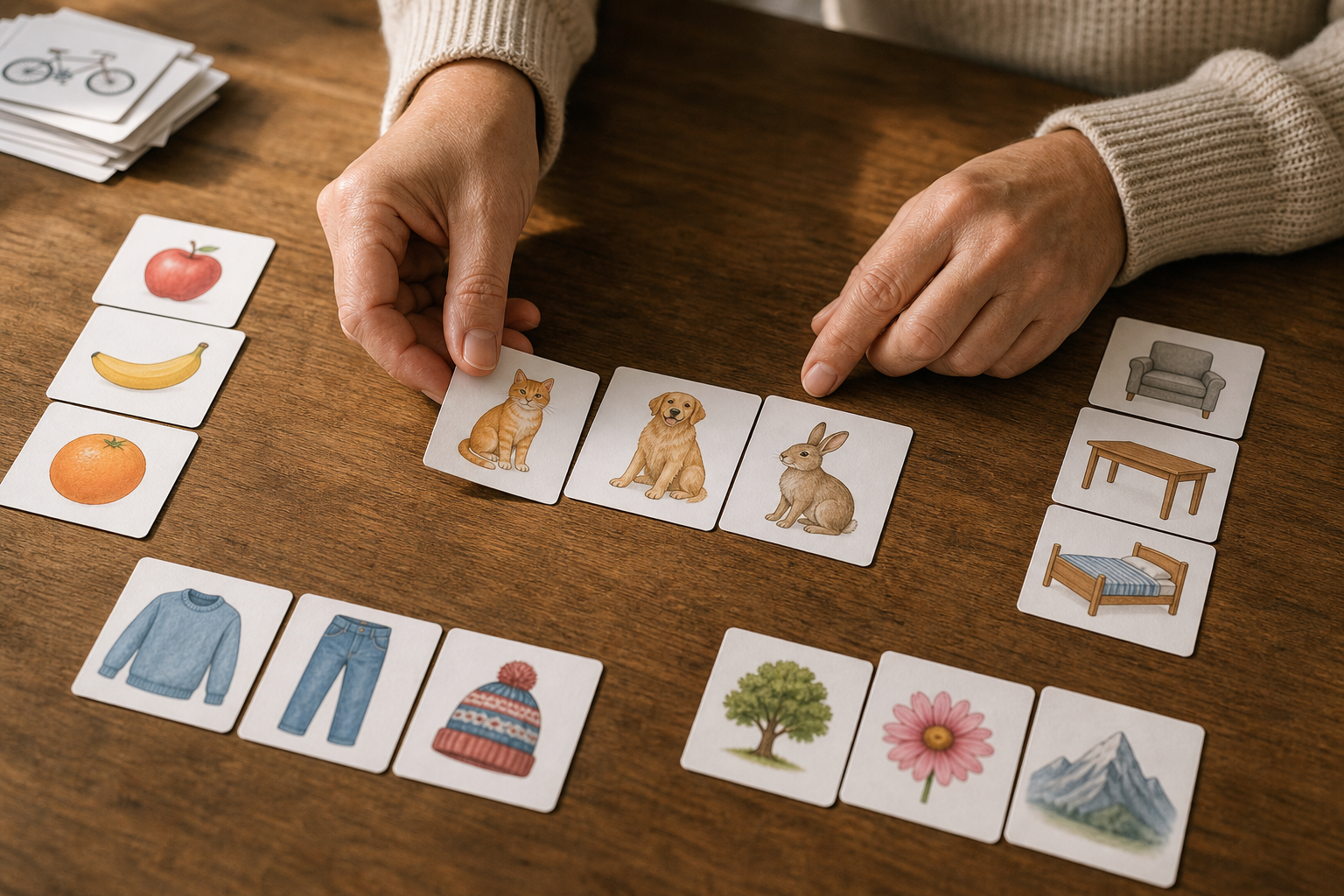
Sorting words by theme and frequency is a small step that keeps planning sessions organized.
Bringing It All Together
Ultimately, core vocabulary planning for educators does not need a complicated system to be effective. A short list of high-frequency words, a simple calendar, and a consistent modeling routine can carry a classroom or caseload through an entire year. Therefore, the goal is steady repetition across settings rather than a new theme every week.
For teams ready to put a plan into action, previewing free samples and browsing available Core Stories, Sound Stories, and planning tools on Little Speech Corner is a practical next step. In the end, a thoughtful, well-modeled plan — however small it starts — gives young communicators, including AAC users, more chances to use the words that matter most.
