
AAC Language Activities That Build Core Vocabulary
Discover AAC language activities using Read, Model, Play. Explore Core Stories and free samples from Little Speech Corner to get started today.
AAC language activities give children who use augmentative and alternative communication (AAC) real chances to hear, see, and use core vocabulary in meaningful ways. For speech-language pathologists (SLPs) and early childhood teams, these activities turn therapy goals into everyday moments of connection. Specifically, Little Speech Corner's Read, Model, Play approach pairs a short story with hands-on play, giving adults a simple framework for modeling language through AAC. In this guide, you'll learn what AAC language activities look like in practice, why consistent modeling matters, and how to choose activities that fit your caseload or classroom.
Quick answer: AAC language activities are short, repeatable routines, such as shared stories, play, and daily tasks, where adults model core vocabulary on a child's AAC system while the child has a chance to respond. Rather than isolated drills, these activities embed language modeling into naturally motivating moments.
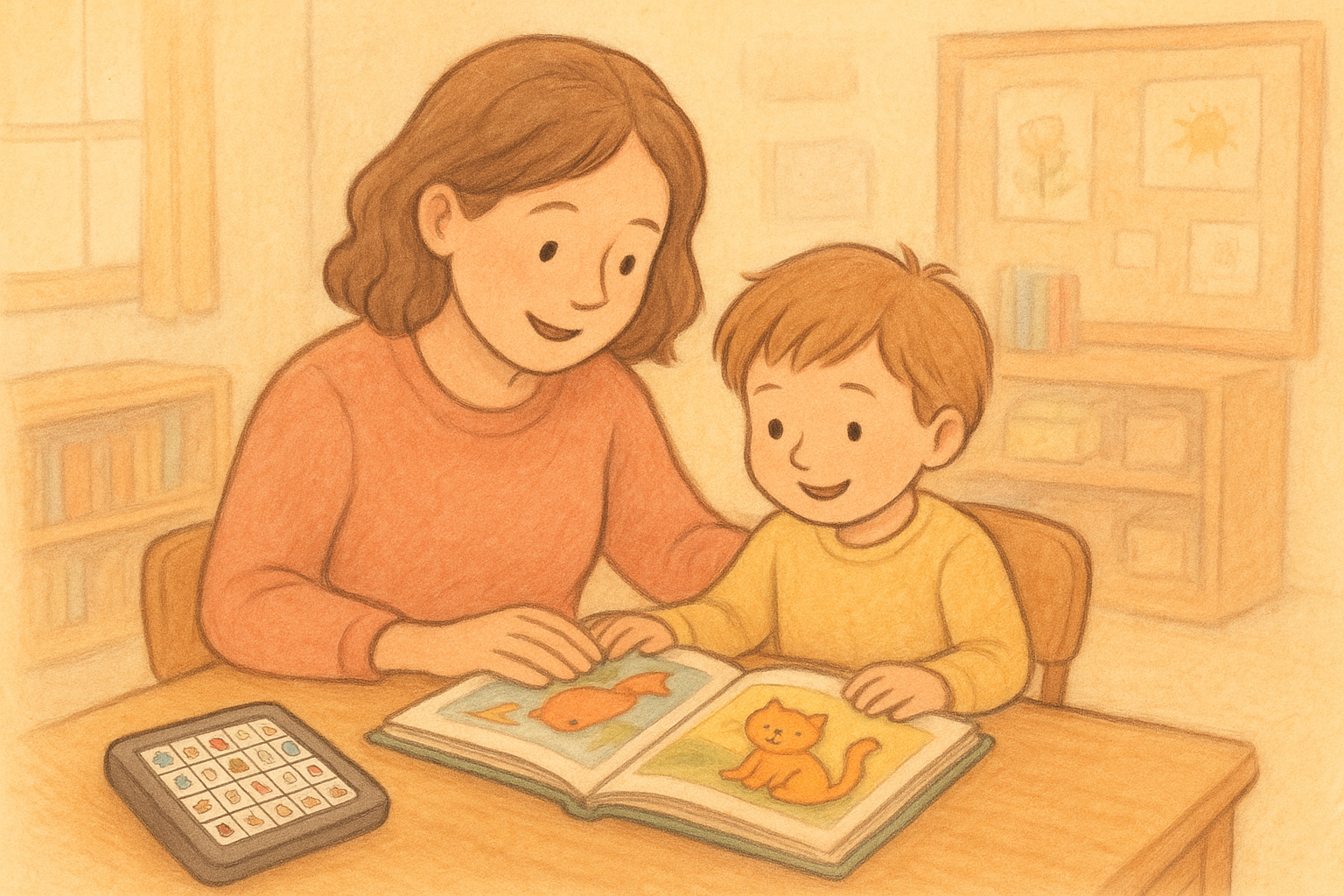
Shared reading is one of the simplest settings for AAC language activities.
What Are AAC Language Activities?
AAC language activities is the term SLPs and educators use for structured opportunities to model language on an augmentative and alternative communication system. According to the American Speech-Language-Hearing Association (ASHA), AAC includes any tool, from picture boards to speech-generating devices, that supports communication for people with complex communication needs.
In practice, an AAC language activity might involve reading an illustrated story while pointing to core words on a communication board, or playing with toys while modeling action words on a device. Unlike quizzing a child, these activities lead with modeling: the adult shows the word first, before ever asking the child to use it.
Wikipedia's overview of augmentative and alternative communication notes that AAC success depends heavily on consistent modeling from communication partners, not just access to a device. That is exactly what these activities are designed to provide.
Why AAC Language Activities Matter for Young Communicators
Consistent modeling is the foundation of AAC success. According to ASHA, an estimated 2 million people in the United States use some form of AAC, and many are children still building core vocabulary. Without frequent modeling, children have far fewer chances to see their system used in real conversation.
Therefore, AAC language activities give adults a repeatable structure for that modeling, instead of relying on memory throughout a busy day. As a result, core words get modeled more often, across more settings, which supports generalization.
In addition, children who receive less language input tend to fall further behind over time, a pattern sometimes called the Matthew effect. Specifically, planned AAC language activities interrupt that gap by making modeling intentional rather than incidental.
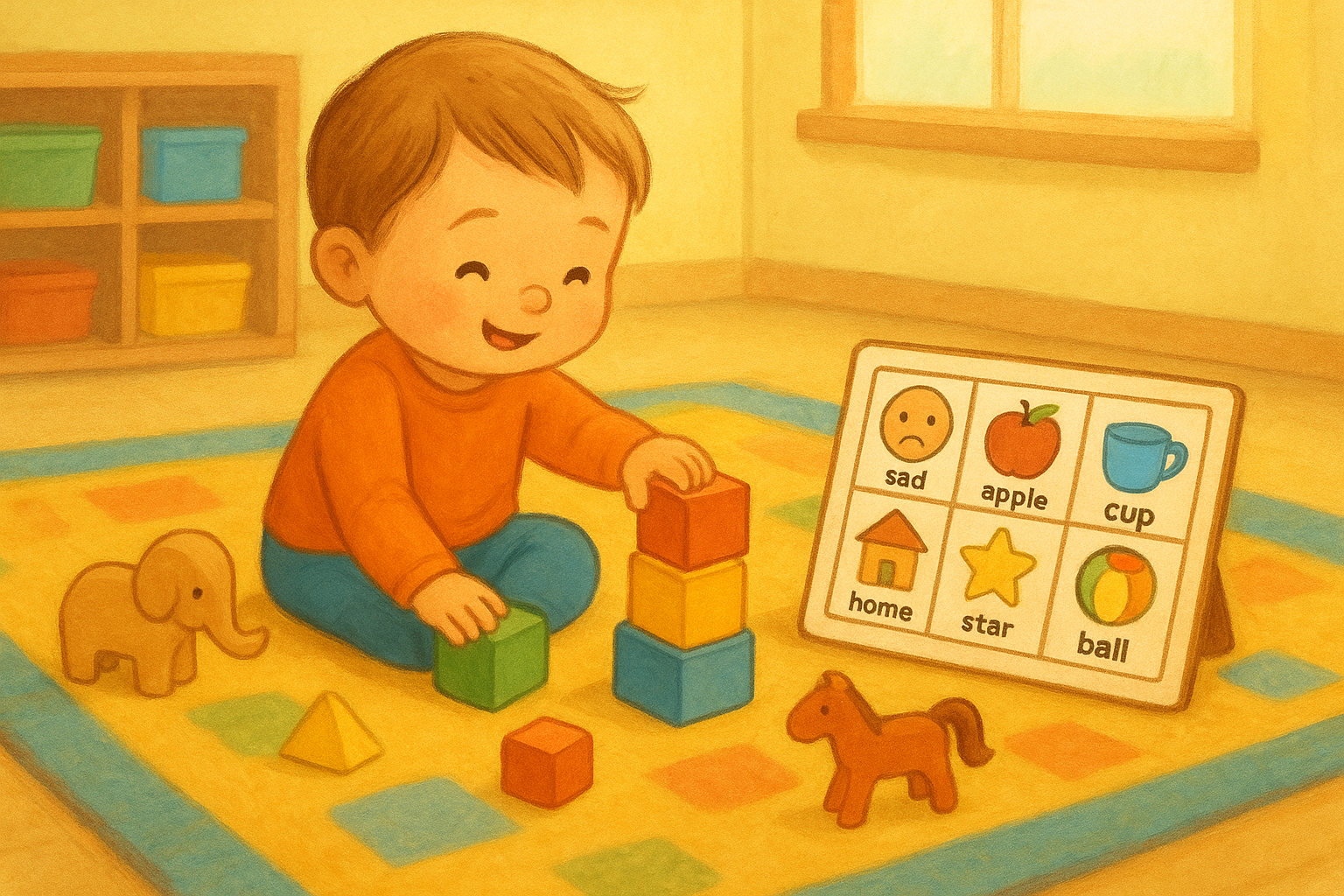
Child-led play gives AAC language activities a natural, motivating context.
The Read, Model, Play Approach to AAC Language Activities
Little Speech Corner's signature framework, Read, Model, Play, breaks AAC language activities into three phases. First, a short Core Story introduces one core word through about five minutes of shared reading. Then, the adult models that word on the child's AAC system. Finally, the pair moves into child-led play that reinforces the same word in a new context.
Here is the process step by step:
- Select a Core Story built around a single core word, and place the child's AAC device, board, or app within easy reach before starting.
- Read the story aloud for about five minutes, pointing to illustrations while modeling the target word on the AAC system each time it appears.
- Pause occasionally to model the core word again, giving the child space to activate it independently if ready.
- Move into child-led play using toys or props connected to the story, continuing to model the same word in new contexts.
- Repeat the same core word across several days or settings before introducing a new target.
This structure keeps sessions manageable while giving children repeated, varied exposure to one core word at a time.
Core Vocabulary Activities for AAC Users
Core vocabulary refers to the small set of high-frequency words, like go, more, stop, and want, that make up most everyday communication. Because these words appear across so many contexts, they are a natural starting point for AAC language activities.
For a closer look at building a core word library, Little Speech Corner's guide on core vocabulary teaching materials for AAC language walks through organizing targets across a school year. The core vocabulary books guide for SLPs and teachers explains pairing printed books with AAC modeling, while the guide to teaching core vocabulary through stories outlines how narrative structure supports repeated exposure.
In practice, many teams rotate a single core word across a week, one day in a story, one day in play, one day at snack time, keeping modeling fresh without overwhelming the child.
Practical AAC Language Activities to Try This Week
Ready to put this into practice? Below are a few AAC language activities that fit easily into a session, classroom block, or home routine.
- Shared reading: Choose a short, illustrated story and model one core word every time it appears, using the AAC system alongside your own voice.
- Snack time modeling: Model words like more, done, or want during snack or mealtime, since this routine naturally repeats several times a day.
- Sensory play: Use sand, water, or playdough to model action words such as push, open, or stop while the child explores the materials.
- Art activities: Model color, cut, or more during a simple craft, pairing the AAC model with the spoken word each time.
- Outdoor play: Model go, stop, and up during active outdoor games, since movement-based play tends to hold attention well.
Above all, the specific activity matters less than the consistency of modeling. A single core word, modeled across several short activities throughout the day, generally supports stronger carryover than one long structured session.

Everyday routines like snack time offer repeated chances for AAC language activities.
Common Mistakes to Avoid with AAC Language Activities
Even well-intentioned AAC language activities can miss the mark if a few common pitfalls creep in. First, some adults wait for the child to initiate before modeling, when research suggests the opposite: model first, then wait. Second, introducing too many new core words at once can overwhelm a child who is still building familiarity with their system.
In contrast, testing a child on vocabulary rather than modeling it tends to reduce motivation. Similarly, leaving the AAC system out of reach during play or mealtime removes the very modeling opportunities these activities are designed to create. Avoiding these mistakes usually comes down to one habit: keep the device nearby, model more than you ask.
How to Choose AAC Language Activities for Your Caseload or Classroom
With so many directions to take, choosing the right starting point matters. For clinicians who want a ready-made framework, Little Speech Corner's Core Stories pair a single core word with about five minutes of shared reading, making it simple to plug AAC language activities into an existing session plan. The Core Stories Foundational 53-Pack extends this into a suggested weekly sequence, which can help teams coordinate modeling across a full school year.
For caseloads that also include articulation goals, Sound Stories provide illustrated narratives loaded with specific speech sounds, useful for sessions that target both language and speech production. Meanwhile, Team Supports, like core-word tip sheets and a planning calendar, help classroom staff and families model the same vocabulary outside of direct therapy time.
Before committing to a full bundle, it is worth exploring free samples first. Visiting Little Speech Corner lets you preview a free Core Story, a sample calendar, and SW and CH Sound Story samples, so you can test the Read, Model, Play structure before purchasing a larger set through the Little Speech Corner TPT store.
Frequently Asked Questions About AAC Language Activities
What are AAC language activities?
AAC language activities are structured but flexible routines, like shared stories, play, and daily tasks, where adults model core vocabulary on a child's AAC system. The goal is repeated, natural exposure rather than isolated vocabulary drills.
How do AAC language activities support core vocabulary learning?
They give adults a repeatable reason to model the same core word across different contexts, such as reading, play, and mealtime. Repetition across settings generally helps children recognize and eventually use the word more independently.
What age group benefits most from AAC language activities?
Little Speech Corner's resources are designed primarily for children ages 2 to 7, though the Read, Model, Play structure can be adapted for older beginning communicators. Early, consistent modeling tends to support stronger long-term language outcomes.
How long should an AAC language activity session last?
A Core Story typically takes about five minutes to read, followed by open-ended play that can last as long as the child stays engaged. Short, frequent sessions throughout the day often work better than one long session.
What is the difference between AAC language activities and traditional speech drills?
Traditional drills often ask a child to produce a word on command, while AAC language activities focus on modeling the word first inside a meaningful context. This modeling-first approach mirrors how children typically acquire language.
How much do AAC language activities from Little Speech Corner cost?
Pricing varies by resource, since individual Core Stories, Sound Stories, and bundles like the Foundational 53-Pack are each listed separately. Current pricing, formats, and licensing details are always listed on the Little Speech Corner TPT store.
Can classroom teachers use AAC language activities without an SLP present?
Yes, many AAC language activities are designed so classroom teams and families can model core vocabulary outside of direct therapy sessions. Team Supports, like core-word tip sheets, are built specifically to help non-SLP adults model consistently.
What materials do I need to start AAC language activities at home?
At minimum, you need the child's AAC system, whether a device, app, or picture board, and a short story or play activity built around one core word. A free sample Core Story is a practical way to try the approach before buying more resources.
What common mistakes should I avoid with AAC language activities?
The most common mistakes are waiting for the child to initiate before modeling, introducing too many new words at once, and leaving the AAC system out of reach during play. Modeling first and keeping the device accessible usually prevents most of these issues.
How often should AAC language activities be repeated for carryover?
Most core words benefit from several days of repeated exposure across different activities before moving to a new target. A weekly rotation, like the one used in the Foundational 53-Pack, is a common structure for pacing this repetition.
Are AAC language activities suitable for children who use picture boards instead of devices?
Yes, the Read, Model, Play approach works with any AAC system, including low-tech picture boards, communication books, and high-tech speech-generating devices. The modeling strategy stays the same regardless of which tool the child uses.
Where can I find free AAC language activities to try first?
Little Speech Corner offers a free Core Story, a sample core-vocabulary calendar, and SW and CH Sound Story samples to preview the approach. These free resources are a low-risk way to test AAC language activities before purchasing a larger bundle, available through the Little Speech Corner AAC resource hub.
Bringing It All Together
Altogether, AAC language activities work best when they are simple, repeatable, and built around consistent modeling rather than testing. The Read, Model, Play framework, five minutes of shared reading, intentional modeling, and child-led play, gives SLPs, teachers, and families a realistic way to fit this modeling into busy days. Whether you start with a single free Core Story or move into a full bundle like the Foundational 53-Pack, the underlying goal stays the same: give children more chances to see their AAC system used in real, motivating moments. As you plan your next session or classroom block, consider trying one new AAC language activity this week and tracking how your learner responds.